Clinically reviewed by Dr. Ponlawat Pitsuwan, Physician, Doctor Samui. Last reviewed: August 2026
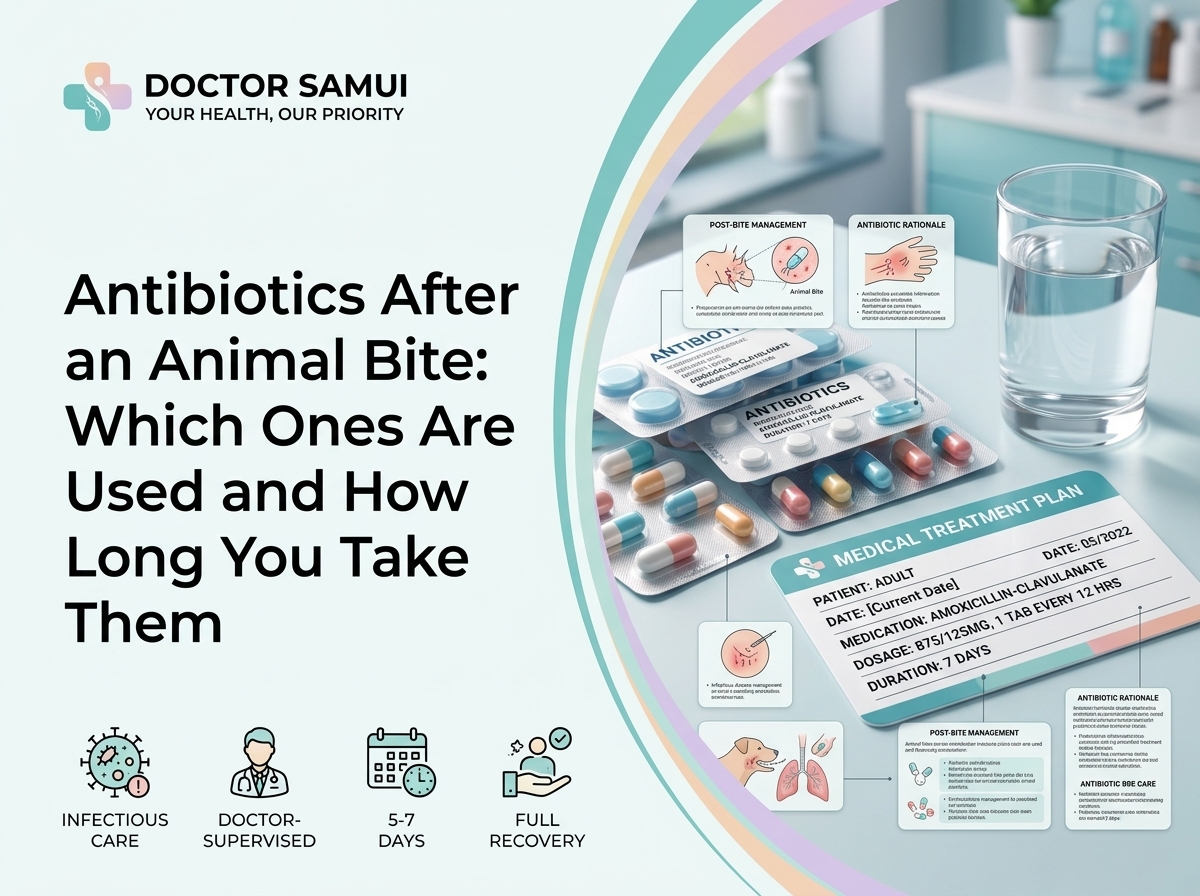
Amoxicillin-clavulanate (Augmentin) is the standard antibiotic for most animal bites. You take it for three days if the wound is clean and antibiotics are purely preventive, or five to seven days if the wound is already infected or high-risk. Cat bites, hand wounds, and bites from stray animals on Koh Samui should always be seen by a doctor, even when they look minor.
You are walking back from the temple grounds near Nathon when a cat that seemed perfectly friendly a moment ago bites your hand. The puncture is small. It barely bleeds. You rinse it under the tap and wonder if you actually need to do anything else. That decision is the one that matters most. Cat bites infect at a much higher rate than most people expect, and in Samui’s heat, a wound that looks fine in the morning can be swollen and red by evening.
The question we hear most at our Chaweng clinic is not whether to worry. It is which antibiotic, what dose, and how many days. This article answers all three, covers what to do if you are allergic to penicillin, and explains why antibiotics and rabies shots are two completely separate things that sometimes you need at the same time.
Animal Bites on Koh Samui — Why the Risk Is Different Here
Koh Samui has a large population of soi dogs and temple cats. Most visitors encounter them on day trips, at night markets, or on the walk between a beach bar and their villa. These animals are rarely vaccinated, their health history is unknown, and their mouths carry bacteria that cause serious infections in humans.
The tropical climate makes things worse. Heat and humidity allow bacteria in a bite wound to multiply far faster than they would in a cooler country. If you are also spending time in the sea or a pool, a small puncture can become an infected wound within hours. This is why the threshold for prescribing antibiotics here is lower than your GP at home might apply.
Tourists often wait a day or two before seeking help, or they are staying far from the clinic. By the time the wound is assessed, infection may already be taking hold. Getting seen the same day gives antibiotics the best chance of working.
Which Bacteria Do Animal Bites Introduce?
A bite wound is not like a simple cut. Animal saliva contains a mix of bacteria, and more than one type can infect the wound at the same time.
Pasteurella multocida is the most common. It lives in the mouths of most cats and many dogs, and it can trigger a painful, fast-spreading infection within hours. Dog saliva also carries Capnocytophaga canimorsus, which is rarely dangerous for healthy adults but can be serious for anyone who is immunocompromised. Anaerobic bacteria thrive in the low-oxygen environment created by a deep puncture wound and add to the risk.
This mix of different bacteria at once is exactly why the antibiotic for a bite needs broader coverage than a standard skin infection antibiotic provides. A routine pharmacy choice will often not be enough.
Do You Always Need Antibiotics After an Animal Bite?
No. Not every bite automatically needs antibiotics. But the decision is clinical, not something you should make by looking at the wound yourself.
The WHO classifies animal exposures into three categories. Category I is contact with intact skin only, which requires no medication. Category II covers minor scratches or abrasions without bleeding, which needs rabies vaccine but may not always need antibiotics. Category III includes bites that break the skin, deep punctures, bites on the hands or face, and any exposure where saliva contacted a mucous membrane. Category III bites almost always need antibiotic cover, especially on Koh Samui where the animal’s vaccination history is unknown.
Cat bites are particularly deceptive. The teeth are narrow and sharp, so the wound closes over quickly and looks minor. Bacteria are pushed deep into the tissue and sealed in. These small punctures carry a very high infection risk. Antibiotics are almost always prescribed for cat bites at our clinic, even when the wound looks insignificant at first glance.
Which Antibiotic Is Used for Animal Bites?
Amoxicillin-clavulanate, sold as Augmentin or co-amoxiclav, is the first-line antibiotic for animal bites. It covers the full range of bacteria found in animal saliva, including Pasteurella and anaerobes. It is taken twice daily with food.
Amoxicillin alone is not enough because it does not cover Pasteurella reliably. Flucloxacillin, which some patients bring from home for skin infections, is also inadequate for bite wounds. The clavulanate part of the combination extends the coverage to the organisms that make bite infections dangerous. This is why the specific antibiotic matters, not just any prescription from a pharmacy shelf.
For more detail on which antibiotics are used for animal bites and how wound treatment fits alongside them, see our wound dressing service page.
Alternatives for Penicillin Allergy
If you are allergic to penicillin, tell the doctor at the start of the appointment. The standard alternative is doxycycline combined with metronidazole. Doxycycline covers Pasteurella and most aerobic organisms. Metronidazole covers the anaerobes. Together they provide comparable coverage to amoxicillin-clavulanate.
Clindamycin alone is not adequate. It lacks reliable Pasteurella coverage. If you have a penicillin allergy and a clinic gives you clindamycin alone for a bite wound, that is worth questioning. Trimethoprim-sulfamethoxazole combined with metronidazole is another option in certain cases, and your doctor will choose based on your allergy history and the wound type.
How Long Do You Take Antibiotics After an Animal Bite?
Duration depends on whether the wound is already infected or whether antibiotics are being given purely to prevent infection.
If the wound is clean, was washed promptly, and shows no signs of infection, three days of amoxicillin-clavulanate is standard. This shorter course aims to suppress any bacteria introduced before they establish.
If the wound is already showing signs of infection — redness spreading out from the bite, warmth, swelling, pus, or fever — the course is five to seven days. Deep bites, hand bites, face bites, and wounds in anyone who is immunocompromised also typically get the longer course from the start, even when the wound looks clean, because the risk of complications is higher.
Do not stop antibiotics early because you feel better. Pasteurella in particular can progress quickly if the course is cut short.
Antibiotics Versus Rabies Shots — Understanding the Difference
These are two separate things that address two completely different risks. This is the part of the conversation we have with almost every patient who comes in after a bite on Samui.
Antibiotics address bacterial infection risk. They have nothing to do with rabies. Rabies is caused by a virus, not a bacterium, and antibiotics do nothing against it. If you are bitten by a stray dog, cat, or monkey on Koh Samui, you need a separate assessment for the rabies vaccine series, regardless of whether antibiotics are also prescribed.
You may need both. Or just one. The bite assessment determines which. At Doctor Samui we assess both risks at the same appointment, so nothing gets missed.
What Happens at Doctor Samui When You Come In After a Bite
The first step is proper wound irrigation. Thorough washing under pressure is one of the most effective ways to cut infection risk, and it needs to be done correctly, not just rinsed under a tap. Then comes assessment of the wound depth, location, and type of animal.
We check your tetanus status and update it if needed. We grade the rabies exposure using WHO categories and discuss whether post-exposure prophylaxis is indicated. If antibiotics are warranted, we prescribe the correct one at the right dose.
If the wound needs follow-up monitoring, our wound dressing service at the Chaweng clinic means you do not need to find a new provider each time. If you are staying at a hotel or villa in Lamai, Bophut, Maenam, Choeng Mon, or Angthong and cannot get to us, we offer 24/7 house calls across the island.
Signs That Antibiotics Are Not Enough
Most bite wounds respond well to antibiotics started early. But some infections progress despite treatment, and you need to know when to return.
Come back to the clinic if the redness is spreading beyond the wound edge after 24 to 48 hours on antibiotics. Return if you develop a fever, if red streaks appear tracking away from the wound, if pus is increasing, or if the pain is getting worse rather than better. These signs suggest the infection may need IV antibiotics, drainage, or both. We handle all of these at Doctor Samui.
Bitten by a dog, cat, or monkey on Koh Samui? Doctor Samui’s Chaweng clinic is walk-in and open every day. We assess the wound, prescribe the right antibiotic, check your tetanus status, and advise on rabies exposure risk, all in one visit. If you are at your hotel or villa and cannot travel, our doctors are available 24/7 for house calls across the island. Come in or call us today.
Frequently Asked Questions
Dr. Ponlawat Pitsuwan
Physician, Doctor Samui
a walk-in clinic based in Chaweng, Koh Samui, with 24/7 hotel and villa visits across the island. He sees tourists, families, and long-stay expats for animal bite assessment, wound care, antibiotic prescribing, tetanus, and rabies post-exposure prophylaxis. His focus is straightforward, evidence-based care delivered in plain language.