Clinically reviewed by Dr. Ponlawat Pitsuwan, Physician, Doctor Samui. Last reviewed: August 2026
Rinse the wound under clean running water for at least five to fifteen minutes. Use gentle soap. Do not use alcohol, seawater, or iodine. Do not close the wound with tape or strips. Then get to a clinic the same day. On Koh Samui, Thailand is rabies-endemic, and that changes everything about how quickly you need to act.
You are at one of the temple areas near Chaweng and a macaque gets too close, or a soi dog trots up friendly outside a beach bar and the next second your hand is bleeding. It happens in a moment. What you do in the next ten minutes matters more than most people realise, and most people get it wrong.
The most important step is washing the wound properly, for longer than feels necessary, with the right things. This guide tells you exactly what to do before you reach a clinic, what not to do, and why Koh Samui’s climate and island animals make this more urgent than a similar bite would feel back home.

Step One: How to Clean an Animal Bite Wound Properly
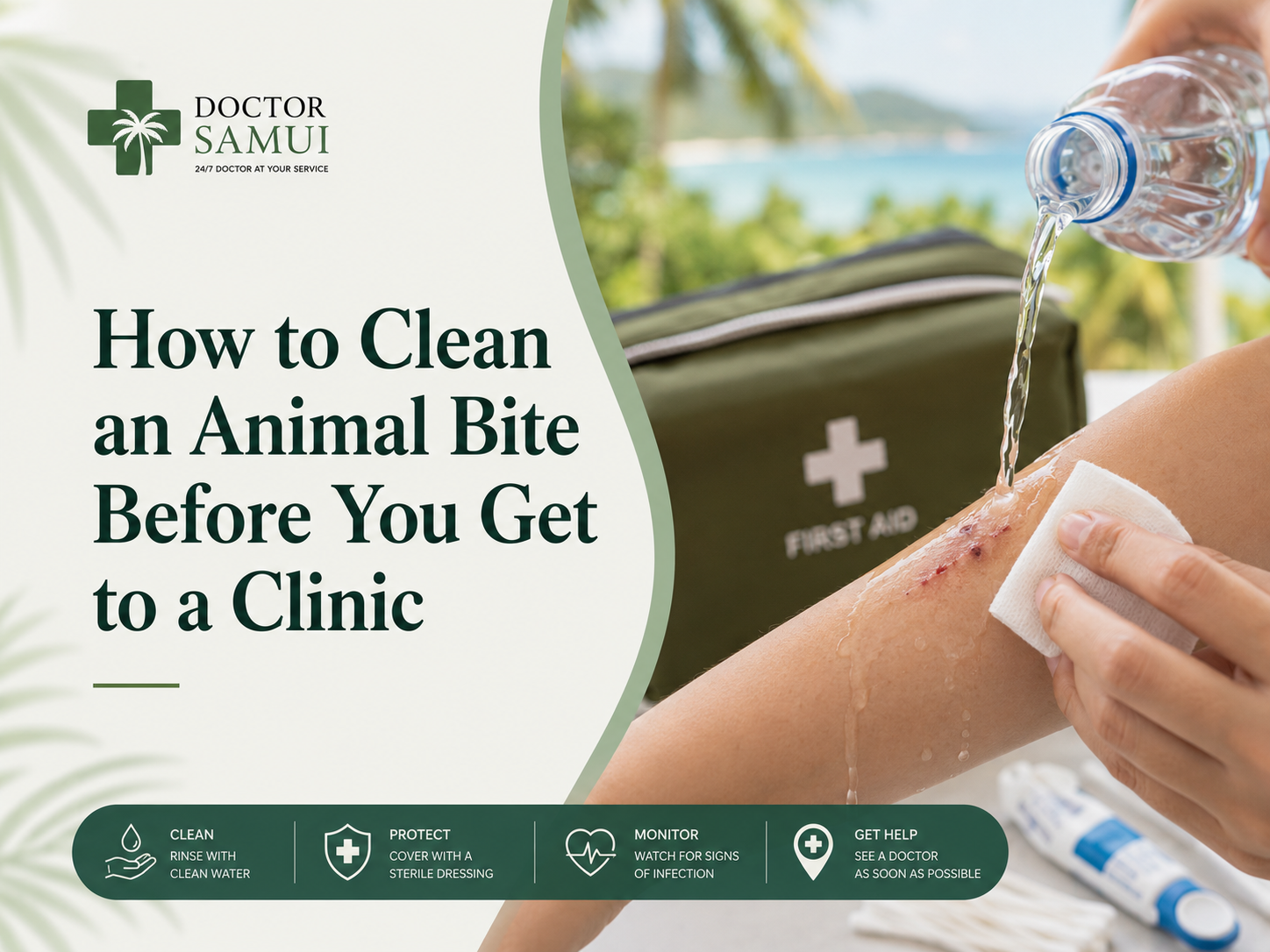
Get to a tap or use bottled water immediately. Run clean water directly over the wound for a minimum of five to fifteen minutes. This is not optional. Thorough rinsing is the single most effective first-aid step you can take, physically flushing saliva, bacteria, and viral particles from the wound before they travel deeper. Most people rinse for thirty seconds. Set a timer.
Use a gentle liquid soap if you have it. Work it into the wound with light pressure. Do not scrub hard, as scrubbing damages tissue and makes wound care harder at the clinic. Rinse the soap away thoroughly with running water.
Pat the area dry with a clean cloth or gauze. Apply a loose, non-occlusive dressing or a clean bandage to protect the wound while you travel. Do not seal it tight.
What NOT to Use on an Animal Bite
This is where beach and hotel first-aid instincts often go wrong.
Do not pour alcohol on the wound. It damages tissue without penetrating deep enough to reduce infection meaningfully. Do not use hydrogen peroxide for the same reason. Do not apply undiluted iodine directly inside the wound.
Do not rinse a bite wound with seawater. This is a specific mistake that happens after incidents on Koh Samui beaches. Seawater carries its own bacteria, including organisms that cause serious tropical wound infections. Bottled water from a beach vendor is far better than the ocean.
Do not close the wound. No tape, no butterfly strips, no pressing the edges together. Closing a bite wound traps bacteria inside and increases infection risk. The clinical team will decide what to do with the wound once they can assess and irrigate it properly.

Why Koh Samui’s Climate Makes Bite Wounds More Dangerous
A bite wound in a cool, dry climate is already a concern. Here, heat and humidity accelerate everything. Bacteria multiply faster. Tissue breaks down faster. A wound that looks minor on the beach at noon can be visibly infected by dinner.
Tropical wounds can deteriorate rapidly into deeper lesions, a pattern that appears after coral cuts, scooter grazes, and animal bites on this island. The window to act early is shorter than most tourists expect. Cleaning the wound well and getting seen the same day is not overcautious. It is the right response.
The Animals on Koh Samui That Bite and What Each One Means
Stray dogs are the most common source of bites here. Soi dogs around beach bars, markets, and temple areas can be unpredictable. Any bite from a stray dog where you cannot confirm vaccination history is a potential rabies exposure and needs medical assessment the same day.
Monkeys near jungle viewpoints and temple areas are a growing concern. Macaques bite and scratch quickly when tourists get too close or try to hand-feed them. A monkey bite or deep scratch is treated as a high-risk rabies exposure. Monkeys can also carry Herpes B virus, which is rare but serious enough to take seriously.
Cat bites are deceptive. A cat’s teeth create narrow puncture wounds that seal over at the surface while trapping bacteria deep inside. The bacteria cats commonly carry causes rapid, aggressive soft-tissue infections in tropical heat. A cat bite that looks like nothing today can be a swollen, spreading infection by tomorrow morning.
Rabies on Koh Samui: Why Timing of Post-Exposure Treatment Matters
Thailand is rabies-endemic. This is not a scare tactic. It is the baseline you need to make a clear decision.
Rabies is fatal once symptoms appear. Post-exposure prophylaxis (PEP), started before symptoms begin, is highly effective. The sooner it starts, the better. Thorough soap-and-water washing is your first layer of protection while you get to the clinic.
If you were bitten or scratched by a high-risk animal whose vaccination history is unknown, this is a WHO Category II or III exposure. Category III requires both rabies vaccine and rabies immunoglobulin (RIG), injected into and around the wound at the first visit. Category II requires vaccine but not RIG. Do not try to classify this yourself. Come in and let us assess it.
Waiting a day or two because you feel fine is a mistake. PEP does not work after symptoms appear. Get seen today.
What the Doctor Samui Team Does When You Arrive With a Bite
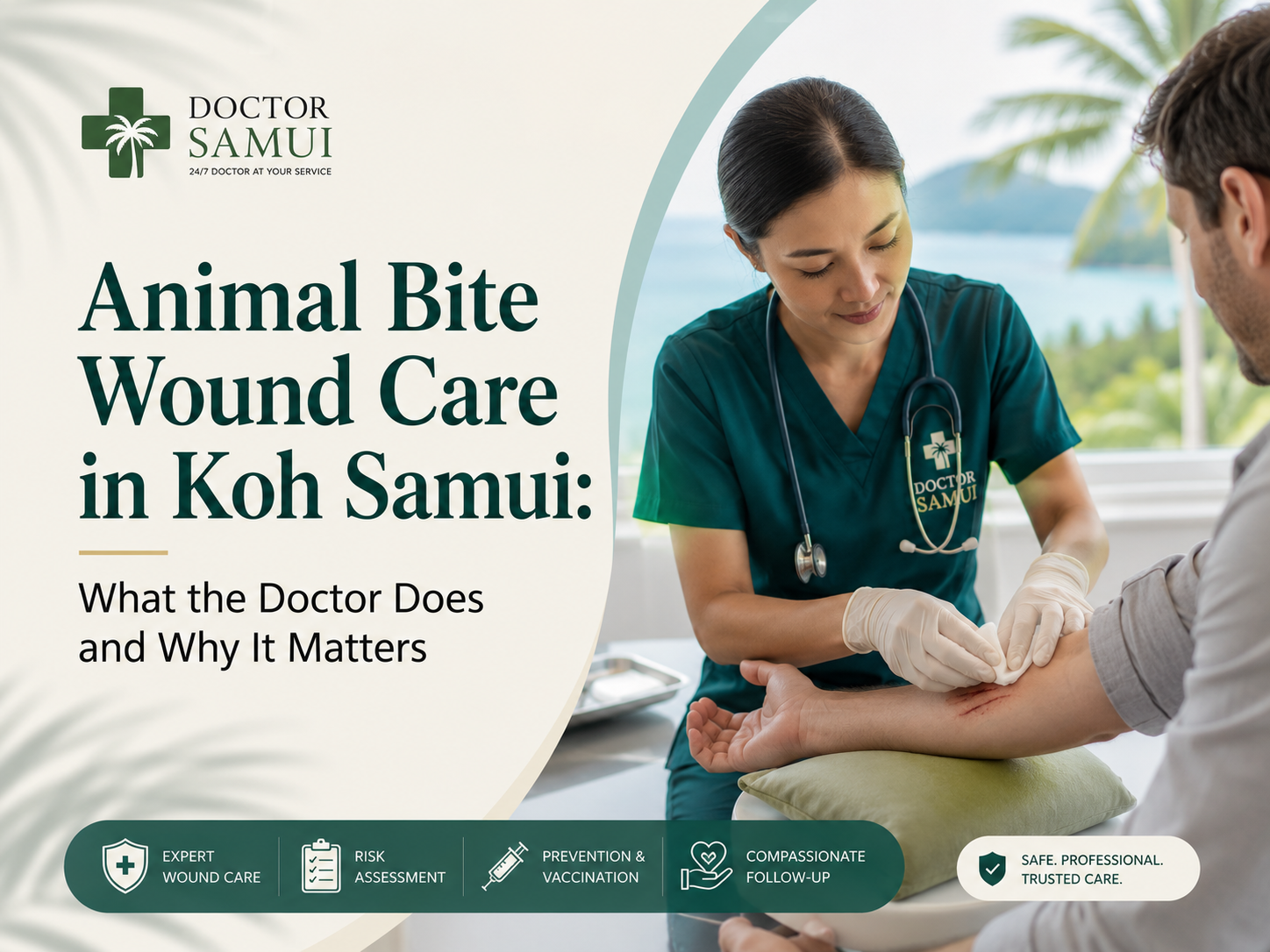
When you walk into the Chaweng clinic, the first step is wound assessment and thorough irrigation with sterile solution. We do not assume the wound is clean even if you have already rinsed it. We flush it properly, assess depth, and check for tissue involvement.
We then assess your rabies exposure category, check your tetanus status, and discuss your vaccination history. If PEP is needed, we carry cold-chain stored rabies vaccine and can begin the series immediately. If RIG is indicated, we administer it at the same visit. We also cover antibiotic treatment where appropriate, particularly for cat bites, monkey bites, and hand wounds.
If you cannot travel, we offer 24/7 hotel and villa visits across the island. Our bite wound care service covers initial wound management at your accommodation. For anything requiring rabies vaccine, coming into the clinic is necessary so we can store and administer it correctly.
Practical Steps Before You Leave for the Clinic
Take a photo of the animal if you safely can. Note the time and location of the bite. If the animal can be observed, let local staff know. You will be asked these questions at the clinic and the answers affect which protocol we follow.
Contact your travel insurer before or on the way in. Animal bites involving wound care, PEP, tetanus boosters, and follow-up dressings typically fall under acute emergency coverage in standard policies. We provide an itemised receipt and a doctor’s letter at the end of your visit. Keep all paperwork. Most claims for this type of incident go through without difficulty.
If you have been bitten or scratched by a dog, cat, or monkey on Koh Samui, come to Doctor Samui’s walk-in clinic in Chaweng today, or call us for a 24/7 hotel or villa visit. We assess rabies exposure category, carry cold-chain rabies vaccine, administer rabies immunoglobulin where needed, and provide wound dressing, tetanus cover, and antibiotic treatment in a single visit. Do not wait for symptoms. Come in the same day.
Frequently Asked Questions
Dr. Ponlawat Pitsuwan
Physician, Doctor Samui
a walk-in clinic based in Chaweng, Koh Samui, with 24/7 hotel and villa visits available across the island. He treats tourists, families, and long-stay expats for animal bites, wound care, rabies post-exposure prophylaxis, and tropical infection management. His approach is direct, evidence-based care delivered in plain language.