Clinically reviewed by Dr. Ponlawat Pitsuwan, Physician, Doctor Samui. Last reviewed: August 2026
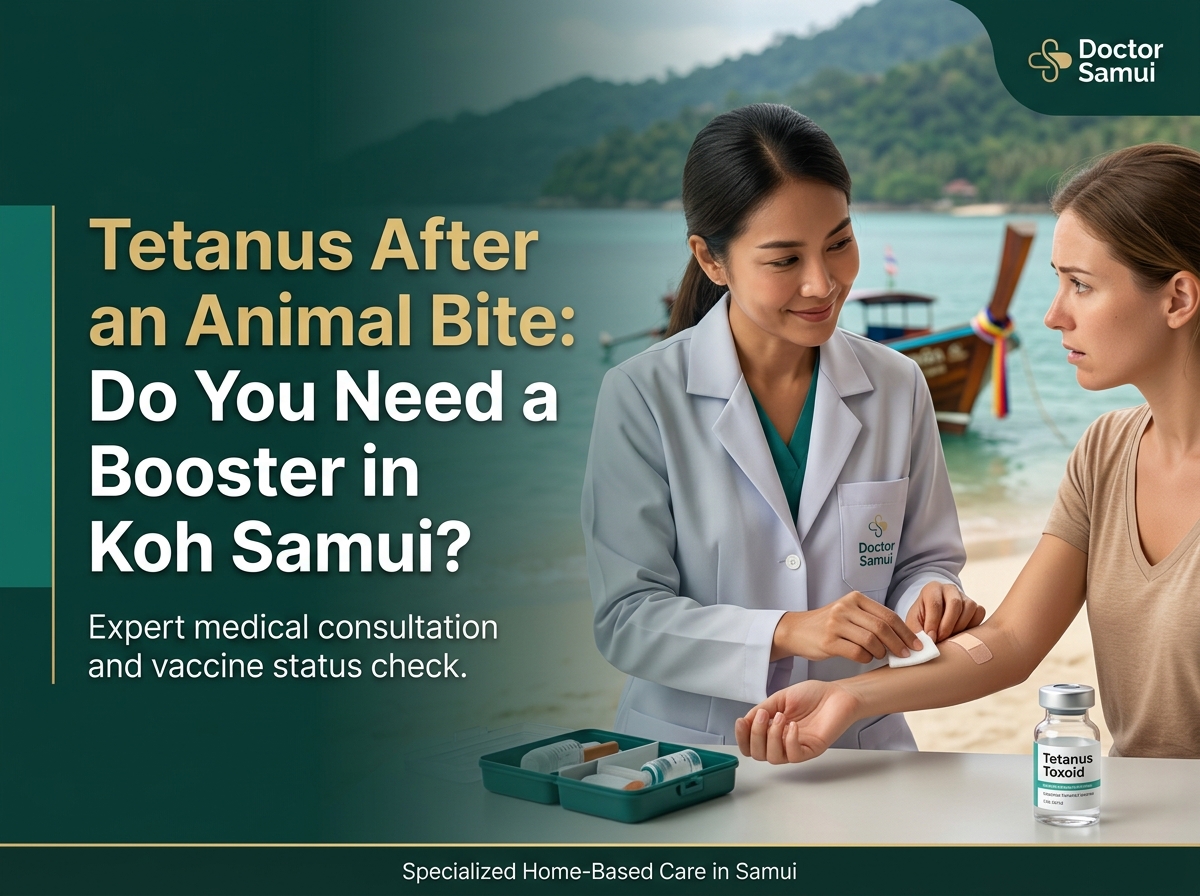
After any animal bite that breaks the skin in Koh Samui, tetanus is a real risk alongside rabies. If your last tetanus booster was more than five years ago and the wound is deep, dirty, or a puncture, you need a booster as soon as possible. Doctor Samui can assess and administer it at our Chaweng clinic or visit your hotel the same day.
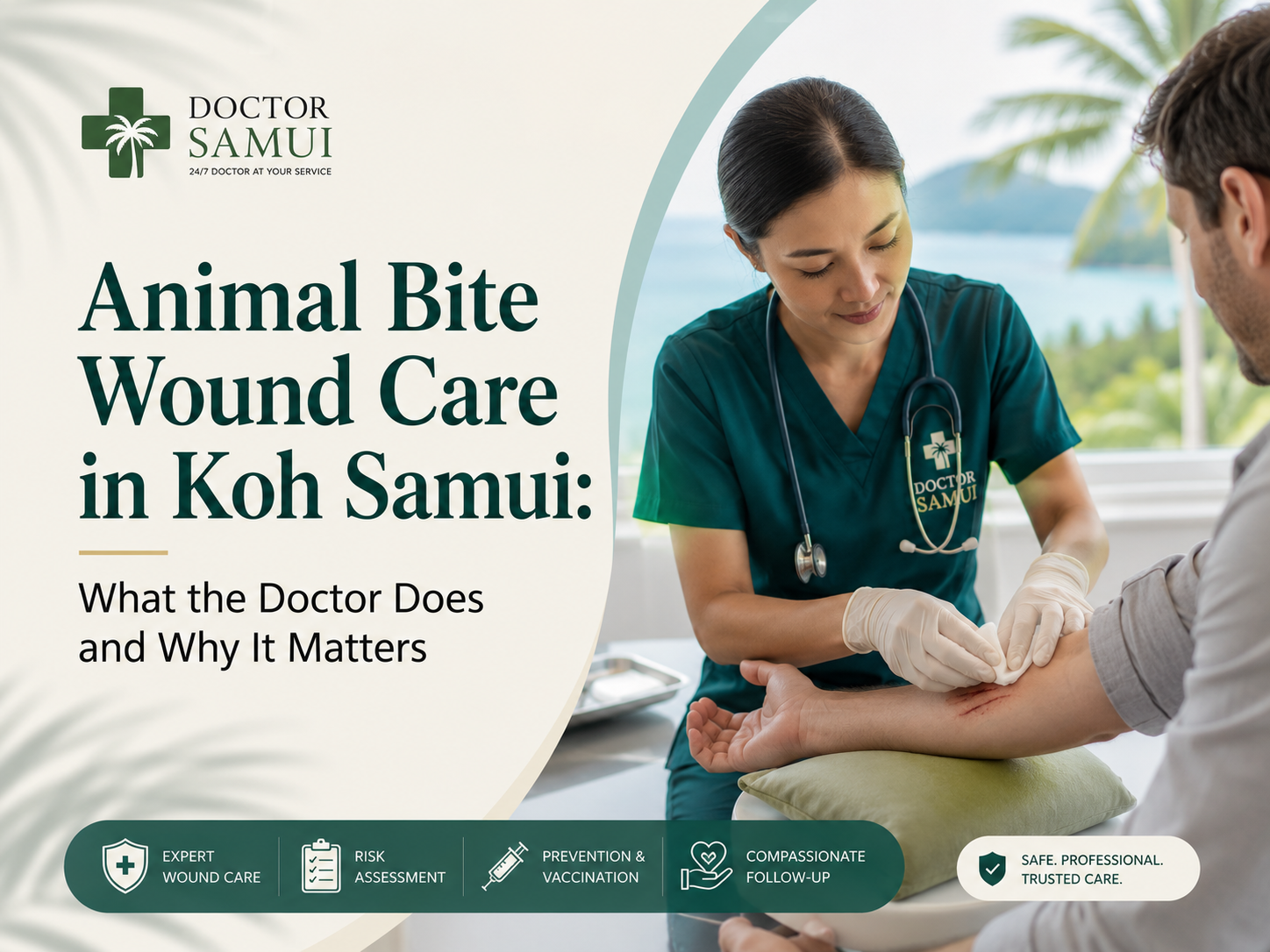
The monkey at the temple steps moved faster than you expected, and now you are back at your villa staring at a row of small scratches across your hand. Or a stray dog near the Chaweng beachfront snapped before you had time to step back. You are already Googling rabies, which makes sense. But there is a second question you need to answer just as fast: when did you last have a tetanus booster?
Tetanus does not get the same attention as rabies after an animal bite in Thailand, but it should. Any wound that breaks the skin, especially a puncture or a dirty one, carries tetanus risk. In a tropical climate where wounds worsen quickly, that risk is not theoretical. Here is exactly what you need to know.
Which Animals on Koh Samui Bite Tourists Most Often
Three animals account for most bite and scratch injuries we see here. Stray dogs are the most common. They are everywhere on the island, including beaches, temple grounds, and night markets. Most are calm, but territorial behaviour around food or sleeping spots leads to bites more often than tourists expect.
Temple macaques are the second. If you have been to Wat Plai Laem or joined a day trip where guides encourage feeding, you know how fast they close the distance. Scratches from macaque claws and unprovoked bites are both genuine risks. Third are feral cats, which cluster around beach restaurants and fishing piers. A scratch from a cat angling for your food is easy to dismiss. Do not.
All three animals have contact with soil, organic matter, and other animals. That is exactly the environment where the bacteria behind tetanus survive and persist.
The 5-Year Rule vs the 10-Year Rule: Which One Applies to You
This is where confusion is most common, even among travellers who know they have been vaccinated. There are two thresholds, and they apply to different wound types.
For a clean, minor wound, a booster is recommended if more than ten years have passed since your last dose. For a dirty wound, a deep puncture, or any animal bite that breaks the skin, that threshold drops to five years. A dog bite or a monkey scratch almost always falls into the second category.
If you do not know when you last had a booster, or whether you completed a primary series at all, a booster is given regardless. You do not need to arrive at the clinic with a complete vaccination record. We ask the right questions and make the call with you.

What to Do in the First 15 Minutes After a Bite on Samui
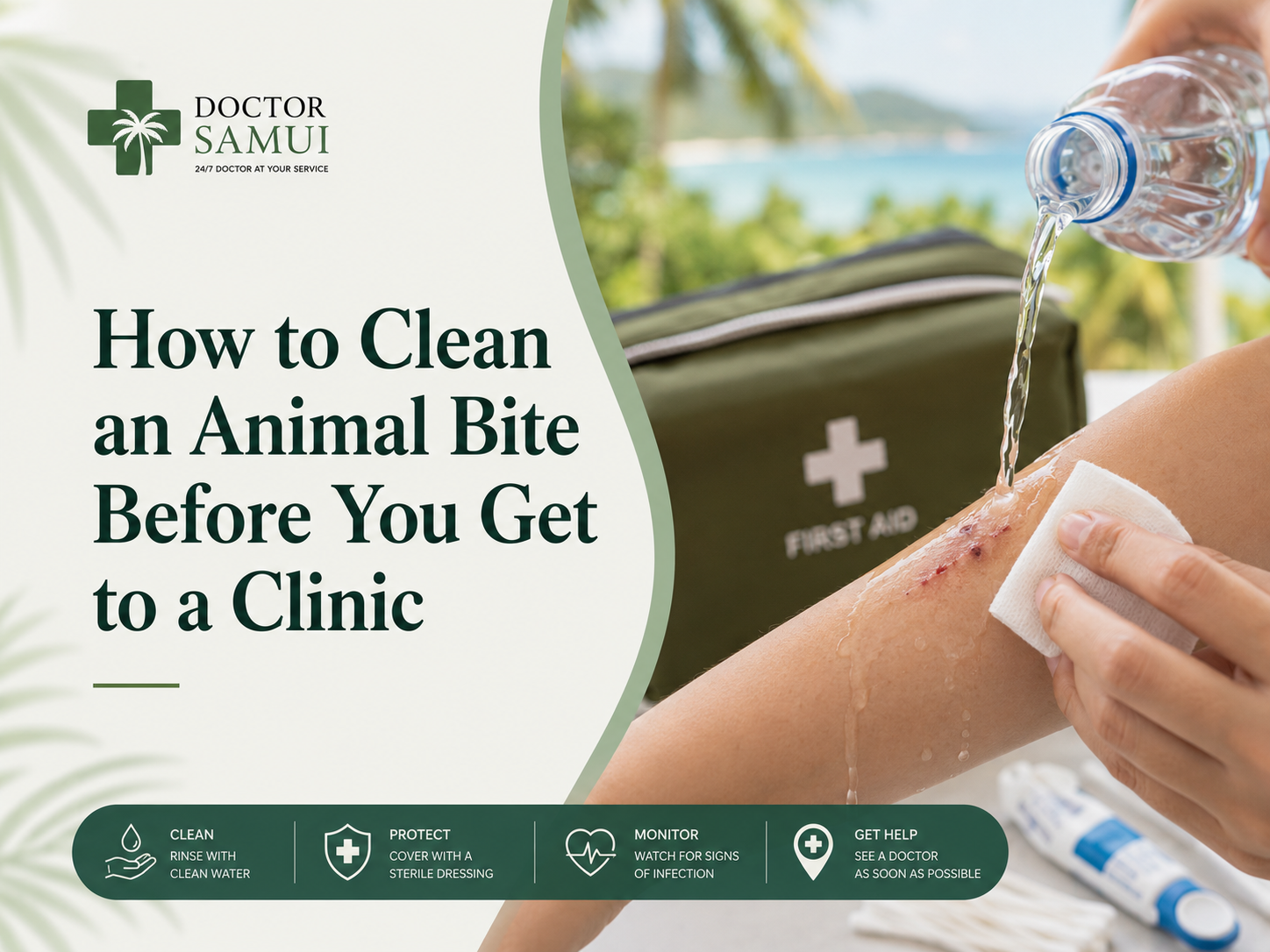
Do not wait until you are back at your hotel. Start cleaning the wound immediately. Use soap and running water, and flush for a full five minutes. If the wound is deep or has visible dirt, go longer.
Do not use seawater or pool water to irrigate a bite wound. Both introduce additional bacteria. Do not squeeze or scrub the wound hard, and do not put toothpaste, lime juice, or any home remedy on it. These cause more damage to tissue that is already compromised. Cover the wound loosely and get to a clinic. The sooner proper irrigation and assessment happen, the better, especially in Koh Samui’s heat.
Why Animal Bites Are Riskier in a Tropical Climate
At home in a cooler country, a minor bite might stay clean for a day or two before showing signs of infection. Here, that timeline is much shorter. Koh Samui’s heat and humidity allow bacteria to multiply in a wound far faster than in a temperate climate. A bite that looks minor at midday can show spreading redness and swelling by evening.
There is also the issue of bacterial strains in tropical environments that may be less familiar to your immune system. Add the possibility of seawater contact before you reach a clinic, and what looked like a small puncture can turn into a significant problem quickly. This is not about causing alarm. It is about understanding why the window for proper wound care matters more here than it does at home.
Tetanus and Rabies: Understanding the Overlap
Here is what tourists often do not realise until they are sitting in a clinic: tetanus and rabies are two completely separate concerns that require separate management. One does not cancel out or cover the other.
Rabies is a viral risk and follows the WHO post-exposure protocol. Tetanus is a bacterial risk and is managed with a booster and, in some cases, tetanus immunoglobulin. Both assessments happen in the same clinical encounter. We look at the wound type, the animal involved, and your vaccination history for both.
If you have been bitten by a stray dog or scratched by a monkey anywhere on the island, both risks need evaluation. Do not let one distract you from the other.
Which Bites Actually Require a Tetanus Booster
Any bite or scratch that breaks the skin is a tetanus-prone wound if it is deep enough to trap bacteria, if it was a puncture, or if the wound had contact with the animal’s mouth or with soil. A dog bite almost always qualifies. A monkey scratch across the back of the hand where the skin is broken qualifies. A cat graze that barely nicked the surface is lower risk but still worth assessing.
In practice, most animal bites in a dirty outdoor environment on Samui are not clean wounds. If there is any doubt, we treat it as a tetanus-prone wound. The cost of a booster you did not strictly need is far lower than the cost of getting tetanus.
What Happens If You Have Never Been Vaccinated Against Tetanus
A significant number of adult travellers, particularly from certain countries, did not complete a full primary tetanus series in childhood or cannot confirm that they did. This changes the management entirely.
If your history is genuinely unknown or incomplete, a booster alone is not enough. You receive both the vaccine and tetanus immunoglobulin, also called TIG. TIG provides immediate short-term protection while the vaccine builds a longer-term response. These are given together at the time of injury. This is a different clinical pathway from a standard booster visit, and it needs to happen promptly after the bite.
Tetanus Symptoms to Watch For After a Bite
Tetanus symptoms do not appear immediately. The time from infection to first symptoms is typically between three days and three weeks. The most recognised early sign is jaw stiffness, which is why tetanus is sometimes called lockjaw. Muscle stiffness can spread to the neck, shoulders, and back.
If you develop jaw stiffness, difficulty swallowing, or muscle rigidity in the days or weeks after a bite, seek emergency care immediately. These symptoms warrant urgent clinical assessment regardless of whether you received a booster. Tetanus is rare in vaccinated individuals, but it is serious and life-threatening if left untreated.
Getting a Tetanus Booster at Doctor Samui
When you come into our Chaweng clinic after an animal bite, we assess the wound, clean it properly if needed, and check your vaccination history for both tetanus and rabies. We do not just hand you an injection and send you on your way. A full picture of both risks is covered in a single visit.
If you cannot get to the clinic, our 24-hour hotel and villa visits cover the whole island, including Lamai, Bophut, Maenam, Choeng Mon, and further out. The visiting doctor carries the necessary vaccines and can assess and treat on-site. This is particularly useful for families with young children or guests at remote villas who were bitten late at night. Our team speaks English, German, and Hebrew, and we work with travel insurance directly. Call first and we sort the rest.
Our wound care service also covers proper irrigation, dressing, and follow-up if the wound shows early signs of infection. For more on how we handle bite wounds and wound care on Samui, our wound dressing page covers what to expect from that part of your visit.
Bitten by a dog, monkey, or cat on Koh Samui? Do not wait to see if the wound looks okay. Doctor Samui offers same-day tetanus booster assessment and wound care at our Chaweng walk-in clinic, with 24-hour hotel and villa visits across the island. We assess tetanus and rabies risk together in one consultation, so you leave knowing exactly what you need. English, German, and Hebrew-speaking staff available.
FAQ
Dr. Ponlawat Pitsuwan
Physician, Doctor Samui
a walk-in clinic based in Chaweng, Koh Samui, with 24-hour hotel and villa visits across the island. He sees tourists, families, and long-stay expats for animal bite assessment, tetanus and rabies post-exposure management, wound care, and common tropical illnesses. His focus is straightforward, evidence-based care delivered in plain language.