Clinically reviewed by Dr. Ponlawat Pitsuwan, Physician, Doctor Samui.
Last reviewed: October 2026
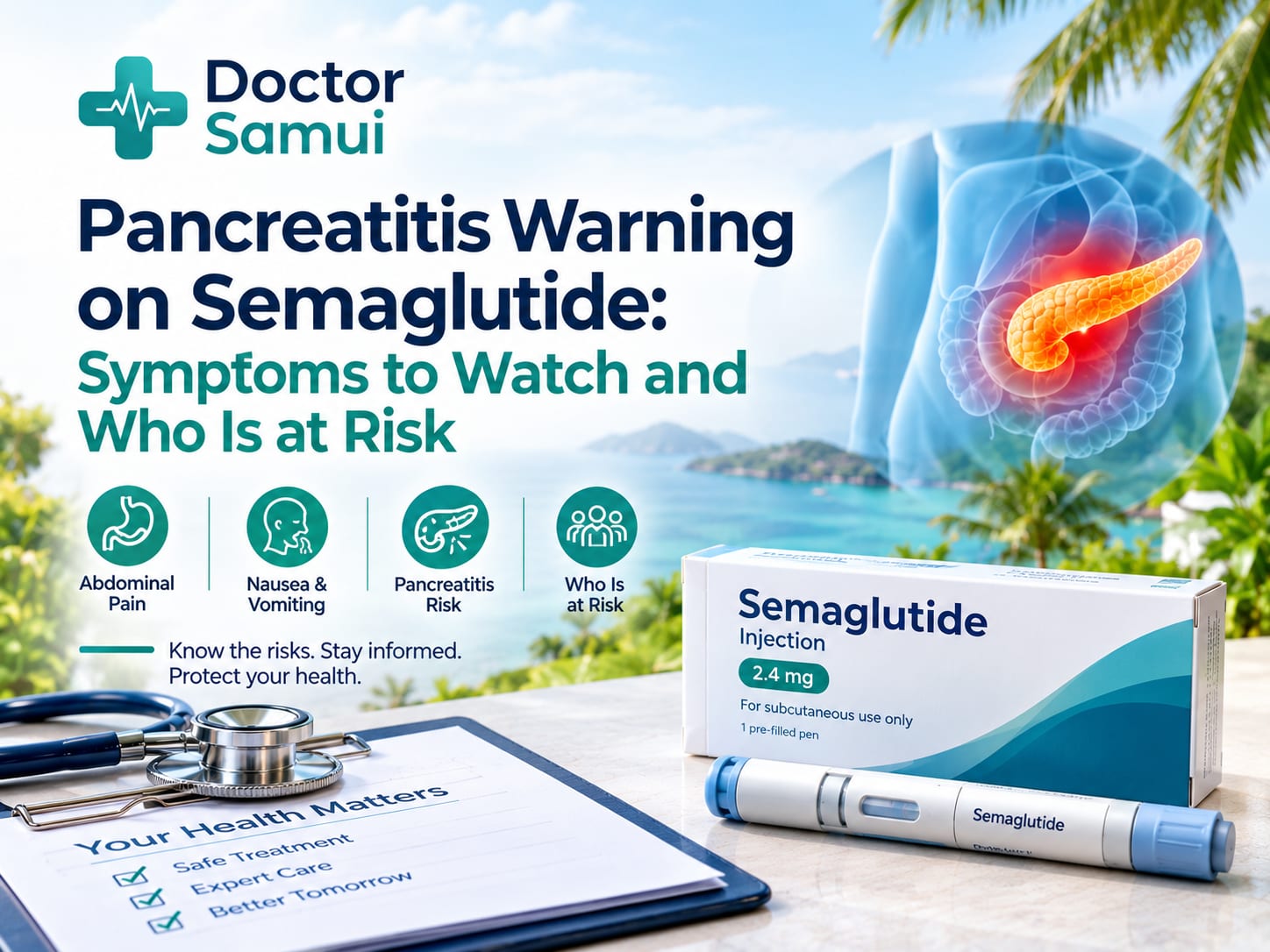
Semaglutide (Ozempic, Wegovy) carries a prescribing warning for acute pancreatitis. The key symptoms are severe upper abdominal pain that radiates to the back, persistent nausea and vomiting, and fever. If you develop these symptoms, stop the injection and seek medical assessment the same day. Semaglutide must not be restarted if pancreatitis is confirmed.
You are three weeks into your semaglutide dose, sitting at a beach restaurant somewhere between Lamai and Chaweng, and a deep, grinding pain starts high in your abdomen. You vomit. It does not help. The pain moves toward your back. This is not the low-grade nausea that comes with a new injection. This needs a doctor today.
Semaglutide is prescribed for type 2 diabetes and weight loss, and many people using it are travelling or living long-stay on Koh Samui. Stomach discomfort is common with the medication and usually harmless. But pancreatitis, inflammation of the pancreas, sits at the serious end of the risk spectrum. Knowing the difference between an upset stomach and a genuine warning sign matters more than most people on this medication realise.
Normal Semaglutide Side Effects vs Pancreatitis: Know the Difference
Most people starting or dose-escalating semaglutide get nausea, loose stools, or a reduced appetite. These feel unpleasant but are not dangerous. The discomfort is mild to moderate, often tied to eating, and settles within hours or by the next day.
Pancreatitis feels different. The pain is severe and constant, typically in the upper abdomen, and it does not ease when you vomit or stop eating. It often spreads to your back. You may also develop a fever and a fast heartbeat.
A useful rule: if your abdominal pain scores above six out of ten, has lasted more than a few hours, and moves toward your back, do not wait it out. Get assessed.
| Feature | Normal GLP-1 Side Effect | Pancreatitis Warning Sign |
|---|---|---|
| Pain severity | Mild to moderate | Severe, constant |
| Location | Diffuse or around stomach | Upper abdomen, radiates to back |
| Relieved by vomiting | Sometimes | No |
| Duration | Hours, often improves | Persists and worsens |
| Fever | No | Often present |
| Heart rate | Normal | May be elevated |
| Action needed | Monitor, stay hydrated | Seek medical assessment today |
What Happens in Acute Pancreatitis
The pancreas makes digestive enzymes and releases them into the gut. In acute pancreatitis, those enzymes activate inside the pancreas itself rather than in the intestine. The organ starts digesting its own tissue.
This triggers rapid, intense inflammation. Fluid shifts out of the bloodstream into surrounding tissue, which can cause dehydration quickly, and that risk is higher in Koh Samui’s heat. In severe cases the inflammation spreads beyond the pancreas, which is what makes acute pancreatitis a genuine emergency rather than something to sleep off.
Semaglutide Pancreatitis Warning: What the FDA Prescribing Label States
The FDA prescribing information for semaglutide includes a specific warning for acute pancreatitis. Cases have been reported in clinical trials and in post-marketing use. The guidance is clear: if pancreatitis is suspected, discontinue semaglutide immediately. If pancreatitis is confirmed, do not restart it.
This is a labelled warning, meaning the evidence was strong enough to require it on the product itself. The absolute risk in clinical trials was low, but a missed or delayed diagnosis carries serious consequences. The warning applies to everyone on the drug, not just high-risk groups.
For more detail on how GLP-1 medications are managed at Doctor Samui, see our page on what are the signs of pancreatitis on GLP-1 medication.
Who Is at Highest Risk of Pancreatitis on Semaglutide
Some patients face meaningfully higher risk than others. A history of pancreatitis is the most significant factor. If you have had it before, your pancreas is more vulnerable to a second episode, and GLP-1 medications are generally not recommended for these patients.
Gallstones and biliary sludge, a thickened bile that can form during rapid weight loss, are common pancreatitis triggers independent of semaglutide. Heavy alcohol use is another. High blood triglycerides also raise risk on their own. Having two or more of these factors together compounds the picture considerably.
Patients who have recently dose-escalated are in a phase when GI side effects are most intense. Dose-escalation phases are when GI side effects are most intense. If you have recently stepped up your dose and develop new abdominal symptoms, do not assume it is routine adjustment discomfort.
Alcohol, Heat, and Semaglutide: A Risk Combination Koh Samui Visitors Should Know
Alcohol is an independent cause of pancreatitis, separate from anything semaglutide does. But the combination of heavy drinking, tropical heat, dehydration, and a medication that already carries a pancreatitis warning creates overlapping risk in a way that is practically relevant here.
Many people on semaglutide drink more than they would at home when they are on Koh Samui. Meals out every night, beach clubs, late sessions in Chaweng. The heat adds dehydration on top of that. This is not a reason to panic, but it is a reason to be genuinely moderate with alcohol, especially around injection day when GI side effects tend to peak.
If you have gallstones, high triglycerides, or a prior history of pancreatitis, avoid alcohol entirely while on semaglutide.
Red-Flag Symptoms That Need Emergency Attention
Most abdominal discomfort on semaglutide is not pancreatitis. But these symptoms need clinical attention that day, not tomorrow morning.
Severe upper abdominal pain lasting more than a few hours needs assessment. So does pain that radiates into the back, vomiting that does not bring relief, fever above 38 degrees Celsius, or a rapid heartbeat. Jaundice, yellowing of the skin or whites of the eyes, may mean the bile duct is involved, which requires hospital-level care.
Do not take strong painkillers and sleep it off. Masking the pain can delay care and worsen the outcome.
Long-Stay Expats: When Symptoms Build Slowly
Acute pancreatitis is dramatic and hard to miss. Chronic pancreatitis develops slowly and is easier to overlook. If you have been on semaglutide for months and have persistent dull discomfort in the upper abdomen, loose oily stools where fat is not being absorbed properly, or unexplained weight loss beyond what the medication would account for, these warrant investigation.
Long-stay expats managing their weight on Koh Samui are exactly the group who might put up with vague symptoms for weeks before seeking care. A blood test checking lipase and amylase, the main pancreatic enzyme markers, gives a fast initial picture. Do not leave it.
Getting Assessed on Koh Samui if You Are on Semaglutide
You do not need to wait until you fly home. If you are on semaglutide and develop concerning abdominal symptoms on Koh Samui, Doctor Samui can assess you at the Chaweng clinic or come to your hotel or villa across the island.
A consultation covers your symptom pattern, your dose and timeline on semaglutide, your relevant history including prior pancreatitis, gallstones, alcohol use and triglyceride levels, and a clinical examination. If blood tests are needed, we guide you to the right facility. If the picture is urgent, we refer you to hospital-level care directly.
If you need a doctor to come to you, our mobile service covers the whole island. Patients in Lamai can reach us through our house call and IV therapy service in Lamai. Those on the west side can use our Taling Ngam house call and IV therapy service. If your travel insurance covers clinic visits, our cashless treatment service in Koh Samui handles the paperwork directly.
When to Stop Semaglutide and Whether to Restart It
If you suspect pancreatitis, stop the injection. Do not take the next dose while you are waiting to be seen. If your pancreas is already inflamed, continuing a medication associated with that inflammation makes no sense.
If a doctor confirms pancreatitis, semaglutide must not be restarted. This is firm prescribing guidance, not a suggestion. Your prescribing doctor will need to review alternative medications for diabetes or weight management that do not carry the same risk profile. Do not restart on your own initiative because you feel better.
If you are on Ozempic or Wegovy and have developed upper abdominal pain, nausea, or back pain that is not settling, do not wait. Doctor Samui offers walk-in assessment at our Chaweng clinic and 24-hour hotel and villa visits across Koh Samui. We can review your symptoms, assess your risk, and advise on whether to suspend your medication and what to do next. Contact us to book or to arrange a visit to your accommodation.
Frequently Asked Questions
Dr. Ponlawat Pitsuwan
Physician, Doctor Samui
a walk-in clinic based in Chaweng, Koh Samui, with 24-hour hotel and villa visits across the island. He sees tourists, families, and long-stay expats for GLP-1 medication assessment, abdominal complaints, and medication safety reviews. His focus is straightforward, evidence-based care delivered in plain language.
References
- U.S. Food and Drug Administration. Ozempic (semaglutide) injection prescribing information. FDA, 2025.
- U.S. Food and Drug Administration. Wegovy (semaglutide) injection and tablets prescribing information. FDA, 2026.
- Forsmark CE, Vege SS, Wilcox CM. Acute Pancreatitis. N Engl J Med. 2016;375(20):1972-1981.
- Bhullar FA, Chahal BS, Nasr HM, et al. Off-label ozempic and pancreatitis: legitimate concern or overblown fear? PMC, 2025.
- American College of Gastroenterology. Acute pancreatitis: diagnostic criteria and laboratory testing. ARUP Consult, 2024.
The information in this article is for educational purposes only and does not constitute medical advice. It should not be used to self-diagnose or replace a consultation with a qualified physician. If you have concerns about your health, contact a licensed medical professional. For appointments at Doctor Samui, visit doctorsamui.com.