Clinically reviewed by Dr. Ponlawat Pitsuwan, Physician, Doctor Samui.
Last reviewed: August 2026
Most monkey encounters on Koh Samui happen at managed venues like the Samui Monkey Center in Nathon, coconut farms in the south, and roadside shows near Hua Thanon, not in the wild. Truly wild macaques are rare on the island itself. Ang Thong Marine National Park, reached by day-trip boat, is the most reliable place to see free-roaming monkeys near Samui. Any bite or scratch from a monkey, anywhere on the island, needs same-day medical assessment because Thailand is rabies-endemic.
You are on the upper trail at Na Muang waterfall, your kids are ahead of you, and someone points into the trees. A monkey. What feels like a holiday highlight can turn into a medical situation within seconds. A single scratch from a macaque’s claw is enough to need same-day treatment, and Thailand is one of the countries where rabies in animals is still an active concern.
Most visitors searching for monkeys on Koh Samui do not realise they will likely encounter a trained or semi-captive animal at a venue, not a wild monkey in a forest. That distinction matters for trip planning, and it matters even more for understanding your real risk. This guide covers exactly where monkeys are on Koh Samui, which locations carry the highest bite risk, and what to do if an encounter goes wrong.
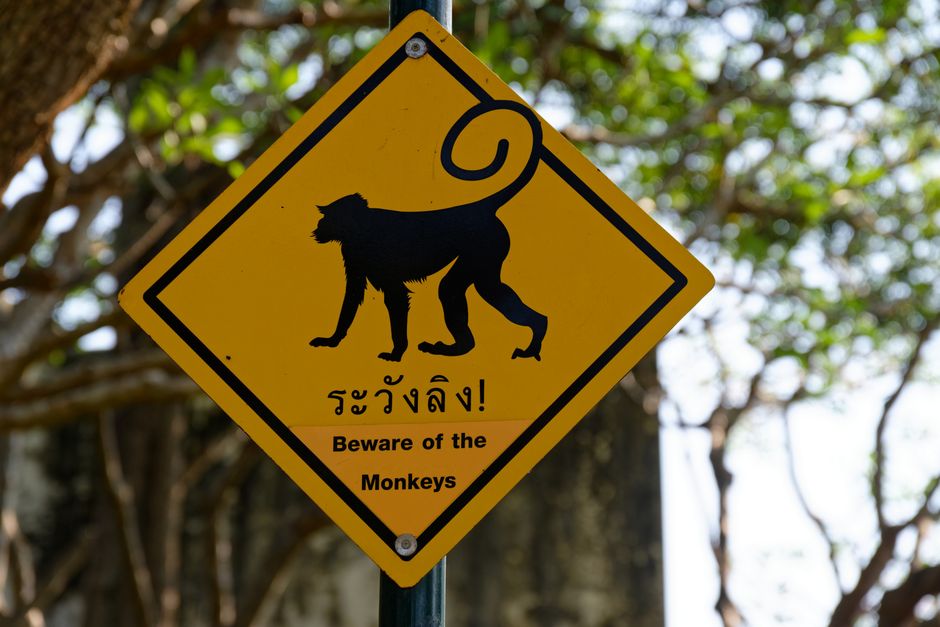
Where Monkeys Actually Are on Koh Samui
Forums have been contradicting each other on this for years, so here is the clear version.
Truly free-roaming wild macaques are rarely seen on Koh Samui proper. Decades of coastal development have cleared most of the jungle habitat they need. Troops of monkeys swinging through trees near your hotel in Chaweng is not the Samui reality.
What you will actually find falls into four categories. Ang Thong Marine National Park, reached by day-trip boat from Samui, is where genuinely wild long-tailed macaques live. They roam freely across the islands and offer the most authentic wildlife encounter near Samui. The jungle fringe around Na Muang waterfall occasionally sees semi-wild macaques, particularly on the upper trail, though sightings are opportunistic rather than guaranteed. The Samui Monkey Center in Nathon keeps trained monkeys in a captive setting and is the most visited monkey attraction on the island. Working coconut farms in the south, particularly around Hua Thanon, use trained macaques for harvesting demonstrations and tourist shows.
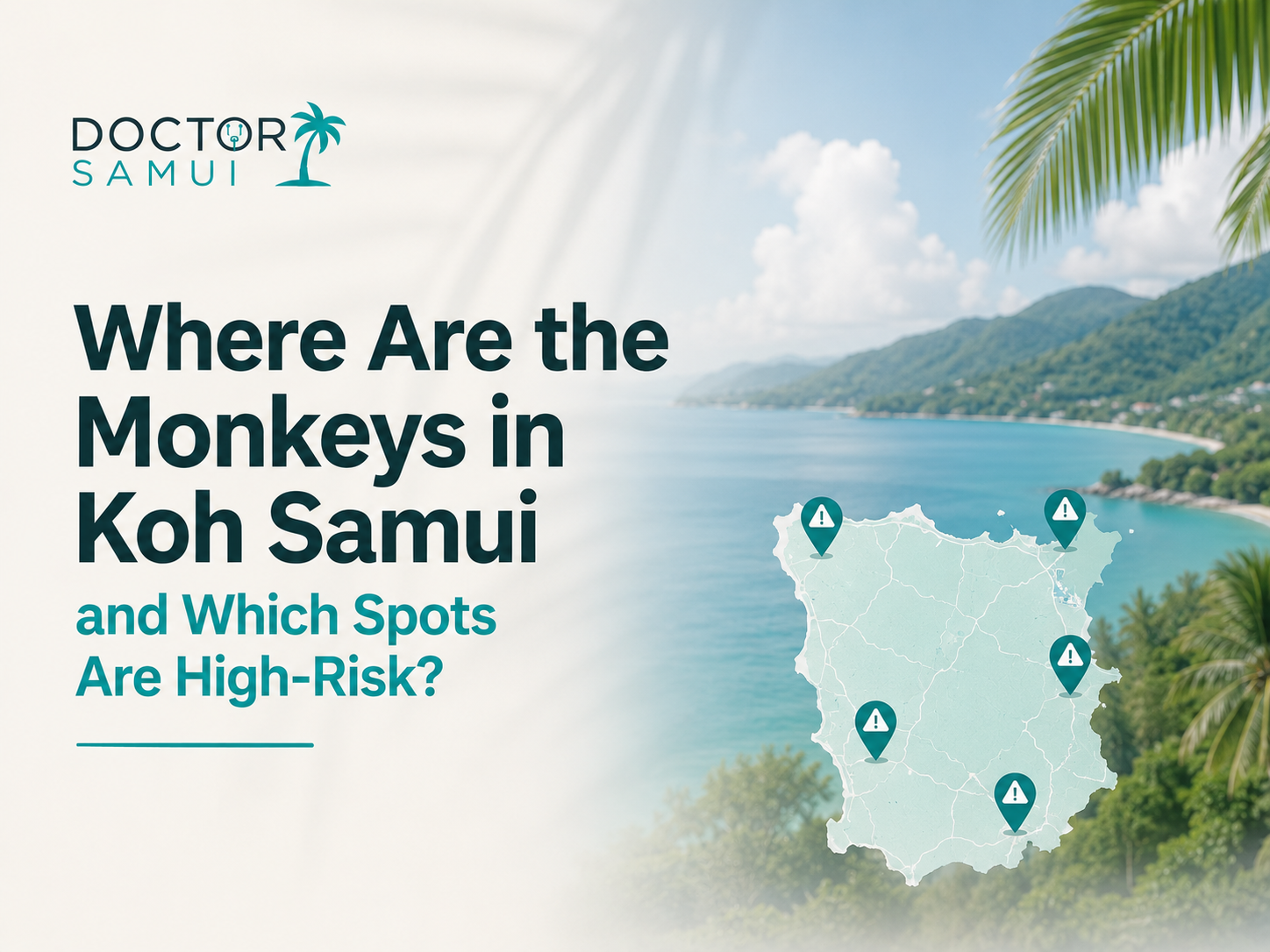
Which Spots Carry the Highest Risk of a Monkey Encounter?
Not all four settings carry the same risk. Most tourist guides go completely silent on this part.
At Ang Thong, wild macaques behave like wild animals. They approach boats and picnic areas looking for food. They are fast, unpredictable, and not accustomed to people the way a trained monkey is. Children eating snacks near the shore are the most common scenario we hear about from patients who arrive after Ang Thong day trips.
At the Samui Monkey Center and coconut-farm shows, the animals are trained but they are still macaques. Physical contact during shows, or a child reaching toward an animal, creates a genuine bite and scratch risk. Temple grounds and roadside spots where tourists feed animals by hand are consistently among the highest-risk settings across Thailand. If you see monkeys near any market or roadside area and someone is actively feeding them, that situation can escalate quickly.
Na Muang waterfall sits in a different category. Sightings are less predictable, so the risk is lower overall. But if you do encounter a macaque on the upper trail, it may be less used to people and therefore less tolerant of close contact. Our page on which monkey spots in Koh Samui are high-risk gives a full breakdown of what to expect at each location before you go.

What Are the Real Health Risks from a Monkey Encounter?
Here is what most travel guides skip entirely, and it matters.
Long-tailed macaques in Thailand can carry rabies. A bite that breaks the skin is a Category III exposure under WHO guidelines, and that requires immediate medical attention. A scratch is not automatically safer. Macaques groom themselves constantly, which means their claws carry saliva. A scratch that breaks the skin carries the same transmission risk as a bite.
Macaques also carry Herpes B virus, a zoonotic infection, meaning one that passes from animals to people, that is rare but serious. For most tourists, rabies is the more immediate concern. But it is one more reason not to dismiss any macaque contact as harmless, even a small graze through an open wound.
Bitten or Scratched? What to Do Right Now
Do not wait to see if it gets infected. Do not wait for symptoms. Rabies has no reliable treatment once symptoms appear, which is why the first few hours matter completely.
Wash the wound with soap and running water for at least 15 minutes. This genuinely reduces viral load, not just surface bacteria. Do not scrub hard enough to cause more tissue damage, but be thorough. Apply an antiseptic if you have one. Then get to a clinic the same day.
At Doctor Samui’s Chaweng clinic, we assess the wound, classify the exposure level, and start rabies post-exposure prophylaxis (PEP) if indicated. For a WHO Category III exposure, that includes Rabies Immune Globulin (RIG), injected into and around the wound to provide immediate local protection, alongside the first vaccine dose in a short series. If you cannot travel to Chaweng, our 24/7 hotel and villa visit service covers the whole island, from Bophut and Maenam to Lamai, Hua Thanon, and the Angthong area.
Should You Get a Rabies Pre-Exposure Vaccine Before Visiting Monkey Areas?
We recommend it for certain groups, and the reasoning is straightforward.
Pre-exposure prophylaxis (PrEP) is a course of rabies vaccinations given before any exposure happens. It does not mean you skip treatment after a bite. What it does is simplify your post-bite situation: you no longer need RIG, which can be hard to source in some locations, and you need fewer total vaccine doses. For families travelling with young children, for expats doing regular hiking or Ang Thong day trips, and for anyone spending more than a few weeks on the island, PrEP is worth having before you need it.
Our rabies vaccination page covers the full pre-exposure schedule and what to expect. We offer pre-exposure vaccination as a walk-in, with no appointment needed. If you are already planning a trip to Ang Thong or a waterfall hike at Na Muang, getting vaccinated a few weeks beforehand makes the whole trip easier to manage.
Ethical Monkey Encounters: What to Know Before You Go
This is practical information, not a lecture.
Monkey shows in Thailand, including some operating near Hua Thanon and at coconut farms, have attracted criticism from animal welfare organisations. Trained performing monkeys are often taken from their mothers as infants and kept on chains between shows. The standard is simple: if a wild animal is performing tricks on a stage, the welfare situation behind it is usually poor.
If you want to see monkeys as part of your Samui trip, an Ang Thong Marine National Park day trip is both the most ethical option and the most genuine wildlife experience. Keep food in closed bags, do not approach or feed the animals, and keep children close. That guidance applies at Ang Thong and anywhere else on the island where you spot a macaque.
Had a monkey bite or scratch on Koh Samui? Do not wait. Doctor Samui’s walk-in clinic in Chaweng provides same-day rabies post-exposure assessment and treatment, including Rabies Immune Globulin when indicated. We also offer pre-exposure rabies vaccination for families, divers, and expats planning trips to higher-risk areas like Ang Thong or Na Muang waterfall. If you cannot travel to us, our doctors are available 24/7 for hotel and villa visits across the entire island. Contact Doctor Samui for immediate assessment.
Are there wild monkeys on Koh Samui island itself?
Genuinely wild, free-roaming macaques are rare on Koh Samui now because coastal development has cleared most of their original habitat. Most encounters on the island happen at managed venues like the Samui Monkey Center in Nathon or coconut-farm shows near Hua Thanon. For truly wild monkeys, an Ang Thong Marine National Park day trip by boat is your best option.
What should I do immediately if a monkey bites or scratches me on Koh Samui?
Wash the wound with soap and running water for at least 15 minutes, then get to a clinic the same day. Do not wait for symptoms to appear. Doctor Samui’s Chaweng clinic handles rabies exposure assessments as walk-ins, and our doctors do 24/7 hotel and villa visits across the island if you cannot travel to us.
Can a monkey scratch give you rabies in Thailand?
Yes. Macaques lick their claws regularly, so a scratch carries saliva just like a bite does. Thailand is rabies-endemic, and any monkey scratch that breaks the skin should be assessed as a potential rabies exposure the same day, not the next morning.
Is it safe to visit the Samui Monkey Center or monkey shows with my children?
The animals at these venues are trained but still macaques, and close contact carries a real bite and scratch risk, especially with young children who move unpredictably. Keep children away from direct contact, do not allow hand-feeding, and consider getting pre-exposure rabies vaccination at Doctor Samui before the visit, particularly for children under five.
Do I need a rabies vaccine before visiting monkey areas in Koh Samui?
Pre-exposure vaccination is not mandatory but it simplifies everything if something goes wrong: no Rabies Immune Globulin needed and fewer post-bite doses required. We recommend it for families with young children, expats on longer stays, and anyone planning Ang Thong day trips or Na Muang waterfall hikes. Doctor Samui offers this as a walk-in with no appointment needed.
Are roadside or temple monkeys in Koh Samui dangerous?
Any monkey being hand-fed by tourists in a public space is in an agitated, unpredictable state. Temple and roadside feeding situations in Thailand consistently produce bites, and they represent some of the higher-risk encounters we see patients coming in after. Stay back, do not offer food, and if you have children with you keep them close behind you.
Dr. Ponlawat Pitsuwan
Physician, Doctor Samui
a walk-in clinic based in Chaweng, Koh Samui, with 24/7 hotel and villa visits available across the island. He regularly assesses and treats tourists, families, and long-stay expats following animal bites and wildlife encounters on Koh Samui, including rabies post-exposure assessment and pre-exposure vaccination for those visiting monkey areas. His approach is straightforward, evidence-based care delivered in plain language.