Clinically reviewed by Dr. Ponlawat Pitsuwan, Physician, Doctor Samui. Last reviewed: August 2026
Rabies is a viral infection that attacks the brain and nervous system. Once symptoms appear, it is almost always fatal. The window for life-saving treatment closes before you feel sick, not after. If you are bitten or scratched by an animal on Koh Samui, wash the wound immediately and get to a clinic the same day.
A street dog cuts across the path near Chaweng night market and nips your ankle. It happens in under a second. The dog trots off. The wound looks small. You wonder whether it is really worth cutting the evening short. It is. Rabies is one of the few diseases where waiting to see how you feel is the wrong call, and by the time you feel anything, treatment no longer works.
Thailand is a rabies-endemic country, and Koh Samui is part of that picture. The island has made real progress vaccinating stray dogs, but coverage is not complete. Monkeys and bats are vaccinated by no one. Any mammal bite or deep scratch here needs to be assessed the same day, not the morning after.

What Is Rabies
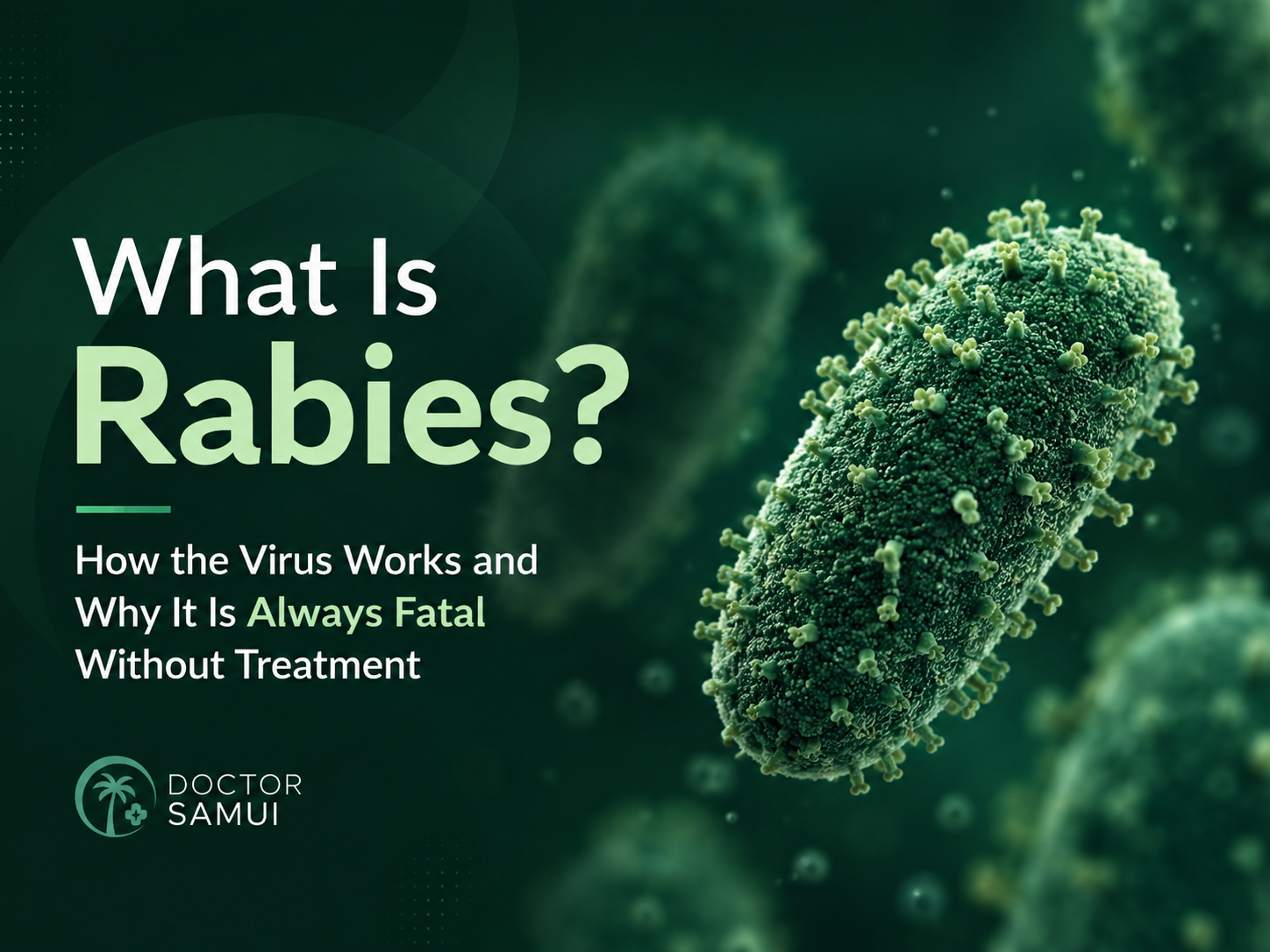
Rabies is a viral disease caused by a lyssavirus, a type of virus that targets the nervous system. It spreads through the saliva of infected animals, usually through a bite, but also through a scratch or saliva on broken skin. Without treatment before symptoms begin, it is nearly always fatal.
It kills tens of thousands of people each year, mostly in Asia and Africa, in places where post-exposure treatment is hard to reach. The reason it is so dangerous comes down to one thing: the virus does not stay at the wound.
How the Rabies Virus Travels to the Brain
When the virus enters a wound, it does not travel through your blood. It moves along your own nerve fibres toward the spinal cord and brain, creeping roughly 12 to 24 millimetres per day.
That is why the location of a bite matters. A bite on the foot gives you more time than a bite on the face or hand. The virus has further to travel. It is also why washing the wound hard with soap and water immediately, for at least 15 minutes, can reduce the viral load before the virus enters the nerve endings. Once it is inside the nerve, washing no longer helps.
What Happens to the Brain
Once the virus reaches the brain it causes encephalitis, which is severe inflammation of brain tissue. The brain swells. Neurons stop working properly. The virus essentially hides inside the nervous system, shielded from the body’s natural defences.
There is no drug that can reach the brain reliably at this stage and clear the infection. By the time the brain is involved, treatment cannot reverse what is happening.
The Two Forms of Rabies and Their Symptoms
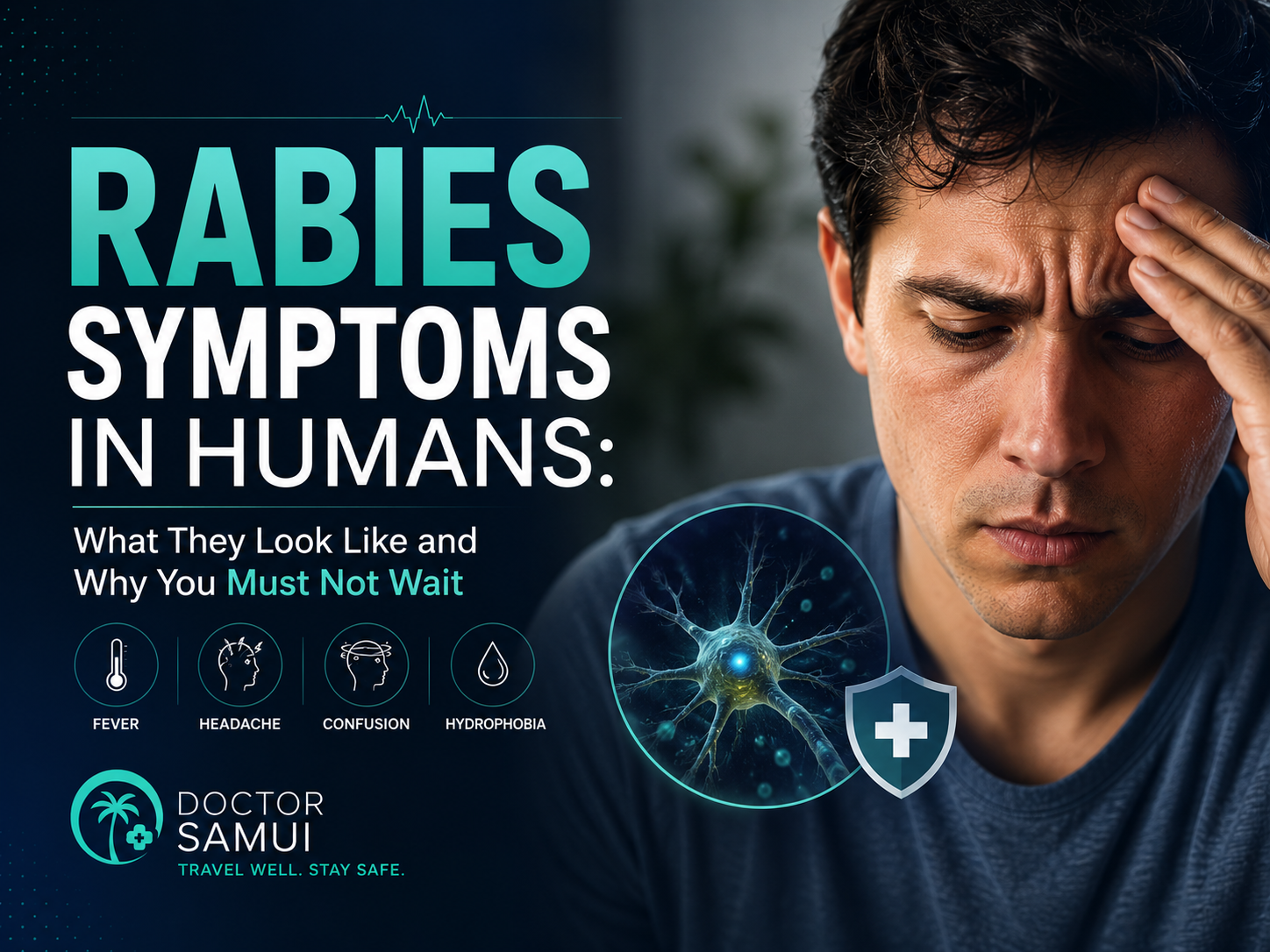
Most people picture someone foaming at the mouth and terrified of water. That is furious rabies, the more common form. It involves agitation, confusion, hallucinations, and hydrophobia, which is a violent painful spasm triggered by the sight or sound of water.
Roughly 30 percent of human rabies cases are the paralytic form. This version is quieter. It causes progressive weakness and paralysis that spreads from the bitten limb upward. It is frequently mistaken for other conditions. There is no foaming at the mouth. People simply get weaker until the nervous system fails.
Both forms are fatal at the same rate once symptoms begin. Before the obvious signs appear, there is a short early stage with fever, headache, and a strange tingling or pain at the original wound site. This is the last point at which anything can be done. By the time the neurological symptoms are obvious, it is too late.
Is Rabies Really Fatal Once Symptoms Start
Essentially, yes. One protocol, the Milwaukee Protocol, uses a medically induced coma to give the immune system time to fight. It has been attempted over 50 times worldwide. Fewer than five people have survived, and those survivors had serious lasting neurological damage. It is not a recognised standard treatment.
Once symptoms appear, rabies kills. This is not alarmism. It is the reason post-exposure prophylaxis exists: treatment before symptoms is the only treatment that works.
Rabies Risk on Koh Samui
Generic travel advice says Thailand is endemic for rabies. That is accurate but not specific enough if you are sitting in Bophut wondering whether to see a doctor tonight.
The real exposures at our Chaweng clinic come from a short list. Street dogs encountered in Chaweng or Lamai at night. Temple monkeys at Wat Plai Laem or Wat Khunaram who scratch tourists who get too close. Cats at beach resorts that appear tame but are not fully vaccinated. Bats, occasionally. Soi dogs are the most common source. Many have been vaccinated through local rescue programmes. Many have not.
A healthy-looking animal is not a safe one. An infected animal can shed live virus in its saliva for days before showing any signs of illness. A wagging tail does not clear the risk.
What to Do in the First 15 Minutes After a Bite
Do not look up flight times. Do not photograph the wound first. Wash it now.
Rinse under running water for at least 15 minutes using soap. If you have iodine or an alcohol-based antiseptic, apply it after washing. This step reduces the viral load at the wound site before the virus can enter the nerve endings. It is the single most effective thing you can do immediately, and it costs nothing.
After washing, contact Doctor Samui. Animal bites that break the skin are classified as WHO Category III exposures, the highest risk level. They require rabies immunoglobulin injected into and around the wound, plus a course of rabies vaccines starting the same day. Doctor Samui offers 24/7 hotel and villa visits across the island, so if you cannot reach the Chaweng clinic, we come to you.
What the Rabies Treatment Course Looks Like
Post-exposure prophylaxis is a vaccine course given on set days: Day 0, Day 3, Day 7, and Day 14. Day 0 is the day of the bite. Rabies immunoglobulin is given once, on Day 0, alongside the first vaccine dose. If you have had pre-exposure rabies vaccination before, the protocol is shorter and immunoglobulin is not required.
The vaccines are straightforward. The course takes two weeks. It works reliably, as long as you start before any symptoms appear. For full details on the vaccine schedule and what to expect, see our rabies vaccine page for Koh Samui.
Pre-Exposure Vaccination on Koh Samui
If you are staying for more than a few weeks, working with animals, visiting temples regularly, or travelling with young children who are less predictable around dogs, pre-exposure vaccination is worth a conversation before anything happens.
It does not make you immune. It primes your immune system so that if you are bitten you still need post-exposure treatment, but you need fewer doses and no immunoglobulin. It is a three-dose course given over several weeks. The time to ask about rabies pre-exposure vaccination is before a dog on a night market path makes the decision urgent.
If you have been bitten, scratched, or licked on broken skin by a dog, cat, monkey, or bat on Koh Samui, do not wait to see how the wound looks tomorrow. Doctor Samui provides same-day rabies post-exposure treatment at our Chaweng clinic and through 24/7 hotel and villa visits across the island, including Bophut, Lamai, Maenam, Choeng Mon, and Hua Thanon. We carry rabies immunoglobulin and vaccines on-site. Contact us now.
FAQ
Dr. Ponlawat Pitsuwan
Physician, Doctor Samui
a walk-in clinic based in Chaweng, Koh Samui, with 24/7 hotel and villa visits across the island. He sees tourists, families, and long-stay expats for animal bite assessments, rabies post-exposure prophylaxis, and travel vaccinations. His focus is straightforward, evidence-based care delivered in plain language.