Clinically reviewed by Dr. Ponlawat Pitsuwan, Physician, Doctor Samui. Last reviewed: August 2026
A monkey scratch in Thailand is a potential rabies exposure, even if it barely broke the skin and did not bleed. Monkeys constantly lick their paws, placing live saliva directly onto their claws. The WHO classifies any scratch that penetrates the skin as at minimum a Category II exposure, requiring rabies vaccination. Wash the wound immediately with soap and running water for 15 minutes, then get to a clinic the same day.
You are at Big Buddha temple in Bang Rak, holding out a piece of fruit, and in under a second there are three thin red lines across your hand. Or it happens on the path at Na Muang waterfall, your child reaching toward a macaque that looked calm a moment ago. The scratch looks minor. That is exactly what makes it dangerous, because most people talk themselves out of going to a clinic.
The honest answer is that a monkey scratch on Koh Samui is serious enough to act on today. Thailand is rabies-endemic, and the monkeys here carry more than one risk most tourists have never considered. This article covers what the WHO protocol actually says, what you need to do right now, and what to expect when you walk into a clinic.
Why a Monkey Scratch Is a Saliva Exposure, Not Just a Scratch
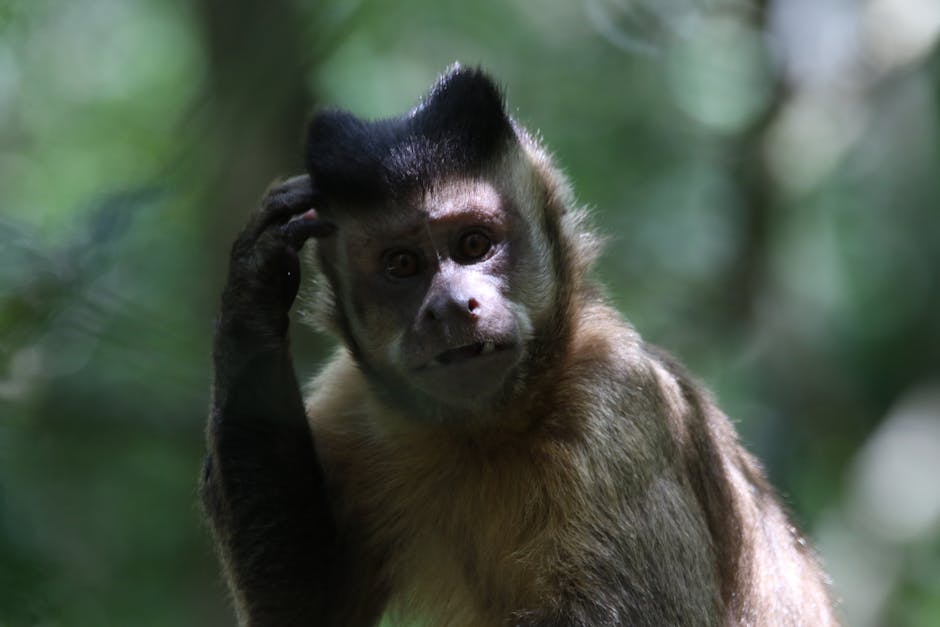
This is the part most people get wrong, and it is the most important thing to understand. Monkeys lick their paws constantly throughout the day. By the time a monkey scratches you, its claws are already coated in fresh saliva. That means a scratch is not just a skin injury. It is a saliva-to-broken-skin exposure, which is exactly how rabies transmits.
You do not need a deep wound. You do not need visible bleeding. Any break in the skin is enough. This is why the WHO does not distinguish between bites and scratches when assessing rabies risk from a primate in an endemic country.
Where Monkey Encounters Happen on Koh Samui
The monkeys here are not deep in the jungle. They are at Big Buddha temple in Bang Rak, along the trail at Na Muang waterfall, at roadside fruit stalls on the ring road, and at several viewpoints around the island. Tourists arrive expecting a photo opportunity. The monkey moves faster than expected, grabs at food or jewellery, and the scratch happens before anyone processes what is going on.
Children are especially vulnerable because they are at the monkey’s eye level and reach out without thinking. We see scratched children at our Chaweng clinic regularly after temple and waterfall visits. Parents are often more shaken than the child, which is completely understandable. The first thing to know: coming straight to the clinic was the right call.
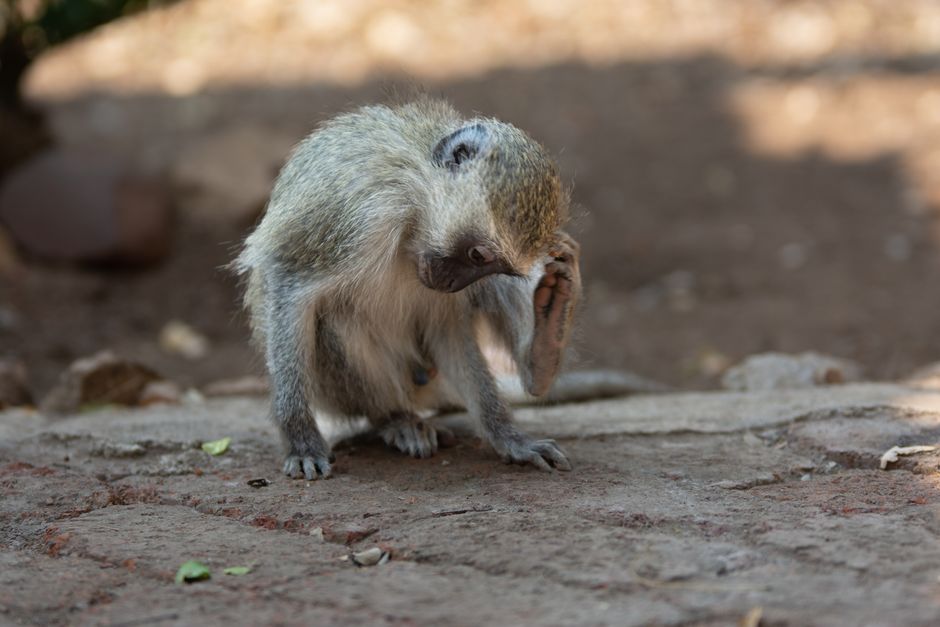
Superficial or Bleeding: How WHO Categories Decide Your Treatment
The WHO divides animal exposures into three categories. Category I is contact with intact, unbroken skin: no treatment needed. Category II is a superficial scratch that breaks the skin but does not bleed: rabies vaccination is required. Category III is a scratch that causes bleeding, any wound on the face, hands, or neck, or contact with mucous membranes: vaccination plus rabies immunoglobulin (RIG) is required.
RIG is injected into and around the wound site. It gives immediate short-term protection while your body builds its own response to the vaccine. Wound location matters too. A scratch on the hand or face is closer to the brain and nervous system, which affects how urgently we act and, in some cases, how RIG is dosed.
First Aid Before You Reach a Clinic
Do this immediately, wherever you are. Wash the wound with soap and clean running water for at least 15 minutes. Fifteen minutes is longer than it feels: keep the water flowing over the wound the entire time. This step alone significantly reduces viral load at the wound site.
After washing, apply an iodine-based antiseptic if you have one. Alcohol-based antiseptic works if you do not. Do not tape the wound shut or bandage it tightly. Leave it open so it can drain. Then go to a clinic the same day, not tomorrow morning.
What Happens If You Wait
The rabies virus does not travel through your bloodstream. It travels along nerve fibres, slowly, toward the brain and spinal cord. This is why post-exposure prophylaxis (PEP) works even when started days after exposure. The virus has not reached the central nervous system yet, and the vaccine can still stop it.
Wound location changes the calculation though. A scratch on the face or neck means a much shorter journey for the virus. For those wounds, starting PEP within hours matters more than for a scratch on the leg. There is no hard deadline for starting PEP as long as you have no symptoms. If you were scratched four days ago and have not had treatment, go today. It is still effective and still essential.
If You Already Had a Rabies Pre-Exposure Vaccine
Many long-stay expats, divers, and well-prepared travellers arrive on Samui having already completed a pre-exposure prophylaxis course. Previously vaccinated patients need only two booster doses of the vaccine, given on day 0 and day 3. You do not need RIG. This is a meaningful difference in both cost and treatment time.
You still need to come in the same day for wound assessment, and you need to bring your vaccination records or be able to confirm the dates and vaccine type you received. If you are not certain your prior series was complete, we treat you as unvaccinated until we can verify. That is the safe approach.
Herpes B Virus: The Second Risk From a Macaque Scratch
Koh Samui’s monkeys are long-tailed macaques. Macaques carry Herpes B virus, also called B virus or Macacine herpesvirus 1, which is common in macaque populations but extremely rare in humans. When it does infect a person, it can cause severe neurological illness.
The risk to a tourist from a single scratch is low, but it is not zero. At Doctor Samui we assess the nature of the wound, the degree of contact with saliva or body fluids, and whether antiviral treatment is appropriate. This is part of a complete assessment, not something that gets left out of the conversation.
Getting Assessed and Treated on the Same Day
Walk into our Chaweng clinic, or call us and we come to your hotel or villa. We have 24-hour house-call coverage across the island, including Bophut, Maenam, Lamai, Choeng Mon, and Bang Rak. If you cannot arrange transport, call before you wait.
At the visit we clean and assess the wound, classify the exposure category, confirm your vaccination history, and give the correct vaccine dose with or without RIG. We provide a written schedule for your remaining doses, which matters if you are flying home mid-course and need documentation for a clinic in another country. We also check tetanus status and assess for bacterial infection. Our full rabies vaccine protocol and what to expect is covered on a dedicated page if you want to read ahead before your visit.
Scratched by a monkey on Koh Samui? Do not wait to see if symptoms develop. Walk into Doctor Samui’s Chaweng clinic today, or call for a 24-hour hotel or villa visit anywhere on the island. We carry rabies vaccines and immunoglobulin on-site, assess your wound category on arrival, and give you a full written schedule for remaining doses. If you were previously vaccinated, bring your records and we confirm the right protocol for you.
Frequently Asked Questions
Dr. Ponlawat Pitsuwan
Physician, Doctor Samui
a walk-in clinic in Chaweng, Koh Samui, with 24-hour hotel and villa visits across the island. He regularly assesses and treats patients following animal scratches and bites on Koh Samui, including rabies post-exposure prophylaxis for tourists, families, and long-stay expats. His focus is straightforward, evidence-based care delivered in plain language.