Clinically reviewed by Dr. Ponlawat Pitsuwan, Physician, Doctor Samui. Last reviewed: August 2026
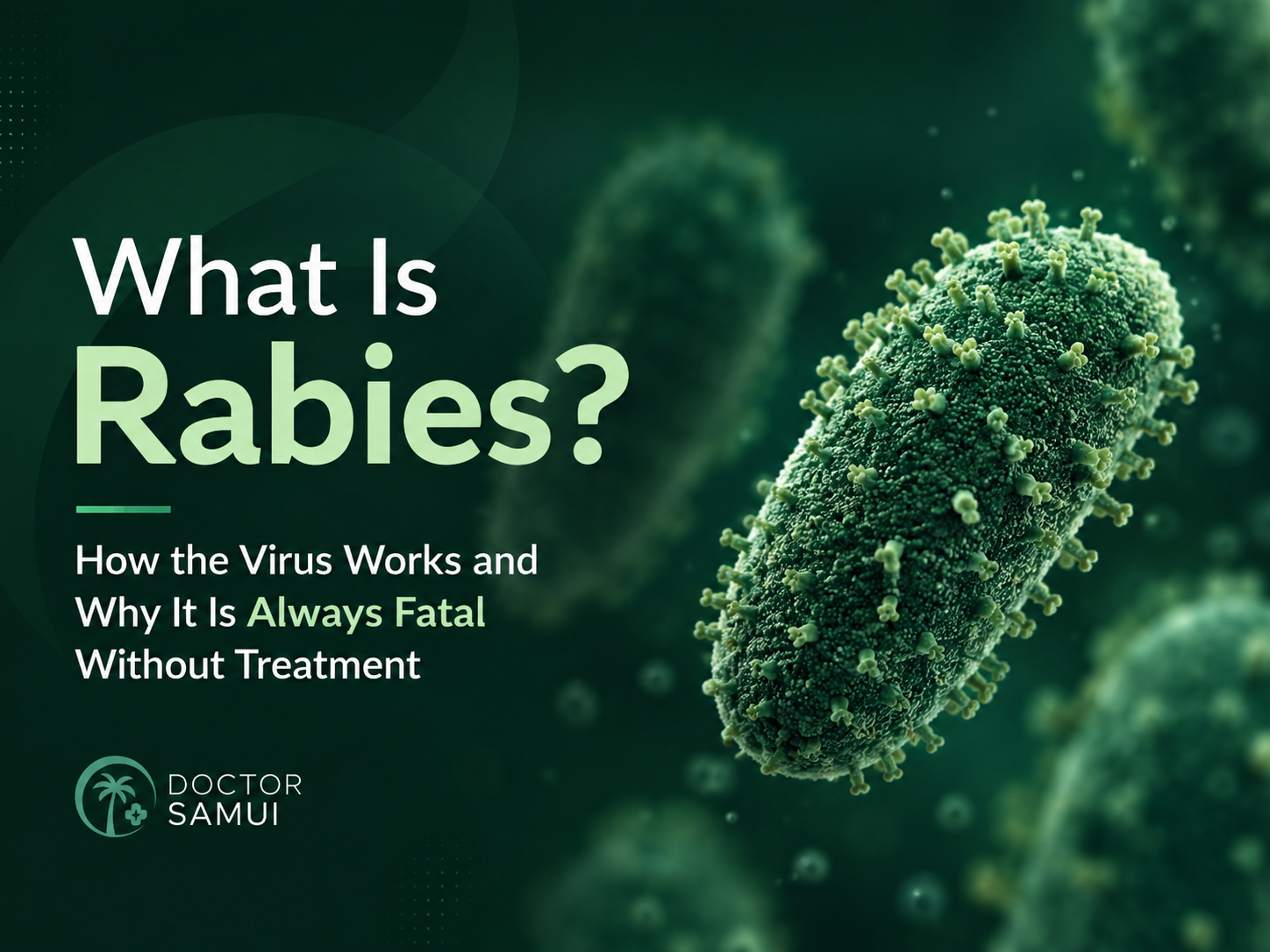
Rabies is almost always fatal once symptoms appear. In Thailand, a rabies-endemic country, any bite or scratch from a dog, cat, or monkey requires the same response: wash the wound immediately with soap and water for at least 15 minutes, then get to a clinic the same day. Waiting to see if you feel sick is not a safe option. It is a dangerous one.
You are feeding a monkey near the waterfall path at Na Muang, it grabs your hand, and there is a small scratch across two knuckles. It barely bleeds. The monkey looks fine. Every instinct says: watch it for a day and see what happens. That instinct is wrong, and on Koh Samui, acting on it can cost your life.
Rabies travels from the bite site along your nerves toward your brain. By the time you feel anything, the virus has already reached your central nervous system. At that point, no vaccine or treatment will save you. The window for preventing that outcome is open right now, today, not tomorrow.

Why the "10-Day Wait and See" Rule Does Not Apply in Thailand
You may have read that you can watch the animal for 10 days after a bite. If it stays healthy, you are safe. This rule exists in some countries, and under specific conditions it is clinically valid. Koh Samui is not one of those conditions.
The 10-day observation rule only applies to known, owned pets in countries with reliable rabies-surveillance systems. It also requires that the animal can be located, confined, and observed by a vet. When a stray dog bites you near Chaweng Beach and runs off, or a temple monkey scratches your child and disappears into a tree, that rule is meaningless. Thailand is rabies-endemic, meaning the virus circulates here in wildlife and strays at a level that makes waiting a genuine gamble with your life.
There is another problem. An animal can shed the rabies virus in its saliva for several days before showing any symptoms. A dog that looks healthy today could already be infectious. Appearance tells you nothing. The only thing that matters is starting post-exposure prophylaxis, called PEP, as fast as possible.
Animal Bites on Koh Samui: Dogs, Monkeys, and Cats
Stray dogs are the most common source of rabies exposure we see on the island. They are near beach restaurants, along the ring road, and around waterfalls. Most visitors approach them because they look friendly. Friendly and vaccinated are not the same thing.
Monkeys are the other big risk, and visitors consistently underestimate it. The macaques around Na Muang and at certain temple areas are bold. They take food from hands, they scratch, and they bite. Beyond rabies, macaques carry Herpes B virus, which is rare but carries a high fatality rate if it reaches the brain untreated. A scratch from a temple monkey that barely breaks the skin is still a reason to come in immediately.
Cat bites and scratches round out the picture. Cat bites are narrow and deep, and narrow deep punctures are the hardest wounds to clean properly. They are also the fastest to become seriously infected.
How Doctors Classify Your Bite — and Why the Category Decides Your Treatment
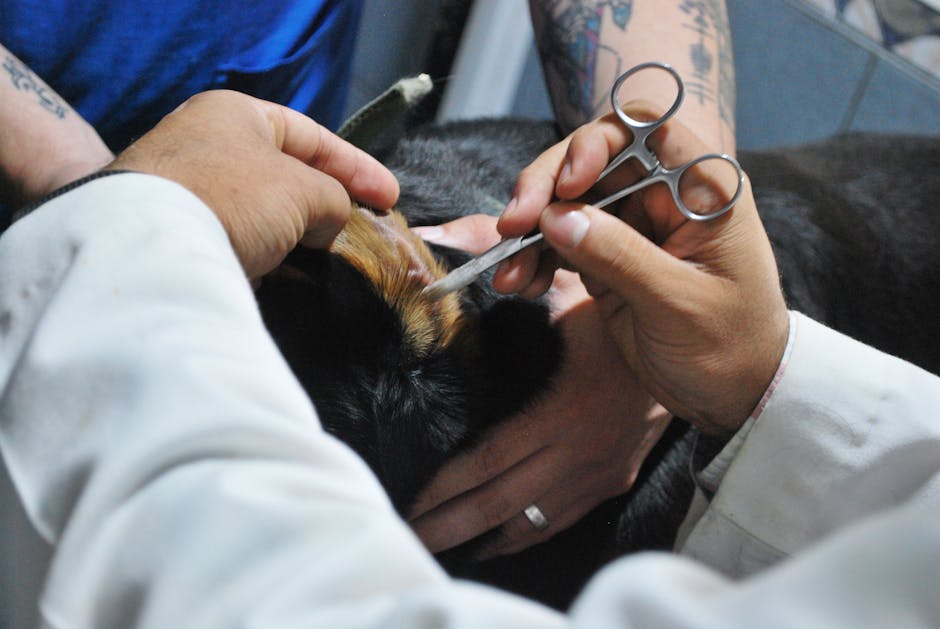
When you come in after an animal bite, we do not just look at whether it bled. We use WHO exposure categories to decide exactly what you need.
Category I means contact with an animal but no broken skin: touching a dog, being licked on intact skin. No treatment beyond washing is needed. Category II means minor scratches or grazes that break the skin but do not bleed freely. That includes the small monkey scratch on your knuckle. Category II requires the full vaccine course. Category III means deep puncture wounds, freely bleeding bites, bites to the face or neck, or any saliva contact with a mucous membrane like your eye or mouth. Category III requires both the vaccine course and rabies immunoglobulin, called RIG, injected into and around the wound on day zero.
RIG must be given on the first day or not at all. Do not downplay your bite to avoid what you think will be extra treatment. Tell us exactly what happened and let us make the call. You can learn more about why delaying treatment after an animal bite is dangerous on our rabies vaccine page.
It Is Not Just Rabies: Bacterial Infection After Animal Bites in the Tropics
Animal bites push bacteria from the animal’s mouth directly into your tissue. On Koh Samui, that wound then sits in tropical heat and humidity for the hours before you seek care. That combination accelerates infection in ways visitors from cooler climates do not expect.
Pasteurella bacteria, common in dog and cat mouths, can cause painful spreading infection within hours. A wound that looks minor in the morning can be red, hot, and swollen by evening. We treat this regularly after beach days, waterfall visits, and scooter stops near stray-dog areas around the island. Tetanus is also a real concern with any bite that breaks skin. If you are not current on your booster, we give it at the same visit.
What to Do in the Next 30 Minutes on Koh Samui
Step one happens before you call anyone. Wash the wound under running water with soap for at least 15 minutes. Not a quick rinse. Fifteen full minutes. This single step reduces rabies transmission risk meaningfully, according to WHO guidelines. If you have iodine or alcohol available, use it after washing, not instead of it.
Once the wound is clean, contact Doctor Samui. If you are at a villa or resort and cannot move easily, we can come to you. Note where the bite happened, what the animal looked like, and whether anyone else witnessed it. Take a photo of the wound and, if it is safe, of the animal. Do not try to capture or confront it.
Start a claim with your travel insurer as soon as your immediate care is handled. Most travel insurance policies cover emergency animal bite treatment including the full PEP course as an acute medical event. Keep your clinic receipt, your treatment certificate, and your wound photos. We provide insurance-compatible documentation at the time of your visit.
What Rabies PEP Actually Looks Like at the Clinic
PEP is not a single injection and done. The standard WHO schedule is four vaccine doses given on days zero, three, seven, and fourteen. If you are already pre-vaccinated against rabies, the schedule shortens. If you are not, and your bite is Category III, you also receive RIG on day zero, before the vaccine has time to build your immune response.
Doctor Samui stocks rabies immunoglobulin in-clinic in a temperature-controlled cold chain. RIG is not always reliably available everywhere on the island, and sourcing it urgently is not a delay you want on day zero of a Category III exposure. The sooner RIG is given, the better it works. There is no way to give it later if you miss that window.
If you are a diver, a long-stay expat, or planning extended time on the island, ask us about pre-exposure prophylaxis. Three vaccine doses given before any bite changes your post-bite treatment significantly: no RIG needed, a shorter vaccine schedule, and more time to reach a clinic if you are somewhere remote.
I Was Bitten Three Days Ago. Is It Too Late?
No. Get here today. PEP remains effective for days or even weeks after exposure, as long as symptoms have not started. The rabies virus moves slowly along peripheral nerves, especially from a bite on the hand or foot. A bite closer to the head moves faster, but time has not necessarily run out even then.
Do not stay at your hotel calculating timelines. If there is any possibility you were exposed, come in and let us assess. We have helped patients who came in a week after a bite and still had a clear window for effective treatment. The one scenario we cannot reverse is waiting until neurological symptoms appear: confusion, agitation, fear of water, or muscle spasms. At that point, no treatment works. That is exactly the outcome the wait-and-see approach risks. It is not theoretical. It is what happens.
If you have been bitten or scratched by any animal on Koh Samui, do not wait. Doctor Samui’s walk-in clinic is based in Chaweng and is open for same-day animal bite assessment, wound care, rabies PEP, RIG, and tetanus. If you are at a hotel or villa and cannot travel, we offer 24/7 house calls across the island, including Lamai, Bophut, Choeng Mon, Maenam, and Nathon. Bring any photos of the wound or the animal. We provide insurance-compatible treatment documentation. Start the process today.
Can I wait a day or two after a dog bite on Koh Samui to see if the dog gets sick?
No, and this is the most dangerous myth we deal with after animal bites on the island. The 10-day observation rule only applies to owned, confined animals in low-rabies-risk countries. A stray dog in Thailand can shed the virus before showing any symptoms, and in most cases you cannot find it again anyway. Come in to our Chaweng clinic or request a hotel visit today.
The bite was tiny, just a small scratch from a monkey at a temple. Do I still need to see a doctor?
Yes. A superficial scratch that breaks the skin is a WHO Category II exposure and requires the full vaccine course. Monkeys on Koh Samui carry both rabies risk and, in macaques specifically, Herpes B virus, which is rare but serious. Wound depth does not determine your risk. Saliva contact with broken skin does.
I was bitten three days ago and did not see a doctor. Is it too late to get the rabies vaccine now?
It is not too late. PEP works even when started several days after a bite, as long as symptoms have not appeared. Come in to Doctor Samui today regardless of how long ago it happened. The only scenario where treatment cannot help is once neurological symptoms have started, and preventing that is exactly why you should come in now.
What is the difference between the rabies vaccine and rabies immunoglobulin, and do I need both?
The vaccine trains your immune system over a two-week course given on days zero, three, seven, and fourteen. Rabies immunoglobulin, RIG, gives you immediate passive protection on day zero only, injected into and around the wound itself. RIG is required for Category III exposures in patients who have not been pre-vaccinated. Doctor Samui stocks RIG in-clinic so you do not face delays sourcing it elsewhere on the island.
Will my travel insurance cover rabies treatment after an animal bite on Koh Samui?
Most travel insurance policies treat PEP and emergency wound care after an animal bite as an acute medical event and cover it. Keep your clinic receipt, your doctor’s treatment certificate, and photos of the wound. Doctor Samui provides full insurance-compatible documentation at the time of your visit. Call your insurer as soon as your immediate care is handled.
Do I need a tetanus shot after an animal bite, even if I had one a few years ago?
It depends on when your last booster was. If it has been more than five years, we generally recommend a tetanus booster at the same visit as your first PEP dose. Animal bites push bacteria into deep tissue, and tetanus is a real risk with any skin-breaking wound in a tropical environment. Tell us your vaccination history when you come in and we will advise based on that.
Dr. Ponlawat Pitsuwan
Physician, Doctor Samui
a walk-in clinic based in Chaweng, Koh Samui, with 24/7 hotel and villa visits across the island. He sees tourists, families, and long-stay expats for animal bite assessment, rabies post-exposure prophylaxis, wound care, and tropical infection management. His focus is straightforward, evidence-based care delivered in plain language.