Clinically reviewed by Dr. Ponlawat Pitsuwan, Physician, Doctor Samui.
Last reviewed: August 2026
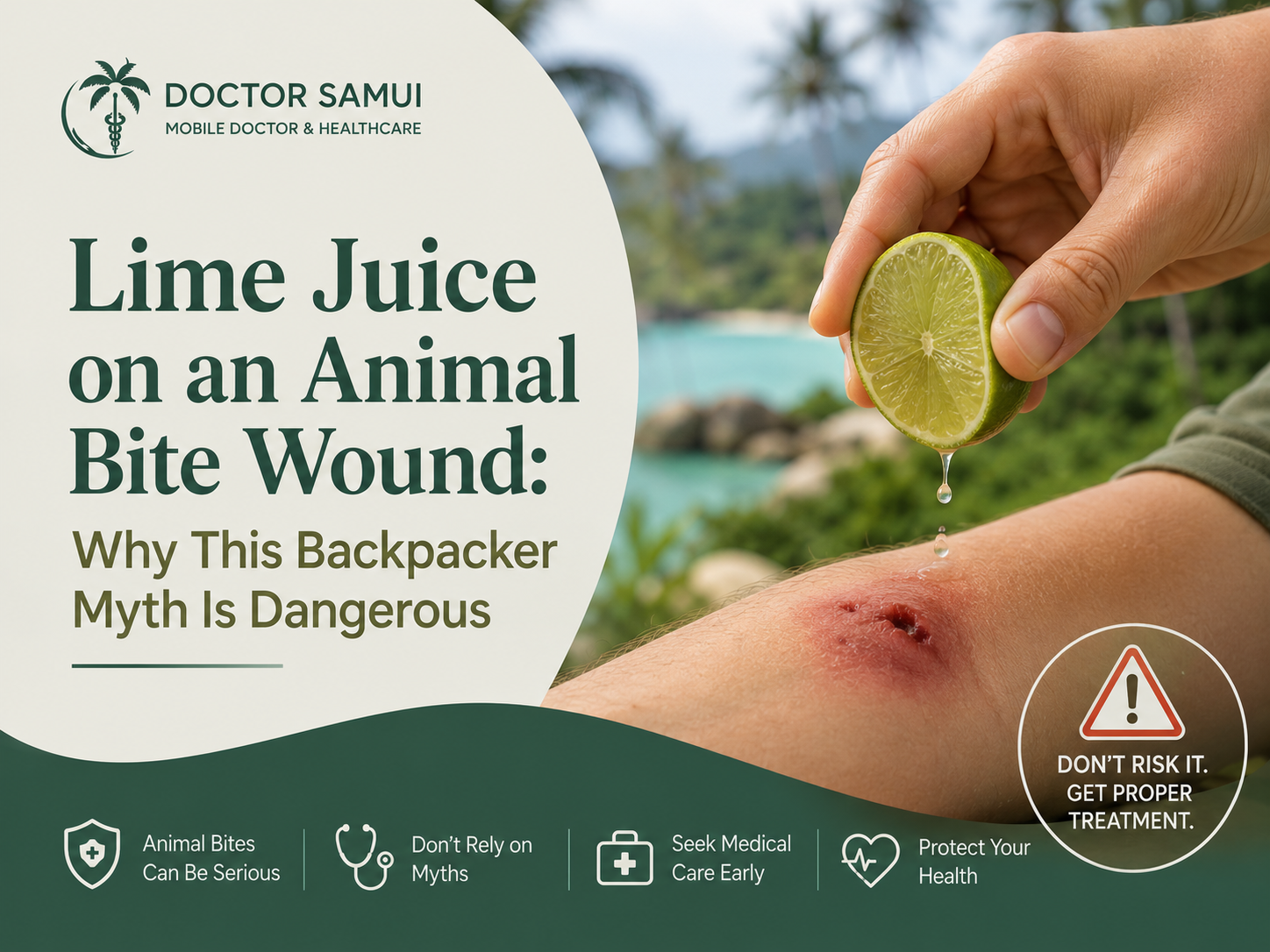
Lime juice does not kill the rabies virus and should never be put on a bite wound. It causes chemical burns, damages tissue, and makes professional wound cleaning harder. The correct first aid is washing with soap and running water for at least 15 minutes, then seeking medical assessment immediately. In Thailand, any bite or scratch from a dog, monkey, or cat that breaks the skin requires urgent evaluation.
You are walking the temple grounds at Nathon or heading back from the viewpoint near Hin Ta when a stray dog lunges and catches your hand. Someone nearby reaches for a lime wedge and says it will clean the wound. This advice is everywhere on the island, and it is completely wrong. Lime juice does not disinfect a bite wound. It makes things worse.
Thailand is a rabies-endemic country. The virus is present in the animal population here, including stray dogs around Chaweng, monkeys at hilltop viewpoints, and cats outside guesthouses across the island. The lime-juice remedy has circulated for years among backpackers and even locals, but using it costs you time you do not have and causes harm you do not need.

Why Soap and Water Work on a Bite Wound and Lime Juice Does Not
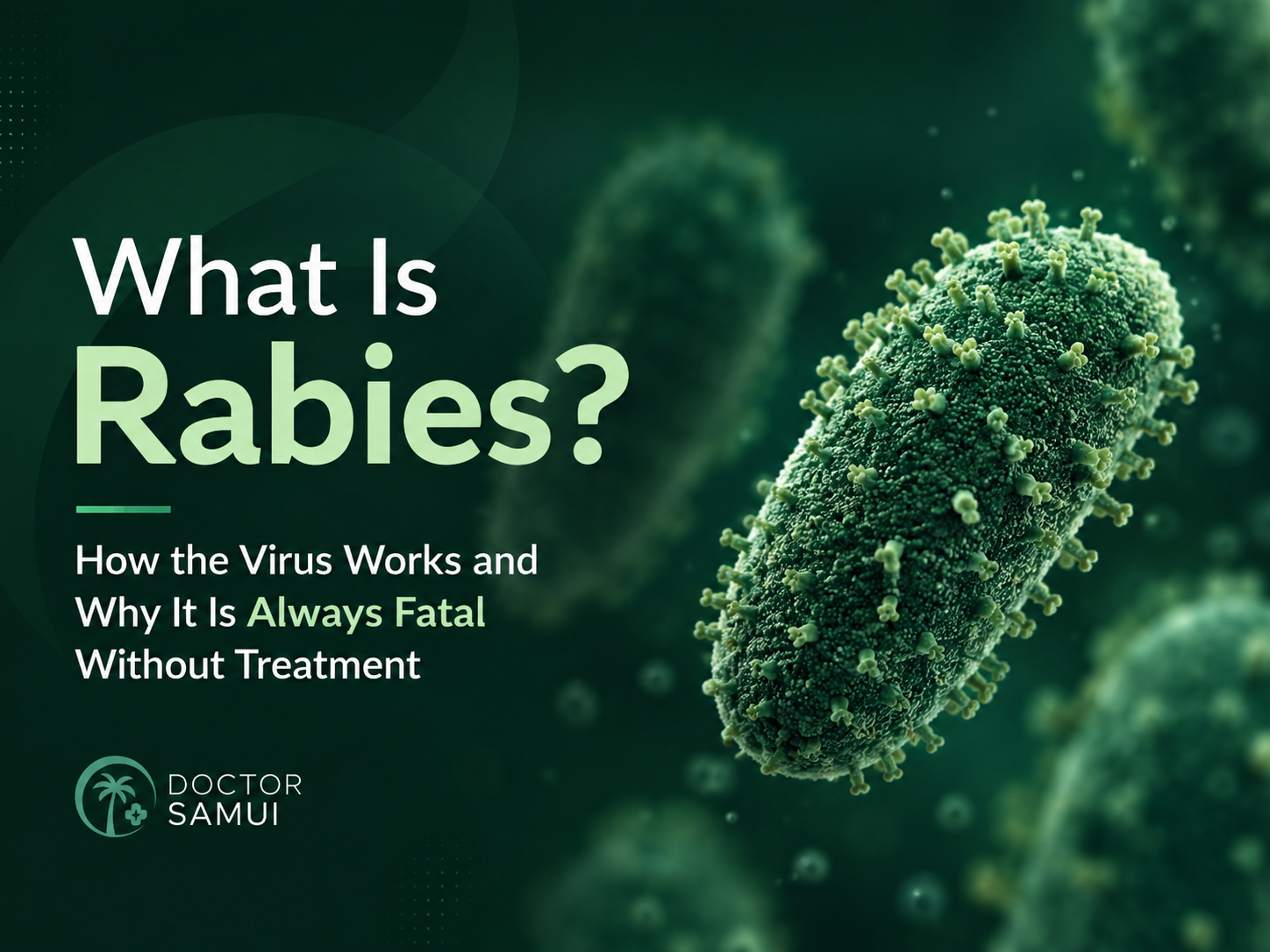
The rabies virus has a fatty outer layer called a lipid envelope. Soap and detergent physically break that layer apart. When you wash a bite wound with soap and running water for 15 minutes, you are disrupting the virus at the surface of the wound before it can travel deeper into nerve tissue.
Citric acid in lime juice does not break down that lipid envelope. It has weak antibacterial effects in laboratory settings, but against the rabies virus it does nothing useful. You are not disinfecting the wound. You are acidifying it.
The WHO wound-washing protocol exists for this exact reason. Soap and water, for a full 15 minutes, is the single most effective step you can take immediately after a bite. No home remedy replaces it.
What Lime Juice Actually Does to Bite Wound Tissue
Citric acid on an open wound damages the cells lining the wound and can seal debris inside rather than washing it out. That damage creates two problems. It gives certain bacteria a better environment to grow, and it makes proper wound cleaning harder when you reach a clinic.
The doctor now has to work through tissue that has already been chemically altered. Lime juice turns a straightforward wound into a more complicated one.
This is not theoretical. Patients arrive at our Chaweng clinic with redness, swelling, and in some cases blistering around the bite site that has nothing to do with the bite itself. It is from the lime juice applied in the first few minutes.

The Extra Risk Nobody Mentions: Lime Juice and Koh Samui’s Sun
There is a risk that almost nobody mentions, and it is especially relevant on a tropical island. Lime juice contains compounds called furocoumarins. When these contact skin that is then exposed to sunlight, they trigger a reaction called phytophotodermatitis.
This means blistering, intense redness, and dark patches that can last for months. A published case report documented exactly this in a tourist who had lime juice applied to a wound at a beach resort in sunlight. The wound healed. The skin reaction was severe and long-lasting.
On Koh Samui, bite incidents almost always happen outdoors. At the beach, near a waterfall, at a temple, on a scooter. If you apply lime juice and then walk back into the sun, which is unavoidable here, you are adding a phototoxic skin injury on top of an already serious bite wound.
The Animal Looked Fine. Does That Change Anything?
No. This is the most common reason patients delay coming in, and it is the most dangerous one.
Animals can shed the rabies virus in their saliva for several days before showing any outward signs of illness. A dog that looks calm and healthy can still transmit rabies. There is no way to assess this by looking at the animal.
Thailand’s stray dog population is large, and vaccination coverage in street animals is not complete. The same applies to monkeys at popular viewpoints and cats at guesthouses. Any of these animals breaking your skin is a clinical event that needs same-day assessment, regardless of how the animal behaved.
Rabies is almost always fatal once symptoms appear. Post-exposure treatment works, but only when it is started promptly.
What to Do Right Now If You Already Used Lime Juice on a Bite
Rinse the wound immediately with clean running water to dilute and remove as much lime juice as possible. Then wash properly with soap and water for a full 15 minutes. It is not too late to do this correctly even if some time has passed.
After washing, apply an antiseptic if you have one. Povidone iodine is recommended by WHO and is available at most pharmacies on the island. Then get to a clinic today, not tomorrow morning.
If you are already back at your accommodation, Doctor Samui offers 24/7 hotel and villa visits across the island. You do not need to travel to us. Getting seen today is what matters.
What Level of Exposure Do You Actually Have?
WHO classifies animal exposures into categories that guide treatment. Category II is a minor scratch or bite that breaks the skin without heavy bleeding. Category III is a deep or bleeding bite, or any bite on the face, head, neck, or hands, or any exposure involving a bat.
Category III requires both the rabies vaccine series and rabies immunoglobulin, which is injected into and around the wound site on the first visit. Category II requires the vaccine series only. Both categories require starting as soon as possible.
Tetanus risk is also assessed at the same appointment. Bite wounds carry tetanus risk separately from rabies, and if you are not current on your tetanus booster, you will need one. We check this during your first visit.
Getting Rabies Post-Exposure Treatment on Koh Samui
Rabies post-exposure prophylaxis is a series of vaccine doses given on day zero, day three, day seven, and day fourteen. If you need immunoglobulin, that is given alongside your first vaccine. You do not need to be admitted to hospital, and many tourists start their series here and complete it at home.
We provide full documentation of every dose, including lot numbers and dates, for you to take to your next clinic. The first dose is the most time-sensitive part of the process.
Doctor Samui offers same-day rabies vaccine appointments with no wait at our Chaweng clinic. For full detail on the schedule and what to bring, see our rabies vaccine page for Koh Samui. If you have been bitten today, come in now or call for a hotel visit.
Been bitten by an animal on Koh Samui? Whether you are at a villa, your hotel, or nearby in Chaweng, Doctor Samui can see you today. We offer same-day rabies post-exposure prophylaxis, wound assessment, tetanus evaluation, and 24/7 hotel and villa visits across the island. No appointment needed. Walk in or call us now.
Frequently Asked Questions
Dr. Ponlawat Pitsuwan
Physician, Doctor Samui
a walk-in clinic based in Chaweng, Koh Samui, with 24/7 hotel and villa visits across the island. He regularly assesses and treats animal bite injuries, administers rabies post-exposure prophylaxis, and manages wound care for tourists, families, and long-stay expats on Koh Samui. His focus is straightforward, evidence-based care delivered in plain language.