Clinically reviewed by Dr. Ponlawat Pitsuwan, Physician, Doctor Samui. Last reviewed: August 2026
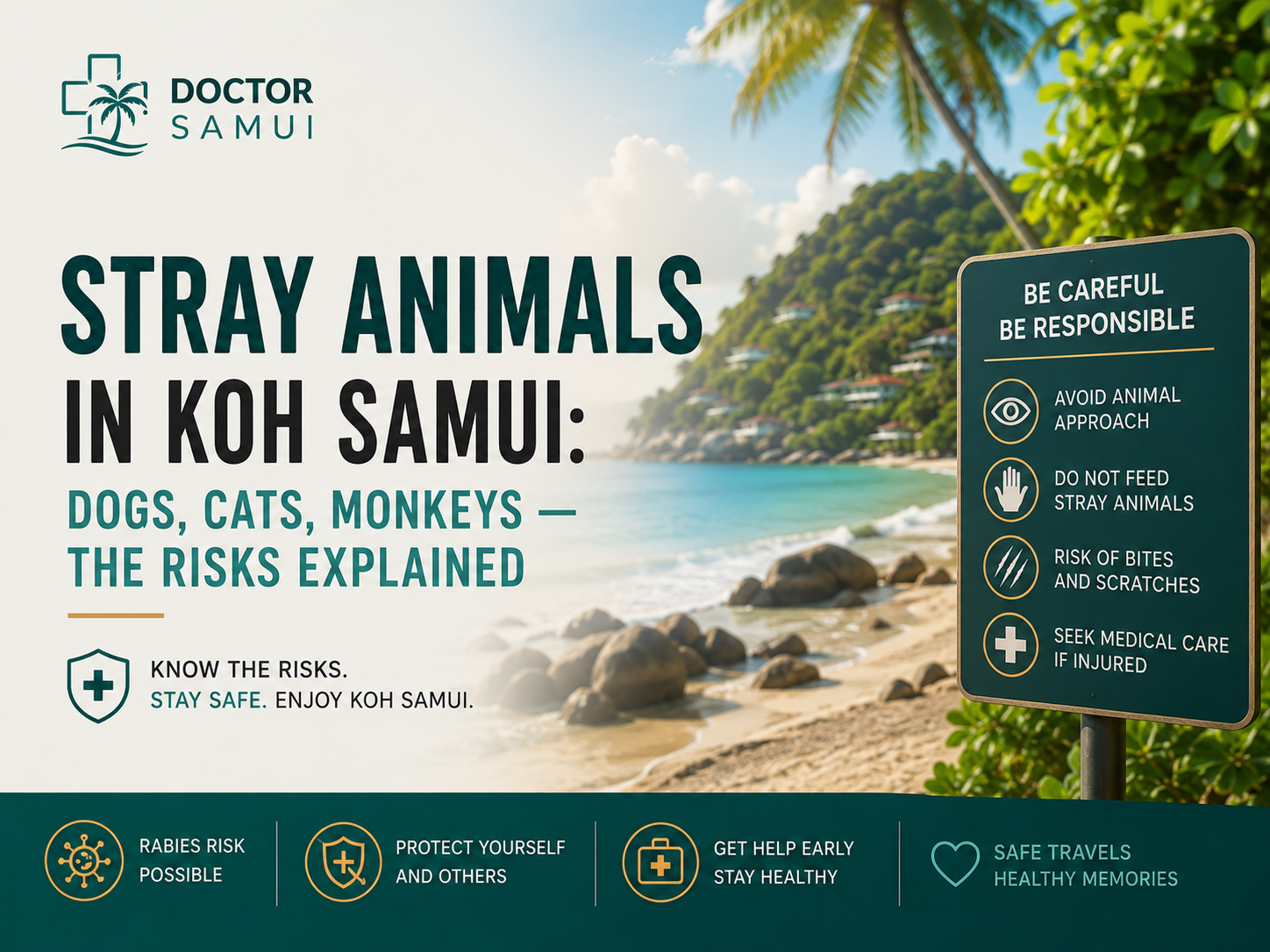
Koh Samui has a large population of stray dogs, cats, and wild monkeys. Thailand is a rabies-endemic country, and any bite or scratch that breaks the skin from one of these animals needs same-day medical assessment. Rabies is preventable after exposure, but treatment must start quickly. A collar on a dog does not mean it has been vaccinated.
You are walking back from Big Buddha along the temple grounds at dusk when a monkey drops from a wall and scratches your arm. It barely breaks the skin. You think: it is just a scratch. That moment — small and easy to dismiss — is the one that matters most. Same-day treatment can prevent rabies. Waiting cannot undo the risk.
Most people spend a week on Samui without any animal trouble at all. But stray dogs on the beach road, cats around hotel gardens, and macaque monkeys near temple sites are part of daily life here. Knowing the real risk from each animal — not the horror story, and not the false reassurance that a collared dog is safe — helps you make the right call fast, especially when you are travelling with children.
Stray Dogs on Koh Samui: Most Common, Most Misunderstood
Soi dogs are everywhere on Samui. Most are calm and keep their distance. But dog bites are a regular presentation at the Chaweng clinic, and the conversation that worries us most is when a patient says: "It had a collar, so I assumed it was fine."
Collars on Samui street dogs almost always mean one thing: the animal has been sterilised, usually through an organisation like Dog and Cat Rescue Samui. That is genuinely good work. But sterilisation is not vaccination. Unless someone hands you a dated, stamped veterinary rabies record for that specific dog, treat it as unvaccinated. A collar tells you nothing about rabies status.
Thailand is classified as rabies-endemic by the WHO. Dog bites are the most common route of human rabies exposure in the country. A bite that breaks the skin, or a scratch from claws that may carry saliva, is a WHO Category III exposure. That means you need the rabies vaccine series and, if you have never been vaccinated before, rabies immunoglobulin injected at the wound site. There is no safe window to think it over.
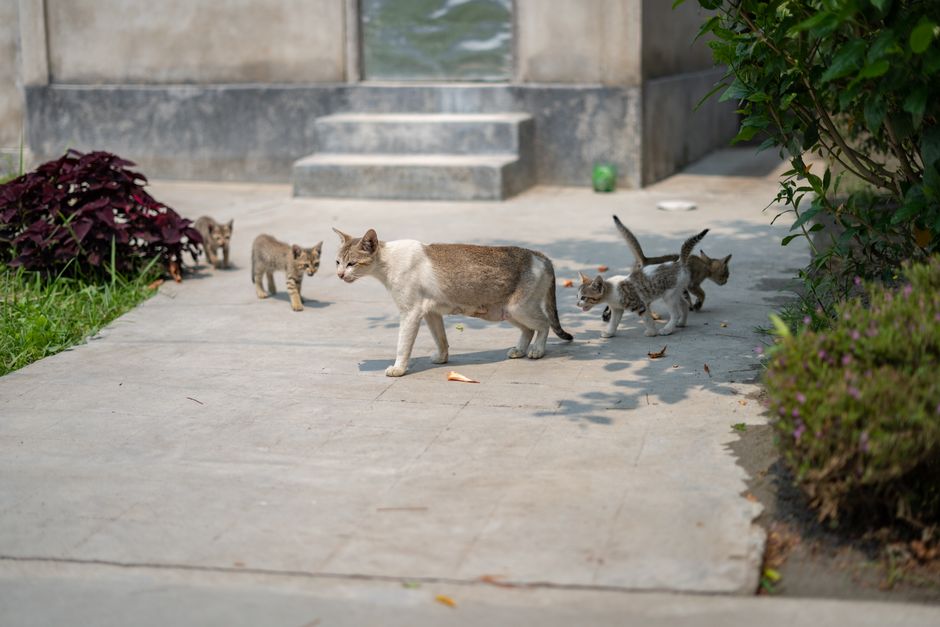
Stray Cats: The Risk Nobody Talks About
Cat bites look minor. That is the problem. A cat’s teeth are narrow and sharp, and they push bacteria deep into tissue before the surface closes over. The result can be rapid, painful swelling — sometimes within hours of a bite that looked like nothing at the time.
Cats in Thailand are also a rabies vector. A stray cat scratch or bite breaking the skin is treated the same way as a dog bite: clean the wound immediately, get assessed the same day, and start the appropriate post-exposure protocol if needed.
Puncture wounds from cat bites should never just be covered and ignored. If your child has been bitten by a cat near your hotel or villa, Doctor Samui offers 24/7 hotel and villa visits across the island, so you do not need to travel with a distressed child to get it seen promptly.
Monkeys Near Samui’s Temples: The Risk Tourists Underestimate
Macaque monkeys are the wild animal tourists interact with most on Samui. They gather around Wat Plai Laem, the Big Buddha complex, and certain viewpoints in the north of the island. They look manageable. Some are fed by visitors daily. That familiarity makes people careless.
A monkey bite or scratch breaking the skin is a WHO Category III exposure. Beyond rabies, macaque monkeys can carry Herpes B virus, a rare but serious infection that can affect the nervous system. It changes how we approach treatment. Any monkey bite needs urgent clinical assessment, not observation.
Do not feed monkeys, do not try to pet them, and keep children away from them entirely. If a monkey scratches or bites you near a temple on Samui, wash the wound immediately with soap and running water for at least 15 minutes and contact a clinic. This is not a situation to post about before getting care.
Where Animal Encounters Actually Happen on Koh Samui
Some spots on the island produce a much higher volume of animal encounters than others. Chaweng beach road at night has a regular population of soi dogs, particularly near food vendors and the southern end of the strip. Dogs are less predictable after dark and when food is nearby. Na Muang waterfall trails have loose dogs that follow hikers. The Big Buddha area and Wat Plai Laem are the island’s main monkey zones. Around Bophut and Maenam, stray cats cluster near guesthouses and beach restaurants where they are informally fed by staff.
Beach dogs near Lamai and Chaweng are often the most relaxed and the most approached by tourists who want to photograph or pet them. A dog that seems friendly can still bite if startled, unwell, or protecting food. Keep your distance even from animals that appear calm.
What to Do in the First 15 Minutes After a Bite on Koh Samui
The most important thing you can do before any medical care arrives is wash the wound. Use soap and running water for a full 15 minutes. This is not just routine first aid — it genuinely reduces the chance of rabies transmission at the wound site. Do not skip this step because the wound looks small.
After washing, apply an antiseptic if you have one. Iodine or 70 percent alcohol both work. Do not press the wound closed or seal it with tape. Do not suck the wound. These sound old-fashioned, but people still do them.
Then contact a clinic immediately. Do not wait to see if it swells. Do not wait until morning. A bite that breaks the skin from any stray dog, cat, or monkey on Koh Samui is a same-day medical situation.
Getting Rabies Treatment on Koh Samui: What to Expect
When you come to Doctor Samui in Chaweng, or when we visit your hotel or villa, the assessment follows clear steps. We look at the wound, assess the exposure category using WHO guidelines, and check whether you have had any previous rabies vaccination.
If you have never been vaccinated, a Category III exposure requires the rabies vaccine series and rabies immunoglobulin injected at and around the wound site. The vaccine schedule runs over 14 days with multiple doses. If you have had pre-exposure vaccination before, the protocol is simpler: two booster doses, no immunoglobulin needed.
We also check the wound for infection risk, assess whether you need a tetanus booster, and prescribe antibiotics if there are signs of bacterial infection. Travel insurance usually covers emergency animal bite treatment in Thailand — keep the clinical documentation we provide, and we can help with insurer paperwork if needed.
Pre-Exposure Rabies Vaccination: Should You Get It Before You Arrive?
Pre-exposure vaccination means getting vaccinated before any bite happens. It is a short course given over several weeks before your trip. It does not make you immune to rabies, but it changes your post-bite treatment significantly: no immunoglobulin required, fewer vaccine doses, and more time to reach a clinic if you are in a remote area.
We recommend it for families travelling with young children, for anyone staying on the island more than two weeks, and for anyone doing outdoor activities near wildlife. Children are bitten more often than adults, and bites on children are more likely to occur on the face or head, which makes rapid treatment even more critical. You can read more about pre-exposure vaccination and the specific risks of stray animals on Koh Samui at our rabies vaccine page.
If you are already on Samui and have not had pre-exposure vaccination, post-exposure treatment is highly effective when started promptly. Doctor Samui offers both pre-exposure and post-exposure rabies vaccination at the Chaweng walk-in clinic and during villa and hotel visits.
Quick Risk Overview by Animal
| Animal | Common Samui locations | Rabies risk | Other infection risk | WHO category (bite breaking skin) |
|---|---|---|---|---|
| Stray dog | Beach road, waterfall trails, temple grounds | High — Thailand endemic | Wound infection, tetanus | Category III |
| Stray cat | Hotel gardens, beach restaurants, guesthouses | Moderate | Rapid soft-tissue infection | Category III |
| Macaque monkey | Big Buddha, Wat Plai Laem, resort edges | Moderate to high | Herpes B virus (rare but serious) | Category III |
Been bitten or scratched by a stray animal on Koh Samui? Do not wait to see how it develops. Doctor Samui offers same-day rabies assessment and vaccination at our Chaweng walk-in clinic, with 24/7 hotel and villa visits across Chaweng, Lamai, Bophut, Maenam, Choeng Mon, and Bang Rak. We carry rabies vaccines and can begin post-exposure treatment immediately. Contact us now.
FAQ
Dr. Ponlawat Pitsuwan
Physician, Doctor Samui
a walk-in clinic based in Chaweng, Koh Samui, with 24/7 hotel and villa visits across the island. He sees tourists, families, and long-stay expats for animal bites, rabies exposure assessment and vaccination, wound care, and travel-related infections. His approach is evidence-based care explained in plain language.