Clinically reviewed by Dr. Ponlawat Pitsuwan, Physician, Doctor Samui.
Last reviewed: August 2026
Thailand is rabies-endemic, and Koh Samui has stray dogs, temple monkeys, bats, and cats that can all transmit it. Most tourist bites on the island happen at predictable moments and are entirely preventable. If a bite or scratch does happen, wash the wound with soap and water for 15 minutes and go to a clinic the same day — do not wait to see if it gets better.
You are walking back from the Na Muang waterfall, tired and happy, when a pack of soi dogs trots out from behind a food stall at the trailhead. Most tourists reach down to pet them. That is exactly when bites happen.
Stray animals on Koh Samui are everywhere, often unvaccinated, and the island sits in a country where rabies still kills people every year. The good news is that most bites here follow a clear pattern, which means most of them can be avoided. This guide covers every animal that genuinely poses a risk, where encounters happen most often, what triggers bites, and what to do in the first 15 minutes if one occurs.

Which Animals Actually Bite Tourists on Koh Samui
Stray dogs, called soi dogs, are the most common source of bites. They roam night markets, temple grounds, waterfall trails, and beach roads. Most look calm. That changes fast around food or when they feel cornered.
Cats are the second most common bite seen at our Chaweng clinic. Cat bites are deceptively dangerous because the teeth create a deep, narrow puncture that seals over and traps bacteria inside. The result is a fast-spreading infection that can become serious within 24 hours, even when the wound looks small.
Monkeys at temple sites carry two separate risks: rabies, and B virus, a herpes-type infection that is rare but has a high fatality rate in humans. A monkey scratch at Big Buddha is not a minor nuisance. It is a Category III exposure under WHO guidelines, meaning it needs rabies immunoglobulin on the same day as your first vaccine dose.
Bats are the risk almost no one thinks about. If you wake up in a villa or hotel room and find a bat in the space, treat it as a bite exposure even if you cannot see a mark. Bat teeth are fine enough that a bite during sleep leaves no obvious wound. Our clinic follows that rule without exception.
Snakes do exist on Koh Samui, including pit vipers near forested trails. They bite defensively, almost always because someone stepped on or grabbed one. Wearing closed footwear on jungle paths is the single most effective prevention.
Where Bites Actually Happen on Koh Samui
The Na Muang waterfall trail sees regular dog encounters, especially at the car park, the food stalls, and the path entry points. Dogs here associate the area with food scraps from tourists and become protective when people eat nearby.
Big Buddha temple grounds are one of the highest-risk spots on the island for monkey bites. Visitors feed the monkeys, which makes them bold and aggressive. The same dynamic applies near the monkey areas along the Chaweng beach road.
Chaweng night market and the late-night bar strip see a spike in dog encounters after midnight. Dogs become more territorial after dark, and tired or intoxicated tourists make poor decisions around them.
Lamai beach road, particularly near local restaurants and the walking street, has a known concentration of strays. Morning and late evening are the peak movement times. Waterfall paths near Hin Lad and jungle-edge trails between Bophut and the island interior also put you close to snake habitat, so stay on the path and use a torch after dark.

The Trigger Behind Most Bites on Koh Samui
Food is behind the majority of bites we see. An animal that looks calm and approachable will bite the moment it thinks you are competing for what it has claimed.
This happens most at temple feeding areas, where crowds of tourists throw food to monkeys or dogs and then reach toward an animal that has just claimed something. It also happens when you eat near a resting stray and make a sudden movement.
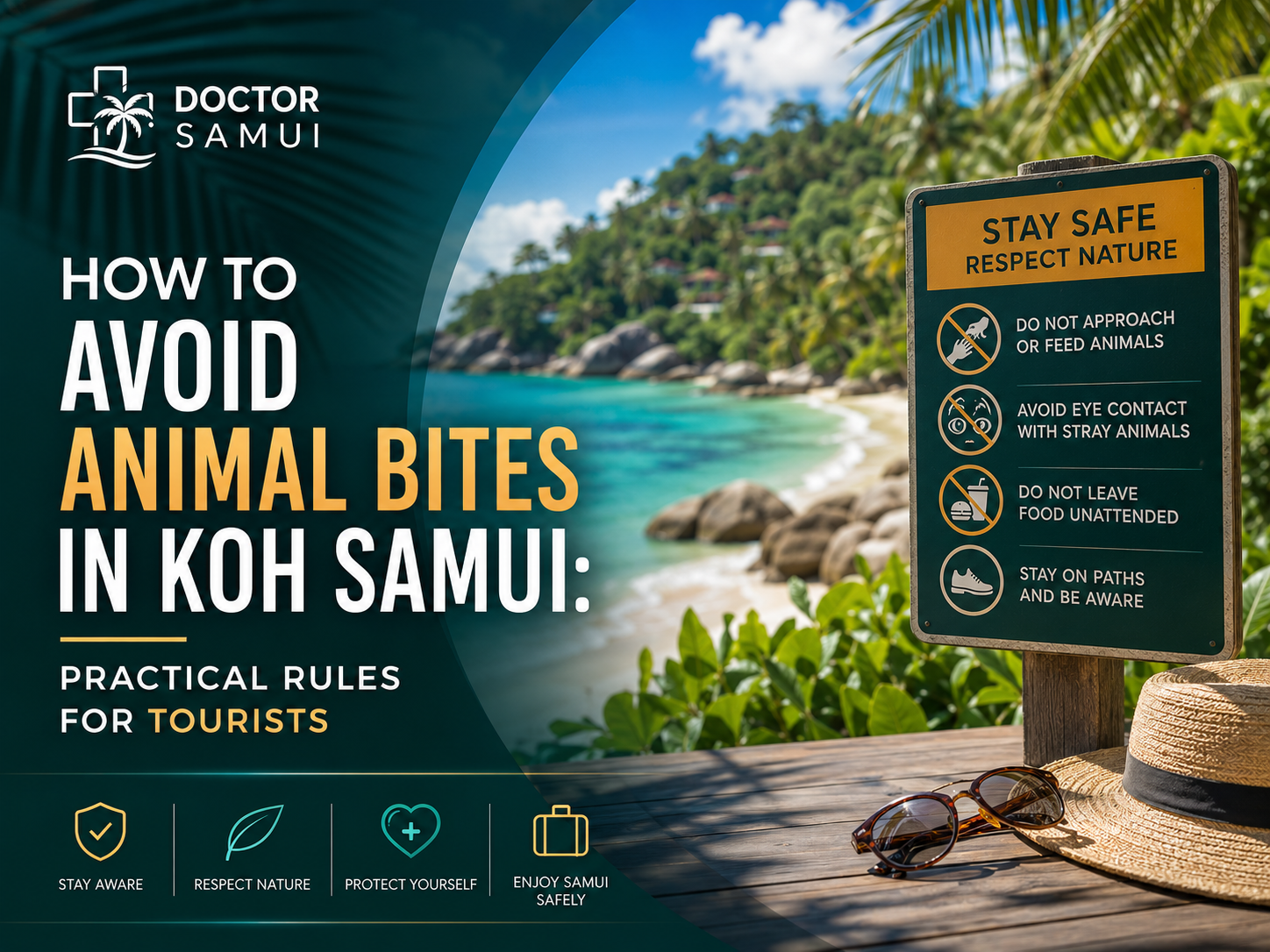
The rule is simple: never feed stray animals, and do not eat near them. If you are at Big Buddha and a monkey approaches, do not offer it anything, avoid direct eye contact, and move away calmly.
Travelling with Children on Koh Samui
Children are bitten more often than adults, and the bites tend to be more serious. A child’s face is at dog-head height. They move unpredictably, which animals read as a threat. And they instinctively reach for animals that adults know to leave alone.
Keep children within arm’s reach near any stray animal. Teach them before you arrive: do not touch any animal on Koh Samui that is not a pet belonging to someone you know. That includes beach dogs that look friendly and temple cats that come to you.
A bite or scratch to a child’s face or hand is automatically a high-risk exposure. Rabies immunoglobulin dosing is calculated by body weight, so a child’s treatment course differs from an adult’s. Come to Doctor Samui or call for a hotel visit immediately. Do not wait until morning.
Should You Get the Pre-Exposure Rabies Vaccine
Pre-exposure vaccination does not mean you skip treatment after a bite. What it does is remove the need for rabies immunoglobulin, which is expensive, not always available at short notice, and requires a clinic that stores it properly. That matters a lot when you are two hours down a waterfall trail.
If you are staying on Koh Samui for more than two weeks, travelling with children, or planning rural temple visits or diving liveaboards near Koh Phangan or the Ang Thong islands, the pre-exposure course is worth doing. It is three injections over 21 days.
You can get this at Doctor Samui’s Chaweng clinic before or after arrival. The rabies vaccine page covers both pre-exposure and post-bite courses in full if you want to read through your options before deciding.
What to Do If You Are Bitten on Koh Samui
Wash the wound immediately. Use soap and running water for a full 15 minutes. This breaks down the outer layer of the rabies virus and reduces the amount that enters your body. It is the most effective thing you can do before reaching a clinic, and the time matters.
After washing, apply any antiseptic you have. Iodine or alcohol are both fine. Do not bandage the wound tightly. Go to a clinic the same day. A scratch, a lick on broken skin, and a bite all warrant the same response.
A bite that breaks the skin is a Category III exposure by WHO protocol. That means you need both the vaccine series and rabies immunoglobulin on the same day. Do not skip the immunoglobulin because the clinic is far or because it costs more. It is the part of the treatment that gives you immediate protection while the vaccine builds up.
If you carry a travel first-aid kit, add a small bar of soap or a few soap sheets. Waterfall trails and temple visits take you further from town than you expect, and those are exactly the locations where bites happen.
Managing Your Vaccine Course While You Are Still on Holiday
Most tourists who start the post-bite vaccine series still have doses due during their trip. The standard course runs to day 28. If you start on day one of a two-week holiday, you need dose two on day three, dose three on day seven, and dose four on day fourteen before you fly home.
You do not need to return to the Chaweng clinic for every dose. Doctor Samui does 24/7 hotel and villa visits across Chaweng, Lamai, Bophut, Maenam, Choeng Mon, and the rest of the island. If your schedule changes or you are checking out early, let us know and we will work out the timing with you.
If you are flying before all doses are complete, carry your vaccination record card. Any travel medicine clinic at your next destination can continue your course. What matters is not missing a scheduled dose window.
Been bitten or scratched by any animal on Koh Samui? Do not wait to see how it feels tomorrow. Come to Doctor Samui’s walk-in clinic in Chaweng or message us for a same-day hotel or villa visit anywhere on the island. We carry rabies immunoglobulin and the full vaccine series and can start your treatment within the hour. For the pre-exposure rabies vaccine or to check your vaccination status before a bite happens, visit us in Chaweng or reach out via WhatsApp any time of day or night.