Clinically reviewed by Dr. Ponlawat Pitsuwan, Physician, Doctor Samui. Last reviewed: August 2026
Rabies exposure assessment is not something you can do yourself. A doctor physically inspects the wound, asks a structured set of questions, and assigns a WHO risk category based on wound depth, location, animal species, and local endemic status. In Thailand, where rabies is present, any bite, scratch, or mucous membrane contact from an unverified animal warrants same-day clinical assessment. Treatment started promptly is almost always effective. Rabies once symptomatic is fatal.
You are walking through the grounds at Wat Plai Laem when a temple monkey reaches out and scratches your hand before you can pull away. Or a stray dog near the beach road in Chaweng bites your ankle and trots off before anyone can catch it. The animal is gone. You do not know if it was vaccinated. You do not know if the skin is broken. What you need right now is a doctor, not a Google search.
Rabies exposure assessment is the clinical process that determines your actual risk and what needs to happen next. It covers the depth of the wound, where on your body it is, what type of animal was involved, whether saliva touched broken skin, and whether you had any prior vaccination. Every one of those factors changes the outcome. Doctor Samui carries out this assessment the same day, at our Chaweng clinic or at your hotel or villa anywhere on the island.
First Steps Before the Assessment — What to Do at the Scene
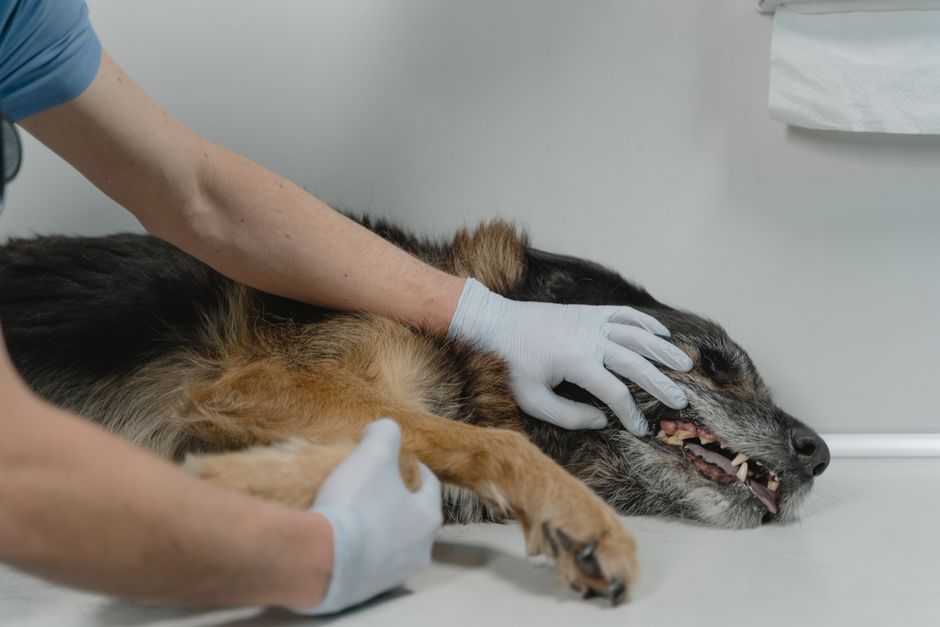
Before you reach us, one action matters more than anything else: wash the wound. Run clean water over it for at least fifteen minutes. Use soap if you have it. WHO recognises immediate wound irrigation as a first-line step that genuinely reduces the risk of viral transmission. This is not optional.
On Koh Samui you may be at a waterfall, on a reef path, or at a temple with no tap nearby. Use bottled water. Do not use seawater, as it can irritate tissue and delay proper wound assessment. Do not apply chilli paste, toothpaste, or any traditional remedy. Do not close or cover the wound tightly before a doctor has seen it. Then come to us, or call us to come to you.
What the Doctor Actually Asks You — The Clinical Interview
A rabies exposure assessment does not start with vaccines. It starts with questions, because the answers determine everything.
You will be asked what type of animal it was, whether it was a stray or owned, and whether you provoked the contact. An unprovoked attack raises concern about the animal’s neurological state. You will be asked exactly where on your body the bite or scratch landed. Wounds on the hands, face, or neck carry higher risk because of their proximity to the brain and spinal cord. The doctor will ask whether there was bleeding, whether saliva reached your eyes, mouth, or any broken skin, and whether you have had rabies vaccination before. Your general health matters too. Patients with weakened immune systems need a more cautious approach.
None of this takes long. But it cannot be done accurately by a pharmacist or from a chart online. It requires a trained clinician who has seen the wound and heard the full history.

WHO Exposure Categories — What Each One Means for You
| Category | What happened | What it means |
|---|---|---|
| Category I | Touching or feeding the animal. No skin contact with saliva. Licks on intact skin. | No treatment needed. Wash hands. |
| Category II | Skin nibbled or scratched without bleeding. Licks on broken skin. | Vaccine course starts immediately. |
| Category III | Penetrating bites. Scratches with bleeding. Saliva contact with mucous membrane or open wound. Any bat contact. | Vaccine course plus rabies immunoglobulin injected into the wound. |
The line between Category II and Category III is not always obvious without a clinical examination. A wound that looks superficial can be deeper than it appears. Bleeding at the site typically confirms Category III. The location on the body also affects the weighting. These are decisions made after physically examining the wound, not from a table.
For a full breakdown of vaccine schedules and category definitions, see our rabies vaccine and exposure category guide.
The Koh Samui Context — Which Animals Carry the Highest Risk Here
Thailand is a rabies-endemic country. That single fact means every unverifiable animal encounter is at minimum a Category II situation until a doctor says otherwise.
On Koh Samui, the most common exposures are stray dog bites near beach roads, monkey scratches at temple sites like Wat Plai Laem and Big Buddha, and cat scratches at guesthouses or beach bars. Temple monkeys are unvaccinated wild animals. Saliva on their claws from grooming makes a scratch a potential exposure route, and we assess it that way every time. Bats are less commonly reported but are present on the island. Any bat contact, even without a visible bite mark, is automatically Category III under WHO guidance. If a bat was in your room overnight and you cannot confirm there was no contact, that needs to be mentioned.
Why the Animal’s Status Matters — and Why You Rarely Know It on Samui
In a straightforward case, the animal is owned, vaccinated, healthy, and available for a ten-day observation period. If it stays well for ten days after biting you, it was not infectious at the time. That protocol is clinically valid and WHO-endorsed.
The reality on Koh Samui is different. The dog runs off. The monkey disappears into the temple grounds. There is no owner, no vaccination record, and no way to observe the animal. You may be flying home in four days. In that situation, WHO guidance is clear: when the animal cannot be identified or observed, start post-exposure treatment. We assess, categorise, and begin treatment the same day. The ten-day observation rule is simply not a realistic option for most tourists on this island, and the assessment accounts for that directly.
How Doctor Samui Conducts a Rabies Exposure Assessment
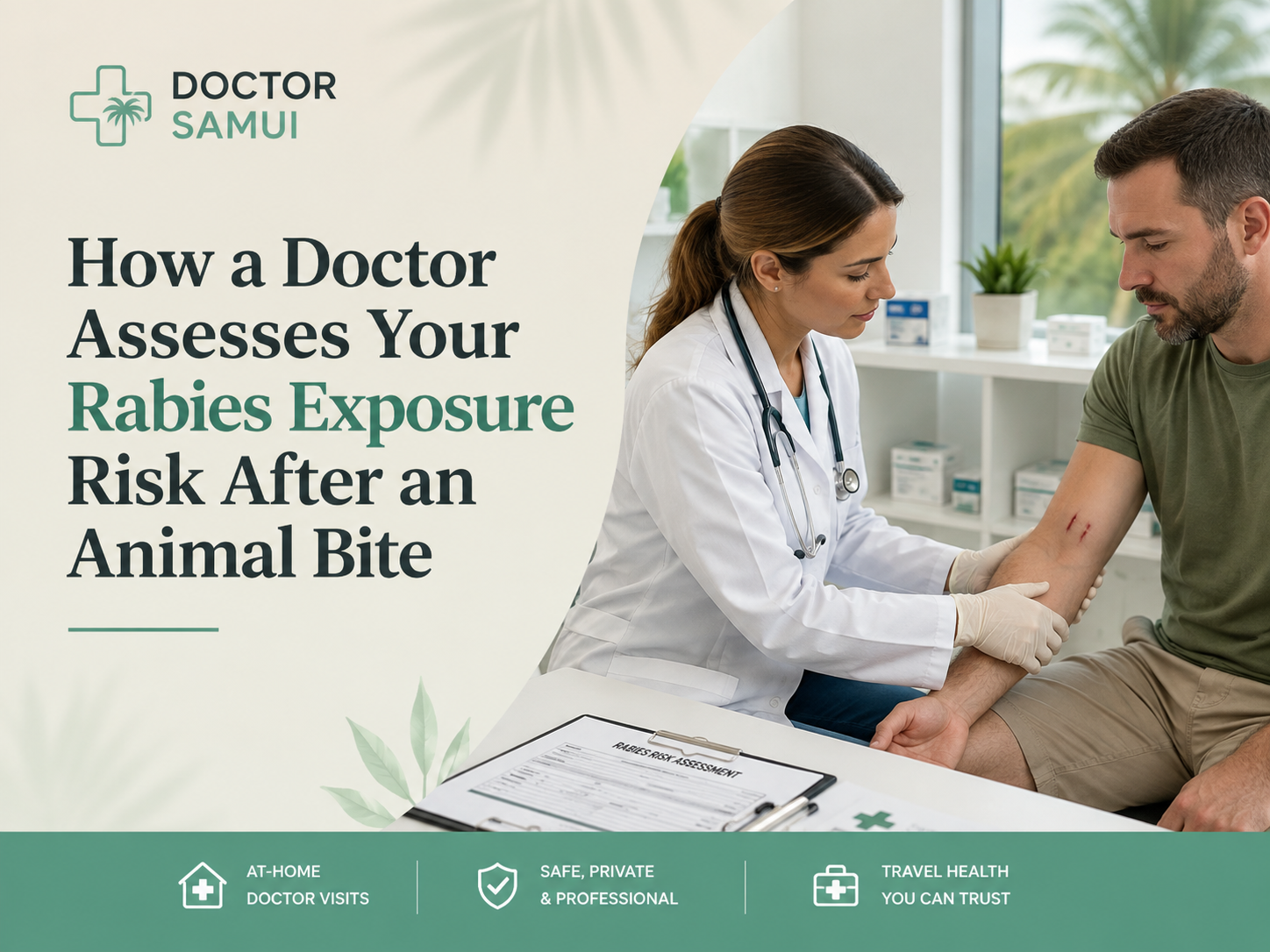
When you come to our Chaweng clinic, or when we come to your hotel or villa, the process is straightforward. The doctor examines the wound under proper light, assesses the depth, confirms whether the skin was fully broken, notes any bleeding, and records the anatomical location. The clinical history described above is taken in full. A formal WHO category is then assigned.
If you need post-exposure treatment, we carry Verorab, a cell-culture rabies vaccine used widely across international travel medicine. For Category III exposures, rabies immunoglobulin is also administered directly into and around the wound at that same visit. Our vaccine supply is cold-chain maintained. The first dose and immunoglobulin, where required, are given on the day of assessment.
If you completed a pre-exposure vaccine course before travelling, the picture changes. You will need only two booster doses, on Day 0 and Day 3, and no immunoglobulin. Bring your documentation so we can confirm the prior course was complete and used a cell-culture vaccine.
Documentation, Insurance, and Follow-up Doses
This is the part most tourists do not think about until they are standing at an airport. The assessment generates a written record. It includes your WHO category, the wound description, the date, the vaccine brand and lot number, and your remaining dose schedule.
That document matters for three reasons. Your travel insurer will likely require a written clinical assessment before approving a rabies treatment claim. We provide that. If you are mid-course and flying home, your GP needs to know exactly what was given and when, so your series continues correctly without restarting. Cell-culture vaccines are internationally compatible when you have the paperwork. Some embassies and employers also require formal exposure documentation. We issue it as standard.
Doctor Samui covers the whole island. If you are staying in Maenam, Lamai, Bophut, or Choeng Mon and cannot get to Chaweng, we come to you, day or night, for follow-up doses and updated documentation.
If you or someone in your group has been bitten, scratched, or had saliva contact from any animal on Koh Samui, do not wait until tomorrow. Doctor Samui offers same-day rabies exposure assessments at our walk-in clinic in Chaweng, and 24-hour hotel and villa visits across the island including Lamai, Bophut, Maenam, Choeng Mon, and beyond. We carry Verorab and rabies immunoglobulin on-site and provide written documentation for insurers and home-country GPs. Contact Doctor Samui now.
How does a doctor decide which WHO rabies category applies to my bite or scratch?
The doctor physically inspects the wound, confirms whether the skin was fully broken, checks for bleeding, and notes the wound location. Hands and face carry higher risk because of their proximity to the central nervous system. Category assignment also factors in the animal species, whether the contact was provoked, and local endemic status in Thailand. You cannot accurately assign your own category from a chart.
The animal that bit me ran off — does that change my assessment?
When the animal cannot be observed or tested, WHO guidelines say to treat the exposure as potentially infectious and start post-exposure treatment. On Koh Samui, most biting animals are strays or temple monkeys with no owner and no vaccination record. We do not wait for the animal to be found. We assess, categorise, and start treatment the same day.
I was scratched by a monkey at a temple — is that actually a rabies risk?
Yes. Monkey scratches are a recognised rabies exposure route in Thailand. Temple monkeys are unvaccinated, and saliva on their claws from grooming makes a scratch a potential exposure. The doctor will assess the scratch depth, whether bleeding occurred, and whether saliva contact was possible. Wash the wound immediately with clean water and get assessed the same day.
I started my vaccine course at Doctor Samui but I am flying home next week — what happens to my remaining doses?
We give you a written record with your exposure category, the doses already given, the vaccine brand and lot number, and your remaining schedule. Cell-culture vaccines like Verorab are internationally compatible, so your series continues at home without restarting. Ask for this documentation before you leave, and bring a copy to your GP when you arrive home.
Does having a prior rabies vaccine series change what the doctor does during an assessment?
It changes the outcome significantly. If you completed a full pre-exposure course with a cell-culture vaccine, you need only two booster doses on Day 0 and Day 3, and no immunoglobulin. The doctor will need to confirm the prior course was complete and properly documented. Bring your vaccine record if you have one.
What is rabies immunoglobulin and does everyone bitten need it?
Rabies immunoglobulin is a preparation of antibodies injected directly into and around the wound site. It provides immediate short-term protection while the vaccine course builds a longer-term response. Not everyone needs it. It is given for Category III exposures only: penetrating bites with bleeding, saliva contact with mucous membranes, and any bat contact. Category II exposures require the vaccine course alone.
Dr. Ponlawat Pitsuwan
Physician, Doctor Samui
a walk-in clinic based in Chaweng, Koh Samui, with 24-hour hotel and villa visits across the island. He sees tourists, families, and long-stay expats for animal bite assessment, rabies post-exposure treatment, and travel health consultations. His approach is direct, evidence-based, and delivered in plain language.