Clinically reviewed by Dr. Ponlawat Pitsuwan, Physician, Doctor Samui. Last reviewed: August 2026
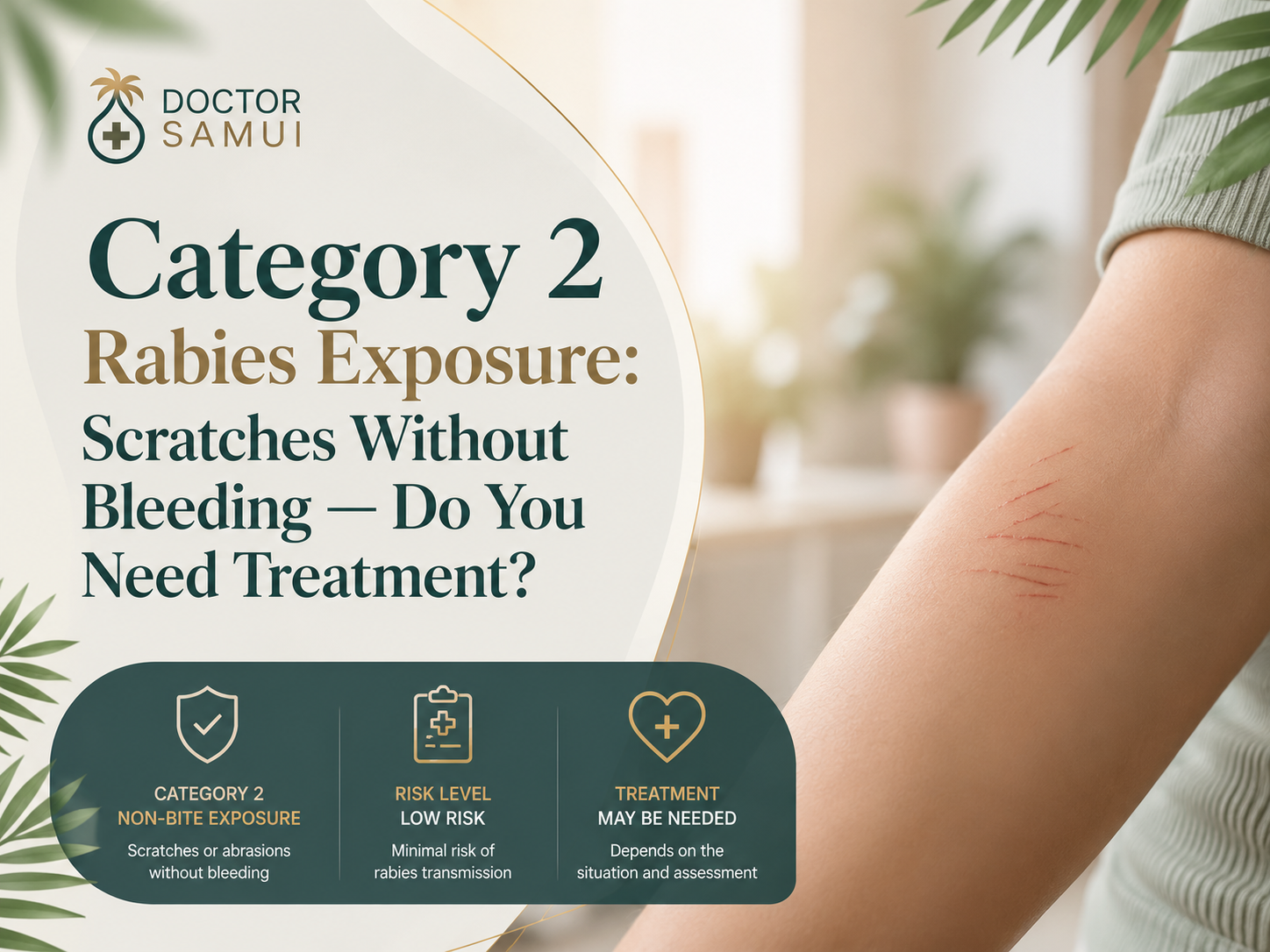
A minor scratch or abrasion on uncovered skin from a dog, cat, or monkey in Thailand is a WHO category 2 rabies exposure. It requires immediate vaccination even without visible bleeding. In Thailand, where rabies is endemic, you should begin post-exposure prophylaxis the same day. Category 2 does not require rabies immunoglobulin — only the vaccine series.
You reach down to pat a dog resting in the shade on the walk back from Na Muang waterfall. Its claw catches your forearm. No blood. Just a faint pink line. You rinse it off and wonder if it even counts. It does. A scratch on uncovered skin from a potentially rabid animal is a WHO category 2 rabies exposure, and in Thailand that means you need vaccines.
Thailand is endemic for rabies. The virus is present in the animal population year-round, not only during outbreaks. Stray dogs, cats, and monkeys on Koh Samui cannot be assumed to be vaccinated. The absence of bleeding is not the same as the absence of risk. Rabies enters through breaks in the skin, and those breaks do not need to be deep or visible to matter.
What Exactly Counts as a Category 2 Rabies Exposure?
The WHO divides animal exposures into three categories. Category 1 is touching or feeding an animal with intact skin — no breach, no risk. Category 3 is a deep bite or scratch with visible bleeding. Category 2 sits between those two. It covers minor scratches and abrasions without bleeding, and licking of already broken skin.
The word "minor" trips people up. It does not mean harmless. It means the skin was compromised without visible bleeding. A shallow claw graze, a monkey nip that does not draw blood, a cat scratch that looks like nothing but stings when you clean it — these are all category 2.
How to Tell If Your Skin Was Actually Broken
This is the question we hear most often at the clinic. The mark is faint. There was no blood. The patient is not sure what happened.
A useful field test: apply antiseptic or alcohol to the area straight away. If you feel a sting or burn, the skin barrier has been broken, and that points to category 2. No sensation and no visible mark may suggest category 1 contact only. But here is the reality: in a rabies-endemic setting like Koh Samui, any genuine doubt should be resolved by a doctor, not by self-assessment alone.

Which Animals on Koh Samui Can Trigger a Category 2 Concern?
Dogs are the most common concern. We see this after beach walks, waterfall hikes, and scooter stops near villages along the ring road. Beach strays around Chaweng and Lamai are often well-fed and approachable, which is exactly what makes tourists lower their guard.
Monkeys are the second most frequent scenario. The macaque troops near temples and popular viewpoints will grab at bags, hands, and food. A macaque scratch, even a glancing one, is a category 2 exposure. Cats at beach resorts and guesthouses are another common presentation — people assume a friendly resort cat is vaccinated, and it usually is not.
Bats are less common but worth knowing about. Any contact with a bat, whether a scratch, a bite, or waking up in a room where a bat was present, should be assessed as category 3 regardless of what you can see on the skin.
The Grey Zone — When a Category 2 Scratch Is Hard to Classify
Some exposures are genuinely hard to call. A monkey brushes your hand during a food grab. A dog licks a spot on your leg that may have had a small dry nick from an earlier cut. You are not sure the animal even made contact properly.
In clinical practice in Thailand, the rule for grey-zone exposures is straightforward: when the animal is potentially rabid and the exposure cannot be clearly ruled out, we treat. Rabies is almost always fatal once symptoms begin. There is no treatment once the virus reaches the brain. Starting a vaccine course you did not strictly need carries a low cost. Not starting one you did need is not survivable.
The 10-day animal observation rule exists in some countries. If the animal is kept and remains healthy for 10 days, the exposure was likely safe. On Koh Samui, that rule rarely applies. Stray animals cannot be caught or reliably observed. In practice, vaccination begins the same day.
What Does Category 2 PEP Actually Involve?
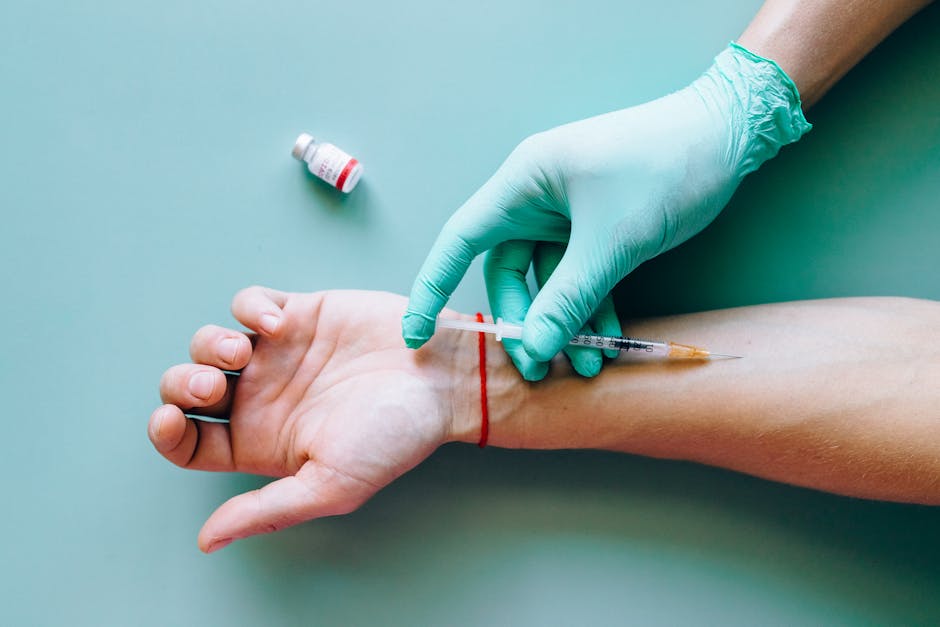
Post-exposure prophylaxis for category 2 is vaccine only. No rabies immunoglobulin is needed. That distinction matters, because RIG is not always available quickly on an island, and some patients arrive having been told they need it when they do not.
For unvaccinated individuals, the standard schedule is four doses: day 0, day 3, day 7, and day 14. Some protocols add a fifth dose at day 28, and your doctor will advise based on your situation and the vaccine type used. All doses are given by injection in the arm. There is no injection into the wound for category 2. The first dose should be given as soon as possible after the exposure, ideally the same day.
What If You Already Had Rabies Vaccines Before Coming to Thailand?
If you completed a full pre-exposure prophylaxis course before arriving, category 2 is much simpler to manage. You need only two booster doses: one on day 0 and one on day 3. No RIG, no extended schedule, no day 7 or day 14 injections.
This matters most for divers, long-stay expats, and frequent visitors who completed PrEP before travelling. Pre-exposure vaccination does not mean you can ignore a scratch. It means your immune system already has the tools to respond faster. Bring your vaccination records to the clinic, or have them ready on your phone, so the doctor can confirm your prior course was complete before shortening your schedule.
Other Things to Consider Alongside Rabies PEP
Rabies is not the only concern after an animal scratch. WHO guidelines recommend considering tetanus for any animal wound, including minor scratches. If your tetanus vaccination is not current, this is the right time to deal with it.
For scratches that broke the skin, antibiotics may also be appropriate. Animal claws carry bacteria that can cause skin infections, and Koh Samui’s heat and humidity make those infections more likely. A doctor can assess the wound and prescribe a short course if there is any sign of contamination or early infection.
Wound washing is the one step you can take right now, before you reach a clinic. Use clean running water and soap for at least 15 minutes, then apply antiseptic if you have it. This reduces viral load at the site and is part of the WHO-recommended first response to any exposure.
Getting Assessed and Treated on Koh Samui
If you are staying in Chaweng, Doctor Samui’s clinic can assess a category 2 rabies exposure on the same day, administer the first vaccine dose, and plan your follow-up schedule. Walk-in visits are welcome.
If you are in a villa or hotel and cannot easily get out, that is not a reason to wait. Doctor Samui provides 24/7 hotel and villa visits across the island, including Lamai, Bophut, Choeng Mon, Maenam, Nathon, and Taling Ngam. A doctor comes to you, assesses the exposure, starts treatment, and explains what comes next. For families travelling with young children, a late-night scratch can feel overwhelming when you are far from home — this is exactly the kind of situation a visit is for.
For more detail on when you need the vaccine after animal contact, see our full guide on the rabies vaccine on Koh Samui. You can also ask us about pre-exposure protection before your next trip.
Scratched by an animal on Koh Samui and not sure if it needs treatment? Doctor Samui can assess your exposure category, give the first vaccine dose, and plan your full PEP schedule — at our Chaweng clinic or at your hotel or villa, any hour of the day or night. Do not wait to see how it develops. Contact Doctor Samui now to speak to a doctor or arrange a visit.
Frequently Asked Questions
Dr. Ponlawat Pitsuwan
Physician, Doctor Samui
a walk-in clinic based in Chaweng, Koh Samui, with 24/7 hotel and villa visits across the island. He regularly sees tourists, families, and long-stay expats following animal bites, scratches, and other exposures involving dogs, cats, monkeys, and bats on the island. His approach is evidence-based care explained in plain language.