Clinically reviewed by Dr. Ponlawat Pitsuwan, Physician, Doctor Samui. Last reviewed: August 2026
Yes, you can survive rabies — but only if treatment starts before symptoms appear. Post-exposure prophylaxis, a course of vaccines given after a bite, is close to 100% effective when started quickly. Once symptoms begin, survival is almost impossible. Fewer than 20 people have ever survived symptomatic rabies in recorded medical history.
A monkey at the 12 Chumphon viewpoint grabs your hand, breaks the skin, and is gone before you can react. You rinse it under a bottle of water, carry on with the day, and spend that evening wondering at midnight whether you actually needed to do more. You did — and the window is still open, but it will not stay open.
Thailand is rabies-endemic. Dogs cause the vast majority of cases, and Koh Samui has a real stray population around temples, beaches, and market areas. A bite, a scratch, or saliva on broken skin does not have to end badly. What matters entirely is how fast you act.
Why This Question Matters More on Koh Samui
Most people asking this are not curious about virology. They were bitten yesterday, or three days ago, and they are trying to decide whether it is too late to do anything.
It is not too late — until symptoms start. That is the line. Before it, treatment works. After it, nothing reliably does.
Tourists get bitten near beach restaurants and night markets every week. Kids get scratched at elephant sanctuaries. Stray dogs around Chaweng’s temple grounds are a daily reality, not an occasional hazard. These are the encounters that bring people to Doctor Samui’s Chaweng clinic, and they are the reason rabies vaccines are kept in stock year-round and available the same day you walk in.
The Honest Answer — Can You Survive Rabies?
There are two very different answers depending on where you are in the timeline.
Before symptoms: yes, completely. Post-exposure prophylaxis, called PEP, is the vaccine course given after a bite. When started before the virus reaches your brain, it is as close to 100% effective as medicine gets. This holds even if you wait a few days, as long as no symptoms have appeared.
After symptoms begin: survival is extraordinarily rare. Fewer than 20 people in recorded history have survived symptomatic rabies, and most did not recover fully. Once the virus reaches the brain, it is fatal for virtually everyone.
The question is not whether rabies can kill you. It can, and almost always does without treatment. The real question is whether you have started treatment yet.
How Rabies Progresses If Left Untreated
The incubation period is the time between the bite and your first symptoms. It is usually one to three months, but it can be as short as a week or stretch beyond a year. You feel completely normal throughout. This entire period is your window, and PEP started during incubation works.
The prodrome comes next. Fever, headache, and fatigue arrive — easy to dismiss as a cold or travel tiredness. The more specific warning is tingling, itching, or pain returning to the original bite site after the wound has long healed. That is the virus moving up the nerve toward your brain. If you notice that, go to an emergency room immediately.
The acute neurological phase is where rabies splits into two forms. Furious rabies, which accounts for roughly 80% of cases, causes agitation, confusion, hallucinations, and the classic hydrophobia — painful throat spasms triggered by any attempt to swallow water. Paralytic rabies is quieter, causing progressive muscle weakness, and it is frequently misdiagnosed as Guillain-Barre syndrome, which is one reason some cases go unrecognised until too late.
Coma and death follow. The time from first symptom to death is typically two to ten days.
The Rare Survivors — What Their Cases Actually Show
The most well-known survivor is Jeanna Giese, a teenager in the United States who survived symptomatic rabies in 2004. Doctors placed her in a medically induced coma and gave her antiviral drugs — a treatment now called the Milwaukee Protocol.
It has not reliably worked since.
The Milwaukee Protocol was tried on many subsequent patients with overwhelmingly poor results. By around 2015, expert consensus had largely moved away from it. A small number of other documented survivors each had unusual circumstances, including some evidence of a partial immune response to the virus. Research among communities in Peru exposed to vampire bat bites found rabies antibodies in people who had never been vaccinated, suggesting that a tiny fraction of people may mount a natural response — but this is not a treatment strategy anyone can rely on.
The honest summary: do not count on being one of fewer than 20 people across the entire history of medicine. Get vaccinated before symptoms start.
Factors That Affect How Long You Have to Act
Bite location matters enormously. A bite on the face or neck puts the virus physically close to your brain, and the nerve pathway is short. Incubation can be as brief as a week. A bite on the foot or lower leg gives the virus a longer distance to travel, meaning more time — sometimes months — before symptoms. That is not a reason to delay treatment. It is a reason to treat face and head bites as a same-day emergency.
Wound depth also matters. A deep puncture carries more risk than a surface scratch. Bites through clothing carry less risk than bites on bare skin. Children are at higher risk partly because a bite is more likely to land near the face or neck relative to their smaller frame.
A scratch on the ankle from a dog with no signs of illness is a different conversation than an unprovoked bite on the forearm from a stray near a Samui night market. These are the details that shape the clinical decision when you come in.
What to Do on Koh Samui If You Have Been Bitten
Wash the wound immediately for at least 15 minutes with soap and running water. Not a quick rinse — 15 minutes, with soap. It is the single most effective first step and it reduces the viral load before it enters the nerve.
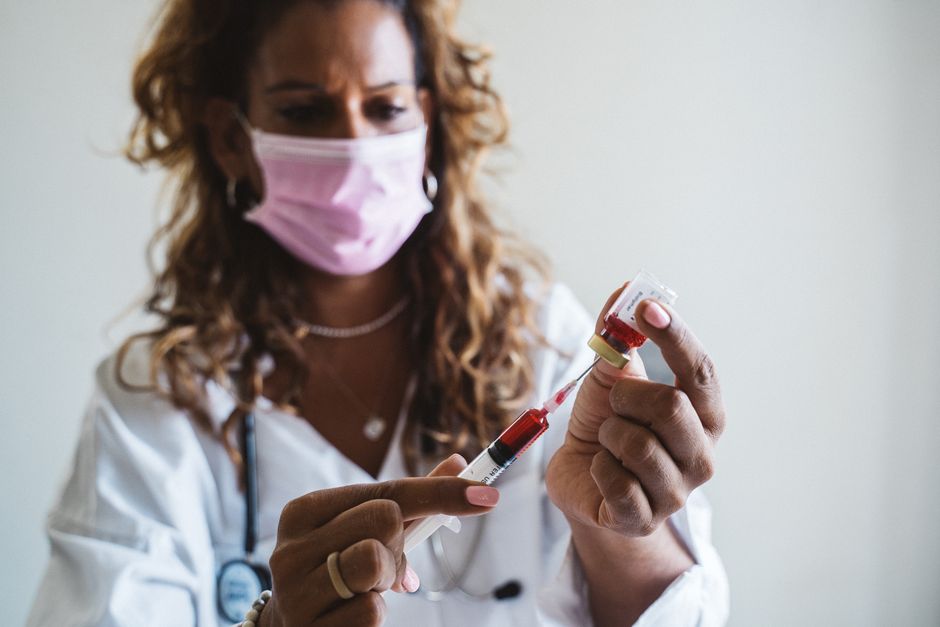
Then come in. Doctor Samui’s clinic in Chaweng handles walk-in animal bites, and the team is available 24 hours for hotel and villa visits across the island if you cannot travel easily. No appointment is needed. The clinic carries both rabies vaccines and rabies immune globulin, known as RIG, which is injected into and around the wound on the first visit for anyone who has not been pre-vaccinated. RIG gives immediate short-term protection while your immune system builds its own response to the vaccine.
Follow-up vaccine doses are given on days 3, 7, and 14. If you are leaving Koh Samui between doses, that can be coordinated — you do not need to stay on the island for the whole course, but you do need to complete it.
If you had pre-exposure rabies vaccines before this trip, the process is simpler: two booster doses, no RIG needed. Pre-exposure vaccination is one of the strongest practical arguments for families and long-stay visitors to Thailand, and it significantly reduces what the post-bite process involves. For full details on the vaccine course and what to expect, see our rabies vaccine Koh Samui page.
Been bitten, scratched, or licked on broken skin by an animal on Koh Samui? Do not wait to see if symptoms develop. Doctor Samui’s clinic in Chaweng is open for walk-in rabies treatment, with 24-hour hotel and villa visits available anywhere on the island. The clinic carries both the rabies vaccine and rabies immune globulin and can start your post-exposure course the same day. Contact us now.
Frequently Asked Questions
Dr. Ponlawat Pitsuwan
Physician, Doctor Samui
a walk-in clinic based in Chaweng, Koh Samui, with 24-hour hotel and villa visits available across the island. He sees tourists, families, and long-stay expats for animal bites, post-exposure rabies prophylaxis, and travel-related illness. His focus is straightforward, evidence-based care delivered in plain language.