Clinically reviewed by Dr. Ponlawat Pitsuwan, Physician, Doctor Samui.
Last reviewed: October 2026
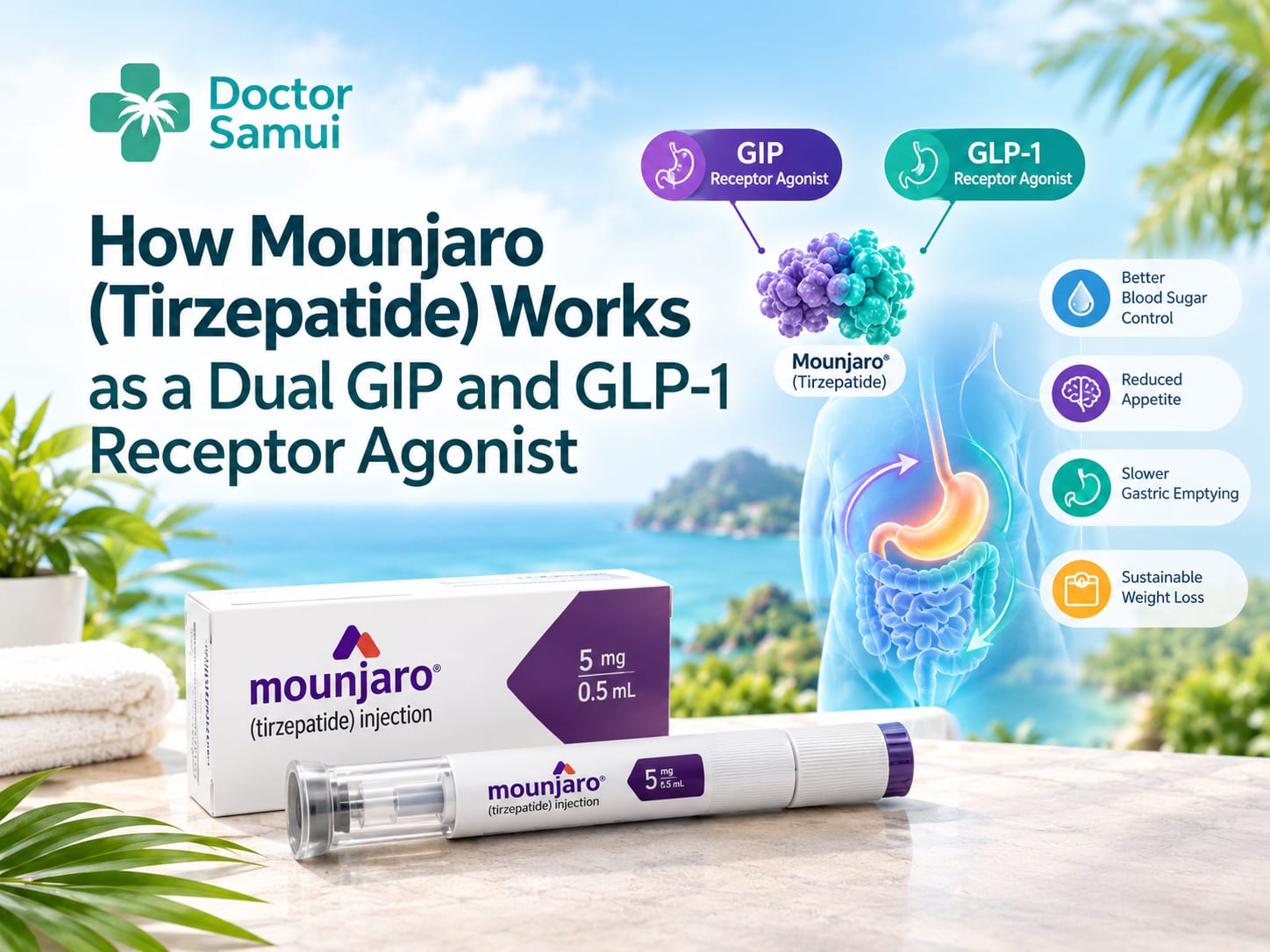
Mounjaro (tirzepatide) is a once-weekly injection that activates two hormone receptors at the same time: GIP and GLP-1. These are the hormones your gut releases after you eat. By targeting both, tirzepatide reduces appetite, slows digestion, improves blood sugar control, and supports greater weight loss than GLP-1 medications alone. This dual action is why it is often called a twincretin.
You are two weeks into a longer stay on Samui, consistent with your injections, and you want to understand what is actually happening each time you dose. That is a fair question. Knowing the mechanism helps you understand why side effects cluster early, why weight loss takes weeks to show, and why the dosing schedule is not optional.
Tirzepatide is a biologic peptide, a small protein-like molecule, designed to mimic two gut hormones at once. Most people have heard of GLP-1 medications like Ozempic. Mounjaro works on that same receptor, but also on a second one called GIP. That second receptor is what changes the results.

GIP and GLP-1: What Each Receptor Actually Does
GLP-1, glucagon-like peptide-1, is released from your small intestine after a meal. It tells your pancreas to release insulin, tells your liver to slow glucose output, and sends signals to your brain that you have had enough. It also slows how quickly food leaves your stomach.
GIP, glucose-dependent insulinotropic polypeptide, is the other incretin hormone. It is released earlier in the meal and also stimulates insulin from the pancreas. But GIP receptors are present in fat tissue, and GIP activity appears to support energy expenditure and fat metabolism through pathways that GLP-1 does not directly reach. It also works on appetite circuits in the brain that are separate from GLP-1’s pathways.
The two receptors do not simply repeat each other. They work through different but complementary routes. Activating both at the same time produces a broader effect on appetite, blood sugar, and metabolism than either receptor can produce alone. This is why tirzepatide, as a dual GIP and GLP-1 receptor agonist, showed greater average weight loss in the SURMOUNT trials than GLP-1-only agents in prior studies.
What Happens in Your Body After Each Weekly Dose
You inject tirzepatide under the skin once a week. Plasma levels reach their peak at a median of around 24 hours after injection, with a range of 8 to 72 hours, based on tirzepatide’s pharmacokinetic profile in the prescribing information. During that window, appetite suppression tends to be strongest and gastric emptying slows noticeably.
By days four to five, levels are still active but lower. Hunger may return a little in the final day or two before your next dose. That is normal and does not mean the medication has stopped working. It means you are near the low point of the weekly cycle.
Blood sugar effects arrive faster than weight loss. Insulin response can improve within the first weeks. Visible weight reduction typically takes longer, because fat loss is cumulative across the full treatment period, not a single-dose event.

How Tirzepatide Controls Blood Sugar
When you eat, tirzepatide’s GIP and GLP-1 activity both prompt your pancreas to release insulin in a glucose-dependent way. That phrase matters: insulin is only released when blood sugar is actually rising. This design reduces the risk of hypoglycaemia, low blood sugar, compared to some older diabetes medications.
Tirzepatide also suppresses glucagon, the hormone that tells your liver to release stored glucose into the blood. Keeping glucagon lower after meals helps prevent blood sugar from spiking. GLP-1 receptor activity also reduces liver glucose production directly.
For people with type 2 diabetes, these combined effects can meaningfully improve glycaemic control. For people using Mounjaro primarily for weight management, the same mechanisms support more stable energy levels and reduced cravings, particularly for high-sugar foods.
How Tirzepatide Affects Appetite and the Brain
Both GIP and GLP-1 receptors are present in the hypothalamus, the part of the brain that regulates hunger and fullness signals. When tirzepatide activates these receptors, appetite drops and the feeling of fullness after smaller amounts of food increases.
Tirzepatide also appears to reduce ghrelin activity. Ghrelin is the hormone that rises before meals and drives the urge to eat. When ghrelin activity is lower, that drive becomes less urgent. This is part of why patients on tirzepatide often report that food becomes less appealing, not that they are fighting hunger, but that the urgency has faded.
These brain-level effects are not instant. Many patients notice a shift in appetite and fullness within the first few weeks. The full effect builds over the dose-titration period as the dose increases.
Dosing and Dose Titration: Why You Start Low
Tirzepatide is started at the lowest available dose and increased gradually, based on the prescribing schedule. The reason is practical: nausea and loose stools are caused by slowed gastric emptying. Starting low gives your gut time to adapt before the dose rises.
Jumping to a higher dose early does not produce faster results. It produces worse side effects, which leads many people to stop before the medication has had time to work. A doctor-supervised program with proper dose escalation is the right approach.
For expats and long-stay visitors on Koh Samui, this means access to a prescribing doctor who can manage the titration, monitor your response, and adjust the plan if needed. That is not something to manage alone or carry over from an appointment made back home.
Who Is Mounjaro Suitable For
Mounjaro is approved for adults with type 2 diabetes, and in many markets for adults with obesity or weight-related conditions. Prescribing criteria are based on BMI thresholds, with or without additional health conditions, and vary by jurisdiction. A clinical assessment is required before starting.
Tirzepatide is not suitable for everyone. People with a personal or family history of medullary thyroid carcinoma, a specific type of thyroid cancer, or multiple endocrine neoplasia syndrome type 2 should not use it. It is not recommended during pregnancy. Anyone with a history of pancreatitis needs to discuss this with a doctor before starting.
Certain medications interact with tirzepatide, particularly those that affect blood sugar. If you are already on diabetes medication, your regimen may need adjustment when starting Mounjaro to avoid blood sugar going too low.
Starting or Continuing Mounjaro on Koh Samui
If you are spending several weeks on the island, treatment continuity is a real logistical question. Tirzepatide requires refrigerated storage, ideally between 2 and 8 degrees Celsius. Per the product label, once removed from the fridge it can be kept at room temperature below 30 degrees Celsius for up to 21 days. In Samui’s climate, keeping it in your villa or hotel fridge is the right approach.
You also need a local prescribing doctor. Doctor Samui can assess your eligibility, review your current medications, and manage dose titration for new patients, or support continuity for those already on treatment. The clinic is based in Chaweng with 24/7 house-call coverage across the island.
Whether you are starting fresh or mid-course and need a prescription review, that is exactly the kind of consultation handled here. Full details of the GLP-1 and dual-agonist program are on the health check-up page for those who want a broader metabolic assessment first.
Side Effects and When to Get Help
Nausea, reduced appetite, loose stools, and mild indigestion are common in the first weeks. They are a direct result of slowed gastric emptying and typically ease as your body adjusts to each dose level. They are not a sign that something is wrong.
Eat smaller meals. Avoid high-fat or very rich food around injection day. Stay well hydrated. These steps help most patients get through the early titration period without stopping treatment.
Some symptoms do need medical attention. Severe vomiting that stops you keeping fluids down, persistent abdominal pain, or pain that spreads to your back needs same-day assessment. These could indicate pancreatitis, which is rare but serious. Doctor Samui’s 24-hour emergency doctor service is available across the island without needing to travel to a hospital first. For patients in the south or east of the island, house-call visits covering Lamai can reach you directly at your accommodation.
Doctor Samui provides clinical assessments and prescriptions for Mounjaro (tirzepatide) at our walk-in clinic in Chaweng and through 24/7 house-call visits across Koh Samui. Whether you are starting treatment, continuing a course already underway, or need a dose review while on the island, we can help. Walk in or contact us to arrange a consultation.
Frequently Asked Questions
Dr. Ponlawat Pitsuwan
Physician, Doctor Samui
a walk-in clinic based in Chaweng, Koh Samui, with 24/7 hotel and villa visits across the island. He sees tourists, families, and long-stay expats for metabolic health consultations, weight management programs including GLP-1 and dual-agonist therapies, and general medical care. His focus is straightforward, evidence-based care delivered in plain language.
References
- Jastreboff AM, et al. Tirzepatide Once Weekly for the Treatment of Obesity. New England Journal of Medicine. 2022.
- Frias JP, et al. Tirzepatide versus Semaglutide Once Weekly in Patients with Type 2 Diabetes. New England Journal of Medicine. 2021.
- U.S. Food and Drug Administration. Mounjaro (tirzepatide) Prescribing Information. 2022.
- Dahl D, et al. Tirzepatide 10 and 15 mg compared with semaglutide 2.4 mg for the treatment of obesity: An indirect treatment comparison. Obesity. 2023.
- Lilly USA. Mounjaro (tirzepatide) Full Prescribing Information. 2026.
The information in this article is for educational purposes only and does not constitute medical advice. It should not be used to self-diagnose or replace a consultation with a qualified physician. If you have concerns about your health, contact a licensed medical professional. For appointments at Doctor Samui, visit doctorsamui.com.