Clinically reviewed by Dr. Ponlawat Pitsuwan, Physician, Doctor Samui.
Last reviewed: October 2026
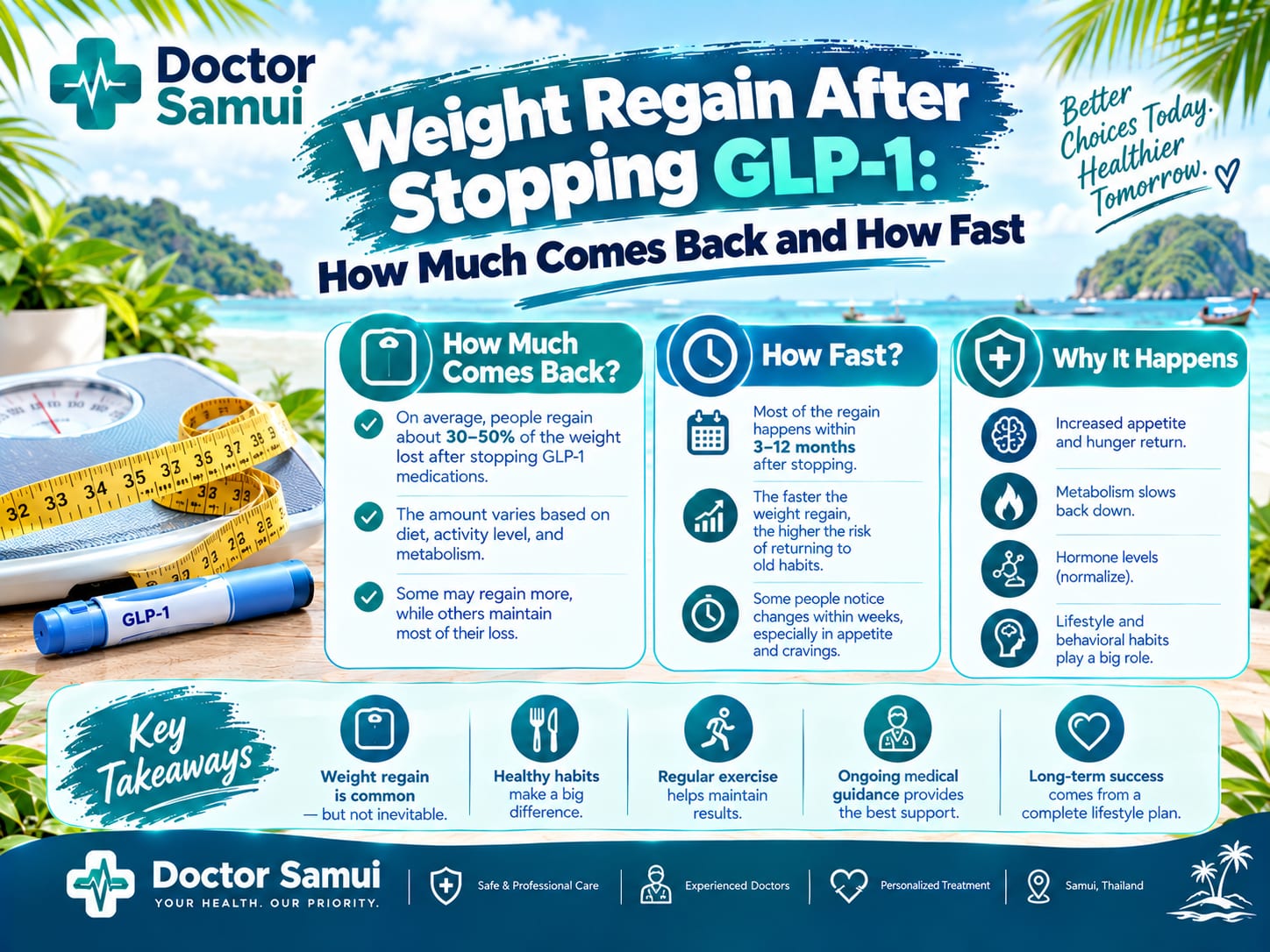
Studies show that roughly two-thirds of weight lost on semaglutide returns within a year of stopping, and the regain starts within weeks, not months. The biology driving this is not a failure of willpower. Your hunger hormones rebound and your body actively defends its previous weight. Slowing that rebound is possible, but it requires a plan, not just a decision to stop.
You packed enough medication for your trip, but the stay extended, the supply ran out, or you decided to pause it for now. Whether you are a long-stay expat on Samui who missed a few injections, or someone watching the scale tick up again after stopping intentionally back home, the question is the same: how much is coming back, and what can you actually do about it?
The short answer is that weight regain after stopping a GLP-1 is real, it is fast, and it affects almost everyone to some degree. That does not mean the medication failed. Obesity is a chronic condition, and GLP-1 drugs work the same way blood pressure tablets work: the benefit largely depends on staying on them. Understanding what happens when you stop helps you make a better decision about what comes next.

Why the Weight Comes Back After Stopping GLP-1
GLP-1 receptor agonists reduce appetite by slowing stomach emptying and by acting on hunger signals in the brain. When you stop, both effects reverse. Your stomach empties faster, and hunger returns, often more intensely than expected.
Ghrelin, your body’s main hunger hormone, is dampened while you are on the medication. After stopping, it rebounds. Your body also defends a baseline weight through hormonal and metabolic pressure. That pressure does not care how much effort went into losing the weight.
This is not a character flaw. It is a biological response that would show up in almost anyone who stopped the medication.
How Much Weight Comes Back, and Is It Just Fat?
The most-cited data comes from the STEP-1 trial extension, which followed semaglutide users after stopping. Within 52 weeks of stopping, participants regained approximately two-thirds of the weight they had lost. The regain curve is steepest in the first few months, then slows but does not stop.
Body composition matters here, and this is the part that often gets overlooked. Research has raised the concern that regained weight may return predominantly as fat rather than as a mix of fat and lean muscle. A person who stops and regains could end up with worse body composition than before they started, even if the number on the scale looks similar to their starting weight. Maintaining resistance exercise during and after treatment may help preserve lean muscle mass, though this remains an area of active study.
Visceral fat, the fat stored around the organs rather than under the skin, may also return faster than subcutaneous fat. That matters for cardiovascular and metabolic risk, not just appearance.
Semaglutide vs Tirzepatide: Does the Drug Matter?
Tirzepatide acts on two hormone pathways rather than one and produced larger average weight loss than semaglutide in the SURMOUNT-5 head-to-head trial. The SURMOUNT-4 trial looked specifically at what happens when tirzepatide is stopped after a period of use. Participants regained a meaningful portion of their lost weight, following a pattern broadly similar to semaglutide discontinuation data.
The practical takeaway is straightforward. A drug that helps you lose more weight does not protect you from regaining it. The mechanism driving regain, which is hormonal and metabolic rebound, operates regardless of which drug you were using.
What Else Reverses When You Stop
Weight is not the only thing that changes. Research, including the STEP 1 trial extension, found that improvements in blood pressure, HbA1c (a measure of blood sugar control over time), and cholesterol all largely reversed after stopping GLP-1 therapy, broadly tracking the weight regain pattern.
For patients prescribed these medications partly because of cardiovascular risk or type 2 diabetes management, this matters beyond the scale. If your prescriber had monitoring targets in mind when they started you on a GLP-1, those targets are worth revisiting after you stop. A health check-up to recheck these markers makes sense within a few months of stopping, not a year later.
Can You Slow or Prevent Regain?
You can slow it, but the evidence for fully preventing it without ongoing medication is limited. A small Danish study suggested that a gradual dose taper, rather than stopping abruptly, may help stabilise weight in the short term. The evidence is preliminary and the study was small, so no firm protocol exists yet. That said, most prescribers would agree that a planned, gradual reduction is easier on the body than stopping cold.
Structured lifestyle support matters more after stopping than during the medication phase, not less. Regular resistance exercise to protect lean mass, consistent protein intake, and a realistic eating plan built around your actual life on the island all help reduce the rate of regain. These are conversations worth having with a clinician before you stop, not after you have already regained several kilograms.
Should You Restart, and When?
If you stopped because of cost, supply issues, or a planned break, restarting is a legitimate option that prescribers support. GLP-1 medications are not addictive, and returning to them after a gap does not reduce their effectiveness.
Restarting typically means stepping back through the dose escalation schedule rather than returning immediately to your previous dose. This depends on how long you have been off the medication and your clinical picture. If you stopped because of side effects, a different drug or a lower maintenance dose may be worth discussing. The goal of long-term GLP-1 use is finding the lowest effective dose, not staying at the highest tolerated one. GLP-1 medications are not suitable for everyone. People with a personal or family history of medullary thyroid cancer or multiple endocrine neoplasia type 2 should not use them. Anyone who develops severe abdominal pain, persistent vomiting, or signs of an allergic reaction after restarting should seek medical care promptly.
Managing GLP-1 Continuity on Koh Samui
Running out of medication on a Thai island is more common than it sounds. Supply chains for semaglutide and tirzepatide still have gaps in many markets. Travellers or expats sometimes arrive with less supply than planned, extend their stay unexpectedly, or stop because they cannot find a local source.
Stopping abruptly brings back appetite and weight faster than a planned pause does. If you are in this situation, the right move is to see a doctor before the supply runs out, not after. You can read more about the GLP-1 weight management programme at Doctor Samui at doctorsamui.com/glp-1.
Long-stay expats in Maenam, Bophut, Lamai, or anywhere else on the island do not need to fly back home to manage this. A doctor hotel visit or villa call works just as well for an initial consultation and clinical review. If you are also due for a metabolic check after stopping, a health check-up covering blood pressure, blood sugar, and cholesterol can be done at the same visit.
If you have stopped a GLP-1 medication, are running low on supply, or are noticing weight returning and want a clinical review, Doctor Samui can help. We offer GLP-1 consultations, metabolic health check-ups, and 24-hour house calls across Koh Samui including Chaweng, Lamai, Bophut, Maenam, and Choeng Mon. Walk in to the Chaweng clinic or contact us for a same-day villa or hotel visit.
Frequently Asked Questions
Dr. Ponlawat Pitsuwan
Physician, Doctor Samui
a walk-in clinic based in Chaweng, Koh Samui, with 24-hour hotel and villa visits across the island. He sees tourists, long-stay expats, and patients managing chronic conditions on Koh Samui, including GLP-1 weight management, metabolic health, and continuity of care for people who are away from their usual prescriber.
References
- Wilding JPH, et al. Weight regain and cardiometabolic effects after withdrawal of semaglutide: The STEP 1 trial extension. Diabetes, Obesity and Metabolism. 2022.
- Aronne LJ, et al. Continued treatment with tirzepatide for maintenance of weight reduction in adults with obesity: the SURMOUNT-4 randomized clinical trial. JAMA. 2024.
- Jastreboff AM, et al. Tirzepatide vs. semaglutide for obesity (SURMOUNT-5). New England Journal of Medicine. 2025.
- World Health Organization. Obesity and overweight: key facts. WHO. 2024.
- Pharmacist.com / APhA. Coming off GLP-1s slowly could be key to preventing weight regain. 2024. (Reporting on Embla/Gudbergsen conference abstract, European Congress on Obesity.)
The information in this article is for educational purposes only and does not constitute medical advice. It should not be used to self-diagnose or replace a consultation with a qualified physician. If you have concerns about your health, contact a licensed medical professional. For appointments at Doctor Samui, visit doctorsamui.com.