Clinically reviewed by Dr. Ponlawat Pitsuwan, Physician, Doctor Samui.
Last reviewed: October 2026
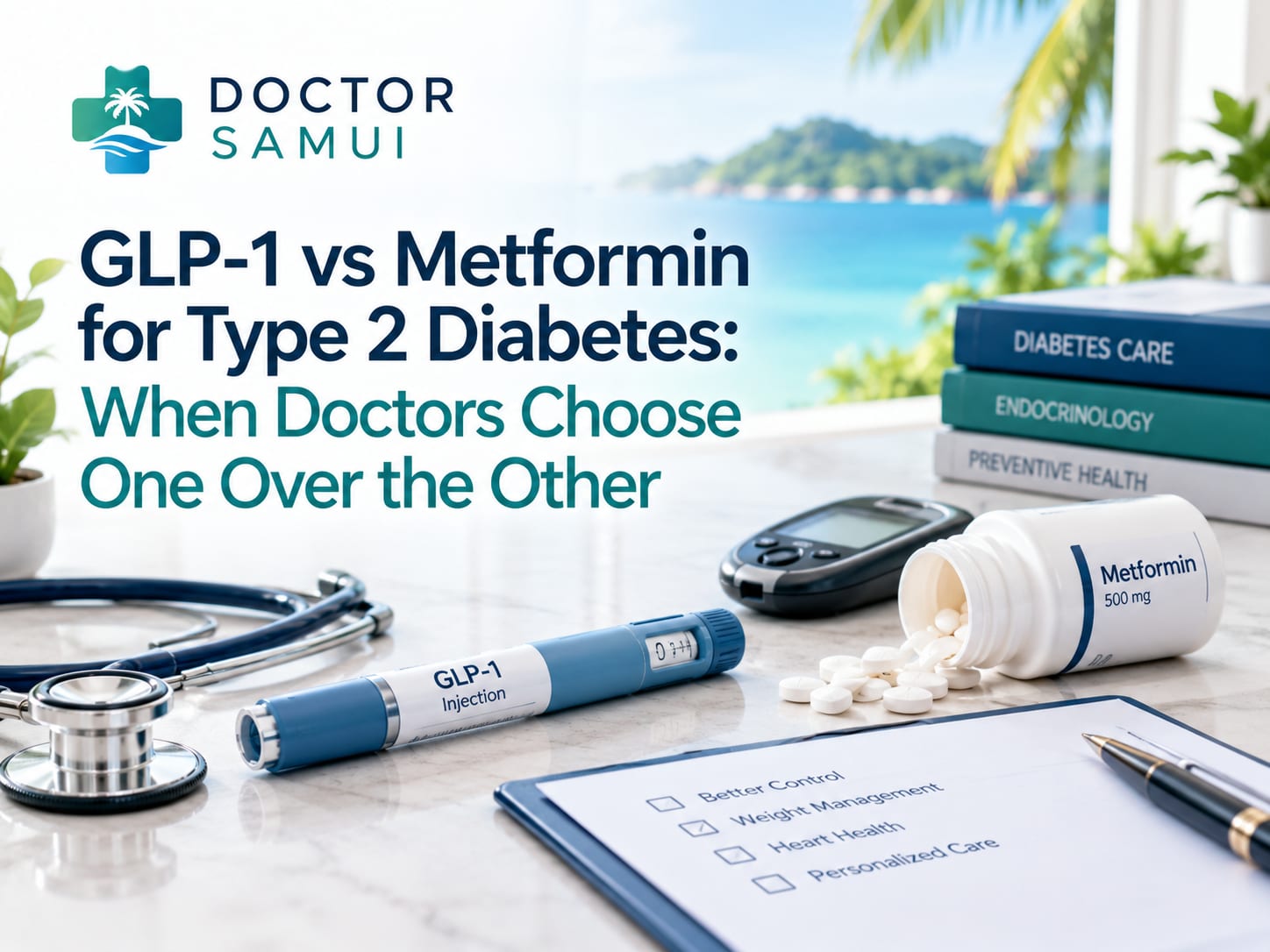
Metformin is still the standard first choice for most people with type 2 diabetes. GLP-1 receptor agonists, including semaglutide (Ozempic) and dulaglutide, are now recommended as a preferred first-line option for patients with established heart disease, heart failure, or chronic kidney disease, regardless of blood sugar level. Many patients take both drugs together. The right choice depends on your cardiovascular risk, kidney function, weight, and how well you tolerate each medication.
Your metformin is running low. You are three days into Koh Samui, eating street food near Chaweng, sweating through long beach walks, and the pharmacy conversation is not going the way you hoped. Or you are a long-stay expat who keeps hearing about Ozempic and wants to know whether it is genuinely better than what you have taken for years.
Either way, the question is the same: which drug should you actually be on, and why?
These two medications work in completely different ways. For a growing number of patients, the preferred choice has shifted in recent years. This is not about one drug being better across the board. It is about which one fits your specific situation.

How Metformin Works for Type 2 Diabetes
Metformin reduces the amount of glucose your liver releases into your blood. It also helps your muscle cells respond to insulin more effectively, which lowers blood sugar without triggering extra insulin production. That is why it rarely causes dangerously low blood sugar when used on its own.
It has been in use for decades. The evidence for its long-term safety is solid. It is inexpensive, widely available in Thailand, and taken as a tablet once or twice a day with food.
How GLP-1 Receptor Agonists Work
GLP-1 drugs mimic a hormone your gut releases naturally after eating. They trigger insulin release only when blood sugar is actually elevated, which keeps the risk of a dangerous low very low. They also slow how fast your stomach empties, which blunts blood sugar spikes after meals and reduces appetite.
Drugs in this class include semaglutide (Ozempic, Wegovy), dulaglutide (Trulicity), and liraglutide (Victoza). Most are given as a weekly or daily injection under the skin. GLP-1 drugs are not suitable for people with a personal or family history of medullary thyroid cancer or a condition called MEN2 syndrome, and should be used with caution in people with a history of pancreatitis. They produce more weight loss than metformin in clinical trial data. They also have direct heart and kidney-protective effects that metformin does not match.
Who Should Start on a GLP-1 Instead of Metformin
This is where the guidance changed. Updated ADA and EASD guidelines recommend GLP-1 receptor agonists as a preferred first-line option for patients with established cardiovascular disease, heart failure, or chronic kidney disease. That applies even when blood sugar control is already reasonable. The cardiovascular benefit is separate from blood sugar lowering.
If you have had a heart attack, have heart failure, or have reduced kidney function, your doctor may recommend a GLP-1 drug before or instead of metformin. This is not about your HbA1c number. It is about protecting your heart and kidneys directly.
Patients with significant obesity and type 2 diabetes may also be considered for earlier GLP-1 therapy, given the sustained weight loss seen in clinical trials.
When Metformin Remains the Right Starting Point
For most people newly diagnosed with type 2 diabetes, without established heart disease or kidney disease, metformin remains a well-supported first choice. It does not require injection. It is affordable and easy to access across Thailand and most of the world.
It is also the practical choice when GLP-1 drugs are not tolerated, not available, or cost-prohibitive. If your HbA1c is mildly elevated and your cardiovascular risk is low, metformin is a sensible place to start. Your doctor can always add or switch later as your situation changes.
Can You Take Both Together
Yes, and many patients do. Metformin and GLP-1 drugs work through different pathways, so combining them is both common and clinically supported. When one drug alone is not enough to keep blood sugar in range, adding the other is a standard next step rather than a full switch.
Some early research suggested metformin may affect GLP-1 levels in the body, but the evidence is limited and conflicting. The two drugs are often used together because they work through different pathways, not because of a confirmed interaction between them.
Cardiovascular and Kidney Risk: Why It Changes the Decision
Several large cardiovascular outcome trials, including LEADER with liraglutide and SUSTAIN-6 with semaglutide, showed that GLP-1 receptor agonists significantly reduce the risk of heart attack and stroke in high-risk patients. That level of evidence does not exist for metformin in the same population.
For patients with chronic kidney disease, GLP-1 drugs have also shown kidney-protective effects in trial data. Metformin, by contrast, is used with caution or stopped when kidney function falls below a certain level, because it can accumulate in the body and cause a rare but serious condition called lactic acidosis. Your kidney function, measured by a test called eGFR, matters when choosing between these drugs.
Side Effects and What to Expect on Koh Samui
Metformin’s most common side effects are gut-related: nausea, loose stools, and stomach cramps. These usually improve when taken with food and settle within the first few weeks. An extended-release version can reduce them further.
GLP-1 drugs also cause nausea, especially at the start or after a dose increase. Vomiting, reduced appetite, and slower digestion are common early on. Starting at a low dose and increasing gradually is standard practice.
On Koh Samui, the heat and high activity levels matter. Dehydration is a real concern for anyone on metformin, because low fluid intake affects how well your kidneys filter the drug. GLP-1 drugs can reduce your drive to drink enough fluids, which adds to that risk. Stay well hydrated on long beach days, dive trips, or hikes up to Na Muang waterfall. If your symptoms feel different from your usual pattern, see a doctor rather than adjusting your dose on your own.
Getting Your Diabetes Medication on Koh Samui
Running out of metformin on the island is more common than it sounds. Dietary changes, altered routines, and pharmacy communication barriers all play a role. If you have run short, or you are questioning whether your current medication is still right for you, the Doctor Samui walk-in clinic in Chaweng can see you the same day.
The clinic can review your medication history, check your blood glucose, and issue a prescription where clinically appropriate. If you are considering a GLP-1 drug for the first time, the Doctor Samui GLP-1 page explains how doctors choose between these options in more detail. For expats managing a long-term condition on the island, a health check up in Koh Samui is a practical way to review HbA1c, kidney function, and cardiovascular risk in one visit.
If coming to the clinic is not practical, 24-hour hotel and villa visits are available across the island, including Lamai, Bophut, Maenam, and Chaweng.
If you are on the island and need to review your diabetes medication, or if you are an expat considering a GLP-1 drug for the first time, Doctor Samui’s walk-in clinic in Chaweng is open for same-day consultations. We can check your blood glucose, review your current prescription, and advise on metformin, GLP-1 therapy, or both. 24-hour hotel and villa visits are available across Koh Samui if you cannot get to the clinic.
Frequently Asked Questions
Dr. Ponlawat Pitsuwan
Physician, Doctor Samui
a walk-in clinic based in Chaweng, Koh Samui, with 24-hour hotel and villa visits across the island. He sees tourists, families, and long-stay expats for chronic disease management including type 2 diabetes, GLP-1 therapy, and ongoing medication review during extended island stays. His focus is straightforward, evidence-based care delivered in plain language.
References
- Davies MJ, et al. Management of Hyperglycaemia in Type 2 Diabetes, 2022. A Consensus Report by the ADA and EASD. Diabetes Care 2022;45(11):2753-2786.
- Marso SP, et al. Liraglutide and Cardiovascular Outcomes in Type 2 Diabetes (LEADER). N Engl J Med 2016;375:311-322.
- Marso SP, et al. Semaglutide and Cardiovascular Outcomes in Patients with Type 2 Diabetes (SUSTAIN-6). N Engl J Med 2016;375:1834-1844.
- Hviid CVB, et al. Comparing GLP-1 receptor agonists versus metformin in drug-naive patients: A nationwide cohort study. PLoS One 2024.
- American Diabetes Association. Standards of Medical Care in Diabetes 2024. Diabetes Care 2024;47(Supplement 1).
The information in this article is for educational purposes only and does not constitute medical advice. It should not be used to self-diagnose or replace a consultation with a qualified physician. If you have concerns about your health, contact a licensed medical professional. For appointments at Doctor Samui, visit doctorsamui.com.