Clinically reviewed by Dr. Ponlawat Pitsuwan, Physician, Doctor Samui.
Last reviewed: October 2026
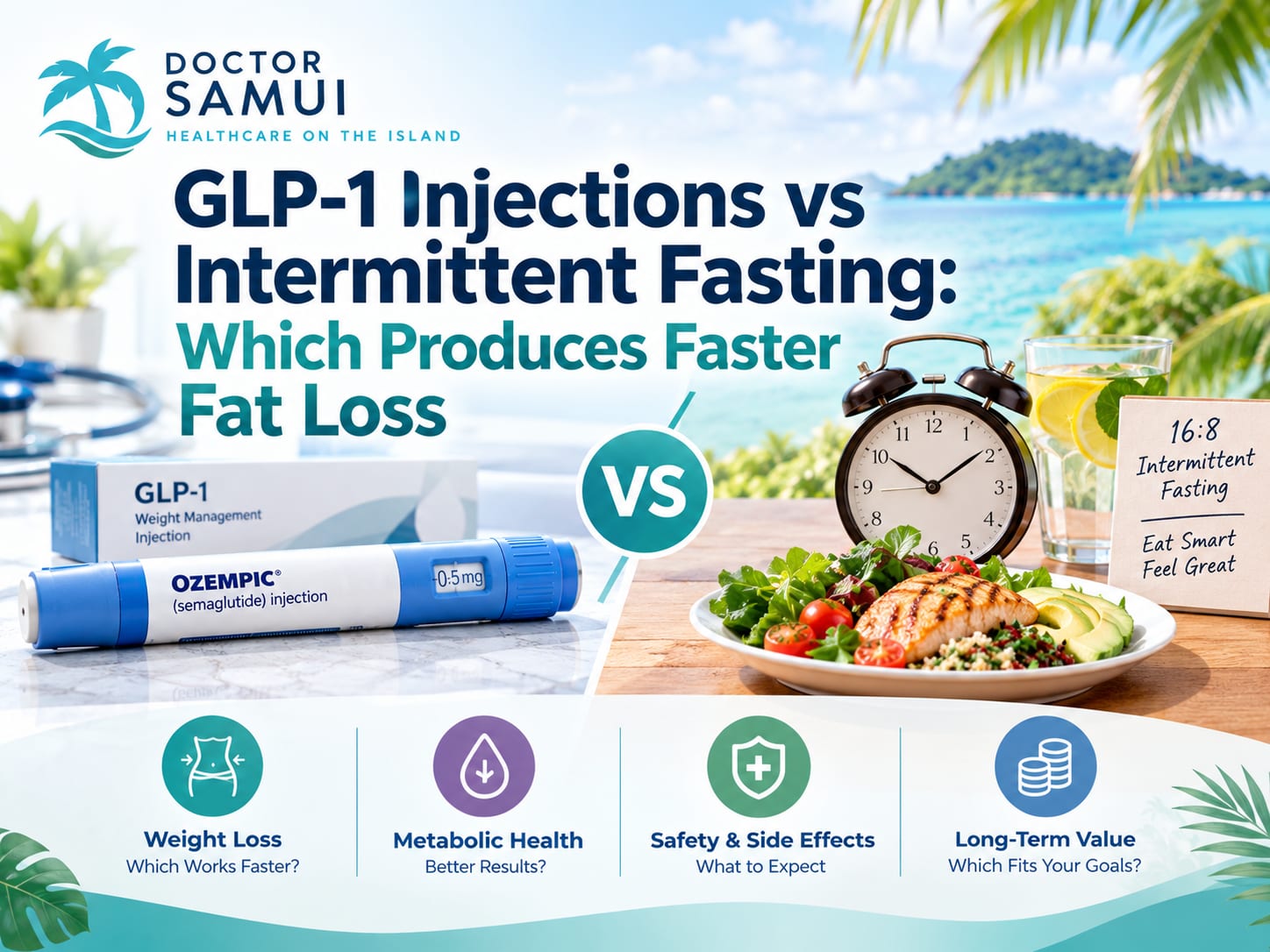
GLP-1 injections produce faster and larger fat loss than intermittent fasting alone. Clinical trials show semaglutide reduces body weight by around 14.9% and tirzepatide by around 20.9% over roughly 68 to 72 weeks. Intermittent fasting typically produces 3 to 8% body weight reduction over a similar period. The right choice depends on your starting point, your health history, and whether you want a short-term intervention or a long-term habit.
You have been on Samui for three weeks. The beach runs have been good, the food has been great, and somewhere between Fisherman’s Village and the Chaweng beachfront you decided this is the year you actually do something about your weight. You have heard about GLP-1 injections. You have also been doing intermittent fasting on and off for months. Now you want to know which one actually works faster, and whether you even need to choose.
GLP-1 medications produce faster and larger results in clinical trials. But they come with costs, side effects, and a real risk of weight regain when you stop. Intermittent fasting is slower. It is also free, sustainable, and builds habits that continue without a prescription. Here is the trial data, the practical differences, and a clear framework for deciding what fits your situation right now on Koh Samui.

How GLP-1 Injections Work for Weight Loss
GLP-1 stands for glucagon-like peptide-1, a hormone your gut releases naturally after eating. It tells your brain you are full, slows how quickly your stomach empties food, and helps regulate blood sugar. Injectable medications like semaglutide and tirzepatide mimic this hormone at much higher levels than your body produces on its own.
The result is a significant drop in appetite. Most people find they are simply not hungry, not that they are fighting hunger. That distinction matters, because it removes the willpower element that makes most diets fail.
How Intermittent Fasting Works for Fat Loss
Intermittent fasting restricts the window of time during which you eat. The most common version is 16:8, eating within an 8-hour window and fasting for 16 hours each day. Some people follow a 5:2 pattern, eating normally five days a week and cutting calories sharply on two.
The mechanism is straightforward. Fasting reduces overall calorie intake and, over time, can improve how efficiently your cells respond to blood sugar. Fat burning increases during the fasting window. What it does not do is suppress appetite in any sustained or reliable way, which is why many people find it hard to keep up.

GLP-1 vs Intermittent Fasting: What the Trial Numbers Actually Show
The STEP 1 trial, published in the New England Journal of Medicine, found that weekly semaglutide 2.4 mg reduced body weight by an average of 14.9% over 68 weeks. The SURMOUNT-1 trial found that tirzepatide 15 mg reduced body weight by an average of 20.9% over 72 weeks. These are large, well-designed trials with substantial results.
Intermittent fasting data is less consistent. Reviews of intermittent fasting trials have placed average weight loss for time-restricted eating at roughly 3 to 8% of body weight, typically over periods of 8 to 24 weeks. That is meaningful, but a different order of magnitude.
Semaglutide and tirzepatide are not the same drug. Tirzepatide targets two gut hormone receptors rather than one, and its trial results reflect that difference. If you are comparing options, that is clinically relevant.
Metabolic Benefits Beyond the Scale
Both approaches improve how efficiently your body handles blood sugar, but through different routes. GLP-1 medications directly affect blood sugar regulation, making them particularly useful for people with type 2 diabetes or pre-diabetes. Intermittent fasting improves the same by reducing the total hours your body spends in a fed, insulin-elevated state.
GLP-1 medications have also shown reductions in blood pressure and inflammatory markers in the STEP programme trials, and semaglutide has shown cardiovascular risk reduction in a separate dedicated outcomes trial (SELECT) in people with established cardiovascular disease and obesity. Visceral fat, the deep abdominal fat that drives metabolic risk, falls with both approaches. Trial data suggests GLP-1 medications produce greater visceral fat reduction at the levels achievable in 6 to 12 months.
Muscle Mass and Body Composition: The Hidden Risk
This part matters especially if you are active. If you are diving the reefs around Koh Tao, trail running the hills above Na Muang, or an expat who trains regularly, the composition of what you lose is as important as how much you lose.
Rapid weight loss of any kind carries a risk of losing lean muscle alongside fat. Data from GLP-1 trials suggests that without adequate protein intake and resistance exercise, a meaningful portion of weight lost can come from lean tissue. Intermittent fasting without sufficient protein carries the same risk. Preserving muscle requires deliberate protein intake throughout any weight loss programme, and resistance training where possible. This is worth discussing with a doctor before starting either approach.
Side Effects and Safety: What to Know Before You Start
GLP-1 medications commonly cause nausea, vomiting, constipation, and slower stomach emptying. These effects are usually strongest during the dose-increase phase at the start of treatment and tend to ease over time.
One specific risk that catches people out: combining a GLP-1 injection with intermittent fasting and then breaking a long fast with a large or fatty meal can trigger significant nausea and reflux. Your stomach is already emptying more slowly because of the medication. A large meal at the end of a fasting window makes that worse.
GLP-1 medications are not appropriate for everyone. They are not recommended during pregnancy or breastfeeding, and are contraindicated in people with a personal or family history of medullary thyroid carcinoma or multiple endocrine neoplasia syndrome type 2. A full medical assessment before starting is the standard of care, not an optional extra.
Intermittent fasting carries fewer medical risks for most healthy adults, but is not appropriate for people with a history of eating disorders, those who are pregnant, or people with certain metabolic conditions.
Can You Combine GLP-1 and Intermittent Fasting?
Yes, and some patients find the combination effective. GLP-1 medications suppress appetite enough that maintaining a fasting window becomes considerably easier. You are not fighting hunger through a 16-hour fast the way you would without the medication.
The combination requires care. Protein intake during your eating window needs to be adequate to protect muscle mass. Breaking your fast with a large or fatty meal is more likely to cause nausea on GLP-1 treatment. If you are considering this combination, read more about how to do intermittent fasting on GLP-1 safely before you start. The goal is to have the fasting habit in place before you eventually taper off the medication.
Who Should Choose Which Option?
Intermittent fasting is a reasonable starting point if you are broadly healthy, have a modest amount of weight to lose, and want to build a long-term habit. It costs nothing, carries minimal medical risk, and its effects can be sustained because they depend on behaviour rather than a drug.
GLP-1 injections are worth considering if you have a higher BMI, have pre-diabetes or type 2 diabetes, have tried sustained dietary changes without meaningful results, or have a clear time-bound goal. The results are significantly larger and faster, but the intervention requires medical supervision, ongoing cost, and a plan for what happens when you stop.
What happens when you stop matters. Data from semaglutide trials shows that patients who discontinued the medication regained a substantial portion of their lost weight. In the STEP 1 extension, participants regained on average around two-thirds of the weight they had lost within one year of stopping. Intermittent fasting can be maintained indefinitely at no cost. If you are considering GLP-1 treatment, the exit strategy is a conversation to have with your doctor from the beginning, not after you finish.
Getting GLP-1 Treatment on Koh Samui
GLP-1 medications are available in Thailand with a prescription from a licensed physician. As a tourist or long-stay expat, you can be assessed, prescribed, and started on treatment through a walk-in appointment or a hotel visit at Doctor Samui. The assessment covers your medical history, current medications, contraindications, and realistic goals.
For patients already on GLP-1 treatment who develop nausea, vomiting, or abdominal symptoms, those warrant clinical assessment rather than waiting it out. Doctor Samui covers 24/7 hotel and villa visits across Chaweng, Lamai, Bophut, and the rest of the island, so you do not need to travel to the clinic if you feel unwell. If you want a full metabolic picture before committing to either approach, a health check-up in Koh Samui is a sensible starting point. For patients staying in or around Lamai, house call and IV therapy services in Lamai are also available if you need support without travelling to Chaweng.
Thinking about GLP-1 injections or want to know which weight loss approach suits your health right now? Doctor Samui offers walk-in consultations and 24/7 hotel visits across Koh Samui. We can assess your suitability for GLP-1 treatment, review your metabolic health, and help you build a plan that works beyond your time on the island. Walk into the Chaweng clinic or call for a hotel visit any time of day or night.
FAQ
Dr. Ponlawat Pitsuwan
Physician, Doctor Samui
a walk-in clinic based in Chaweng, Koh Samui, with 24/7 hotel and villa visits across the island. He sees tourists, families, and long-stay expats for weight management consultations, GLP-1 assessment and prescribing, metabolic health reviews, and general health check-ups. His focus is straightforward, evidence-based care delivered in plain language.
References
- Wilding JPH, Batterham RL, Calanna S, et al. Once-Weekly Semaglutide in Adults with Overweight or Obesity. N Engl J Med. 2021;384(11):989-1002.
- Jastreboff AM, Aronne LJ, Ahmad NN, et al. Tirzepatide Once Weekly for the Treatment of Obesity. N Engl J Med. 2022;387(3):205-216.
- Rubino D, Abrahamsson N, Davies M, et al. Effect of Continued Weekly Subcutaneous Semaglutide vs Placebo on Weight Loss Maintenance in Adults With Overweight or Obesity: The STEP 4 Randomized Clinical Trial. JAMA. 2021;325(14):1414-1425.
- Wilding JPH, Batterham RL, Davies M, et al. Weight regain and cardiometabolic effects after withdrawal of semaglutide: The STEP 1 trial extension. Diabetes Obes Metab. 2022;24(8):1553-1564.
- Lincoff AM, Brown-Frandsen K, Colhoun HM, et al. Semaglutide and Cardiovascular Outcomes in Obesity without Diabetes (SELECT). N Engl J Med. 2023;389(24):2221-2232.
- de Cabo R, Mattson MP. Effects of Intermittent Fasting on Health, Aging, and Disease. N Engl J Med. 2019;381(26):2541-2551.
The information in this article is for educational purposes only and does not constitute medical advice. It should not be used to self-diagnose or replace a consultation with a qualified physician. If you have concerns about your health, contact a licensed medical professional. For appointments at Doctor Samui, visit doctorsamui.com.