
Clinically reviewed by Dr. Ponlawat Pitsuwan, Physician, Doctor Samui.
Last reviewed: November 2026
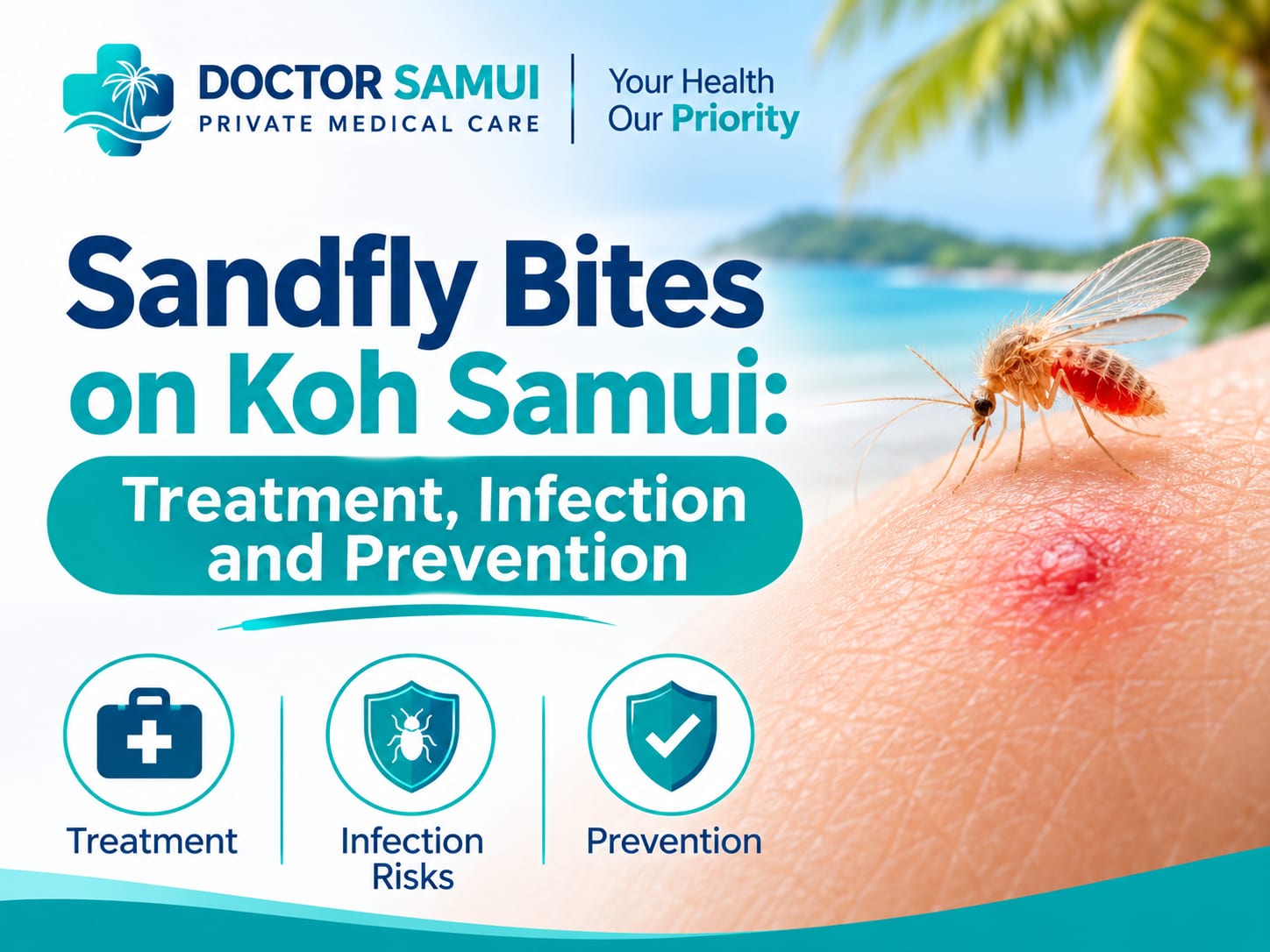
Sandflies on Koh Samui are tiny biting midges, most active at dawn and dusk on quieter, unraked beaches. Their bites cause intense, delayed itching that can last one to three weeks. Scratching breaks the skin and risks bacterial infection. For mild bites, a topical antihistamine or low-strength hydrocortisone from a local pharmacy is a reasonable first step. If a bite is spreading, warm, or you have a fever, see a doctor the same day.
You spent the afternoon at Silver Beach or walked the shoreline near Lipa Noi at sunset, and you felt nothing at the time. By midnight, your ankles and lower legs are covered in small, fiercely itchy red bumps. That is the classic sandfly pattern on Samui, and the delayed reaction is exactly why most people do not connect the dots until the itching becomes hard to ignore.
These are not mosquito bites. They come from biting midges, sometimes called no-see-ums, too small to see and too quiet to hear. The itch is often more intense and longer-lasting than a mosquito bite, and scratching is what turns a minor nuisance into something that needs clinical care. Here is what to do, what to watch for, and when to come in.

Why Koh Samui Sandfly Bites Are Worse on Some Beaches
The sandflies active on Koh Samui belong to the Ceratopogonidae family, tiny biting midges that thrive in moist, organic-rich sand along the shoreline. They are most active at dawn and dusk. Breezier, more developed beaches like central Chaweng tend to have fewer problems because wind disrupts their flight. The quieter stretches with leaf litter and seaweed, places like the south and west coast beaches near Hua Thanon, Taling Ngam, and Ban Tai, are where bites are more common.
Coastal vegetation right at the waterline and shaded, damp sand near reef shores create the habitat they prefer. If you are sitting still at sunset, barefoot on a quiet beach, you are in the right place at the right time for them.
Bite Reactions: What to Expect
The itch comes from your body reacting to the midge’s saliva. That reaction is delayed. You may feel nothing for several hours, then wake up with a cluster of small, raised, intensely itchy bumps on the ankles, lower legs, and feet.
First-time visitors often have a milder initial reaction. Re-exposure sensitises the immune system, so people returning to Samui or bitten before in other tropical destinations sometimes react more strongly the second time. Children with eczema or atopic skin tend to have a more visible reaction. This is a normal variation, not a sign that something is seriously wrong.
The bumps can stay raised and itchy for one to three weeks. Some develop a small blister at the centre. Unlike a mosquito bite, the itch tends to worsen with scratching and can disrupt sleep on several nights in a row.

Stopping the Itch
The goal in the first day or two is to reduce the itch without breaking the skin. A topical antihistamine or low-strength hydrocortisone creamClinically reviewed by Dr. Ponlawat Pitsuwan, Physician, Doctor Samui. Last reviewed: November 2026
Sandflies on Koh Samui are tiny biting midges, most active at dawn and dusk on quieter, unraked beaches. Their bites cause intense, delayed itching that can last one to three weeks. Scratching breaks the skin and risks bacterial infection. For mild bites, a topical antihistamine or low-strength hydrocortisone from a local pharmacy is a reasonable first step. If a bite is spreading, warm, or you have a fever, see a doctor the same day.
You walked the shoreline near Lipa Noi at sunset, or spent the late afternoon sitting on the sand at Silver Beach. You felt nothing at the time. By midnight, your ankles and lower legs are covered in small, fiercely itchy red bumps. That is the classic Koh Samui sandfly pattern, and the delayed reaction is exactly why most people do not connect the dots until the itching becomes hard to ignore.
These are not mosquito bites. They come from biting midges, too small to see and too quiet to hear. The itch is often more intense and longer-lasting than a mosquito bite, and scratching is what turns a minor nuisance into something that needs clinical care. Here is what to do, what to watch for, and when to come in.
Why Sandfly Bites Are Common on Samui Beaches
The sandflies active on Koh Samui belong to the Ceratopogonidae family, tiny biting midges that thrive in moist, organic-rich sand along the shoreline. They are most active at dawn and dusk. Breezier, busier beaches like central Chaweng tend to have fewer problems because wind disrupts their flight. The quieter stretches, natural shorelines with leaf litter and seaweed near Hua Thanon, Taling Ngam, and Ban Tai, are where bites are most common.
Coastal vegetation right at the waterline and shaded damp sand near coral reef shores create the habitat they prefer. If you are sitting still at sunset, barefoot on a quiet beach, you are in exactly the right place at the right time for them.
What Sandfly Bites Feel and Look Like
Your body reacts to the midge’s saliva, and that reaction is delayed. You may feel nothing for several hours, then wake up with a cluster of small, raised, intensely itchy bumps on the ankles, lower legs, and feet.
First-time visitors often have a milder initial reaction. Re-exposure sensitises the immune system, so people returning to Samui or who have been bitten before in other tropical destinations sometimes react more severely. Children, especially those with eczema or atopic skin, tend to have a stronger and more visible reaction. This is a normal difference in immune response, not a sign that something is seriously wrong.
The bumps can stay raised and itchy for one to three weeks. Some develop a small blister at the centre. Unlike a mosquito bite, the itch tends to worsen with scratching and can disrupt sleep on multiple nights.
Stopping the Itch: First Steps
The goal in the first day or two is to reduce the itch without breaking the skin. A topical antihistamine or low-strength hydrocortisone cream from any pharmacy in Chaweng is a reasonable starting point for mild, uninfected bites. Apply as directed on the packaging.
Do not use a topical steroid on a bite that already looks infected. Pus, crusting, or spreading redness are warning signs. Steroids suppress the local immune response and can make an early infection worse while masking the signs. If you are not sure whether a bite is infected, have it looked at before applying anything stronger than a basic antihistamine cream.
Oral antihistamines can help reduce the itch response overall, especially at night. These are available over the counter at Samui pharmacies. Keeping the skin clean and dry, and cutting fingernails short to reduce scratching damage, makes a real difference in outcome.
When Koh Samui Sandfly Bites Get Infected
Scratching is how most sandfly bite infections start. The nails break the skin, bacteria enter, and what began as a minor bite becomes a localised skin infection. Signs of a secondary infection include increasing redness, warmth around the bite, swelling, pus or discharge, and pain rather than itch.
If the redness is spreading beyond the original bite site, the skin feels tight and hot over a larger area, or you develop a fever, that points to cellulitis. Cellulitis is a bacterial skin infection that requires oral antibiotics. A pharmacy cream will not resolve it.
The main health risk from sandfly bites on Samui is this kind of secondary bacterial skin infection, not transmitted disease. It is common and very treatable if caught early. If a bite looks infected, see a doctor the same day rather than waiting to see if it settles. Doctor Samui can assess and prescribe on the same visit, including via a hotel or villa visit anywhere on the island.
For anything beyond minor surface irritation, the pages on sandfly bite infection and cellulitis treatment in Koh Samui explain what a clinical assessment involves.
When to See a Doctor on Koh Samui
Mild bites that itch but are not growing, spreading, or producing discharge can be managed at home with pharmacy products. Watch them for the first 48 hours.
Come in, or call for a hotel visit, if the bite area is spreading, warm, and swollen beyond the original bump. Come in if you develop a fever alongside the bites. Come in if your child’s bites are visibly infected, swelling significantly, or if your child is under two. Do not wait with a fever and spreading skin redness. That combination can progress quickly.
Doctor Samui’s walk-in clinic is in Chaweng, with 24-hour villa and hotel visits across Lamai, Bophut, Maenam, Choeng Mon, and the south and west coasts. If you are staying somewhere remote, a doctor can come to you. There is no need to navigate transport at night with a sick child or a spreading infection.
Sandfly Bites vs Mosquito or Flea Bites
Sandfly bites cluster on the lower legs and ankles, almost always where skin was directly on the sand. The reaction is delayed by several hours and rarely appears above the knee unless you were lying on the beach.
Mosquito bites are larger, appear faster, and are more randomly distributed on any exposed skin. Flea bites also cluster on the lower legs but have a halo of redness around a central puncture, often in a line or tight group, and are linked to pet contact or older soft furnishings.
If you have a widespread skin rash, bites appearing in new places without further beach exposure, or significant swelling beyond individual bite sites, that warrants a clinical look. A rash that spreads without obvious insect contact is not a sandfly reaction. Doctor Samui’s skin rash clinic can help sort out what you are dealing with.
Preventing Sandfly Bites on Samui Beaches
Timing is the most effective prevention. Avoid sitting on the beach at dawn and dusk, especially on quieter, unraked shorelines. If you are out at those times, cover your lower legs. Loose trousers or a sarong over the ankles makes a significant difference.
DEET-based repellents or picaridin-based alternatives work against biting midges. Higher DEET concentrations give longer protection. Apply to exposed skin before going out, particularly in the late afternoon, and reapply after swimming. Clothing treated with permethrin adds another layer for families spending extended time near the shoreline.
A fan directed at your sitting area at dusk helps too. The midges are poor fliers and wind disrupts them easily. If you are in an open-air villa near a quiet beach, a portable fan on the veranda at sunset prevents a lot of bites. For villa guests on the south or west coast, the mobile doctor service in Taling Ngam and house calls in Hua Thanon are available if bites escalate and you prefer not to drive to Chaweng.
If a sandfly bite is spreading, infected, or your child has a fever alongside skin bites, Doctor Samui can assess and treat you the same day. Walk in to our clinic in Chaweng or request a 24-hour hotel or villa visit anywhere on Koh Samui. Insect bite treatment, skin infection assessment, and same-day prescriptions are available without an appointment.
Frequently Asked Questions
Dr. Ponlawat Pitsuwan
Physician, Doctor Samui
a walk-in clinic based in Chaweng, Koh Samui, with 24-hour hotel and villa visits across the island. He sees tourists, families, and long-stay expats for insect bite reactions, secondary skin infections, and tropical dermatology presentations specific to island beach activities. His focus is straightforward, evidence-based care delivered in plain language.
References
- Sunantaraporn S, et al. DNA barcoding of Culicoides biting midges (Diptera: Ceratopogonidae) and detection of Leishmania and other trypanosomatids in southern Thailand. Parasites and Vectors, 2025.
- Phimpraphi W, et al. Natural infection with Leishmania (Mundinia) martiniquensis supports Culicoides peregrinus (Diptera: Ceratopogonidae) as a potential vector of leishmaniasis. PLOS Neglected Tropical Diseases, 2023.
- Centers for Disease Control and Prevention. Avoid Bug Bites. CDC Travelers Health, 2024.
- NHS. Insect bites and stings: Treatment. NHS, 2023.
- Sukantamala N, et al. First Evidence of Co-Circulation of Leishmania martiniquensis, Leishmania orientalis, and Crithidia sp. in Culicoides Biting Midges, the Putative Vectors for Autochthonous Transmission in Southern Thailand. Frontiers in Microbiology, 2022.
The information in this article is for educational purposes only and does not constitute medical advice. It should not be used to self-diagnose or replace a consultation with a qualified physician. If you have concerns about your health, contact a licensed medical professional. For appointments at Doctor Samui, visit doctorsamui.com.
