
Clinically reviewed by Dr. Ponlawat Pitsuwan, Physician, Doctor Samui.
Last reviewed: November 2026
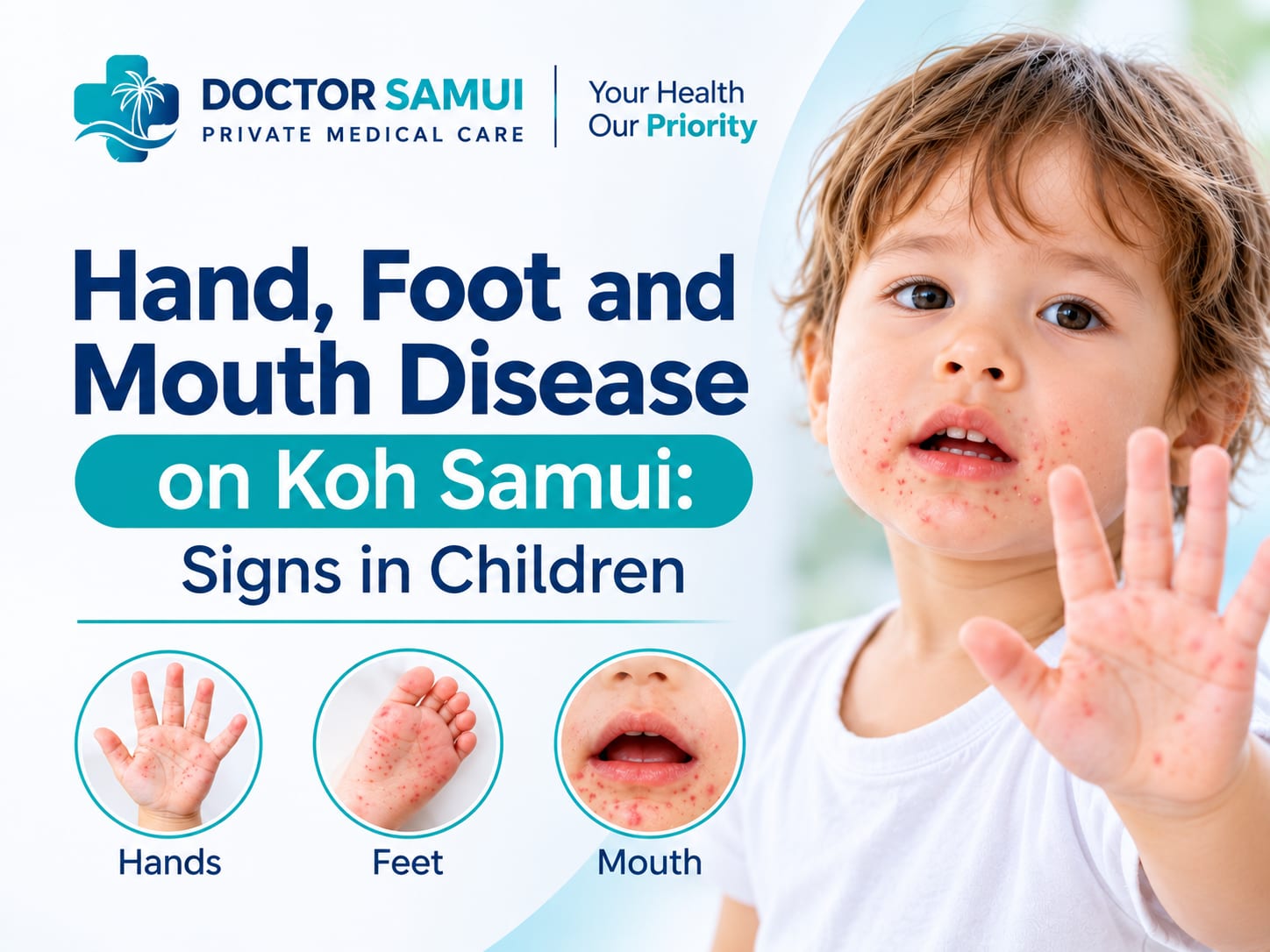
Hand, foot and mouth disease (HFMD) is a common viral illness in young children caused by enteroviruses, most often Coxsackievirus A16 or EV-A71. It causes fever, painful mouth sores, and a blistering rash on the hands, feet, and sometimes the buttocks. Most children recover at home within seven to ten days with fluids and rest. See a doctor promptly if your child develops a high fever that will not come down, becomes very drowsy, or stops drinking.
Your toddler spent the morning at the Chaweng resort pool, splashing in the kids club with a dozen other children. By evening, they are off their food and running a fever. The next morning, you spot small blisters on their palms and a ring of sores inside their mouth. That combination, fever plus mouth ulcers plus a blistering rash, is hand, foot and mouth disease. In most cases you can manage it safely from your villa or hotel room.
Koh Samui sits in Surat Thani province, which records HFMD cases year-round in Thai national disease surveillance data. The island’s warm, humid climate and the density of shared resort pools, splash zones, and kids clubs create easy conditions for the virus to spread among young children. Knowing what to watch for, what to do at home, and when to call a doctor makes an enormous difference when you are far from your usual GP.
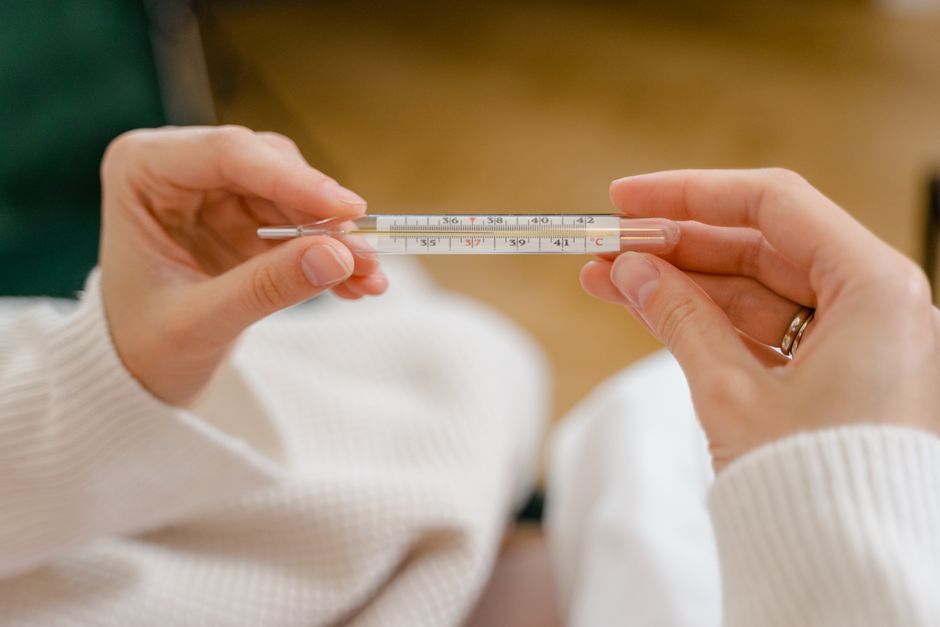
First Symptoms of Hand Foot Mouth Disease in Thailand
The illness usually starts with a fever, reduced appetite, and a sore throat. Within one to two days, painful ulcers appear inside the mouth, on the tongue, and on the inside of the cheeks. The rash follows shortly after: small red spots or blisters on the palms, the soles of the feet, and sometimes the buttocks and groin.
In young children, the mouth sores are often the most distressing part. They hurt enough to put children off eating and drinking, which is where the real risk of dehydration begins. The rash itself is not usually itchy, but the blisters can be uncomfortable, especially on the soles when walking.
Most cases in Thailand are caused by Coxsackievirus A16, which is typically mild and self-limiting. The strain called EV-A71 is less common but associated with a higher risk of neurological complications, particularly in children under five. This is one reason you should not simply wait and see if your child’s symptoms are severe or worsening.
The rainy season from May through September tends to bring higher case numbers across Southern Thailand. Tourist season on Samui runs year-round, though, so there is no month when the risk simply disappears.
How HFMD Spreads in Resort Pools and Kids Clubs
HFMD spreads through direct contact with saliva, blister fluid, nasal discharge, and stool. Shared pool toys, floaties, and towels can all carry the virus. The virus transfers when another child touches a contaminated surface and then touches their face.
Beach wisdom gets this one wrong: enteroviruses show notable resistance to the chlorine levels used in recreational pools. A child who is still contagious can shed the virus in a pool without the chlorine clearing it reliably. A resort pool or splash zone is a genuine transmission risk, not a safe alternative to the beach.
Kids clubs are high-risk for the same reason. Shared toys, close contact, and children who are contagious before their rash even appears all make group childcare settings efficient transmission routes. If your child has HFMD, let the resort know. Keep them out of the pool and kids club until all blisters are fully crusted and dry and the fever has been gone for at least 24 hours without medication.

Home Care and Fluids
Most children with HFMD do not need hospital treatment. The goal at home is comfort and hydration.
Fluids are the priority. The mouth sores make swallowing painful, so children often resist drinking. Cold fluids can help, as the temperature numbs the sores temporarily. Oral rehydration salts, available at pharmacies across Samui, are the best option if your child has been refusing feeds or has had any diarrhoea. Plain water is fine for children who are still drinking reasonably well.
For fever and pain, paracetamol dosed by your child’s weight is the standard recommendation. Check the packaging for the weight-based dosing table, or ask a pharmacist or doctor to confirm the right amount. Do not give aspirin to children. Ibuprofen is an alternative for children over three months, but paracetamol is generally preferred first.
Soft, cool foods are easier to manage when the mouth is sore. Avoid anything acidic, salty, or spicy, as these will aggravate the ulcers. Your child does not need to eat much while they feel unwell, but they must keep drinking.
Warning Signs That Need a Doctor
Most HFMD cases stay mild. A small number, particularly those caused by EV-A71, can progress to neurological complications including viral meningitis or encephalitis. These are rare, but they move fast and need prompt medical attention.
Call a doctor if your child develops any of the following: a high fever that does not come down with paracetamol, unusual drowsiness or difficulty waking, limb trembling or shaking, rapid or laboured breathing, a seizure, or refusal to drink for several hours in a row. These are not wait-and-see symptoms.
If you are in a villa in Lamai, a hotel near Bophut, or anywhere else on the island and you do not have transport, you do not need to figure out how to get to a hospital. Doctor Samui’s 24/7 hotel and villa visit service covers the whole island. A doctor can come to you, assess your child in person, and tell you clearly whether they need further care or whether you can continue managing at home. You can read more about signs of hand foot mouth disease in children and when to call us at the hotel visit page.
Early in the illness, HFMD can look like dengue fever: both cause fever, rash, and irritability. Dengue does not cause blisters on palms and soles or mouth ulcers, but if your child has been near mosquitoes and the picture is not clear, a clinical assessment matters. A rapid dengue test can rule that out quickly. You can find out more about fever and dengue testing in Koh Samui at our dedicated page.
Flying Home With HFMD
A common concern once the rash appears near the end of the trip is whether it is safe to fly home.
Your child should not fly while still febrile or while blisters are open and wet. Most airlines follow their own medical advisors’ guidance, and a child with visible open sores or active fever can be denied boarding at the gate.
Wait until all blisters are fully crusted and dry, the fever has been gone for at least 24 hours without medication, and your child is eating and drinking reasonably well. At that point, most children are past the peak contagious stage and fit to travel.
If your airline or travel insurer requires documentation, Doctor Samui can provide a fit-to-fly certificate or written medical assessment confirming your child’s current status. Many travel insurance policies cover additional accommodation costs when a dependent child is medically unfit to fly. Doctor Samui works with travel insurance providers and can supply the clinical documentation you need to support a claim.
If your child has a fever, mouth sores, or a blistering rash on their hands and feet, Doctor Samui can assess them at your hotel or villa across Koh Samui, 24 hours a day. We cover Chaweng, Lamai, Bophut, Maenam, Choeng Mon, and every part of the island. We can also provide fit-to-fly certificates and travel insurance documentation if your trip has been affected. Contact us to arrange a visit or walk in to the clinic in Chaweng.
Frequently Asked Questions
Dr. Ponlawat Pitsuwan
Physician, Doctor Samui
a walk-in clinic based in Chaweng, Koh Samui, with 24/7 hotel and villa visits across the island. He sees tourists, families, and long-stay expats for paediatric illness, fever assessment, and travel health concerns including hand, foot and mouth disease in young children. His focus is straightforward, evidence-based care delivered in plain language.
References
- NHS. Hand, foot and mouth disease. NHS UK, reviewed 2023.
- Centers for Disease Control and Prevention. Hand, Foot, and Mouth Disease (HFMD): Clinical Overview. CDC, 2024.
- World Health Organization. Hand, Foot and Mouth Disease (HFMD). WHO Western Pacific.
- Huang YP, et al. Enterovirus 71 infection and neurological complications. PMC review, 2016.
- NHS. Who can and cannot take ibuprofen for children. NHS UK.
The information in this article is for educational purposes only and does not constitute medical advice. It should not be used to self-diagnose or replace a consultation with a qualified physician. If you have concerns about your health, contact a licensed medical professional. For appointments at Doctor Samui, visit doctorsamui.com.
