Clinically reviewed by Dr. Ponlawat Pitsuwan, Physician, Doctor Samui.
Last reviewed: September 2026
Most cases of dog diarrhea on Koh Samui clear up within 24 to 48 hours with a bland diet and fresh water. But tropical heat, stray dog contact, and island parasites like Giardia make some cases here more serious than they would be back home. If your dog has blood in the stool, is vomiting repeatedly, or is not improving after 48 hours, get them seen.
Your dog has been fine all week, happily sniffing along the beach at Lamai or bounding through the grounds of your villa in Choeng Mon. Then you wake up to watery stool on the tiles and a dog who looks a little sorry for themselves. It happens constantly here, and most of the time it is not serious. But Koh Samui’s tropical climate, the stray dogs your dog probably met on a beach walk, and the outdoor water sources they drink from without asking you first all change the odds slightly compared to a case of diarrhea back in a cooler country.
Most dogs bounce back quickly with the right food and rest. The part that catches expats and visitors off guard is knowing which cases need a vet and which ones just need plain rice for three days.
What Usually Causes Dog Diarrhea
The most common cause is simple dietary indiscretion. That is a polite way of saying your dog ate something they should not have. Street food scraps, market rubbish, another animal’s droppings, or a sudden switch in food brand will all upset a dog’s gut. This pattern comes up constantly after families arrive on the island and swap from their home country’s dog food to whatever is available locally.
Other causes include bacterial infections, viral illness, stress from travel, and reactions to new medications. For dogs new to island life, even the change in drinking water can be enough to trigger a few days of loose stools.
Koh Samui-Specific Causes That Change the Picture
This is where Samui genuinely differs from a temperate setting. The island’s warm, wet climate lets intestinal parasites survive outside a host far longer than they would in cooler environments. Stray dog contact is extremely common here, whether on the beach, near food markets, or along the ring road. Strays in tropical Thailand carry significantly higher rates of parasites than the average pet dog in Europe or North America.
Giardia, hookworms, and roundworms are the ones seen most often in Samui dogs with ongoing loose stools. Giardia spreads through contaminated water and ground contact. Dogs who drink from outdoor puddles or streams near the Na Muang waterfalls are at real risk. If your dog’s diarrhea started after a beach walk where they had contact with strays or drank from a shared water source, think parasites first, not just a dodgy meal.
This matters for families too. Hookworms and some Giardia types can pass from dogs to people, particularly young children who play on the same ground. Mention it when you come in to the clinic.

Signs of Dehydration — Why It Escalates Faster in Samui’s Heat
Dehydration is the real danger with dog diarrhea, and Koh Samui’s heat makes it arrive faster than owners expect. A dog losing fluid through diarrhea in 32-degree humidity is not in the same position as a dog doing the same thing in a cool house back home.
There are two checks you can do right now without any equipment. Gently lift the skin at the back of your dog’s neck and release it. It should snap back flat immediately. If it stays tented or moves back slowly, your dog is dehydrated. Also look at their eyes: sunken eyes and a dry or sticky mouth are serious warning signs. Puppies, elderly dogs, and small breeds can reach dangerous dehydration within a few hours in Samui’s climate.
Keep fresh water available at all times. If your dog is not drinking, that is urgent. If your dog is lethargic, glassy-eyed, or refusing all fluids, they need IV fluid therapy, not home management.
What to Feed a Dog with Diarrhea
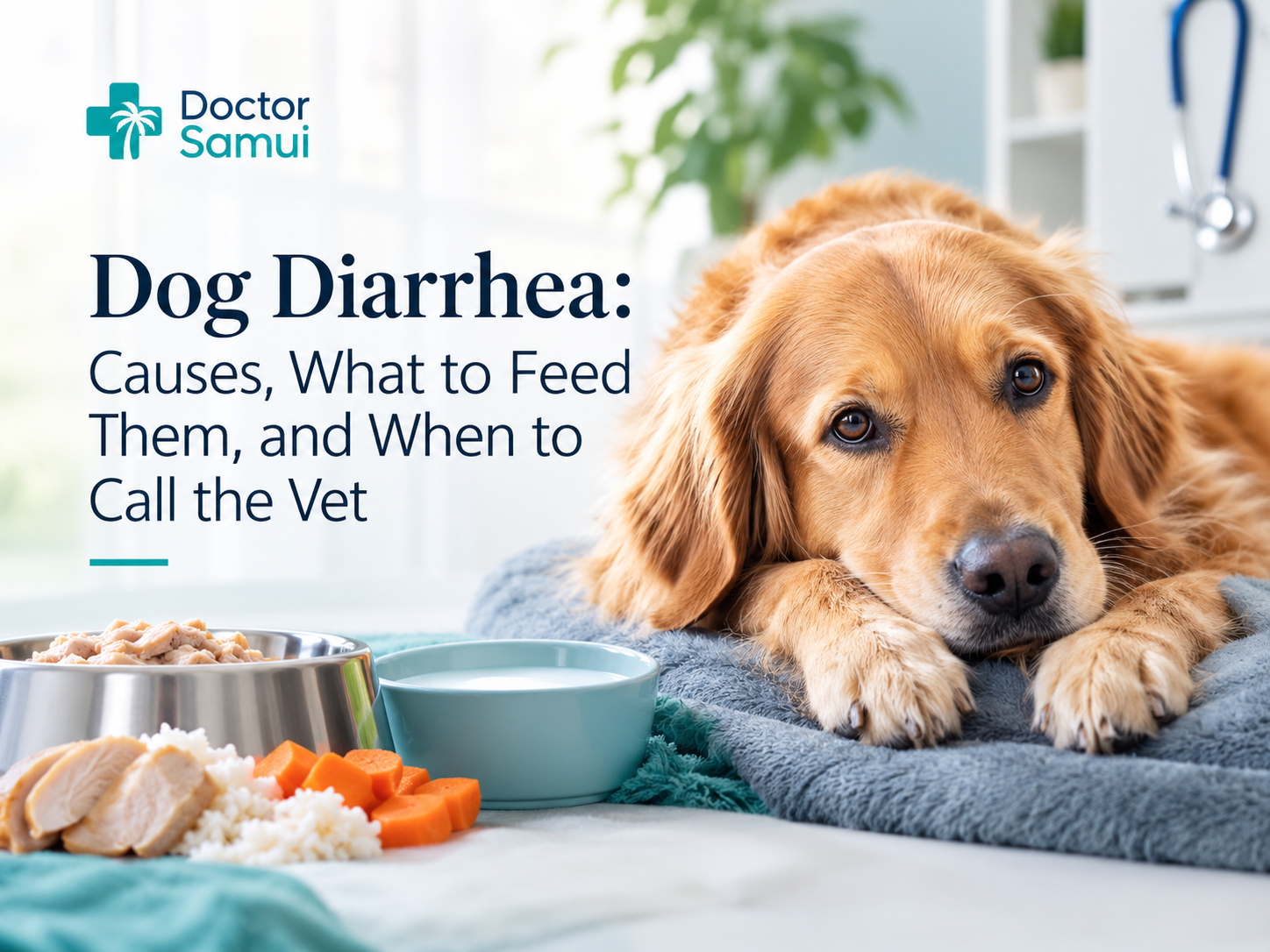
Boiled chicken breast with plain white rice is the right answer, and you can find both at any market or restaurant kitchen on the island. No skin, no bones, no seasoning, no sauce. Thai food is not safe for a sick dog, no matter how plain it looks. It almost always contains garlic, onion, or oil that will make things worse.
Feed small amounts every three to four hours rather than one big meal. Keep this up for three to five days, then slowly reintroduce their normal food by mixing it in gradually. A transition that is too fast is one of the most common reasons diarrhea returns after it seemed to be resolving.
Fresh water is the only drink. No flavoured water, no coconut water, no milk.
Do Probiotics Help?
Probiotics designed for dogs have reasonable evidence behind them for shortening acute diarrhea. They support gut recovery, especially after a sudden diet change or a mild infection. If you can find a canine-specific probiotic locally, it is a sensible addition to the bland diet. Human probiotic products are not the same formulation and are not a reliable substitute.
A probiotic will not fix a parasitic infection or a bacterial illness. If the diarrhea is not improving, the probiotic is not the answer.
Medications — What Helps and What to Avoid
Do not reach for human anti-diarrheal tablets from a Thai pharmacy without checking first. Loperamide, the active ingredient in most over-the-counter anti-diarrhoeals, can be dangerous in certain herding breeds including Collies, Shetland Sheepdogs, and Australian Shepherds. It should also never be given if there is blood in the stool or any suspicion of a bacterial or parasitic cause. Slowing gut movement can trap the infection inside and make things considerably worse.
Metronidazole is commonly prescribed by vets for Giardia and certain bacterial causes of diarrhea. It works well, but it needs a proper diagnosis first. Do not buy it over the counter without knowing what you are treating.
The rule is simple: if you are not sure, do not medicate. Get the dog assessed first.
When to Stop Home Treatment and Get Help
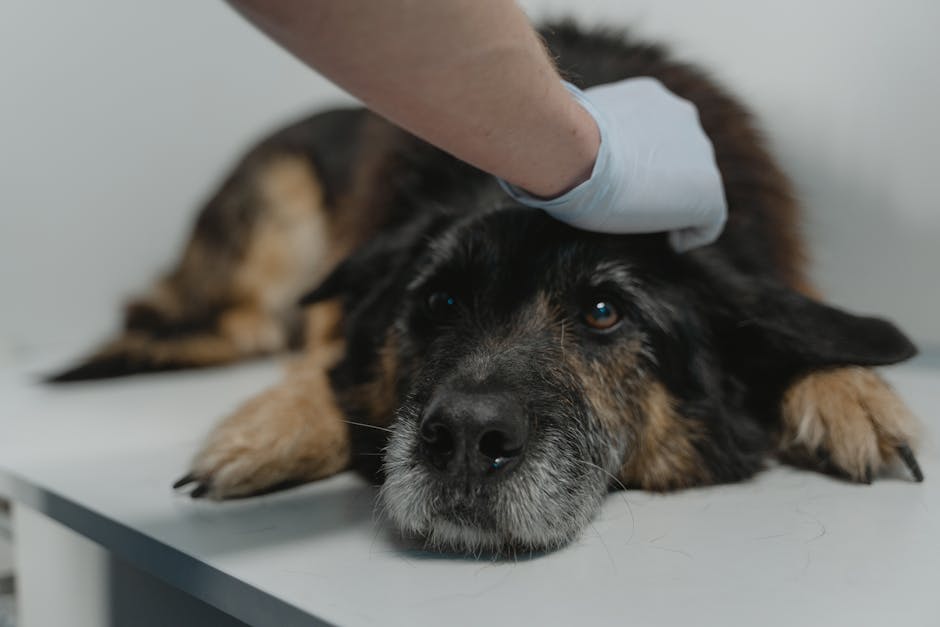
Some cases need to be seen the same day. Blood or very dark, tarry stools is urgent. Repeated vomiting alongside the diarrhea is a serious combination. So is obvious abdominal pain, a swollen belly, or complete refusal to move. A dog that may have eaten something toxic or swallowed a foreign object, or one that has been unwell for more than 48 hours without improving, needs clinical assessment.
For puppies and elderly dogs, shorten that window to 24 hours. They deteriorate faster. For dogs with loose stools that come and go over days or weeks, that pattern points toward parasites or a chronic gut issue that will not resolve on diet changes alone.
Doctor Samui’s walk-in clinic in Chaweng can run a fecal test to check for parasites, provide IV fluid therapy when needed, and prescribe the right treatment based on what is actually causing the problem. For dogs too unwell to travel, or for owners staying far from Chaweng, the clinic also offers 24-hour hotel and villa visits across the island. You can read more about diarrhea treatment on Koh Samui if the symptoms are affecting your family as well as your dog.
If your dog has had diarrhea for more than 48 hours, has blood in the stool, is vomiting, or is showing signs of dehydration, do not wait it out. Doctor Samui’s Chaweng clinic offers same-day assessment, fecal parasite testing, and IV fluid therapy for dogs with diarrhea. We also visit hotels and villas across Koh Samui around the clock. Walk in or call us to arrange a visit wherever you are on the island.
Frequently Asked Questions
Dr. Ponlawat Pitsuwan
Physician, Doctor Samui
a walk-in clinic based in Chaweng, Koh Samui, with 24/7 hotel and villa visits across the island. He sees tourists, families, and long-stay expats for gastrointestinal illness, tropical parasite infections, and acute care in both adults and children. His focus is straightforward, evidence-based care delivered in plain language.