Clinically reviewed by Dr. Ponlawat Pitsuwan, Physician, Doctor Samui.
Last reviewed: September 2026
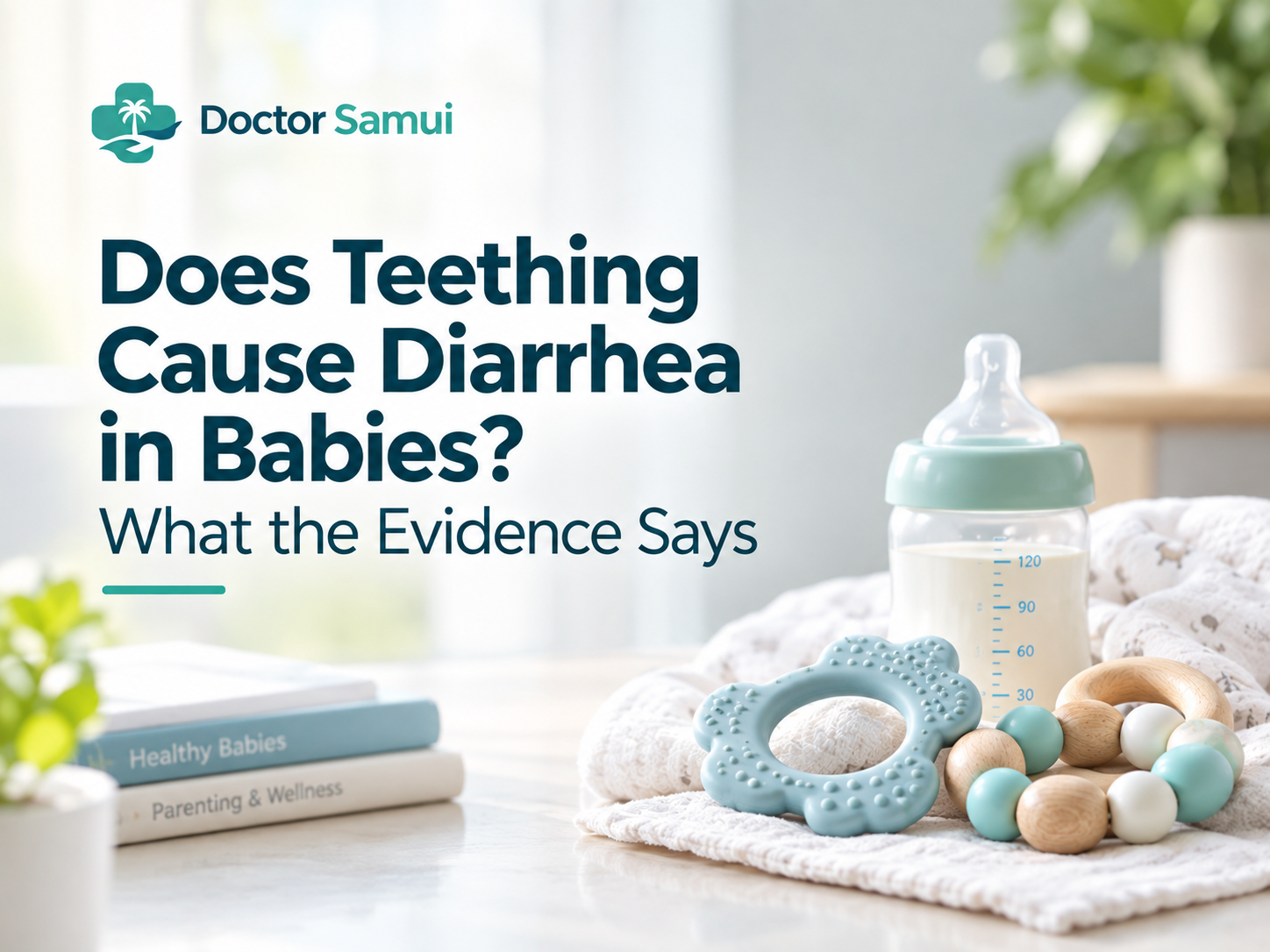
Teething does not directly cause diarrhea. Research consistently shows no proven biological link between a tooth breaking through the gum and loose stools. What does happen is that teething age overlaps with several other reasons babies get diarrhea: germ exposure from mouthing objects, a drop in protective antibodies, starting solid foods, and picking up infections more easily. If your baby has three or more watery stools in 24 hours, treat it as real diarrhea and watch for signs of dehydration.
Your baby has been cranky for days, drooling through every bib, and now the nappy you just changed looks nothing like normal. You are staying at a villa in Lamai, two hours from your usual paediatrician and a long flight from home. The first question most parents ask is: is this the teething, or something worse?
The short answer is that teething is not causing the diarrhea. The timing is a coincidence, but a very understandable one. The two things happen at the same age for reasons that have nothing to do with each other. Once you understand that, you will know exactly what to watch for and when to act.

What the Evidence Actually Says About Teething and Diarrhea
Studies looking at babies during active tooth eruption have found that mild gum soreness, drooling, and irritability are genuinely linked to teething. Loose stools are not. A widely cited study published in Pediatrics followed babies through each tooth eruption and found no meaningful connection between teething and diarrhea.
So where does the idea come from? Parents see a tooth arriving and diarrhea at the same time, and they connect the two. Correlation is not causation, and the real reasons for the overlap are worth understanding.
Why Teething and Diarrhea Appear at the Same Time
Four things happen around six to eight months of age that together explain why diarrhea is so common during the teething window.
Babies become champion mouthers. Everything goes in: toys, cot rails, fingers, sand at the beach. Every surface carries bacteria and viruses, and more mouthing means more germ ingestion.
The protective antibodies a baby is born with start to fade around six months. That natural immunity boost from mum runs out right when teething begins, and the immune system is genuinely more open to infection at this age.
Many babies also start solid foods during this period. New foods shift the gut bacteria balance and can cause softer or more frequent stools on their own.
Finally, teething babies swallow far more saliva than usual. Large amounts of swallowed saliva can loosen stools slightly. This is not true diarrhea, but it can look like it. None of these require a tooth to be coming through to happen.
What Does Teething Poop Actually Look Like?
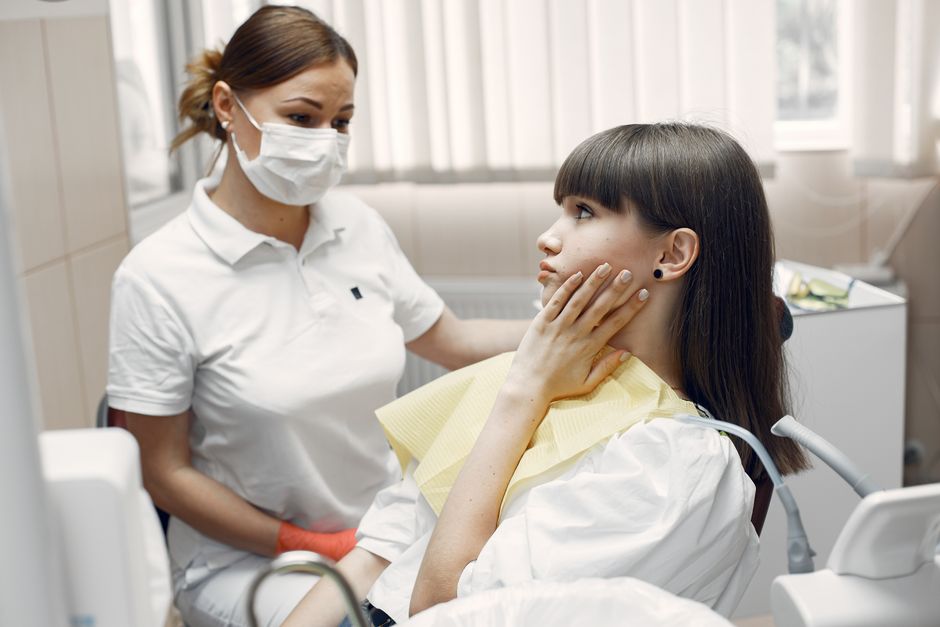
A teething baby may have stools that are slightly softer than usual or a little more frequent. That is as far as the teething effect goes.
True diarrhea is three or more watery, runny stools in 24 hours. If the stool looks like water, smells different from normal, contains mucus, or has any trace of blood, that is not teething. That is an infection until proven otherwise.
Colour matters too. Green or yellow watery stools in a sick, feverish baby are a red flag. A slightly greenish tinge in an otherwise well baby who is drinking normally is usually not worrying. When in doubt, take a photo and show a doctor.
What Else Could Be Causing the Diarrhea on Koh Samui?
This is the question worth asking on this island, because the infectious risks here are genuinely different from what you face at home.
Rotavirus spreads fast in tropical environments and is a common cause of severe watery diarrhea in infants. Traveller’s diarrhea from contaminated water or food is common even when adults in the same family feel fine, because babies are more vulnerable. Giardia, a parasitic infection picked up from contaminated water or surfaces, can cause ongoing loose stools that are easy to mistake for a teething side effect.
If your baby has been in the sea near Chaweng or Lamai, near a pool, at a beach restaurant, or mouthing local surfaces the way teething babies do, the cause of the diarrhea may be something that needs treatment. Our diarrhea treatment service at Doctor Samui covers rapid assessment for these infections, including stool testing when needed.
Why Dehydration Is a Bigger Risk on a Tropical Island
At home in Germany, the UK, or Israel, a mild bout of diarrhea in a baby is unpleasant but usually manageable. On Koh Samui in 34-degree heat, the same illness carries a different level of risk.
Babies lose fluid faster in the heat. They cannot tell you they are thirsty. A day of diarrhea plus sweating in a villa without air conditioning can tip an infant into dehydration faster than most parents expect.
Signs to watch for: fewer than six wet nappies in 24 hours, no tears when crying, dry lips and mouth, a sunken soft spot on the head in younger infants, or a baby who is unusually limp or hard to rouse. If you see any of these, do not wait for morning. Doctor Samui offers 24-hour hotel and villa visits across the island, including Lamai, Chaweng, Bophut, and Maenam, so you do not need to bundle a sick baby into a taxi at midnight.
How to Manage Diarrhea During Teething
Keep feeding. If you are breastfeeding, continue. Breast milk is the best thing you can give. If your baby is on formula, do not switch to a diluted version. Full-strength formula is correct.
For babies over six months, oral rehydration salts (ORS) are the standard approach. ORS sachets are available at pharmacies and most 7-Eleven stores on Koh Samui. Mix them exactly as directed. Do not use sports drinks, coconut water, or fruit juice as substitutes, as they have the wrong electrolyte balance for a sick infant.
If your baby is on solids, plain bland foods are fine: rice, banana, boiled potato. Avoid anything high in sugar or fibre for a day or two.
Teething Remedies While Travelling — What Is Safe
Chilled (not frozen) teething rings are safe and genuinely help. Gently rubbing the gum with a clean finger also provides some relief.
Teething gels containing benzocaine are not recommended for infants. Benzocaine can interfere with how blood carries oxygen in very young children. If you have packed a gel from home, check the ingredients before using it.
Amber teething necklaces are dangerous. They pose a strangulation and choking risk and have no clinical evidence of effectiveness. If a market stall or pharmacy on the island suggests one, decline.
Paracetamol in the correct infant dose is appropriate if your baby is clearly in discomfort. Ibuprofen can be used in babies over six months. If you are unsure of the right dose for your child’s weight, the Doctor Samui clinic in Chaweng can advise rather than you guessing from a packet.
Red Flag Symptoms — When to Stop Waiting and See a Doctor
Some situations do not need monitoring. They need a doctor now.
Fever above 38°C in a baby under three months is always urgent. Fever above 39°C in any infant with diarrhea warrants same-day assessment. Blood or mucus in the stool at any age needs to be seen. A baby who has had diarrhea for more than 24 to 48 hours and is showing dehydration signs needs clinical review, as does any baby who refuses all fluids.
If your baby is limp, unresponsive, or breathing differently, that is an emergency.
You are on Koh Samui, not at a suburban GP surgery with next-day appointments. Walk-in access and 24-hour villa visits mean you do not have to wait. Acting early is always the right call with an infant in this heat.
If your baby has diarrhea on Koh Samui, whether during teething or not, Doctor Samui’s walk-in clinic in Chaweng is open now. We see infants and young children every day for diarrhea, dehydration, fever, and travel illness. If you cannot travel, we come to you, day or night, anywhere on the island including Lamai, Bophut, Maenam, Choeng Mon, and Chaweng. We have English, German, and Hebrew-speaking staff and everything needed to assess and treat a sick baby without delay.
Frequently Asked Questions
Dr. Ponlawat Pitsuwan
Physician, Doctor Samui
a walk-in clinic based in Chaweng, Koh Samui, with 24-hour hotel and villa visits across the island. He sees tourists, families, and long-stay expats for infant and paediatric illness, diarrhea and dehydration, travel-related infections, and family health concerns. His focus is straightforward, evidence-based care delivered in plain language.