
Clinically reviewed by Dr. Ponlawat Pitsuwan, Physician, Doctor Samui. Last reviewed: September 2026
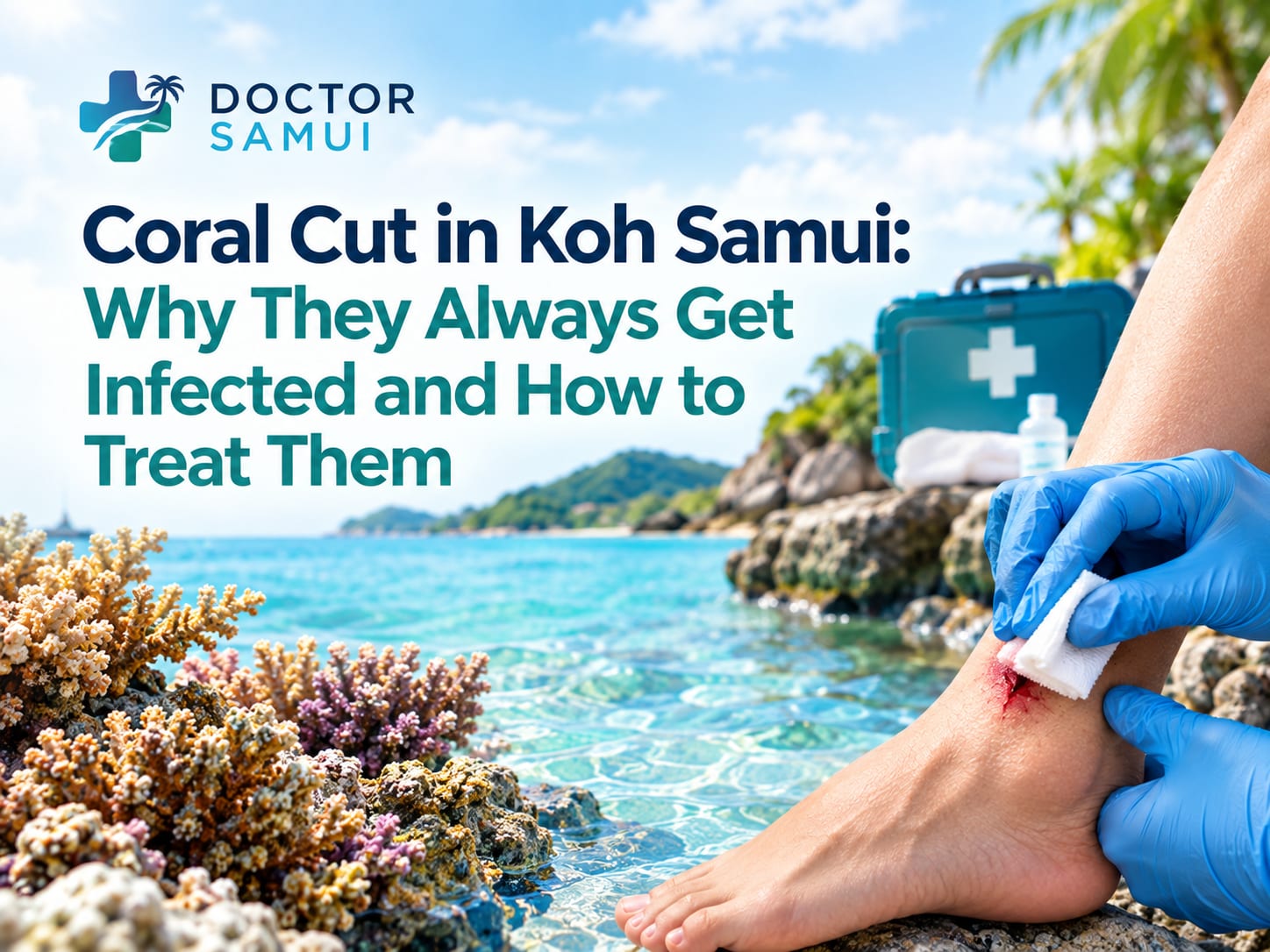
Coral cuts get infected fast in Koh Samui because the wound carries live marine bacteria, coral fragments, and polyp tissue deep into the skin. Standard first aid is not enough. You need proper cleaning, the right antibiotic, and a tetanus check. Doctor Samui treats these at our Chaweng clinic and with 24/7 hotel visits across the island.
You step off the snorkelling boat at Koh Tan, glance down, and notice a stripe of broken skin across your shin. It does not hurt much yet. The reef was beautiful, and you figure it will sort itself out by morning. That is exactly what happens with almost every coral cut we see here, and it is exactly why so many of them end up infected by day two.
A coral cut is not a normal cut. The reef is alive. When you scrape across it, the wound picks up bacteria, coral fragments, and organic debris that your body cannot easily clear on its own. The warm, humid Koh Samui environment then does the rest. We see these wounds every week at our Chaweng clinic, and the patients who come in early do far better than those who wait.
Not All Coral Reef Injuries Are the Same
The reef around Koh Samui produces three different types of injuries, and the right first aid depends on which one you have.
A stony coral scrape is the most common. You brush against a hard reef shelf at Ang Thong or drag a knee across the rocky edge near Chaweng, and you get an abrasion or shallow cut. This wound needs proper cleaning with antiseptic, not seawater.
Fire coral is different. It looks like a brownish-yellow plate or branching structure and it stings. The pain is sharp and immediate. Fire coral carries stinging cells, and the first aid differs: rinse with vinegar or seawater, not fresh water, and do not rub the area. Rubbing or using fresh water can trigger the remaining cells to fire and make the sting worse.
A deep laceration from a reef ledge is the third type and the most serious. These cuts are often jagged, may have coral fragments embedded inside, and almost always need professional debridement, which means thorough cleaning with all debris carefully removed.
Why Coral Cuts in Koh Samui Get Infected So Easily
The bacteria living on tropical reefs are not the ones your immune system is used to fighting. Vibrio and Pseudomonas species are both common in warm seawater and both capable of causing aggressive skin infections. Koh Samui gives them ideal conditions.
Humidity on the island sits above 80% for much of the year. Wounds stay moist. Bacteria multiply faster. Add the warm water temperatures near popular snorkelling spots like Koh Tan and Koh Madsum, and the infection risk rises further.
Coral fragments left inside the wound make things worse. Even a tiny piece of coral debris drives a foreign-body reaction. Your body tries to wall off the material it cannot clear, which is how a small reef scrape becomes a slow, non-healing wound weeks later. Left untreated, it can form a firm nodule under the skin that will not resolve without proper treatment.
You can read more about why coral cuts get infected in our accidents and injuries guide.
First Aid for a Coral Cut Before You Reach a Clinic
Do this as soon as you are back on the boat or in your hotel bathroom.
Get out of the water and keep the wound away from the ocean, the pool, and the hot tub. Re-exposure to warm seawater puts more bacteria directly into an open wound.
Rinse the wound with clean fresh water for several minutes. Bottled water is ideal. Then apply Betadine, which you can find at any 7-Eleven or pharmacy on the island. Do not use alcohol directly on an open wound, and do not scrub hard, as that pushes debris deeper.
Cover the wound loosely with a clean dressing. Do not seal it with waterproof plasters until it has been properly assessed.
Beach wisdom gets this one wrong: saltwater will not clean the wound, and leaving it in the sun will not dry it out and heal it. Both give bacteria more time to take hold.
Warning Signs That Mean You Need a Doctor Today
Watch the wound over the next 24 to 48 hours. Mild redness at the wound edge, slight swelling, and tenderness in the first day are expected. What you should not see is those symptoms spreading or getting worse after that.
Red streaks tracking up the limb away from the wound are a warning sign. This means infection is spreading through the channels under the skin, and you need antibiotics today. A rising fever, rapidly spreading redness, foul smell, or pus from the wound all mean infection is already established.
If you have diabetes, liver disease, or anything that affects your immune system, come in for even a minor coral wound. These patients are at much higher risk of a marine wound becoming a serious infection.
What Coral Cut Treatment Looks Like at Doctor Samui
When you come into our Chaweng clinic with a reef wound, the first thing we do is look inside it properly. We clean the wound thoroughly, remove any visible coral fragments, and check how deep the injury goes. Betadine at home does not do what proper debridement does, and skipping this step is the most common reason wounds fail to heal.
We then check your tetanus status. If you are not up to date, or not sure when your last booster was, we give you one. We apply a sterile dressing and set a dressing change schedule based on how the wound looks. You can also book a coral cut treatment appointment and we will handle the full dressing plan from there.
If the wound shows signs of infection, we prescribe antibiotics that cover marine bacteria. We typically use Doxycycline or a fluoroquinolone such as Ciprofloxacin. Amoxicillin, which many visitors buy from Thai pharmacies, does not cover the bacteria found in reef wounds and will not clear a marine infection. If you are prescribed Doxycycline, be aware that it makes your skin burn faster in the sun. Cover up and use high-SPF sunscreen during the course.
For guests who cannot get to us, Doctor Samui offers 24/7 hotel and villa visits across the island, from Lamai and Chaweng to Bophut, Maenam, and beyond. Our doctor arrives with a full sterile kit and can perform wound assessment, debridement, dressing, antibiotic prescription, and tetanus evaluation at your resort.
Can You Dive or Swim Again After a Coral Cut?
This is the first thing most divers ask. The honest answer is: not until the wound is fully closed, and that takes longer than most people expect.
No waterproof dressing holds reliably under dive conditions. Warm seawater will reach the wound. For a minor clean cut that has been properly treated, you are looking at a minimum of three to five days before re-entry. For an infected wound or anything that needed debridement, it is longer, and a doctor needs to clear you before you go back in.
If you are on a multi-day dive package out of Chaweng or visiting Ang Thong Marine Park, see a doctor the same day you are injured. Do not wait to see how it looks overnight if you are hoping to dive tomorrow.
Travel Insurance and Coral Cut Documentation
Most travel insurance policies cover coral cut treatment. Ask us for an itemised receipt, a written diagnosis, and a brief clinical note describing the wound and treatment. Keep these with your policy documents.
If you need a fit-to-fly certificate or a medical report for your insurer, we can provide that at the clinic visit. It is much easier to sort paperwork before you leave the island than to retrieve it afterwards.
Got a coral cut on Koh Samui? Come into our Chaweng walk-in clinic or contact us for a 24/7 hotel or villa visit anywhere on the island. We carry a full sterile kit and provide wound debridement, dressing, antibiotic prescriptions, and tetanus assessment on-site. Do not wait for redness to spread. Contact Doctor Samui via WhatsApp or phone to book same-day care.
Frequently Asked Questions
Dr. Ponlawat Pitsuwan
Physician, Doctor Samui
a walk-in clinic based in Chaweng, Koh Samui, with 24/7 hotel and villa visits across the island. He treats tourists, families, and long-stay expats for marine injuries including coral cuts, reef scrapes, sea urchin wounds, and tropical wound infections. His focus is straightforward, evidence-based care delivered in plain language.
