

Clinically reviewed by Dr. Ponlawat Pitsuwan, Physician, Doctor Samui.
Last reviewed: September 2026
A sprained knee usually hurts in one spot, swells gradually, and stays stable when you stand. A torn ligament often swells fast within the first hour, may feel like the knee is giving way, and sometimes comes with a pop at the moment of injury. If you cannot put weight on it, the swelling is rapid, or the knee feels loose, you need a clinical assessment today, not rest and ice alone. Doctor Samui can see you at our Chaweng clinic or come to your hotel anywhere on the island.
The path down from Na Muang Waterfall is steeper than it looks on the way back, and the rocks are slippery after rain. One wrong step on the descent and you are sitting on wet stone, holding your knee, trying to decide whether you can make it to the car park or whether this is something worse. That decision matters more than most people realise.
Pain alone does not tell you much. A badly sprained knee and a partially torn ligament can feel almost identical in the first hour. What matters are the details: how fast it swelled, whether you heard or felt a pop, whether the joint feels solid when you stand on it. Read through the signs below, and if anything fits, come in or call us.
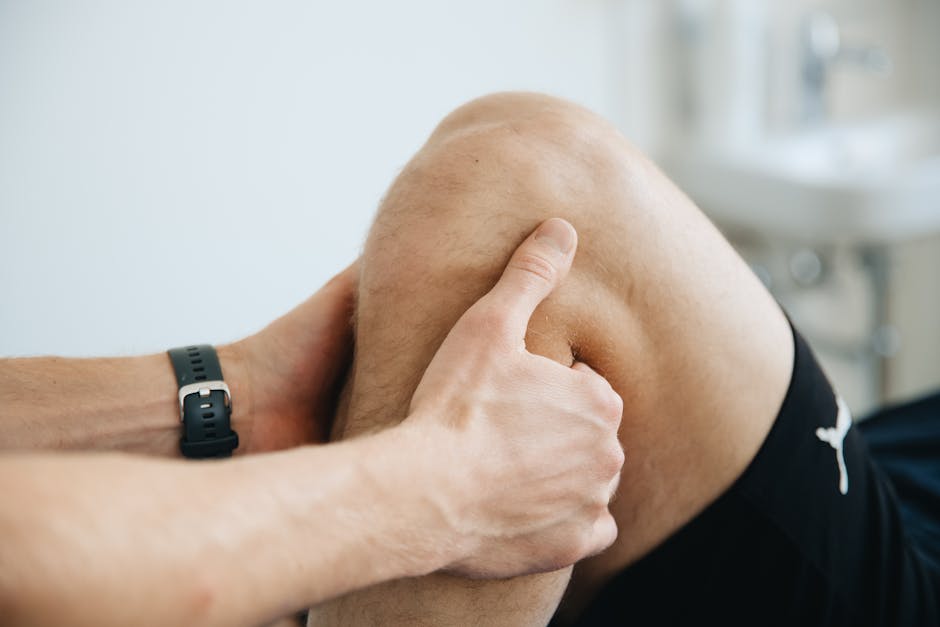
Common Causes of Knee Injuries on Koh Samui
Most knee injuries treated at our Chaweng clinic fall into a handful of very predictable situations.
Motorbike accidents are the most common. A sandy bend on the ring road, a sudden stop on loose gravel near Lamai, or a low-speed slide in a car park: the knee takes the impact, and often comes away with both a soft tissue injury and road rash across the joint. That combination matters, and the reasons why are explained below.
Waterfall trails are second. Na Muang and Hin Lad both have wet, algae-covered rocks. Visitors slip on the descent far more than on the way up. A knee twisted at the wrong angle on wet rock can stretch or tear a ligament just as badly as a sports injury.
Reef entries and awkward exits from snorkel boats also cause knee injuries, especially when fins catch on a step. Hiking trails near Chaweng Noi or the island interior can do the same thing on uneven ground after rain.
Sprain, Torn Ligament, or Fracture: How to Tell the Difference
A sprain means a ligament has been stretched but not torn. The knee hurts, swells over a few hours, and feels tender on one side. You can usually put weight on it and the joint stays stable.
A ligament tear, such as an ACL, MCL, or PCL injury, tends to behave differently from the start. Many people describe a pop at the moment of injury. Swelling comes on fast, often within one to two hours, because blood is collecting inside the joint. The knee may feel like it wants to give way, especially on stairs or uneven ground. Some tears still allow walking in the first hour or two, which is exactly why walking ability alone does not rule out a serious injury.
A meniscus tear, damage to the cartilage disc inside the knee, usually causes pain along the joint line, swelling that builds over a day or two, and a catching or locking sensation when you try to fully bend or straighten the leg.
A fracture, including a broken kneecap, typically causes severe pain, obvious swelling, and an inability to straighten the leg. These need X-ray and hospital-level care.

Red Flag Signs: Walk-In Clinic or Straight to Hospital?
Some signs mean go directly to hospital. A visibly deformed knee, an inability to bear any weight after genuinely trying, an open wound deep enough to expose tissue, or signs of extreme tightness and numbness in the limb: these go to an emergency department without delay.
For everything else, a walk-in clinic is the right first step. Rapid swelling, a history of a pop, instability, or a knee that locks: all of these need examination and probably an X-ray, but they do not all require an emergency room. Our accidents and injuries service handles exactly this range and can make the call on whether you need to go further.
If you cannot travel, a Doctor Samui doctor will come to you. Our 24/7 hotel and villa visits cover the full island, from Chaweng and Lamai to Bophut, Choeng Mon, and Maenam. A doctor at your door can examine the knee, manage pain, apply a compression bandage or brace, and advise whether you need imaging that day.
Do You Need an X-Ray After a Knee Injury in Koh Samui?
Doctors use a set of clinical signs to decide when an X-ray is needed. An X-ray is the right call when there is tenderness directly over the kneecap or the bony bump on the outer side of the knee just below the joint, when you cannot bend the knee past a right angle, or when you cannot take four steps without significant difficulty. If none of those apply, a fracture is unlikely and soft tissue assessment becomes the focus.
X-ray shows bone. It does not show ligaments or cartilage. If a ligament or meniscus tear is suspected and does not settle with conservative care, an MRI is the next step. We can arrange that referral and help you understand the results without navigating a Thai hospital alone.
Immediate First Aid Before You Reach the Clinic
Rest the knee. Stop walking on it if it hurts to do so. Sit down, raise the leg, and apply a cold pack or ice wrapped in a cloth. Never place ice directly against skin.
Compression helps. A crepe bandage from any pharmacy on the island reduces swelling. Do not wrap it so tightly the leg goes numb.
Do not put the knee into a pool, the sea, or a stream if there is any broken skin around the joint. In a tropical environment, water sources carry bacteria that can infect an open wound within hours. This is not the same as rinsing a minor graze.
Take ibuprofen or paracetamol for pain if you have no reason to avoid them. Ibuprofen also reduces swelling and has good evidence behind it for soft tissue injuries.
Then come in, or call us.
Why Knee Injuries Behave Differently on Koh Samui
This is something most generic advice ignores, and it matters.
Road rash or a laceration around the knee is not a minor issue in Koh Samui’s climate. High humidity and heat speed up bacterial growth in open wounds. If your knee has any broken skin from a motorbike slide, reef contact, or a fall on rocks, infection risk starts within the first day. Certain bacteria found in tropical seawater are more aggressive than what you encounter in cooler climates. A wound that looks manageable on Monday can be swollen, hot, and spreading by Wednesday.
This is why wound care matters alongside the knee assessment itself. Proper cleaning, irrigation, and a sterile dressing done at the same visit is not optional here. It is standard care done right for this environment.
Soft tissue injuries also tend to stay swollen longer in heat and humidity. A sprained knee that would settle in four days somewhere cooler may remain uncomfortable for longer on Samui. Ongoing swelling is not a reason to panic, but it is a reason not to dismiss it as normal.
What Happens at a Knee Assessment at Doctor Samui
The first step is a physical examination, whether you come to the Chaweng clinic or a doctor visits your hotel. We check the joint line, test the ligaments for stability in multiple directions, assess range of motion, and examine any skin injury around the knee. This takes around ten minutes and gives us a clear picture.
If the clinical signs point toward a possible fracture, we arrange X-ray. If soft tissue injury is the main concern, we discuss whether conservative care or imaging referral fits your situation and how long you are staying on the island. If you want to understand whether your knee is sprained or torn before deciding on next steps, that assessment is part of every visit. You can read more about how we assess and manage soft tissue injuries if you want to know what to expect.
We also provide travel insurance documentation at the same visit. If your injury changes your plans, requires an early departure, or means you cannot fly in the window you booked, your insurer will ask for a formal medical report from a licensed physician. We issue that before you leave.
Hurt your knee on Koh Samui and not sure how serious it is? Doctor Samui offers walk-in knee assessments at our Chaweng clinic, with onsite examination, wound care, and X-ray referral where needed. If you cannot travel, our doctors make 24/7 hotel and villa visits across the island, from Lamai and Bophut to Choeng Mon and Maenam. Same-day medical reports for travel insurance are available at every visit. Contact us and we will come to you or see you straight away.
FAQ
Dr. Ponlawat Pitsuwan
Physician, Doctor Samui
a walk-in clinic based in Chaweng, Koh Samui, with 24/7 hotel and villa visits across the island. He sees tourists, families, and long-stay expats for knee injuries, motorbike accidents, waterfall falls, sports injuries, wound care, and emergency assessments. His approach is straightforward, evidence-based care explained in plain language.
