

Clinically reviewed by Dr. Ponlawat Pitsuwan, Physician, Doctor Samui.
Last reviewed: November 2026
After diving on Koh Tao, current DAN and PADI guidelines recommend waiting at least 12 hours before flying after a single no-decompression dive, and at least 18 hours after repetitive dives or a multi-day course. If you dived yesterday and your Bangkok Airways flight from Samui is tomorrow morning, check the exact hours between your last dive and your departure time before you board. Any symptoms such as joint pain, skin mottling, numbness, or dizziness after a dive are a reason to skip the flight entirely and get assessed first.
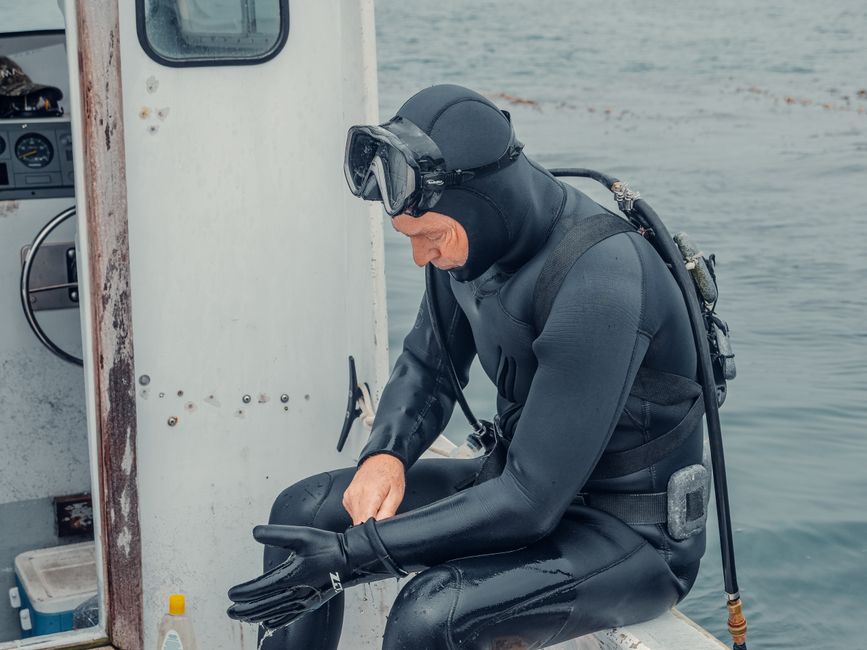
You finish your last dive at HTMS Sattakut, one of Koh Tao’s big wreck sites, around 4 pm. You are back in Mae Haad by 5 pm, on the Lomprayah by 7 pm, and your Bangkok Airways flight from Samui Airport departs at 9 am the next morning. That is 17 hours from last dive to takeoff. For a single recreational dive, that just clears the minimum. For anyone who did two dives that day, or who spent the past four days on a PADI course, it does not.
The number most divers get wrong is not the interval itself. It is what they count from. The ferry crossing does not start your clock. Your last descent does. If you are working backward from a morning flight, the math has to start from when you surfaced.
Why the Flight Out of Samui Airport Is the Risk, Not the Boat Back From Koh Tao
The boat ride from Koh Tao to Koh Samui happens at sea level. So does the drive to the airport and the check-in queue. None of that changes anything about the nitrogen still in your tissues. The risk begins the moment the aircraft pressurises the cabin to its cruising altitude equivalent.
Bangkok Airways flights from Samui are short, usually under two hours to Bangkok. But cabin pressure in commercial aircraft is maintained at a pressure equivalent to roughly 6,000 to 8,000 feet above sea level, not sea level. That reduced pressure means dissolved nitrogen in your blood and tissues has less ambient pressure holding it in solution. If enough nitrogen is still present, it can form bubbles. That is decompression sickness, or DCS.
Cabin Pressure Versus a Surface Interval on the Lomprayah or Seatran
A surface interval on the boat is not the same as off-gassing time before a flight. During a surface interval between dives, your body is at sea level and nitrogen slowly leaves your tissues. That process continues on the ferry. But the Lomprayah from Koh Tao to Koh Samui takes roughly two hours. Even a full day’s sail at sea level is not the same as the pressure reduction inside a pressurised aircraft cabin.
Nitrogen after multiple dives takes many hours to clear to a safe level. The Lomprayah arrival time counts toward your no-fly window only because it is elapsed time at normal atmospheric pressure. It does not accelerate anything. Heat, alcohol, and dehydration can slow off-gassing, not speed it up. If you drank on the overnight ferry, arrived tired and dehydrated, and are heading straight to a morning Bangkok Airways departure, your off-gassing conditions are worse than the guidelines assume.
No-Fly Intervals After a Single Dive, Repetitive Dives, or a Course Week
DAN, the Divers Alert Network, sets a minimum of 12 hours before flying after a single no-decompression dive. After repetitive dives on the same day, or multiple consecutive dive days, the minimum rises to 18 hours. These are minimums, not recommendations. DAN’s own guidance notes that a more conservative 24-hour wait further reduces residual risk.
If you completed a PADI open water course on Koh Tao over four days, the picture is different from a tourist doing two fun dives on a day trip. Four consecutive days of training dives, often two per day at progressive depths, results in higher cumulative nitrogen loading. PADI recommends at least 18 hours after the final course dive, and many diving physicians consider 24 hours the safer figure after a full course week. Build this into your itinerary before you book the ferry and the flight.
One more factor worth knowing: a small hole between the heart’s upper chambers called a patent foramen ovale, or PFO, is more common than most people realise. If you have one, tiny nitrogen bubbles that would normally be filtered by the lungs can pass directly into the arterial circulation. This raises your DCS risk at a given nitrogen load. Most people with a PFO do not know they have it. The standard guidelines apply to everyone, but if you have a known PFO, speak to a doctor before diving.
Why a Deep Last Dive on Koh Tao the Day Before a Morning Flight Is a Problem
The deeper the dive, the faster your tissues absorb nitrogen. A dive to 30 metres on the HTMS Sattakut wreck loads your tissues faster than a 12-metre reef dive at Shark Island. Even if both dives stay within the no-decompression limit, the residual nitrogen after a deep dive is higher at the same elapsed time after surfacing.
Tiny nitrogen bubbles can form even after dives within safe limits, and they are more common after deep or repetitive dives. Most never cause symptoms at sea level. In a pressurised cabin, they can expand. The concern applies to any deep final dive on Koh Tao the afternoon before a morning Samui departure, not just dives that required a decompression stop.
Symptoms That Mean You Should Not Fly and Should Be Assessed for DCS Instead
Joint pain or aching in the limbs, skin that looks mottled or blotchy in patches, numbness, tingling, weakness, vision changes, or unusual fatigue that is worse than normal post-dive tiredness: any of these in the hours after surfacing means do not board the flight.
DCS symptoms can be subtle at first. A mild ache in the shoulder you think is from carrying your tank. A patch of itchy or blotchy skin. These can be early signs. If you fly with early DCS, the reduced cabin pressure can worsen bubble formation rapidly. What starts as mild joint pain can become a neurological emergency in the air.
If you have any of these symptoms on Koh Samui before your flight, the right step is 100% oxygen and a clinical assessment, not a rush to the airport. Koh Samui has a hyperbaric oxygen therapy facility used for recompression treatment of confirmed DCS. The first step is assessment, not self-presenting at the chamber. Doctor Samui offers 24-hour hotel and villa visits across Chaweng, Lamai, Bophut, and the rest of the island. If you are lying in your room the night before a flight and something feels wrong after diving, call before you try to manage it yourself. A same-night assessment, first-line oxygen support, and urgent referral if needed is a far safer path than boarding and hoping the symptoms settle. If you are staying in Chaweng or Bophut, our house call doctor service can reach you within the hour.
How to Change a Bangkok Airways or Connecting Ticket If You Need Another Night
The reason people board flights too soon is usually not ignorance of the guidelines. It is the cost and the complexity of changing a ticket on short notice in a foreign country.
Bangkok Airways allows changes on most published fares, though fees and fare difference charges apply. If you booked through a third-party site, you may need to call the agent directly. Keep the name and contact number for your booking platform in your phone before you travel. A one-night hotel extension in Chaweng or Bophut during shoulder season is usually manageable. During peak weeks around Christmas or Songkran, it can be much harder to find a room.
If your reason for delaying is medical, documentation matters. A written clinical note stating that you were assessed and advised to delay your flight for medical reasons after diving strengthens any travel insurance claim. DAN dive insurance may cover medically necessary delays and treatment costs related to DCS. Standard travel insurance often does not cover voluntary delays unless you have written medical grounds. Check your policy before the trip, and carry your DAN membership details with you. For a formal fit-to-fly assessment in Koh Samui before rescheduling, that is something we provide at the clinic and during hotel visits.
Planning the Trip So the Last Dive and the Flight Are Not on Back-to-Back Days
The simplest fix here is not a medical one. It is a scheduling one. Build a full day between your last dive and your departure day. If you are flying out of Samui on a Saturday morning, make Friday a no-dive day. Use it to explore the island, eat well, drink water, and sleep.
If you are doing a PADI course that ends on a Thursday, do not book a Friday flight home. Your dive instructor on Koh Tao should walk you through the no-fly interval before sign-off, and most do. But the ferry and flight booking is your responsibility. The Lomprayah and Seatran both run multiple daily crossings from Koh Tao to Koh Samui. The 11 am departure from Koh Tao, arriving Koh Samui around 12:30 pm, still puts you well within the airport for most Bangkok Airways afternoon and evening departures on the day after your last dive. It is not fine the same day as your final dive.
DAN travel insurance for diving is worth arranging before any dive trip. It covers emergency recompression treatment, medical evacuation, and in some cases necessary delays caused by diving-related illness. Sorting it out from a hotel room on Koh Samui after symptoms appear is too late. If you are unsure whether your existing policy covers dive incidents, the team at our travel insurance clinic in Koh Samui can help you work through the documentation.
Need an assessment before your flight? If you are on Koh Samui with symptoms after diving, or you need a clinical review before rescheduling, Doctor Samui is available 24 hours a day, seven days a week. We cover hotel and villa visits across Chaweng, Lamai, Bophut, Maenam, Choeng Mon, and everywhere else on the island. We can assess DCS symptoms, provide first-line oxygen support, issue a medical note for your travel insurance or airline, and arrange urgent referral to the island’s recompression facility if needed. Contact us before you decide whether to board.
FAQ
Dr. Ponlawat Pitsuwan
Physician, Doctor Samui
a walk-in clinic based in Chaweng, Koh Samui, with 24-hour hotel and villa visits across the island. He sees tourists, divers, families, and long-stay expats for dive-related illness assessment, pre-flight medical clearance, DCS symptom evaluation, and emergency care.
References
- Divers Alert Network. Guidelines for Flying After Diving. DAN Health and Safety Guidelines.
- Vann RD, Butler FK, Mitchell SJ, Moon RE. Decompression illness. The Lancet. 2011;377(9760):153-164.
- Capodanno D et al. Epidemiology of Patent Foramen Ovale in General Population and in Stroke Patients: A Narrative Review. Frontiers in Neurology. 2020;11:281.
- Wikipedia. Cabin pressurization. (citing FAA regulatory limit of 8,000 ft and measured median cabin altitude of 6,128 ft on commercial aircraft).
The information in this article is for educational purposes only and does not constitute medical advice. It should not be used to self-diagnose or replace a consultation with a qualified physician. If you have concerns about your health, contact a licensed medical professional. For appointments at Doctor Samui, visit doctorsamui.com.
