
Clinically reviewed by Dr. Ponlawat Pitsuwan, Physician, Doctor Samui.
Last reviewed: November 2026
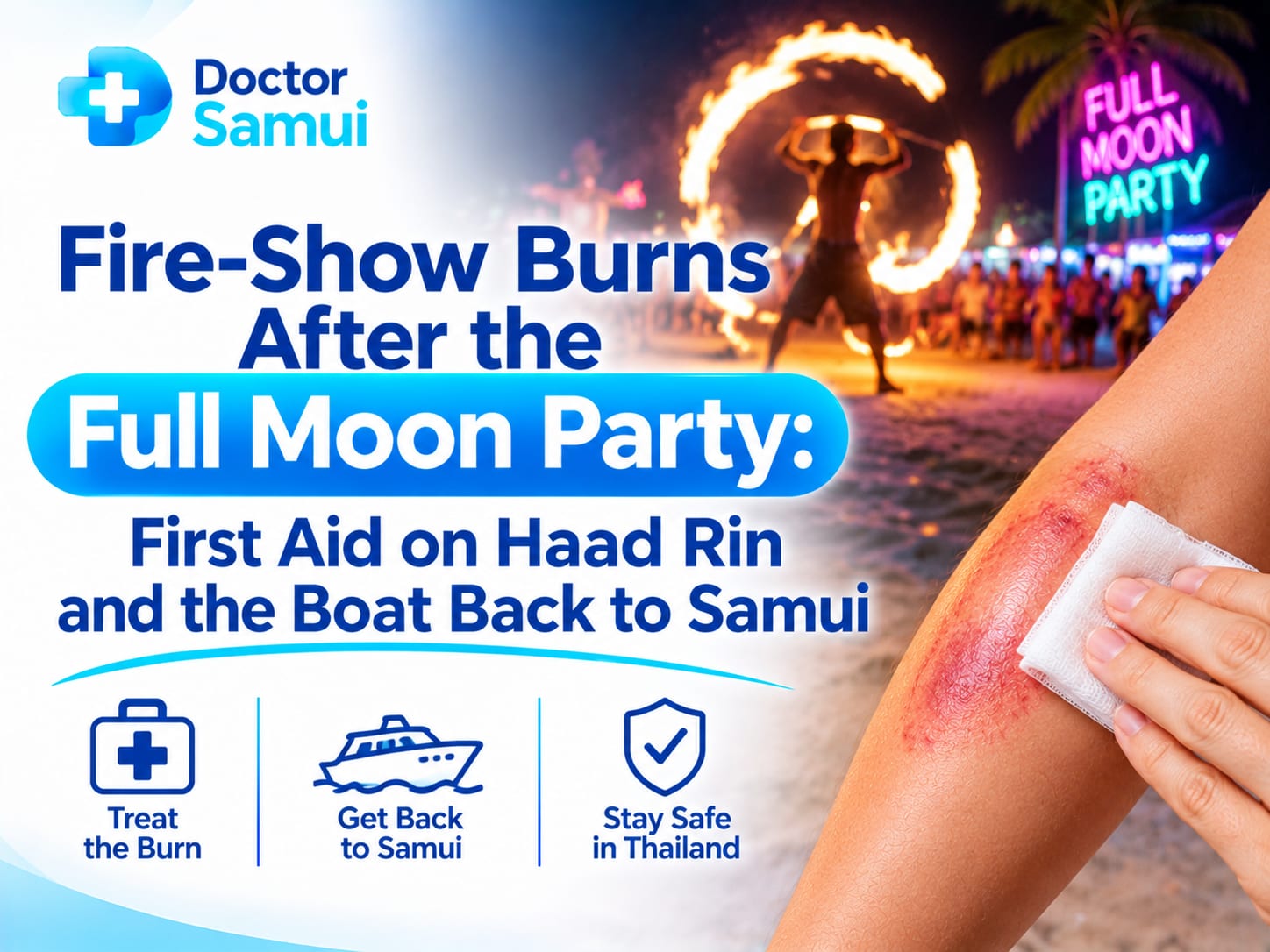
A fire-show burn at Haad Rin is not the same as a sunburn or a scooter exhaust graze. The props use kerosene or paraffin fuel, which contaminates the wound and changes what first aid you need. Cool the burn under clean running water for 20 minutes, do not apply ice or toothpaste, and seek clinical assessment before deciding whether to wait for the morning boat back to Koh Samui.
The fire jump-rope is still spinning when you feel it: a sudden heat across your forearm, your calf, or the back of your hand. The music is loud, the beach is packed, and the nearest clean tap might be 200 metres away. What you do in the next five minutes matters more than most people realise, and common beach first-aid advice can miss several key steps.
Fire-show burns carry a risk that generic burn first aid does not cover: fuel contamination. Poi, rope, and breathing props at Haad Rin are soaked in kerosene or paraffin. That fuel stays on the skin and in the wound after the flame is out. It changes how the wound needs to be cleaned, it affects how deep the injury may actually be, and in the case of fire breathing it creates a separate risk entirely, one with no visible burn at all.

How Full Moon Party Fire-Poi, Fire-Rope and Fire-Breathing Injuries Happen on Haad Rin
Poi and fire-rope props are soaked in kerosene or paraffin before each set. When contact happens, you get both a thermal burn from the flame and chemical contact from the fuel residue left on the skin. These are not identical to a dry heat burn, and treating them as one misses the contamination step entirely.
Fire breathing is a separate category. The performer atomises fuel into a fine mist and ignites it. Bystanders standing close, or performers who misjudge the arc, can inhale aerosolised kerosene droplets. There is no skin burn and there may be no immediate symptoms at all. But inhaled fuel droplets can cause chemical pneumonitis, an inflammatory reaction in the lungs, with cough, chest tightness, and breathlessness appearing hours later.
If you were near a fire-breathing act and inhaled smoke or fuel spray, say so at any clinic, even if your skin looks completely fine. This is an injury that can be missed, and it can worsen overnight.
What to Do in the First Minutes on the Beach, Before You Look for a Party Medic
Move away from the performance area first. Then deal with the burn. The sequence matters because a fuel-soaked item of clothing near an open flame is still a hazard.
Cooling, What Not to Put on the Burn, and Clothing That Has Stuck
Cool the burn with clean running water for 20 minutes. This is the single most effective step, and the timer starts from when cooling begins, not from when the burn happened. Do not use the ocean. Seawater is not sterile, the salt causes additional pain, and it does not remove kerosene or paraffin residue. Use bottled drinking water if no tap is nearby. Haad Rin has food and drink vendors along the beach, and bottled water is your best option at 2am.
Beach wisdom gets this one wrong: do not apply ice, toothpaste, coconut oil, or any cream from a beach bag. Ice constricts blood flow and can damage the surrounding tissue. Toothpaste and home remedies trap heat, introduce bacteria, and obscure the wound so a clinician cannot properly assess it. If someone has already applied something to your burn before you read this, tell the clinic exactly what it was.
If clothing is stuck to the burn, do not pull it off. Cool through the fabric with water, and let a clinician remove it. Synthetic fabrics melt onto burns and pulling causes additional skin damage.
When a Phangan Clinic Is Enough, and When You Should Not Wait for the Morning Boat
Burn depth assessment determines your next step. A reddened, painful area with no blisters is likely superficial. A blistered area that is pink and painful underneath is a partial-thickness burn. White, grey, or leathery skin with reduced or no pain indicates a deeper injury and needs urgent care that night, not the morning boat.
Body location matters as much as size. A burn to the face, hands, fingers, or feet, or any burn crossing a joint, needs clinical assessment regardless of how small it looks. A burn around the mouth or nose after fire breathing needs immediate evaluation for airway involvement. Any burn larger than the patient’s own palm also warrants same-night assessment.
If the burn is small, clearly superficial, well away from the face and joints, and you have had it properly cooled and assessed by a clinic on Phangan, waiting for the morning boat is reasonable. If you are not certain which category applies, go tonight.
Crossing Back to Samui With a Fire Show Burn: Pain, Dressings and Infection in the Salt Air
A speedboat crossing from Haad Rin to Koh Samui takes around 30 to 50 minutes depending on departure point and sea conditions. If your burn has been dressed at a Phangan clinic, that dressing needs to stay intact for the crossing. Saltwater spray on an open or loosely covered burn introduces bacteria and causes real pain. If the dressing is not fully covering the wound, ask the clinic to use a non-adherent dressing with an outer waterproof layer before you board.
Take any pain relief given to you at the clinic before the crossing, not after you arrive. Boat rides with a blistered hand or arm are more painful than most people expect. Keep the wound elevated and away from the spray side of the boat.
Once you are back on Samui, wound care continues. A burn that looked minor on the night can become infected in the days that follow. If your dressing becomes wet, smells unusual, or you develop a fever, see a doctor the same day. Doctor Samui provides professional wound dressing and burn follow-up care at the Chaweng clinic, and if you cannot travel, a doctor can visit your hotel or villa across the island for dressing changes and reassessment.
Follow-Up on Samui If the Blister, Face or Hands Were Involved After a Fire-Show Burn
Blisters should not be burst. They are a protective barrier over healing skin. If a blister ruptures on its own, the area needs a clean, non-adherent dressing changed regularly, usually every one to two days in a hot and humid environment, or sooner if the dressing becomes soiled or wet.
Burns to the hands and fingers carry a specific risk: joint contracture. If scar tissue forms across a joint without proper care, it can restrict movement long after the wound closes. This is a real outcome when deeper hand burns are left without appropriate dressing and monitoring. If your hands were involved, do not leave wound management to chance or hotel first-aid kits.
Face burns warrant assessment for two things: depth, which affects scarring risk, and any involvement of the eyes or airway. If there is any redness or irritation around the eyes after a fire-show incident, have them examined. Doctor Samui can assess burns to the face and hands at the walk-in clinic in Chaweng, or a doctor can come directly to your hotel or villa across Koh Samui, including areas such as Lamai, Maenam, Bophut, and Choeng Mon.
For burns that need ongoing dressing changes during your stay, the accident and trauma service at Doctor Samui means you do not need to manage this alone with pharmacy supplies. Treatment can also be coordinated with your travel insurance, and the clinic can assist with documentation if a claim is needed.
Burned at the full moon party and back on Samui? Doctor Samui’s walk-in clinic in Chaweng is open for burn assessment, wound dressing, and follow-up care. If you cannot travel to us, a doctor can visit your hotel or villa across the island, any time of day or night. Contact Doctor Samui for same-day burn wound care on Koh Samui.
FAQ
Dr. Ponlawat Pitsuwan
Physician, Doctor Samui
a walk-in clinic based in Chaweng, Koh Samui, with 24-hour hotel and villa visits across the island. He sees tourists, families, and long-stay expats for burn wound care, accident and trauma treatment, and injury follow-up after island activities including full moon party and fire-show incidents. His focus is straightforward, evidence-based care delivered in plain language.
References
- NHS. Burns and scalds: Treatment. NHS, 2023.
- NHS. Burns and scalds. NHS, 2023.
- Enoch S, Roshan A, Shah M. Emergency and early management of burns and scalds. BMJ. 2009;338:b1037.
- UK Health Security Agency. Kerosene: toxicological overview. UK Government, 2023.
- Ontario Health at Home. Northeast partial thickness burns pathway. Ontario Health at Home, 2022.
- World Health Organization. Burns: Key Facts. WHO, 2018.
The information in this article is for educational purposes only and does not constitute medical advice. It should not be used to self-diagnose or replace a consultation with a qualified physician. If you have concerns about your health, contact a licensed medical professional. For appointments at Doctor Samui, visit doctorsamui.com.
