
Clinically reviewed by Dr. Ponlawat Pitsuwan, Physician, Doctor Samui.
Last reviewed: November 2026
Both stingray and stonefish stings need hot water immediately, as hot as you can safely tolerate without scalding, held at roughly 42-45°C. Soak the affected area for at least 30 to 90 minutes and reheat the water as it cools. Both venoms break down with heat. Get a medical assessment the same day to check for retained spines, wound infection, and your tetanus status. If the pain is not easing after soaking, or if you feel faint, short of breath, or unwell beyond the injury site, call for help now.
You are wading the sandy shallows near Hua Thanon, heading back from a snorkel, and something shifts under your foot. The pain arrives in seconds, sharper than anything you expected from the sea. If that is where you are right now, do the same thing whether it was a stingray or a stonefish: get the foot into the hottest water you can safely stand, as fast as you can.
Stonefish and stingrays are both real hazards in Samui’s coastal waters, particularly around reef edges, sandy bottoms, and rocky shallows. They are not aggressive animals. Almost every injury happens because someone stepped on one. The first aid is the same for both, the wound care differs, and knowing which is which helps the doctor treating you decide how urgently you need further support.

Where Stonefish and Stingrays Hide in Samui Waters
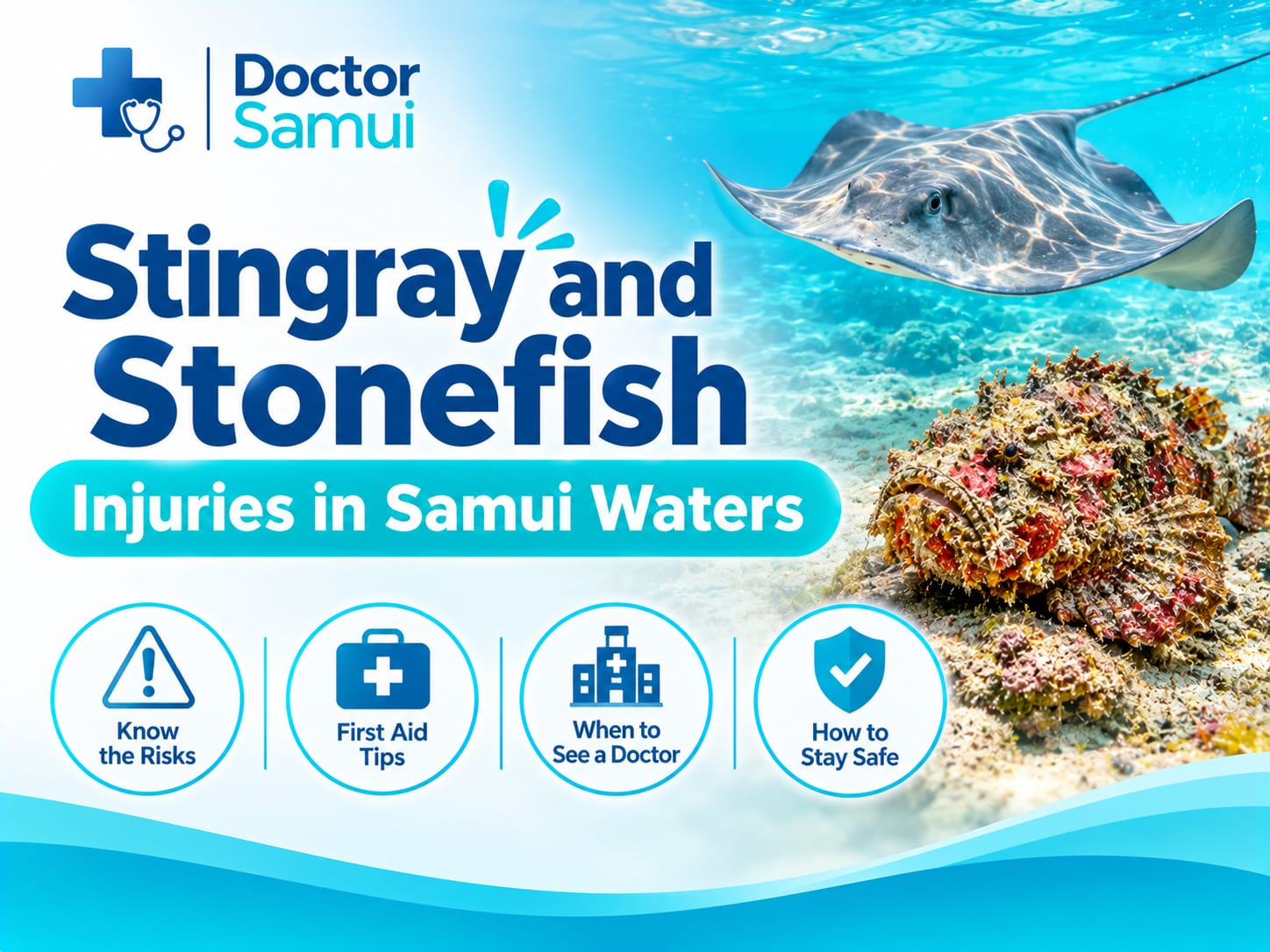
Stonefish are among the most camouflaged fish in the sea. Their skin mimics coral rubble and encrusted rock so well that you can stare directly at one and not see it. They sit completely still on the reef floor or among coral rubble in the shallows. Sandy shallows near reef edges, rocky tide pools, and weedy patches around Samui’s southern and eastern coasts are all plausible habitat. They do not flee. They wait.
Stingrays are more often found on open sandy bottoms. They partially bury themselves in soft sediment, leaving just the outline of their disc visible. Snorkellers and wade-in swimmers are the most common victims at reef entry points. The tail spine is a defensive reflex, not an attack.
Neither animal is rare here. Both are genuinely hard to spot. That is the whole problem.
What a Stonefish Sting Feels Like and Why It Hits So Fast
Stonefish venom is delivered through up to thirteen to fifteen dorsal spines, depending on the species. When you step on one, the spines puncture the skin and venom enters the tissue immediately. The pain is severe, burning, and radiating. It typically peaks within the first hour. Some people feel it travelling up the leg.
Stingray injuries produce a sharp, tearing pain at the site, sometimes with a visible laceration rather than a clean puncture. The venom causes burning pain and swelling, but effects beyond the foot and leg are less common with stingrays than with stonefish.
With stonefish, nausea, weakness, dizziness, or chest tightness in the first hour are signs the venom is affecting more than just the local tissue. That changes the urgency. If those symptoms appear, this is no longer a beach first-aid situation.

What Not to Do After a Stonefish Sting in Thailand
Beach wisdom gets this one wrong, and it can make things worse. Do not apply ice. Cold does not deactivate the venom and may worsen tissue damage. Do not use a pressure immobilisation bandage, the technique used for snakebites in Australia. That approach is not recommended for stonefish or stingray envenomation and can worsen localised damage.
Do not try to suck the venom out. It does not work and risks infection. Do not apply vinegar. Vinegar is used for certain jellyfish stings, not for stonefish or stingray injuries. The only thing that works for the venom itself is heat.
Hot Water First Aid for a Stonefish or Stingray Sting
The venom from both stonefish and stingrays breaks down at high temperature. Immerse the injury in water at 42-45°C and keep it there. That temperature feels uncomfortably hot on healthy skin but should not scald you.
A practical field test: if you can hold your uninjured hand in the water comfortably for more than a few seconds, the water is probably not hot enough. If you cannot hold your hand in at all, let it cool slightly before using it.
Soak for a minimum of 30 minutes. Many guidelines suggest up to 90 minutes. Reheat the water as it cools, because lukewarm water will not do the job. The pain should ease significantly during the soak. If it does not, or if it returns quickly after you stop, the wound needs medical attention beyond hot water.
If you are at a villa or hotel on Samui and struggling to manage the soak on your own, Doctor Samui can come to you. A doctor attending the room can manage pain properly while the soak continues, check for retained spines, and arrange further care if needed.
Why Every Stonefish Wound Needs Checking
Hot water reduces venom activity. It does not remove spine fragments, clean the wound, or prevent infection. Stonefish spines can break off inside the puncture. Fragments left in tissue cause ongoing inflammation and can seed a serious infection weeks later. A clean puncture that looks minor on the surface may have debris deeper down.
For stonefish stings specifically, there is a risk of compartment syndrome in severe cases. Swelling inside the foot’s tissues can increase pressure to a point that damages nerves and blood supply. This is uncommon, but it is a reason not to assume resolved pain means a resolved injury.
Stonefish antivenom may not be readily available at hospitals on Koh Samui; availability in Thailand is uncertain and cannot be guaranteed. For severe presentations involving cardiovascular or breathing changes, hospital transfer and specialist advice are needed. It is not needed for every sting. Most cases respond to hot water and pain management. Doctor Samui can advise on current availability and arrange transfer when antivenom is indicated.
You can walk in to our Chaweng clinic for stingray and stonefish injuries in Koh Samui, or we can come to your hotel or villa. The wound needs proper irrigation, good lighting to check for spine fragments, and a plan for the next 48 to 72 hours.
Tetanus and Infection Risk After a Marine Sting
A puncture wound from seawater is not a clean wound. Tropical seawater carries marine bacteria including Vibrio vulnificus, which can cause rapidly progressing soft tissue infection in warm-water environments like the Gulf of Thailand. Signs of infection can appear within hours to a few days after the sting.
Watch for increasing redness spreading from the wound, warmth, swelling that is getting worse rather than better, pus, or fever. Broad-spectrum antibiotics covering marine bacteria are often prescribed after stonefish and stingray injuries. Wound infections from marine punctures in tropical water can escalate faster than typical land-based infections.
Tetanus is also a real consideration. If your tetanus booster is not current, or if you do not know when you last had one, this injury is a reason to get it sorted today. For ongoing care, Doctor Samui provides daily wound dressing in Koh Samui and accident and trauma treatment across the island.
Reducing Your Risk Before You Get in the Water
Reef shoes with solid soles are the single most practical prevention step for wade-in activities, shallow reef walks, and snorkel entries along rocky or weedy shorelines. Flip-flops offer almost no protection. The shuffle-walk method, sliding your feet along the sand rather than lifting and placing them, is standard advice for stingray-prone sandy shallows because it nudges them out of the way before you step on them.
Talk to children before snorkelling or rock-pooling near Samui’s reef entries. The rule is simple: look before you step, and never touch things on the reef floor. Stonefish look like rock. The only real protection is not stepping on the reef at all.
If you do get stung and you are covered by travel insurance, Doctor Samui works with most major insurers for cashless treatment. You can find out more about cashless treatment with your travel insurance before your visit.
If you or someone in your group has stepped on a stonefish or stingray on Koh Samui, start the hot water soak immediately and call Doctor Samui. We provide 24/7 hotel and villa visits across Chaweng, Lamai, Bophut, Maenam, Hua Thanon, Choeng Mon, Bang Rak, Taling Ngam, Nathon, and Angthong. Walk in to our Chaweng clinic or have a doctor come to you. We can assess the wound, remove spine fragments, prescribe antibiotics, check your tetanus status, and arrange hospital transfer if antivenom is needed. Do not wait to see if the wound improves on its own.
Frequently Asked Questions
Dr. Ponlawat Pitsuwan
Physician, Doctor Samui
a walk-in clinic based in Chaweng, Koh Samui, with 24/7 hotel and villa visits across the island. He treats tourists, families, and long-stay expats for marine injuries including stonefish and stingray stings, coral cuts, and other reef and water-related hazards. His focus is straightforward, evidence-based care delivered in plain language.
References
- Saggiomo SL, Seymour JE, Wilson D, et al. The Geographic Distribution, Venom Components, Pathology and Treatments of Stonefish (Synanceia spp.) Venom. Marine Drugs. 2021;19(6):302.
- Zhu Q, Liu H, Xiang L, et al. Heat deactivation of the stonefish Synanceia horrida venom: implications for first-aid management. Toxicon. 2017;139:1-7.
- Clark RF, Girard RH, Rao D, Ly BT, Davis DP. Stingray envenomation: a retrospective review of clinical presentation and treatment in 119 cases. Journal of Emergency Medicine. 2007;33(1):33-37.
- Centers for Disease Control and Prevention. Vibrio vulnificus infection information for clinicians. CDC, 2023.
- NSW Poisons Information Centre. Pressure Immobilisation Technique. Poisons Info NSW, 2023.
The information in this article is for educational purposes only and does not constitute medical advice. It should not be used to self-diagnose or replace a consultation with a qualified physician. If you have concerns about your health, contact a licensed medical professional. For appointments at Doctor Samui, visit doctorsamui.com.
