Clinically reviewed by Dr. Ponlawat Pitsuwan, Physician, Doctor Samui.
Last reviewed: October 2026
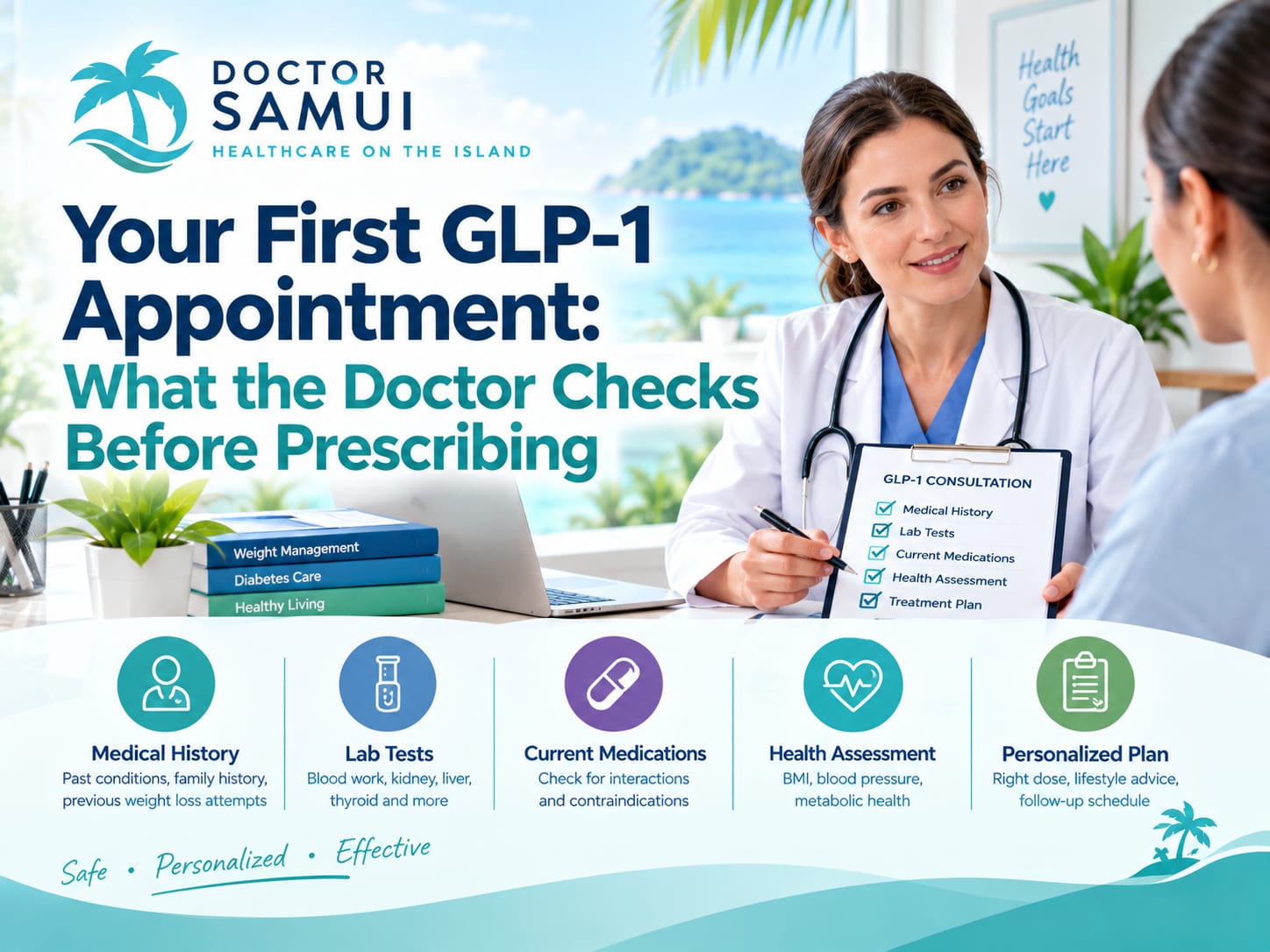
Before a doctor prescribes semaglutide or tirzepatide, they check your BMI, review your full medical history, run blood tests covering thyroid function, kidney and liver markers, blood sugar, and pancreatic enzymes, and screen for specific conditions that make these injections unsafe. In Thailand, GLP-1 medications are prescription-only, so an in-person consultation with a licensed physician is required. At Doctor Samui’s Chaweng clinic, the full workup and prescription can often happen in a single visit.
You have been reading about GLP-1 injections between beach days, your usual GP is back home, and you want to know whether you qualify before you book anything. The short answer: the consultation is more thorough than most people expect, and there is a good reason for that.
A doctor prescribing semaglutide or tirzepatide is not just ticking boxes. They are ruling out conditions where these drugs can cause serious harm, checking your baseline numbers, and making sure the starting GLP-1 first appointment gives them everything they need to prescribe safely. Here is exactly what that looks like.

Who Qualifies: The BMI and Comorbidity Check
The first thing the doctor establishes is whether you meet the eligibility criteria. Current prescribing guidelines support GLP-1 use for adults with a BMI of 30 or above, or a BMI of 27 or above when a weight-related health condition is present, such as type 2 diabetes, high blood pressure, or elevated cholesterol. Your weight and height are measured at the visit, not taken from what you remember from home.
BMI alone does not settle it. The doctor also looks at your weight history, how long excess weight has been present, and whether previous weight-loss attempts were medically supervised. This shapes the prescribing decision alongside your lab results.
Blood Tests Your Doctor Orders Before the First Dose
This is the part most people do not expect. You cannot walk in, ask for a GLP-1 injection, and leave with one the same day without labs.
Your A1C shows your average blood sugar over roughly three months. This tells the doctor whether you already have type 2 diabetes or are close to it, which affects which drug and which dose makes most sense. Your TSH reading screens for thyroid dysfunction such as hypothyroidism or hyperthyroidism, both of which are relevant before starting this drug class.
A comprehensive metabolic panel covers kidney function and liver markers, both relevant to how your body handles these medications. Your lipid panel checks cholesterol and triglyceride levels. Amylase and lipase are pancreatic enzymes; elevated levels could point to existing pancreatic inflammation, which changes the risk calculation significantly.
If you arrive without recent lab results, Doctor Samui can run these on-site at the Chaweng clinic. Results typically come back the same day or the following morning, so the full workup does not have to stretch across multiple visits.

Medical History and Contraindication Screening
Some conditions make GLP-1 medications a hard no. A personal or family history of medullary thyroid carcinoma, a specific type of thyroid cancer, or multiple endocrine neoplasia type 2 (MEN 2), a rare hereditary condition affecting hormone-producing glands, rules out this entire drug class. That is a firm stop, not a discussion.
A history of pancreatitis, even a single episode, requires careful review. If you develop severe abdominal pain during treatment, stop using the medication and see a doctor straight away, as this may be a sign of pancreatitis. A new lump or swelling in the neck, hoarseness, or difficulty swallowing should also be assessed promptly. Gallbladder disease is also flagged because GLP-1 drugs are associated with a higher rate of gallstone-related events. Active pregnancy or breastfeeding is a contraindication, and a history of certain eating disorders warrants honest discussion before any prescription is written.
The doctor will go through your current medication list too. Some diabetes medications interact with GLP-1 drugs in ways that raise the risk of low blood sugar. That is not automatically a reason to refuse a prescription, but it may change the starting dose or require adjustments to what you are already taking.
Why a Licensed Clinic Matters on Koh Samui
Injectable GLP-1 medications are prescription-only under Thai FDA rules. You cannot legally obtain them without a valid prescription from a licensed physician following an in-person consultation. This is not a formality.
Counterfeit and unlicensed GLP-1 products have been documented in the Thai market. Using an unverified product carries real risks: contamination, incorrect dosing, and no medical oversight if something goes wrong. If you see GLP-1 injections advertised without a consultation requirement, that is a warning sign worth taking seriously. Reading about red flags at a weight loss injection clinic is worth doing before you book anywhere on the island.
Doctor Samui operates as a licensed walk-in clinic in Chaweng with physician-led consultations. The prescription process follows Thai FDA requirements, and medications dispensed come through verified supply channels.
What to Bring to Your First GLP-1 Appointment on Samui
Patients who do not have a local GP are still able to complete a full workup at the clinic. That is fine.
A full list of current medications and supplements matters most. If you take anything for blood pressure, cholesterol, diabetes, or thyroid conditions, the doctor needs to see it. Any bloodwork done within the past twelve months is useful if you have it. If you have nothing, the clinic runs everything on-site.
A note of past weight-loss attempts helps the doctor understand your history. Your travel insurance details are worth having on hand too. If your policy covers consultation fees and labs, Doctor Samui can assist with the necessary documentation for your travel insurance claim at the Koh Samui clinic.
What Happens After the First Prescription
Starting the medication is not the end of the process. GLP-1 drugs begin at a low dose and increase gradually over several weeks. This reduces nausea and other side effects while your body adjusts.
The doctor will want to review you again after the initial weeks on the drug. That follow-up checks how you are tolerating the dose, whether any side effects need managing, and whether your blood markers have shifted. If you are a long-stay expat or spending several months on the island, this follow-up can happen at the Chaweng clinic or through a hotel or villa visit. If you head home before follow-up is due, the doctor will advise on what to monitor and which symptoms should prompt you to see a physician wherever you are.
The doctor will also set clear expectations at the first visit. GLP-1 medications work alongside dietary changes and physical activity. Weight loss varies between individuals, and the timeline is not predictable from a single appointment. A baseline health check-up in Koh Samui can also be a useful starting point if you want a broader picture before your first GLP-1 consultation.
If you are ready to start the process or want to find out whether you qualify, Doctor Samui offers GLP-1 consultations at the Chaweng walk-in clinic, with same-visit blood tests so the full workup can happen in one appointment. Expats and long-stay visitors can arrange ongoing follow-up care. For tourists and expats across Koh Samui, including Lamai, Bophut, Maenam, and Choeng Mon, house-call and hotel visits are available around the clock. Contact the clinic to book your consultation or ask about same-day availability.
Frequently Asked Questions
Dr. Ponlawat Pitsuwan
Physician, Doctor Samui
a walk-in clinic based in Chaweng, Koh Samui, with 24/7 hotel and villa visits across the island. He sees tourists, families, and long-stay expats for GLP-1 consultations, weight management workups, and general health assessments. His focus is straightforward, evidence-based care delivered in plain language.
References
- U.S. Food and Drug Administration. Ozempic (semaglutide) prescribing information. FDA, 2025.
- U.S. Food and Drug Administration. Wegovy (semaglutide 2.4 mg) prescribing information. FDA, 2026.
- Rubino DM, et al. Effect of Weekly Subcutaneous Semaglutide vs Daily Liraglutide on Body Weight in Adults With Overweight or Obesity Without Diabetes. JAMA. 2022;327(2):138-150.
- Nation Thailand. Thailand makes GLP-1 injections prescription-only from September 15. Nation Thailand, 2026.
- American Diabetes Association. Standards of Medical Care in Diabetes — 2024. Diabetes Care, 2024;47(Suppl 1).
The information in this article is for educational purposes only and does not constitute medical advice. It should not be used to self-diagnose or replace a consultation with a qualified physician. If you have concerns about your health, contact a licensed medical professional. For appointments at Doctor Samui, visit doctorsamui.com.