Clinically reviewed by Dr. Ponlawat Pitsuwan, Physician, Doctor Samui.
Last reviewed: October 2026
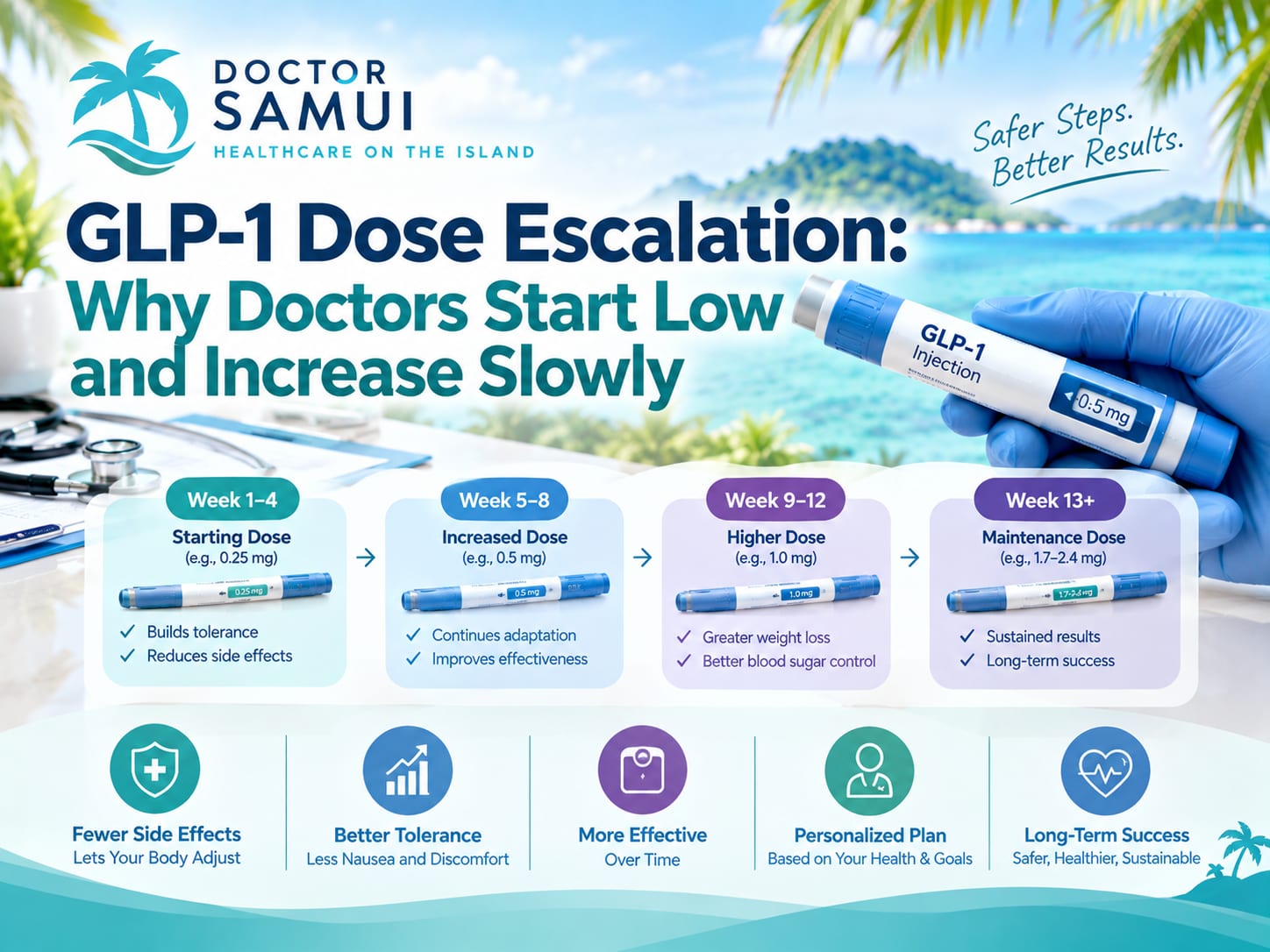
GLP-1 receptor agonists like semaglutide and tirzepatide always start at the lowest available dose and increase in steps over several weeks. This is not caution for caution’s sake. Your body needs time to adapt to each dose level before the next one is safe to add. Skipping steps raises your risk of side effects severe enough to make you stop treatment entirely.
You have your first prescription, you are staying on Samui, and the dose feels almost insultingly small for a goal that is still months away. It feels like being asked to walk when you want to run. But that slow start is doing more work than it looks like, and understanding it makes the harder weeks easier to get through.
The GLP-1 dose escalation schedule exists to protect your body, not to delay your results. Every step up gives your gut, your heart, and your metabolism time to adjust before the next increase. Patients who try to rush the schedule often end up stepping back down anyway, having lost weeks. Getting the escalation right the first time is almost always faster in the end.

The Clinical Reasoning Behind Starting Low
Nausea is the reason most patients know about. GLP-1 medications slow down how fast your stomach empties, and at higher doses that effect is strong. Starting low lets your gut adapt gradually rather than all at once.
But that is only part of the picture. These medications cause real weight loss, and early in treatment your blood pressure, heart rate, and fluid balance all shift. A slow escalation gives your cardiovascular system time to adjust alongside those changes. That adaptation takes weeks, not days.
There is also lean mass to consider. A very fast drop in calorie intake, driven by a high starting dose, can push the body toward losing muscle alongside fat. A gradual increase tends to allow a steadier reduction in intake, which may help limit muscle loss during weight loss, though the evidence on this is still developing.
Semaglutide and Tirzepatide GLP-1 Dose Escalation Schedules Side by Side
The two most prescribed GLP-1 agents have different escalation structures. Here is how they compare based on their approved prescribing information.
| Semaglutide (Wegovy) | Tirzepatide (Mounjaro / Zepbound) | |
|---|---|---|
| Starting dose | 0.25 mg once weekly | 2.5 mg once weekly |
| Step 2 | 0.5 mg (weeks 5 to 8) | 5 mg (weeks 5 to 8) |
| Step 3 | 1 mg (weeks 9 to 12) | 7.5 mg (weeks 9 to 12) |
| Step 4 | 1.7 mg (weeks 13 to 16) | 10 mg (weeks 13 to 16) |
| Maintenance dose | 2.4 mg (from week 17) | 15 mg (from week 21, if tolerated) |
| Minimum ramp time | Approximately 16 weeks | Approximately 20 weeks |
The starting dose for both drugs is not a therapeutic dose. It is too low on its own to produce meaningful weight loss. Its only job is to introduce your body to the medication before the dose moves into the range where appetite and weight effects actually begin.
The goal is also not automatically the maximum dose. Many patients stabilise at an intermediate step where they are tolerating treatment well and seeing consistent results. The maintenance dose is the lowest dose that works for you, not necessarily the highest dose on the label.
Why the First Days After Each New Dose Level Feel Different
Side effects from GLP-1 medications are dose-dependent. They are tied to the size of the dose, not just to being on the medication. Every time you step up, you are introducing your body to a new level of drug exposure, and the first one to two weeks at each new step are usually when any new symptoms appear.
This is expected. It is not a sign that something has gone wrong. What it does mean is that the days after a dose increase need a little more attention to how you feel, how much you are eating, and how well you are staying hydrated in Samui’s heat.
If symptoms settle within a week or two at the new level, your body has adapted. If they do not settle, that is a different conversation.
Signs You Should Not Push Through to the Next Step
Knowing when to hold a dose is as important as following the schedule. Mild nausea, reduced appetite, and some tiredness after a step-up are expected. These are not reasons to pause.
Certain symptoms do warrant holding your current dose and speaking to a doctor before going further. Vomiting that stops you eating or drinking for more than a day or two, significant abdominal pain, or dizziness that feels tied to low blood pressure are all reasons to pause. These medications are not suitable for people with a personal or family history of medullary thyroid carcinoma or multiple endocrine neoplasia syndrome type 2, and are not recommended during pregnancy. Do not advance to the next dose level until those symptoms have resolved and you have had a review. A full guide to what to do when a GLP-1 dose step feels too hard is worth checking before you decide either way.
Pushing through a dose increase when your body has not adapted to the current one does not make treatment faster. It usually means stepping back down, which costs more time overall.
Flexible Titration: When Slowing the GLP-1 Dose Escalation Schedule Is the Right Call
The standard schedules above are the approved starting points. They are not rigid rules that cannot be adjusted. A prescriber can keep you at the same dose for an extra four weeks if you are not tolerating the current step well. This is called flexible titration, and it is a legitimate part of how these medications are managed.
Slowing down when your body needs it does not weaken the long-term result. It improves adherence, and a patient who stays on treatment consistently always does better than one who stops early because of side effects.
If you are finding a step genuinely hard, asking your prescriber to hold the current dose for an extra four weeks is a reasonable request. It is not a sign of treatment failure.
Managing Your GLP-1 Escalation on Koh Samui Without Your Home Doctor
This is the situation that catches expats and long-stay visitors off guard. You started treatment at home, you have your schedule, but your prescribing doctor is in another country. Week five arrives, you are due to step up, and the nausea from your last injection has not fully settled.
The practical answer is to bring two things when you travel: a written copy of your titration plan with dose steps and dates, and your prescriber’s contact details. If you are already on the island and need a review before advancing your dose, Doctor Samui can assess how you are tolerating your current level and confirm whether the next step is appropriate. We do not restart your course. We review where you are and give you a clear plan for what comes next. Consultations are available at the Chaweng clinic seven days a week, and 24-hour house calls across the island mean you do not have to travel if you are feeling rough after a step-up.
The Samui heat matters here too. GLP-1 medications already reduce your appetite for fluids as well as food. Sweating more than usual in a tropical climate makes that worse. Dehydration makes GI side effects harder after every dose step, so staying on top of fluids here is not just a general wellness tip.
If you missed your weekly injection while travelling: if fewer than five days have passed since the scheduled date, inject as soon as you remember and continue your usual schedule. If more than five days have passed, skip that week and resume on your next scheduled day. After a gap of several weeks, a review before restarting makes sense, as stepping back down temporarily is often the safer approach. If you are in the Lamai or Chaweng area, a same-day clinic visit is the quickest way to get a clear answer.
Staying on Samui mid-treatment and not sure whether to step up? Doctor Samui runs a supervised GLP-1 programme from our Chaweng clinic, with consultations available seven days a week and 24-hour house calls across the island. If you are mid-escalation, dealing with side effects after a dose increase, or managing your titration without access to your usual doctor, we can review your current dose, adjust your plan, and keep you on track. Contact us or visit the clinic to book your GLP-1 consultation.
FAQ
Dr. Ponlawat Pitsuwan
Physician, Doctor Samui
a walk-in clinic based in Chaweng, Koh Samui, with 24/7 hotel and villa visits across the island. He sees tourists, families, and long-stay expats for GLP-1 consultations, dose escalation reviews, and ongoing weight management support. His focus is straightforward, evidence-based care delivered in plain language.
References
- Wilding JPH, Batterham RL, Calanna S, et al. Once-Weekly Semaglutide in Adults with Overweight or Obesity. N Engl J Med. 2021;384(11):989-1002.
- Jastreboff AM, Aronne LJ, Ahmad NN, et al. Tirzepatide Once Weekly for the Treatment of Obesity. N Engl J Med. 2022;387(3):205-216.
- Novo Nordisk. Wegovy (semaglutide) Prescribing Information. US FDA, 2023.
- Eli Lilly. Zepbound (tirzepatide) Prescribing Information. US FDA, 2026.
- Eli Lilly Medical Information. What should a patient do if they miss a dose of Zepbound (tirzepatide)?
The information in this article is for educational purposes only and does not constitute medical advice. It should not be used to self-diagnose or replace a consultation with a qualified physician. If you have concerns about your health, contact a licensed medical professional. For appointments at Doctor Samui, visit doctorsamui.com.