
Clinically reviewed by Dr. Ponlawat Pitsuwan, Physician, Doctor Samui.
Last reviewed: November 2026
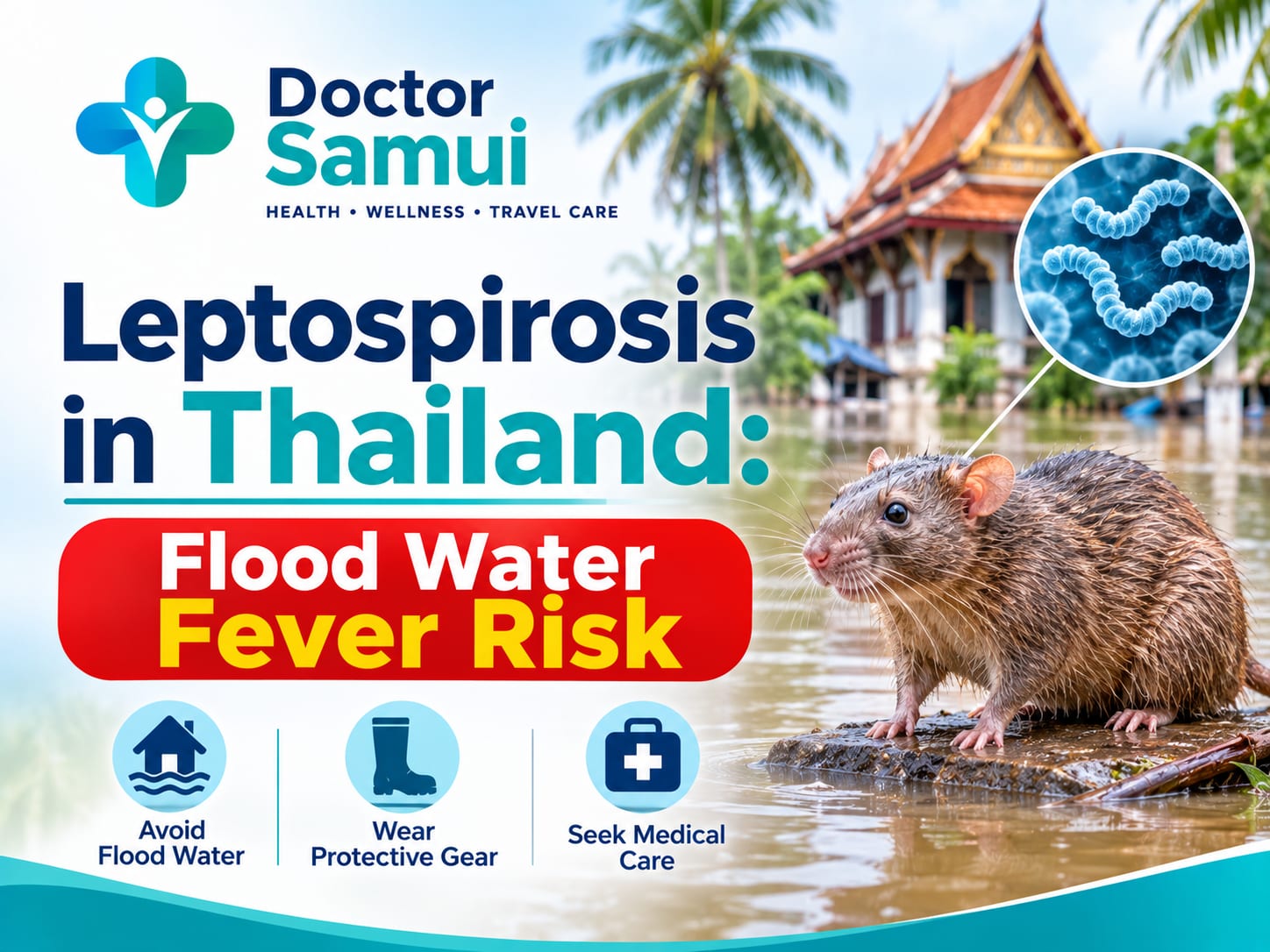
Leptospirosis is a bacterial infection spread through water or soil contaminated by animal urine, most often rats. You can get it by wading through flood water, swimming in rivers, or hiking waterfalls where your skin or any open cut contacts infected water. Symptoms usually start within two to fourteen days of exposure, though the range is two to thirty days: fever, severe headache, and muscle pain. Treated early with antibiotics, most people recover fully. Left untreated, it can progress to organ failure.
You hiked down to Na Muang or Hin Lat after a few days of rain, cooled off in the pool at the base, and thought nothing of it. Three days later you are back at your hotel with a fever, a crushing headache, and muscles that ache like you ran a marathon. That combination, after freshwater contact on Koh Samui, needs a blood test. It may not be leptospirosis. But it may be.
Koh Samui sits in the same southern Thai region as Nakhon Si Thammarat, one of the country’s highest-burden provinces for this infection. The island gets heavy monsoon rain from October through December, flooding streets in Chaweng and Lamai, pushing contaminated water across hiking trails and into paddocks. Most tourists do not know the risk exists until they are already symptomatic. If you are reading this with a fever after any freshwater exposure on the island, keep reading.
How Leptospirosis Spreads on Koh Samui
The bacteria live in the kidneys of rats, dogs, and cattle and pass out through urine into water and soil. They enter your body through broken skin, cuts, or the lining of your mouth, nose, or eyes. You do not need a wound you can see: softened, waterlogged skin from walking through flood water is enough.
On Koh Samui, the specific exposures that matter are freshwater, not sea water. Salt water does not carry significant leptospirosis risk. The ocean is fine. What is not fine: wading through flooded streets after a storm, standing under waterfall pools at Na Muang or Hin Lat, kayaking through flooded mangrove channels, or walking barefoot through wet jungle with an open cut or fresh tattoo.
The rainy season runs from October through December on Samui, and that is when risk peaks. But leptospirosis circulates year-round here. A heavy rain after a dry spell, one that pushes rat urine from drains into pooled street water, is enough to create a risk.
Symptoms to Watch For After Freshwater Exposure
Fever comes on suddenly and hard, usually between five and fourteen days after exposure, though it can appear as early as two days or as late as thirty days. Severe headache follows. Muscle pain concentrates in the calves and lower back. You may also have red eyes, nausea, or a rash. That first phase often looks like a bad flu or dengue.
Many people improve briefly after a few days and then get worse. That second wave is the warning sign. If you develop yellowing of the skin or eyes, dark urine, reduced urination, or confusion, do not wait. Those are signs of Weil’s disease, the severe form, which involves kidney failure, liver failure, or both.
Muscle pain so severe it stops you walking, or pain that is rapidly worsening, needs same-day assessment. That can signal the infection has moved beyond mild. If you have a fever on Koh Samui after any freshwater activity, that history matters as much as the temperature reading.
Testing: Why Your Exposure History Matters
Tell the doctor exactly what you did and where. That history, freshwater contact, the specific location, whether you had open cuts, is what points toward leptospirosis before blood test results return. If you skip that detail, you may be treated for a generic viral fever while the real problem progresses.
Blood tests will include a full blood count, liver and kidney function tests, and leptospirosis serology. Dengue NS1 antigen and scrub typhus serology are usually run at the same time. Dengue, scrub typhus, and leptospirosis all cause fever, headache, and muscle pain in the same season in the same population. The doctor cannot tell them apart on symptoms alone. Running the panel together is the only way to get the right antibiotic.
For mild cases, oral doxycycline is the standard treatment. Severe cases need IV antibiotics in hospital. Early treatment, within the first few days of symptoms, reduces the risk of progression to Weil’s disease. If you need a health check-up and blood tests in Koh Samui and do not want to sit in a walk-in queue while feeling this unwell, Doctor Samui can send a doctor to your hotel or villa to assess you and arrange blood tests directly.
Prevention: What Actually Works
The clearest rule: avoid wading through flood water or standing in freshwater streams with broken skin. After a storm, streets in Chaweng or Lamai that look like they are just wet may be contaminated. Waterproof boots matter during heavy flooding. If you have an open wound, keep it out of rivers, waterfalls, and flooded ground.
After a confirmed high-risk exposure, even before symptoms appear, there is a clinical option worth knowing. Short-course prophylactic doxycycline has been used in clearly defined high-risk situations in endemic areas, such as flooding exposure with open wounds or repeated freshwater contact for trekkers working in the field. This is a clinical decision based on your specific situation. It is not a routine recommendation for every tourist who swam at a waterfall. If you think you had a significant exposure, ask a doctor before symptoms appear.
There is no licensed vaccine for leptospirosis in Thailand for general travellers. Standard precautions remain the main protection.
Fever after flood water or a waterfall on Koh Samui? Doctor Samui’s clinic is based in Chaweng, and doctors are available 24 hours a day for hotel and villa visits across the island, including Lamai, Bophut, Maenam, and everywhere in between. We can assess your symptoms, take a full exposure history, run same-day blood tests, and start antibiotic treatment at your accommodation if clinically indicated. Contact Doctor Samui now.
Frequently Asked Questions
Dr. Ponlawat Pitsuwan
Physician, Doctor Samui
a walk-in clinic based in Chaweng, Koh Samui, with 24-hour hotel and villa visits across the island. He sees tourists, families, and long-stay expats for fever assessment, infection management, and post-exposure care following freshwater and outdoor activities. His focus is straightforward, evidence-based care delivered in plain language.
References
- Centers for Disease Control and Prevention. Leptospirosis. CDC Yellow Book 2024: Health Information for International Travel.
- World Health Organization. Human Leptospirosis: Guidance for Diagnosis, Surveillance and Control. WHO, 2003.
- Phimda K, et al. Clinical Manifestations and Epidemiology of Leptospirosis Cases, Upper Southern Thailand, 2017. Journal of Health Science, Thai Department of Disease Control.
- Chadsuthi S, et al. Spatial analysis of leptospirosis in Thailand 2012–2018. Scientific Reports, 2021.
- Kashino SS, et al. The Use of Chemoprophylaxis after Floods to Reduce the Occurrence and Impact of Leptospirosis Outbreaks. Cochrane Database of Systematic Reviews. PMC 2010.
- Centers for Disease Control and Prevention. Leptospirosis: Signs and Symptoms.
The information in this article is for educational purposes only and does not constitute medical advice. It should not be used to self-diagnose or replace a consultation with a qualified physician. If you have concerns about your health, contact a licensed medical professional. For appointments at Doctor Samui, visit doctorsamui.com.
