Clinically reviewed by Dr. Ponlawat Pitsuwan, Physician, Doctor Samui. Last reviewed: August 2026
Yes, the rabies risk from a stray dog bite in Thailand is real. Thailand is a rabies-endemic country, and stray dogs are the most common source of exposure. Wash the wound immediately with soap and running water for at least 15 minutes, then get to a clinic the same day. Do not wait to see how the wound looks or whether the dog seemed healthy.
You are on the beach path near Chaweng after dark, or your kids are tossing scraps to a friendly-looking dog outside Wat Plai Laem, or you are sitting outside a bar on the Bophut strip when it happens. A bite, a scratch, or a dog’s mouth on broken skin. One second everything is fine. The next you are staring at your hand and wondering how serious this actually is. Serious enough to act tonight, not tomorrow morning.
Thailand carries rabies in its dog population. This is not a rare event. The dogs on Koh Samui’s beaches, temple grounds, and back streets are the same population that drives bite presentations at our Chaweng clinic week after week. Rabies is entirely preventable after a bite if you move fast and get the right treatment. But delay costs lives, and there is no treatment once symptoms appear.

Why Koh Samui Has a Stray Dog Problem
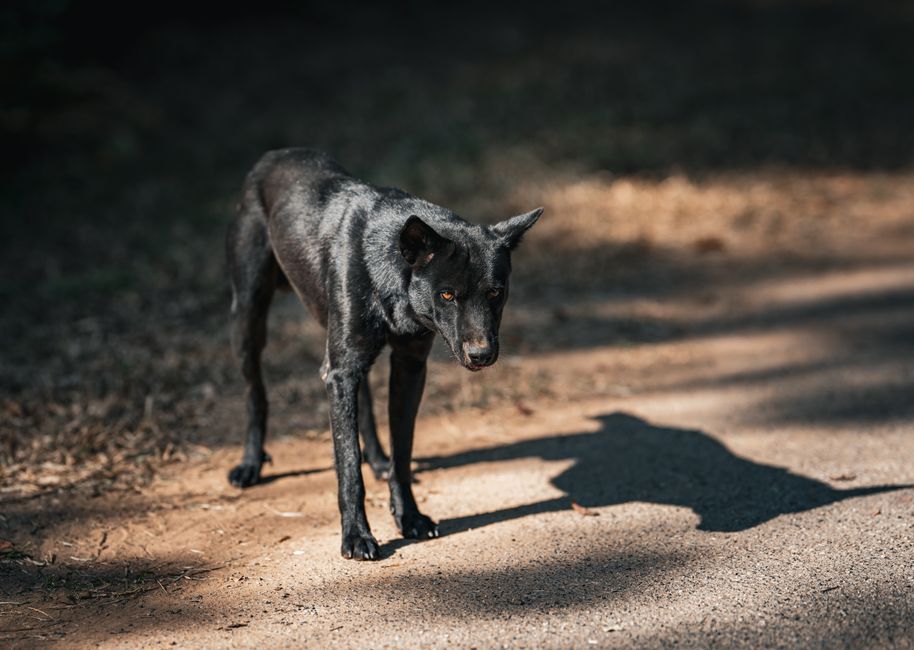
Koh Samui has a large, established soi dog population. These dogs are not truly wild. Locals feed them, give them names, and sometimes put collars on them. But informal feeding is not veterinary care, and a collar is not a vaccination record.
Soi dogs move in loose territorial packs. You will find them around temple grounds, on night-market lanes, along beach access paths after dark, and on quieter stretches near Maenam and Bophut. The waterfall trails at Na Muang also have resident dogs that approach tourists expecting food.
Bites happen in predictable situations. Reaching toward a dog you do not know. A child running toward a dog that is eating or sleeping. Surprising a dog at night. These are the same scenarios we hear every time someone comes in.
The Real Rabies Risk After a Stray Dog Bite in Thailand
Rabies is carried in the saliva of infected animals. Dogs are the primary source in Thailand, and the country records human rabies deaths every year. This is not a distant theoretical risk on Koh Samui. It is a documented, ongoing hazard.
Once symptoms appear, rabies is almost always fatal. There is no effective treatment at that stage. But there is a window after a bite when post-exposure prophylaxis (PEP), the vaccine course given after exposure, stops the virus from reaching the brain. That window is real, and it works. Time is the critical variable.
A dog can carry and transmit rabies while looking completely healthy. Bright eyes, wagging tail, no foaming at the mouth. Do not make your decision based on how the dog seemed.
WHO Exposure Categories and What Your Bite Actually Means
The WHO divides animal exposures into three categories. Your category determines exactly what treatment you need.
Category I means the dog touched or licked completely intact, unbroken skin. No treatment is needed beyond washing the area, but if you are not certain your skin was unbroken, treat it as Category II.
Category II means nibbling on skin, minor scratches without bleeding, or licks on skin that may have small cuts. You need the rabies vaccine course started today.
Category III means one or more penetrating bites, scratches that bleed, broken skin, or any contact with a mucous membrane such as the mouth, eyes, or nose. You need the vaccine course and rabies immunoglobulin (RIG) on the same day. RIG provides immediate protection at the wound site while your body builds its own response to the vaccine.
If you are not sure which category applies, assume the higher one and come in. Self-assessment after a stressful bite is unreliable.
First Aid Before You Reach the Clinic
Do this immediately, before anything else. Wash the wound under running water with soap for a full 15 minutes. This single step significantly reduces viral load in the wound. Then apply an antiseptic. Povidone-iodine (Betadine) is the first choice, or alcohol if that is all you have.
Do not cover the wound tightly. Do not apply pressure that closes the wound edges before it has been properly irrigated. Do not let anyone convince you to suck the wound or apply any traditional remedy.
After washing and applying antiseptic, get to a clinic. If you cannot reach our Chaweng clinic directly, Doctor Samui provides 24/7 hotel and villa visits across the island. You do not need to wait until morning.
What Happens at the Clinic
When you come in, we assess the wound, clean it properly, and confirm your WHO exposure category. We check your tetanus status and give a booster if needed. For Category II and III exposures, we start the rabies PEP vaccine course the same day.
For Category III exposures, we also give rabies immunoglobulin. Doctor Samui stocks RIG at the Chaweng clinic. You do not need to take a ferry to the mainland to access it. RIG must be given on Day 0 alongside your first vaccine dose, which is exactly why same-day treatment matters.
The standard PEP schedule for unvaccinated patients is four doses: Day 0, Day 3, Day 7, and Day 14. If you have had pre-exposure vaccination before the bite, the schedule shortens to two doses and no RIG is needed.
Beyond Rabies: The Bacterial Infection Risk You Might Overlook
Rabies gets all the attention, and rightly so. But dog bites also carry a significant bacterial infection risk, and in Koh Samui’s heat and humidity, that risk escalates fast.
Dog mouths carry bacteria that can cause serious wound infections. In a warm, tropical environment, a bite wound can become infected and spread within 24 to 48 hours. Watch for increasing redness beyond the bite edges, swelling, warmth, pus, red streaking, or fever. Do not assume these are normal healing.
Most dog bite wounds that need antibiotics are treated with amoxicillin-clavulanate. If you have a penicillin allergy, tell us when you arrive and we will use an appropriate alternative.
Special Concern: Children and Dog Bites on Koh Samui
If a dog bit your child, this is more urgent than if it bit you. Children are bitten on the face, neck, and head far more often than adults. These areas are closer to the brain, which means the virus has less distance to travel. Children may also stay quiet about a bite if they are scared or worried about getting in trouble.
On a family holiday to Koh Samui, where kids are naturally drawn to beach dogs and temple animals, this risk is very real. Bring your child in the same day, regardless of how minor the wound looks. Our team treats children regularly and will assess the wound calmly and explain every step.
Should You Get the Rabies Vaccine Before You Travel?
Pre-exposure prophylaxis (PrEP) is the rabies vaccine course taken before any bite occurs. It does not remove the need for post-bite care, but it changes everything about that care. With PrEP, you need only two post-bite doses and no RIG. That means less urgency around sourcing immunoglobulin, lower cost, and a simpler protocol.
PrEP makes strong sense for long-stay expats, frequent travellers to Thailand, anyone with significant planned animal contact, and children spending extended time on the island. It is a short course of two doses given over a few weeks.
You can read more about timing, scheduling, and whether PrEP is right for your trip on our rabies vaccine page for Koh Samui.
Leaving Koh Samui Before You Finish Your Vaccine Course
This is one of the most common practical problems we manage. You start your course on Day 0 but you are flying home on Day 5. What happens to Days 7 and 14?
You continue the course wherever you are. Doses do not need to come from the same clinic or the same country. The schedule runs from the date of your first dose, not from the location. Doctor Samui provides a written vaccination record with batch numbers, dates, and your full dose schedule. Any travel clinic or hospital abroad can use this to continue your course correctly.
Do not delay starting because you are leaving soon. Starting on Koh Samui and finishing abroad is correct. Waiting until you get home before starting is not safe. Day 0 is the most critical dose.
If your travel insurer needs documentation, your vaccination record from Doctor Samui serves as the clinical evidence for your claim. Keep it with your travel documents.
If you have been bitten or scratched by a dog on Koh Samui, do not wait until morning. Doctor Samui’s walk-in clinic in Chaweng is open now, and we provide 24/7 hotel and villa visits across the island, including Bophut, Lamai, Maenam, Choeng Mon, and beyond. We carry rabies immunoglobulin and vaccines at the clinic, so you do not need to travel to the mainland. Walk in or call us to arrange a visit wherever you are staying.
Frequently Asked Questions
Dr. Ponlawat Pitsuwan
Physician, Doctor Samui
a walk-in clinic based in Chaweng, Koh Samui, with 24/7 hotel and villa visits available across the island. He sees tourists, families, and long-stay expats for dog bite assessment, rabies post-exposure prophylaxis, wound care, and travel health consultations. His focus is evidence-based care explained in plain language.