Clinically reviewed by Dr. Ponlawat Pitsuwan, Physician, Doctor Samui. Last reviewed: August 2026
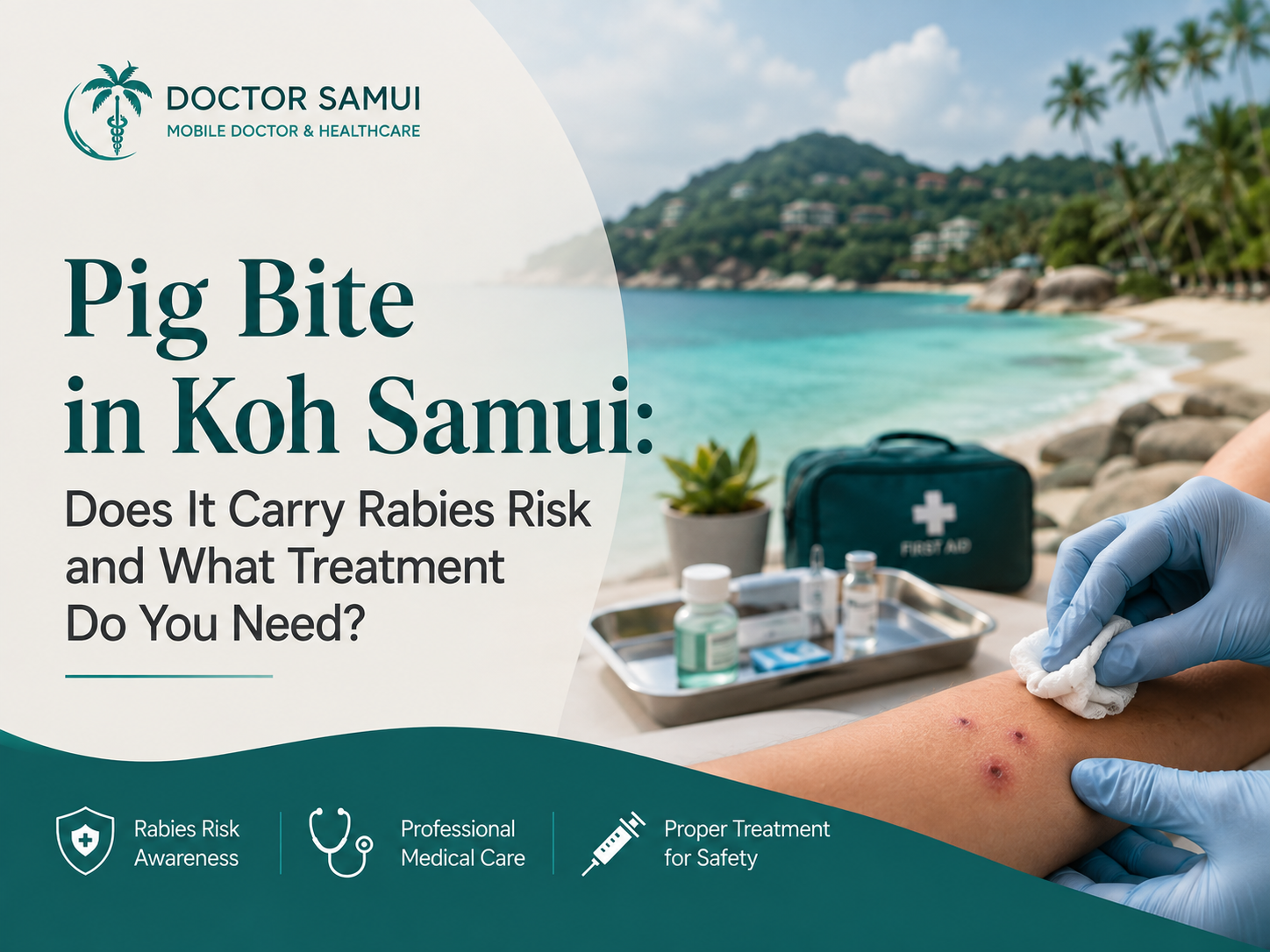
Pig bites in Koh Samui carry two real risks: bacterial infection and, because Thailand is rabies-endemic, potential rabies exposure. Any bite or scratch from a pig that breaks the skin needs same-day medical assessment. Wash the wound with soap and water for at least 15 minutes, then get to a clinic or call a doctor to your hotel. Do not wait to see how it looks in the morning.
The boat from Koh Samui to Koh Madsum takes about 20 minutes. Most people go for the beach, the clear water, and the pigs. Feeding them is the whole point of the trip. But these are free-roaming animals with powerful jaws and unpredictable behaviour, and tourists get bitten more often than the tour operators let on. If a pig just broke your skin on Pig Island, here is what you actually need to do.
Pig bites are more serious than most people expect. The bacteria in a pig’s mouth are aggressive, and in Thailand, rabies is a real consideration with any animal bite. This is not about scaring you. It is about giving you the right information fast, because the decisions you make in the first hour matter.

Where Pig Bites Happen on Koh Samui
Koh Madsum is the most common location. Day-trippers feed the pigs by hand on the beach, wade in with them, and take photos up close. The pigs are used to people but they are not domesticated in any meaningful sense. A pig that feels crowded, grabs at food in your hand, or simply gets overexcited can bite hard and fast.
Beyond Pig Island, we see bites from pigs kept on temple grounds and rural farms, particularly around Nathon and Taling Ngam. Long-stay expats and people renting villas near agricultural land are often the patients here, not day-trippers.
Does a Pig Bite in Koh Samui Carry a Rabies Risk?
This is the question everyone asks first. The honest answer: pigs can carry rabies, Thailand is rabies-endemic, and that combination means we take every pig bite seriously.
Rabies in pigs is less common than in dogs or bats, but it does happen. A pig that bites during normal feeding on Pig Island is a different risk profile from a stray animal that attacked without provocation. But we cannot determine rabies status from behaviour alone. Once rabies symptoms appear, the outcome is fatal. That is why we do not gamble on it.
The WHO classifies animal exposures by category. A scratch or nibble that breaks the skin is Category II. A deep bite, multiple bites, or contact with mucous membranes is Category III. Both categories in a rabies-endemic country warrant starting post-exposure prophylaxis (PEP), which is the course of rabies vaccines given after an exposure. Category III exposures also need rabies immunoglobulin (RIG) injected around the wound on the same day as the first vaccine. Our rabies vaccine and PEP page explains the full schedule and what to expect at each visit.
Why Pig Bite Wounds Carry a Higher Infection Risk Than You Might Expect
Even setting rabies aside, a pig bite is bacteriologically serious. Pig mouths carry a mix of bacteria that cause fast, aggressive infections in humans, including Pasteurella multocida, Actinobacillus suis, and Streptococcus milleri. Multiple bacterial species enter the wound at once, which is why infections can progress so quickly.
Pig teeth and tusks also create puncture wounds that look small at the surface but go deep. Deep punctures trap bacteria and are difficult to clean properly. Tropical heat and humidity accelerate bacterial growth, so a wound that looks manageable on the boat back from Koh Madsum can look very different by that evening.
First Aid Steps to Take Immediately After a Pig Bite
Do this before you get on the boat back. Do not wait until you reach the hotel.
Flush the wound with clean running water and soap for a full 15 minutes. This is the WHO standard, and it is longer than most people manage. Set a timer. If you have a water bottle, use it. The goal is to physically wash out as much bacterial load as possible.
After washing, apply an antiseptic if you have one, such as povidone-iodine or alcohol. Cover the wound loosely with a clean cloth. Do not tape a puncture wound shut. Contact Doctor Samui as soon as you have signal. Our team can advise by WhatsApp while you are still on the water, and we can have a doctor at your hotel or villa when you arrive back on the island.
What Treatment Will a Doctor Give You for a Pig Bite in Koh Samui?
When you come in, or when we visit you at your hotel, the first step is to assess the wound and classify the exposure using WHO categories. That classification drives the treatment plan.
For wound care, we irrigate the wound properly, remove any damaged tissue if needed, and decide whether it can be closed or should be left open to reduce infection risk. Deep puncture wounds are usually left open. We also check your tetanus status. If you are not up to date or unsure, you get a booster.
Antibiotic prophylaxis is standard for pig bites. Amoxicillin-clavulanate covers the key bacteria found in pig mouths. If you have a penicillin allergy, there are alternatives. You get a full course, not just a few days.
For rabies PEP, we start the vaccine series the same day and arrange follow-up doses on days 3, 7, and 14. If the wound is Category III, we give RIG at the wound site on day 0 as well. If you completed pre-exposure rabies vaccination before your trip, the schedule is shorter and you will not need RIG, though you still need wound care and antibiotic review. Anyone planning future trips to Samui unvaccinated should read about pre-exposure rabies vaccination before they travel.
Signs Your Pig Bite Wound Is Getting Infected
Watch the wound closely for the first 48 hours. In a tropical climate, infection can develop fast.
Redness spreading outward from the bite edge, warmth, swelling, or pus are all signs of infection. Cellulitis can travel up a limb quickly. If you develop fever, chills, or feel generally unwell, that is urgent. Do not manage it with painkillers and wait to see what morning brings.
Abscess formation, where the wound fills with pus and becomes a firm, painful lump, sometimes needs drainage on top of antibiotics. We see patients at our Chaweng clinic who waited three or four days and now need a minor procedure that earlier treatment would have avoided.
Should You Get Assessed Even If the Bite Looks Minor?
Yes. Every time.
A graze from a pig tusk that barely bleeds is still skin-breaking contact with swine bacteria in a rabies-endemic country. Tourists on Pig Island frequently say the pig "just grazed" them or "barely touched" them. Puncture wounds look minor at the surface. The depth is the problem, not the width.
There is no version of this where waiting makes sense. The infection risk from a pig bite is real from the moment skin breaks. The rabies risk, however small, carries a consequence that cannot be reversed once symptoms begin. Get assessed the same day.
If you or someone in your group was bitten or scratched by a pig on Pig Island or anywhere on Koh Samui, contact Doctor Samui now. We offer walk-in assessment at our Chaweng clinic and 24/7 doctor visits to hotels and villas across the island, including Lamai, Bophut, Maenam, Choeng Mon, and Nathon. We carry rabies vaccines and can start your PEP course the same day. Message us on WhatsApp for immediate advice while you are still on the water or back at your resort.
FAQ
Dr. Ponlawat Pitsuwan
Physician, Doctor Samui
a walk-in clinic based in Chaweng, Koh Samui, with 24/7 hotel and villa visits across the island. He sees tourists, families, and long-stay expats for animal bites, wound care, rabies post-exposure prophylaxis, and island-specific travel medicine. His focus is straightforward, evidence-based care delivered in plain language.