Clinically reviewed by Dr. Ponlawat Pitsuwan, Physician, Doctor Samui. Last reviewed: August 2026
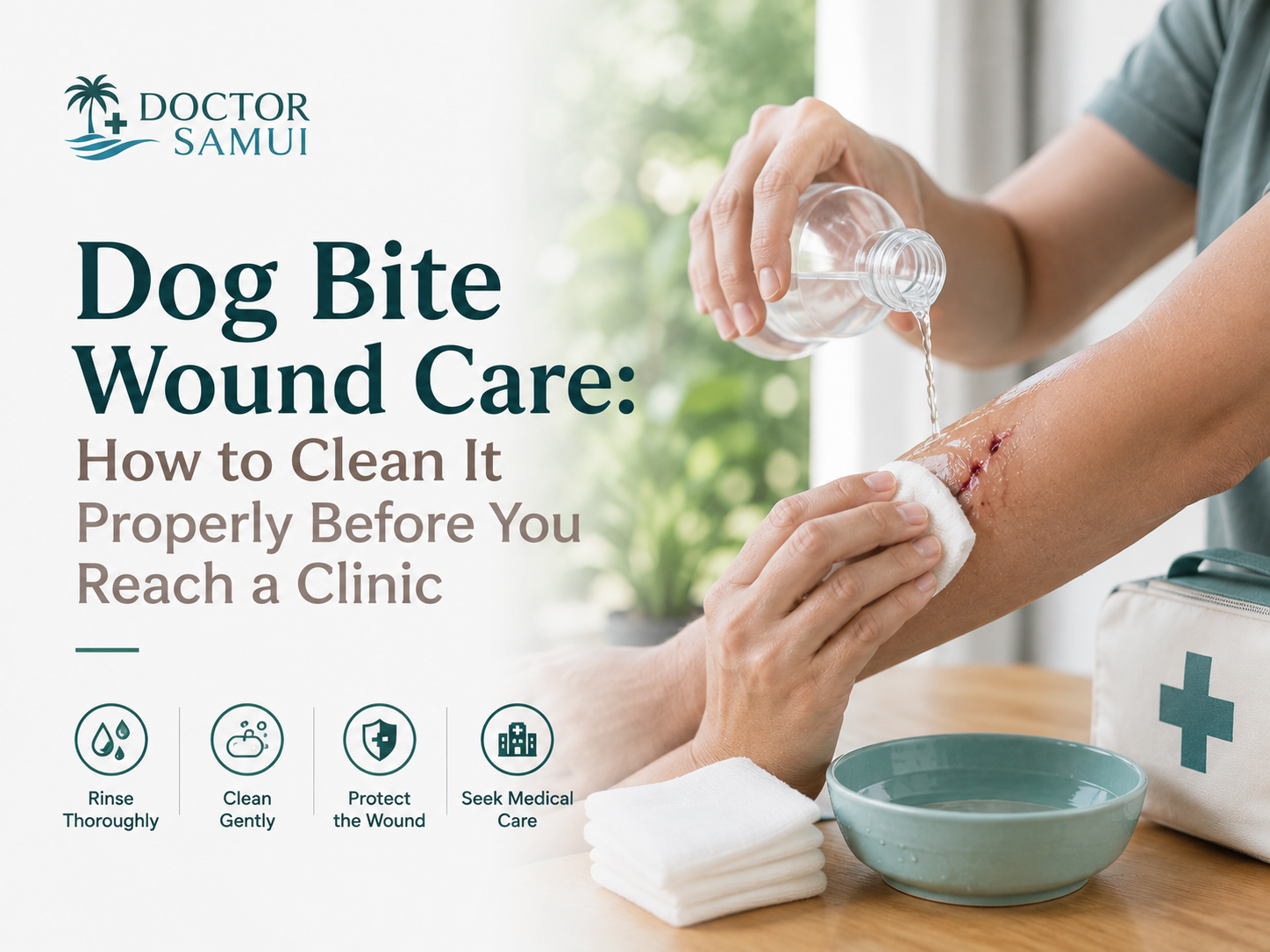
After a dog bite, flush the wound with soap and running water for a full 15 minutes. Do this before anything else. This step reduces both bacterial infection and rabies virus at the wound site. Then get to a clinic the same day, even if the wound looks minor. On Koh Samui, treat every stray dog bite as a potential rabies exposure until a doctor says otherwise.
You are cutting back to your hotel through a side street in Chaweng, or walking the temple path at Wat Plai Laem, when a dog comes from nowhere. It happens in seconds. One moment you are on holiday, the next you are looking at a puncture mark on your ankle wondering what to do first. The answer is simple: find a tap and start washing. Right now. Everything else comes after that.
What you do in the first ten minutes matters more than most people realise. Not just for infection, but for rabies risk. The good news is that you can do something genuinely useful before you reach a clinic, and this guide walks you through exactly that. Once the wound is clean, Doctor Samui’s team in Chaweng can take over with a full rabies assessment, same-day vaccines, and antibiotic cover, or we come to your hotel if you cannot travel.

Why Dog Bites on Koh Samui Carry a Different Risk
The stray dog situation on Koh Samui is not the same as a pet bite back home. Soi dogs roam beaches, temple grounds, night markets, and quiet resort lanes. Many look healthy. Some even wear collars. None of that tells you whether they are vaccinated.
The collar myth is one of the most common mistakes we see after bites on this island. Community soi dogs are often fed and named by locals, and they get collars. They do not get rabies vaccines. Unless the owner hands you a dated, stamped veterinary record on the spot, treat the dog as unvaccinated. That is WHO guidance, and it is the right call here.
Koh Samui’s heat and humidity also speed up bacterial infection. A bite that might stay clean for 24 hours in a cooler climate can show early infection signs here within hours. Saliva from any dog, stray or pet, carries bacteria that thrive in warm, moist tissue. Move fast.
Step-by-Step Dog Bite Wound Care Before You Reach the Clinic
Start at the nearest tap. You do not need bottled water, a pharmacy kit, or anything special. Tap water in Koh Samui hotels and villas is fine for wound flushing.
Run water over the wound and work soap into it gently. Use any soap available: bar soap, hand wash, shower gel. Do not scrub hard, as that can push bacteria deeper into tissue. Let the pressure of running water do the work, and flush for a full 15 minutes. WHO guidelines are specific on this point. Ten minutes is not enough. Set a timer if you need to.
After flushing, apply an antiseptic. Betadine, which is povidone-iodine solution, is sold at every pharmacy and many convenience stores on the island. Apply it gently with clean gauze or cotton. Do not skip the irrigation step and go straight to Betadine. The antiseptic works after the flush, not instead of it.
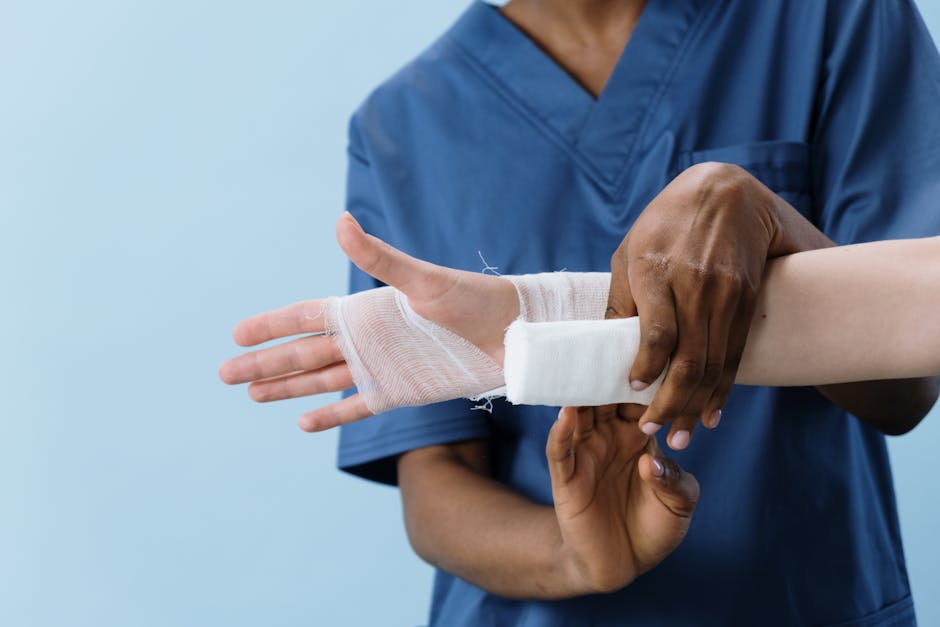
Cover the wound loosely with clean gauze or a non-stick dressing. Do not seal it tightly. Leave it to breathe slightly, especially if it is a puncture wound.
What Not to Do: Beach Wisdom Gets This Wrong
Beach wisdom on this one is wrong, and following it can make things worse.
Do not pour hydrogen peroxide directly into the wound. It damages the tissue that needs to heal and does not offer any benefit that soap and water do not already provide. Rubbing alcohol and full-strength Dettol are in the same category: too harsh for open tissue. A diluted antiseptic is fine. Undiluted alcohol is not.
Do not tightly close or tape a dog bite shut, especially a puncture wound. Sealing it traps bacteria inside. Puncture wounds need to drain, not seal. We see this regularly at the Chaweng clinic from patients who thought they were helping.
Do not apply toothpaste, lime juice, or any local home remedy. These circulate among backpackers but have no clinical value and can introduce new contaminants. Skip them entirely. And do not wait to see if the wound gets better on its own. Small puncture wounds fool people because the skin closes fast. The bacteria are already inside.
Why Washing the Wound Is Also Your First Step Against Rabies
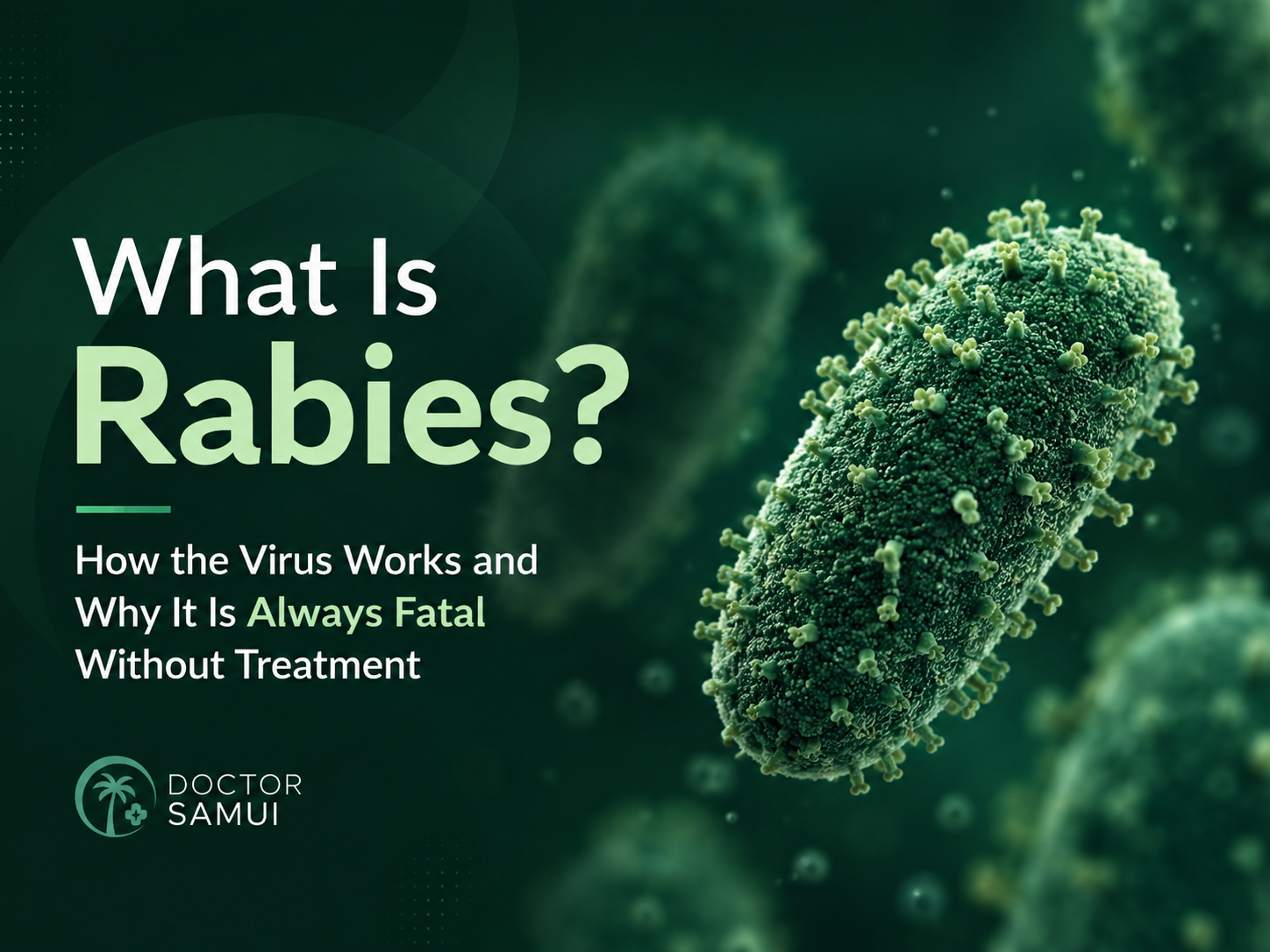
Most people think of wound cleaning as infection control. It is that, but it is also your first direct action against the rabies virus.
Soap and water physically disrupt the outer layer of the rabies virus, reducing the amount present at the wound site before it can reach nerve tissue. This is not a substitute for post-exposure prophylaxis, known as PEP. But it matters, and WHO includes this flushing step as part of its rabies exposure response protocol for exactly this reason.
The faster you flush and the longer you flush, the lower the viral load at the wound site. Fifteen minutes is the minimum. Start counting from when water actually contacts the wound.
How Deep Is Too Deep: When to Head Straight to a Clinic
Most dog bites can be cleaned at the scene and then followed by a clinic visit within the hour. But some need direct clinical attention first.
If the wound is deep, gaping, or actively bleeding, apply firm pressure with clean cloth and head straight to Doctor Samui or call for a hotel visit. Do not attempt prolonged irrigation of a wound that will not stop bleeding. If the bite is on the face, neck, hands, or near a joint, get medical assessment before spending time on extended home cleaning. These sites carry higher rabies risk because the virus reaches nerve tissue faster.
If a child is bitten, especially on the head or face, do a quick rinse and get moving. Children are bitten more often on the head and neck than adults, which are the highest-risk sites for rabies. Lower body weight also means bacterial infection spreads proportionally faster.
Infection Signs to Watch For in the Hours After
Even after good wound care, infection can develop quickly in Koh Samui’s climate. You do not need to know the names of the bacteria in dog saliva. You need to know the signs.
Watch for redness spreading away from the wound edge, increasing warmth, swelling, pus, or red streaking up the skin from the bite site. Fever, chills, or increasing pain in the wound 12 to 24 hours later are also signals that bacteria are active. These signs need same-day clinical assessment, not a wait-and-see approach.
What Happens When You Arrive at Doctor Samui
Bring your passport and, if you have it, any photo or information about the dog. At the Chaweng clinic, or when we visit your hotel or villa, we work through a structured assessment.
We classify the bite using WHO exposure categories. A scratch or lick on intact skin is Category II. A bite that breaks the skin, or any exposure near the face or hands, is Category III. That classification determines whether you need rabies immunoglobulin, known as RIG, alongside the vaccine series. We carry RIG and cold-chain vaccines at the clinic, and same-day administration is available.
We also check your tetanus status, dress the wound properly, and prescribe antibiotics where there is infection risk. You leave with a written vaccine schedule so you can plan follow-up doses around your holiday. For details on the full rabies vaccine process, see our rabies vaccine page for Koh Samui. If you are staying in Bophut, Lamai, Maenam, or anywhere else on the island, we come to you for follow-up visits.
Travel insurance almost always covers dog bite treatment in Thailand. Photograph the wound, keep all clinic receipts and documentation, and note the location and time of the bite.
Higher-Risk Groups: Children, Older Visitors, and Immunocompromised Travellers
For most healthy adults, the timeline after a dog bite allows for scene cleaning followed by a clinic visit within the hour. For some groups, that margin is tighter.
Children under 15, older travellers, and anyone on immunosuppressants or living with diabetes need faster assessment. Infection moves faster when the immune response is slower. Wound care at the scene is still the right first step, but do not delay to wait and see. Our team at Doctor Samui can visit your hotel directly if getting into a vehicle is difficult after a traumatic bite.
For rabies specifically, being immunocompromised does not increase the biological risk of infection from the bite itself, but the vaccine response may be lower. Your doctor needs to know this in order to plan the right protocol.
If you or your child has been bitten by a dog on Koh Samui, Doctor Samui offers same-day walk-in assessment at our Chaweng clinic and 24/7 hotel and villa visits across the island, including Lamai, Bophut, Maenam, and Choeng Mon. We carry rabies immunoglobulin and cold-chain vaccines on-site, provide WHO-protocol PEP, check your tetanus status, and give you a written vaccine schedule to follow across your stay. You do not need to find a hospital. Contact us and we will come to you.
How long should I wash a dog bite wound before going to a clinic on Koh Samui?
Flush with soap and running water for a full 15 minutes. This is the WHO minimum and it applies regardless of how small the wound looks. Tap water in Koh Samui hotels and villas is adequate for this. Then apply an antiseptic and head to the clinic the same day.
Can I use Betadine or Dettol on a dog bite wound in Thailand?
Betadine, which is povidone-iodine solution, is the right antiseptic choice after you have already flushed the wound with soap and water for 15 minutes. Use it as a second step, not a replacement for irrigation. Dettol at full concentration and rubbing alcohol can damage tissue, so avoid applying them directly into the wound.
The dog that bit me on Koh Samui was wearing a collar. Does that mean it was vaccinated?
No. Community soi dogs on the island are often collared by locals who feed them, but a collar carries no information about vaccination status. Unless you have a dated, stamped veterinary record in your hands, treat the bite as a potential rabies exposure and seek assessment at Doctor Samui the same day.
My child was bitten by a dog on the beach. Do I clean it the same way as an adult bite?
The cleaning technique is the same, but the urgency is higher. Children are bitten more often on the face, head, and neck, which are the highest-risk sites for rabies. Do a quick, gentle flush and move to a clinic or call us for a hotel visit straight away. Do not wait to see whether the wound looks serious.
I already cleaned the wound myself. Do I still need to see a doctor the same day?
Yes, without exception. Cleaning reduces risk but does not eliminate it. A doctor must assess the WHO bite category, determine whether rabies immunoglobulin is needed, check your tetanus status, and start the vaccine schedule if required. Doctor Samui offers same-day walk-in care in Chaweng and 24/7 hotel visits across the island.
What are the signs that a dog bite wound is getting infected?
Watch for redness spreading beyond the wound edge, swelling, increasing warmth, pus, or red streaking on the skin. Fever or chills within 12 to 24 hours also point to active infection. These signs need same-day clinical assessment, not home treatment alone.
Will my travel insurance cover dog bite treatment and rabies vaccines on Koh Samui?
Most travel insurance policies cover dog bite treatment in Thailand, including the rabies vaccine series. Photograph the wound, keep all receipts and clinic documentation, and note the time and location of the bite. Doctor Samui provides written documentation for insurance claims.
Dr. Ponlawat Pitsuwan
Physician, Doctor Samui
a walk-in clinic based in Chaweng, Koh Samui, with 24/7 hotel and villa visits across the island. He sees tourists, families, and long-stay expats for dog and animal bite assessment, rabies post-exposure prophylaxis, wound care, and tropical infection management. His focus is straightforward, evidence-based care delivered in plain language.