Clinically reviewed by Dr. Ponlawat Pitsuwan, Physician, Doctor Samui. Last reviewed: August 2026
A cat bite in Thailand carries a real rabies risk. Thailand is a rabies-endemic country, and most cats on Koh Samui that bite tourists are strays or semi-feral with no traceable owner. Any bite that breaks the skin needs immediate wound washing and same-day medical assessment. Do not wait to see how it looks in the morning.
You are at an open-air restaurant along Chaweng beach. A skinny cat weaves between the tables, you reach down, and it bites you. It barely bled. You clean it with a tissue and order another drink. This is exactly the moment we see go wrong. That small puncture is the one that brings tourists to our clinic two days later with a swollen hand and real anxiety.
Thailand has never been free of rabies, and Koh Samui is not an exception. Most cats that approach tourists at beach restaurants, temple grounds, and resort pools are strays or semi-feral. You cannot tell if a cat carries the virus by looking at it. The treatment window is generous, but it is not infinite. The wound also carries a bacterial risk that most people never consider until the infection sets in.
Why Cat Bites Are Medically Deceptive
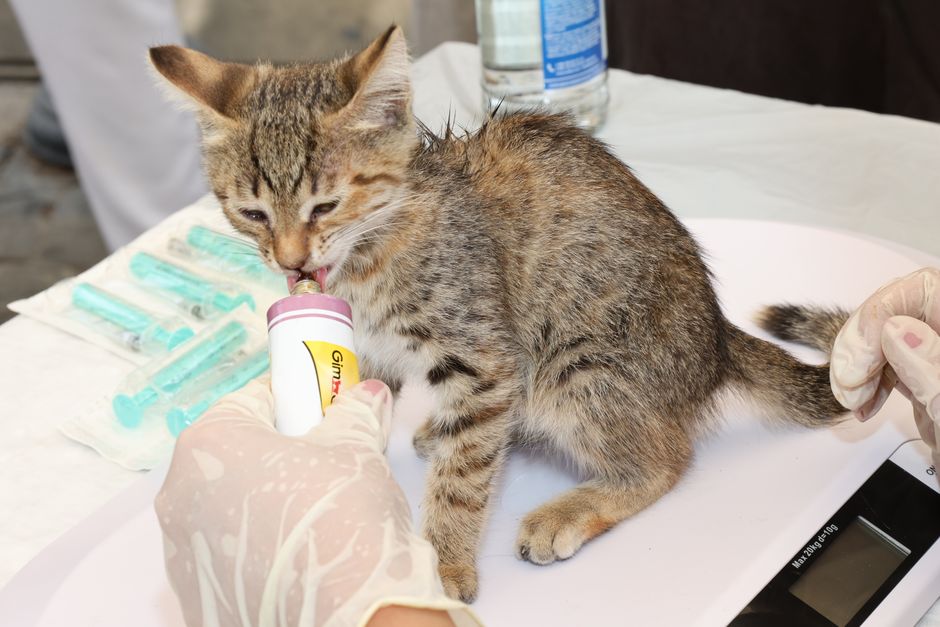
Cat teeth are narrow and sharp. They push bacteria deep into tissue, and the skin closes over almost immediately. A dog bite tends to tear and bleed and look worse than it is. A cat bite often looks minor and feels minor. It is frequently not minor.
The bacterium Pasteurella multocida lives in most cats’ mouths and can cause a fast, aggressive soft-tissue infection. Hands can swell significantly within six to eight hours of a bite that looked like nothing more than a pinprick. If you are diabetic, older, or on any medication that suppresses your immune system, that risk is higher and the infection moves faster.
This is not a reason to panic. It is a reason to go to a clinic the same day, not the next morning, not after the trip. Wound washing and antibiotics started early can stop a bacterial infection before it takes hold.
Cat Bite Rabies Risk in Thailand: What You Actually Need to Know
Rabies circulates in dogs, cats, and bats across Thailand. A healthy-looking cat can carry the virus in its saliva for up to ten days before showing any sign of illness. The cat that bit you at the Fisherman’s Village night market and walked off looking perfectly fine is not automatically safe.
The risk depends on the type of bite, where on the body, whether the skin was broken, and whether the cat can be identified and monitored. This is where the WHO exposure category system helps.
The WHO Three-Category System for Cat Bites
WHO divides animal exposures into three categories. Category I is touching or feeding an animal with intact skin, no bite, no scratch that breaks skin. No treatment is needed. Category II is minor scratches or abrasions without bleeding, or licks on broken skin. This needs wound washing and the rabies vaccine series. Category III is any bite that breaks the skin and causes bleeding, scratches that bleed, or saliva contact with a mucous membrane. This needs wound washing, the full vaccine course, and rabies immunoglobulin (RIG) given around the wound on day zero.
Most cat bites tourists describe land in Category III, even the ones that barely bled. If the skin broke and there was any bleeding at all, treat it as Category III until a clinician tells you otherwise.
The 10-Day Observation Rule: Why It Rarely Applies on Koh Samui
You may have read that a healthy animal can be observed for ten days, and if it stays well, you can stop the vaccine course. This rule is valid. It applies to owned animals whose owners can be found and who will cooperate with ten days of close monitoring.
It does not apply to stray cats, beach cats, or temple cats. It does not apply to a cat you fed once at a restaurant and will never see again. On Koh Samui, almost every cat involved in a tourist bite falls into that category. WHO guidelines are clear: when the animal cannot be reliably observed, treat as though it is rabies-positive and complete the full course.
Do not gamble on observation when the cat has already disappeared.
Where Cat Bites Happen on Koh Samui
The cats at Wat Plai Laem and Wat Samret are well-known, semi-tame, and constantly fed by visitors. They are also completely unvaccinated in any traceable sense. The beach restaurants along Chaweng and Lamai have resident cats that tourists feed scraps to daily. Resort pool areas, night markets in Fisherman’s Village, and the waterfront at Nathon all have semi-feral cat populations that are comfortable around people but unpredictable when cornered or overstimulated.
Children are especially vulnerable. They tend to approach animals face-first, crouch down to the animal’s level, and pet longer than an adult would. A bite to the face or neck in a child is a clinical urgency because the wound is closer to the brain and the potential time window is shorter.
The Bacterial Infection Risk Beyond Rabies
The rabies question is the one that dominates, and rightly so. But Pasteurella infection can put you in hospital within 24 to 48 hours if it goes untreated. Capnocytophaga, another bacterium found in cat saliva, is rare but serious in people with weakened immune systems or no spleen. If you have not had a tetanus booster in the last five years, a cat bite is also enough reason to get one.
At Doctor Samui, a patient with a cat bite is assessed for all of these risks together, not rabies in isolation. A wound that needs cleaning, antibiotics, and vaccination at the same visit is common. We see it several times a week at our Chaweng clinic.
What Happens When You Come In
When you walk into our Chaweng clinic, or when we come to your hotel or villa, the process is consistent. We examine the wound, assess its depth and location, ask about the cat, ask about your vaccination history, and assign a WHO exposure category.
If you are unvaccinated and the bite is Category III, you need RIG infiltrated into the wound on day zero plus the first dose of rabies vaccine. The vaccine course continues on days 3, 7, and 14. If you have had pre-exposure rabies vaccination before, you need two booster doses and no RIG. We carry the rabies vaccine at our Chaweng clinic. RIG is available, though stock across the island can be limited, which is exactly why coming in the same day matters.
A cat bite at 11pm does not need to wait until morning. Our 24/7 hotel and villa service covers Chaweng, Lamai, Bophut, Maenam, Choeng Mon, and across the island.
If You Have Already Waited a Few Days
Come in anyway. Rabies travels along peripheral nerves toward the brain, and that process takes time. For most bites to the hand or arm, the incubation period runs from several weeks to several months. Starting post-exposure treatment days after the bite is still highly effective.
The only situation where it cannot help is after clinical symptoms have already begun, including tingling at the bite site, unexplained anxiety, difficulty swallowing, or confusion. Those symptoms are a medical emergency. If you were bitten three days ago and have been anxious about it, stop searching online and come in. You can read more about the full process and what we stock on our rabies vaccine page.
Travel Insurance and Paying for Treatment
Rabies post-exposure treatment is covered by most comprehensive travel insurance policies. We provide itemised receipts for every consultation, vaccine, and procedure, which is what your insurer needs for a pay-and-claim submission.
The full course across four visits, with RIG on day zero, is a meaningful cost. Rabies without treatment is fatal. If you are unsure what your policy covers, call your insurer before you arrive, or ask us what documentation to request when you come in.
If you have been bitten by a cat on Koh Samui, same-day assessment matters. Doctor Samui’s Chaweng clinic is open for walk-ins and we offer 24/7 hotel and villa visits across the island. We carry the rabies vaccine and can advise on RIG availability. Walk in, call us, or book online and we will assess the wound, assign a WHO exposure category, and start treatment the same day if needed.
FAQ
Dr. Ponlawat Pitsuwan
Physician, Doctor Samui
a walk-in clinic based in Chaweng, Koh Samui, with 24/7 hotel and villa visits across the island. He sees tourists, families, and long-stay expats for animal bites, rabies post-exposure assessment, wound care, and travel medicine. His focus is straightforward, evidence-based care delivered in plain language.