Clinically reviewed by Dr. Ponlawat Pitsuwan, Physician, Doctor Samui.
Last reviewed: October 2026
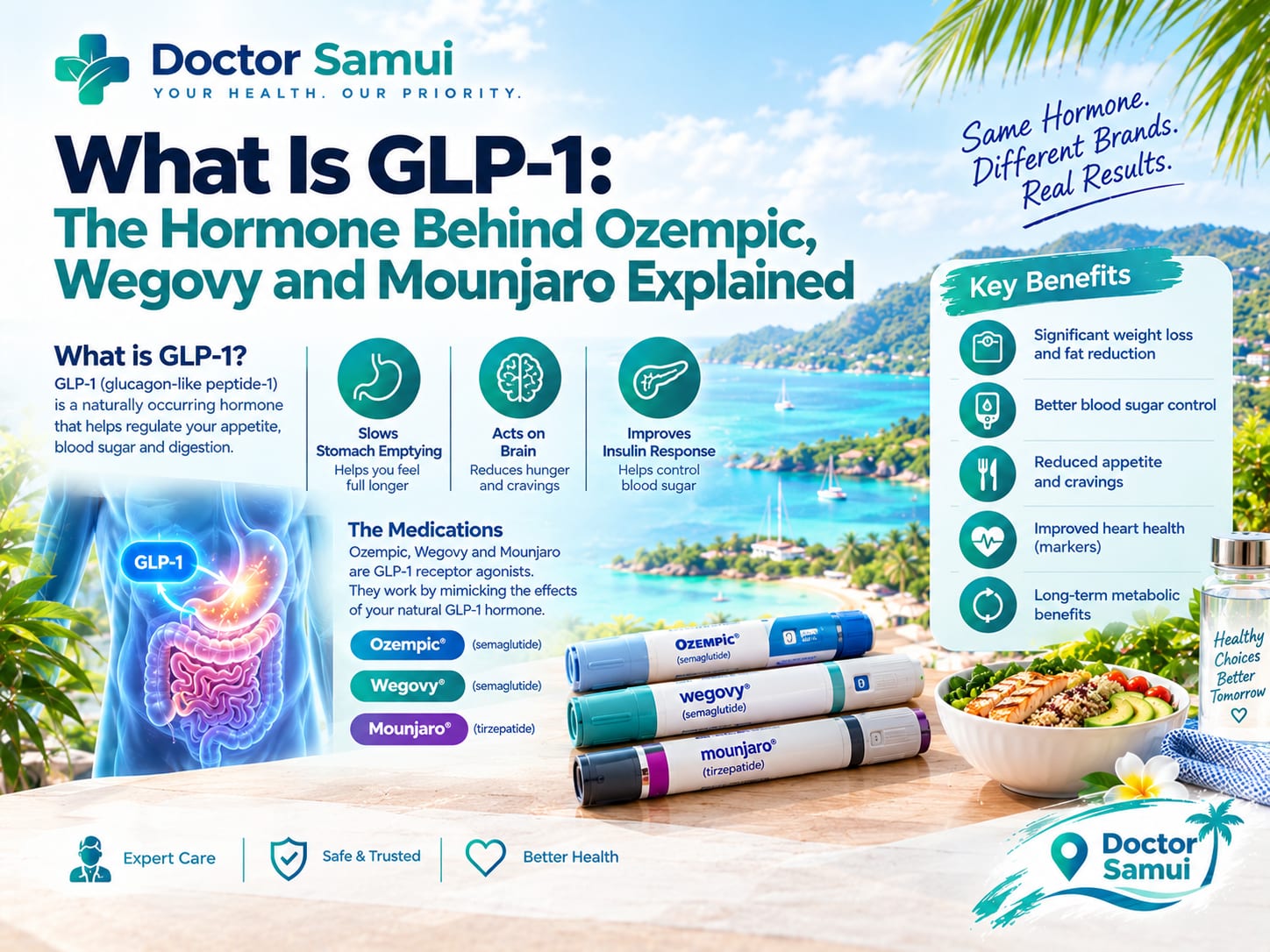
GLP-1 (glucagon-like peptide-1) is a hormone your gut releases after eating. It tells your pancreas to release insulin, slows digestion, and signals your brain that you are full. Ozempic, Wegovy, and Mounjaro are medications that mimic this effect. They require a doctor’s prescription and medical supervision to use safely.
You are a week into a longer stay on Samui, eating well, spending mornings on a hired scooter along the ring road, and someone at your villa mentions they are on Ozempic. Or you have been managing type 2 diabetes for years and your doctor recently switched you to a GLP-1 medication. Either way, you want to understand what it is actually doing before you put more of it in.
GLP-1 is a hormone you already make. The medications named above are designed to work the same way yours does, but stronger and for longer. This article explains what GLP-1 is, how the main drugs compare, who should not use them, and what to do if you are visiting or living on Koh Samui and need to start or continue treatment.

What GLP-1 Does in Your Body
After you eat, specialised cells in your small intestine release GLP-1 into your bloodstream. It hits several targets at once.
At the pancreas, it triggers insulin release and dials down glucagon, the hormone that raises blood sugar. The result is better blood sugar control after meals. At the stomach, it slows how quickly food moves through, which stretches the stomach wall longer and makes you feel full sooner. At the brain, it acts on appetite centres and reduces hunger between meals.
Your natural GLP-1 breaks down within minutes. That is why it does not have a lasting effect on its own, and why the medications had to be engineered to last much longer.
Natural GLP-1 vs GLP-1 Receptor Agonist Medications
The drugs in this class, called GLP-1 receptor agonists, are not GLP-1 itself. They are molecules designed to bind to the same receptors GLP-1 uses, but resist the rapid breakdown that clears the natural hormone so quickly.
Semaglutide, the active ingredient in Ozempic and Wegovy, lasts long enough to be injected once a week. Tirzepatide, the active ingredient in Mounjaro, works on both the GLP-1 receptor and a second receptor called the GIP receptor. GIP (glucose-dependent insulinotropic polypeptide) is another hormone involved in blood sugar and fat storage. Dual action on both receptors produced greater effects on weight than GLP-1 action alone in a head-to-head clinical trial (SURMOUNT-5, published 2025).
This is the main reason Mounjaro tends to produce larger average weight reductions than Ozempic or Wegovy in clinical trials, though individual responses vary.

GLP-1 Medications Compared: Ozempic, Wegovy, Mounjaro and What Is New in 2026
The drug names can be confusing because the same molecule is sold under different brand names for different purposes.
| Brand Name | Active Ingredient | Receptor Targets | Primary Approval | Form |
|---|---|---|---|---|
| Ozempic | Semaglutide | GLP-1 | Type 2 diabetes | Weekly injection |
| Wegovy | Semaglutide (higher dose) | GLP-1 | Obesity / weight management | Weekly injection |
| Wegovy (oral) | Semaglutide | GLP-1 | Obesity / weight management | Daily tablet (available 2026) |
| Mounjaro / Zepbound | Tirzepatide | GLP-1 + GIP | Type 2 diabetes / obesity | Weekly injection |
| Orforglipron (Foundayo) | Orforglipron | GLP-1 | Approved for obesity (US, April 2026); status varies by country | Daily tablet |
The oral semaglutide tablet became available in some markets in early 2026. Orforglipron is a fully oral, small-molecule GLP-1 agonist that does not require refrigeration, which matters for anyone travelling in tropical heat. Its regulatory approval status varies by country and should be confirmed at the time of consultation.
Availability in Thailand depends on Thai FDA approval and import status, which changes. A physician consultation at Doctor Samui can confirm what is currently accessible here.
Who Should Not Take GLP-1 Medications
These medications are not appropriate for everyone, and a proper consultation is not optional.
You should not take GLP-1 medications if you have a personal or family history of medullary thyroid carcinoma or a condition called MEN-2 (multiple endocrine neoplasia type 2). Animal studies raised a thyroid tumour signal with this drug class, and while the relevance to humans is still under study, the contraindication stands in current prescribing guidelines.
A history of pancreatitis, severe kidney disease, or severe liver disease also warrants caution or exclusion. GLP-1 medications are not recommended during pregnancy or breastfeeding. They are not approved for type 1 diabetes. Anyone with a history of serious eating disorders should discuss this carefully with a doctor before considering treatment.
What Side Effects to Expect on GLP-1 Medications
The most common side effects are nausea, vomiting, diarrhoea, and constipation. These are most noticeable when you first start or when your dose is increased. For most people they settle over a few weeks, though not for everyone.
On Koh Samui, these side effects carry an added complication. Heat and humidity accelerate fluid loss. If you are vomiting or have diarrhoea while on a GLP-1 medication, dehydration can develop faster than it would in a cooler climate.
Traveller’s diarrhoea is also common on the island, and it can be hard to tell at first whether your symptoms are medication-related or food-related. If you are unsure, get assessed. Beach wisdom here is not enough: losing fluids in 32-degree heat while on a drug that already slows your digestion is a different problem than a stomach bug at home.
Some research has raised the question of lean muscle mass loss alongside fat loss during rapid weight reduction on GLP-1 medications. This is an active area of discussion and one reason why monitoring body composition, not just body weight, matters during a supervised programme.
Serious but less common risks include pancreatitis (severe persistent abdominal pain, sometimes with vomiting), gallbladder problems, and a possible increased heart rate. These need prompt medical attention. Doctor Samui offers 24-hour hotel and villa visits across the island if you need assessment without travelling to the clinic.
What Screening to Expect Before Starting a GLP-1 Programme
Starting GLP-1 treatment without baseline tests is not good medicine. Before prescribing, a responsible programme should check your fasting blood glucose and HbA1c, kidney and liver function, thyroid-relevant history, and body weight with body composition where possible.
A urinalysis is also standard in many supervised programmes. These tests confirm you are a safe candidate, provide a baseline to measure your response against, and catch contraindications that a symptom history alone might miss. A health check-up at Doctor Samui can include all of this before a GLP-1 consultation.
Starting or Continuing GLP-1 Treatment on Koh Samui
Under Thai FDA regulations, GLP-1 medications require a physician’s prescription. They are approved for type 2 diabetes or clinically diagnosed obesity. Thai authorities have issued warnings about unregulated "slimming pens" sold online without prescription, and reclassification of these drugs as specially controlled substances requiring physician oversight has been under active discussion. Buying GLP-1 medications from unlicensed sources in Thailand carries real medical and legal risk.
If you are a tourist who has run out of your Ozempic or Wegovy supply mid-trip, the path is a physician consultation first. We can review your prescription history, run the relevant baseline tests, and prescribe or bridge your treatment under proper medical supervision. Cold-chain storage matters too: semaglutide pens require refrigeration, and Samui’s heat is not forgiving. Make sure your medication has been stored correctly before using it.
Long-stay residents and expats who want ongoing weight management with proper monitoring can access that through the GLP-1 treatment programme at Doctor Samui. If side effects develop and you need to be seen quickly, our 24-hour emergency and walk-in service covers the whole island.
If you are on Koh Samui and need a GLP-1 consultation, have run out of your prescription, or want to start a supervised programme with proper baseline blood tests, Doctor Samui can help. We see patients at our walk-in clinic in Chaweng and offer 24-hour hotel and villa visits across the island. Contact us to arrange an assessment.
Frequently Asked Questions
Dr. Ponlawat Pitsuwan
Physician, Doctor Samui
a walk-in clinic based in Chaweng, Koh Samui, with 24-hour hotel and villa visits across the island. He sees tourists, families, and long-stay expats for metabolic health consultations, weight management assessments, and GLP-1 treatment programmes. His focus is straightforward, evidence-based care delivered in plain language.
References
- Drucker DJ. Mechanisms of Action and Therapeutic Application of Glucagon-like Peptide-1. Cell Metabolism. 2018;27(4):740-756.
- Wilding JPH et al. Once-Weekly Semaglutide in Adults with Overweight or Obesity. New England Journal of Medicine. 2021;384(11):989-1002.
- Jastreboff AM et al. Tirzepatide Once Weekly for the Treatment of Obesity. New England Journal of Medicine. 2022;387(3):205-216.
- Healio. FDA approves orforglipron, an oral GLP-1 for adults with obesity. April 2026.
The information in this article is for educational purposes only and does not constitute medical advice. It should not be used to self-diagnose or replace a consultation with a qualified physician. If you have concerns about your health, contact a licensed medical professional. For appointments at Doctor Samui, visit doctorsamui.com.