Clinically reviewed by Dr. Ponlawat Pitsuwan, Physician, Doctor Samui.
Last reviewed: October 2026
Stopping GLP-1 injections like semaglutide or tirzepatide without a plan usually leads to significant weight regain, because appetite hormones rebound quickly once the medication leaves your system. A gradual dose reduction over several weeks, combined with a protein-focused diet and resistance training, gives you the best chance of keeping the weight off. If you are stopping while abroad or away from your prescribing doctor, get a clinical consultation before you run out.
You have been on semaglutide or tirzepatide for months. The weight came off. Your appetite settled. Now you are on Koh Samui for an extended stay, your supply is running low, and your prescribing doctor is back home in another country. What happens if you just stop?
The short answer: your appetite comes back fast, and the weight tends to follow. How much, and how quickly, depends heavily on what you do in the weeks around stopping. Stopping GLP-1 safely is not complicated, but it does require a plan, and that plan should start before your last injection, not after.

Why Weight Comes Back After Stopping GLP-1
GLP-1 receptor agonists, the drug class that includes Ozempic, Wegovy, and Mounjaro, work partly by slowing how fast your stomach empties and partly by acting on hunger signals in the brain. While you are on the medication, your appetite is quieter, you feel full faster, and your body draws on stored fat.
When you stop, those effects reverse. Ghrelin, the hunger hormone that tells your brain to seek food, rebounds. Gastric emptying speeds back up. The fullness cues that made smaller portions feel satisfying start to fade. This is not a failure of willpower. It is a predictable biological response.
The STEP 1 trial extension found that participants who stopped semaglutide regained a substantial portion of their lost weight within one year. A 2022 analysis in Diabetes, Obesity and Metabolism confirmed that regain begins within weeks of stopping. The biology is working against you unless you have a strategy in place.
Tapering vs. Stopping Abruptly
There is no FDA or EMA requirement to taper GLP-1 medications. Physical dependence, in the way that occurs with opioids or corticosteroids, does not happen with this drug class. If a serious side effect develops, stopping immediately is the right call.
That said, a stepped reduction is reasonable for planned, elective stops. Evidence for tapering specifically comes from a small study with 85 participants at 26-week follow-up, which found slower regain in the tapering group. The sample size is modest, and this should not be treated as definitive. What it suggests is that giving your body a few weeks to adjust, rather than removing the drug abruptly, may reduce how sharply appetite rebounds.
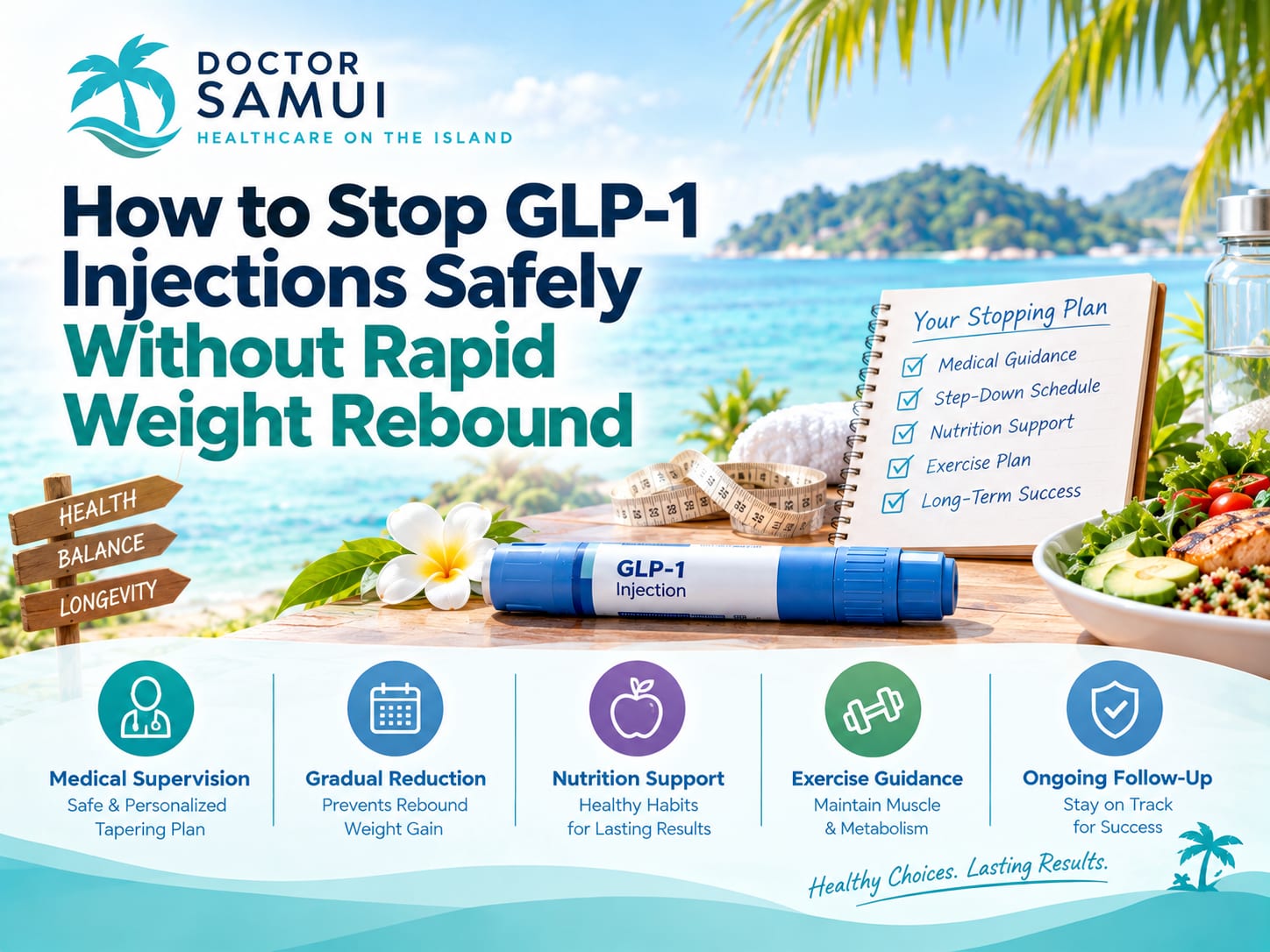
Stepping down one dose level every three to four weeks before stopping entirely is a reasonable precaution. It is not medically mandatory, but most patients find the transition easier.

A Practical Dose-Reduction Schedule for Stopping GLP-1 Safely
For semaglutide: if you are on 1 mg weekly, step down to 0.5 mg for three to four weeks, then stop. If you are on 2.4 mg (Wegovy), step down to 1.7 mg, then 1 mg, with three to four weeks at each step. For tirzepatide, step down two dose levels before stopping, with three to four weeks at each level.
These step-downs follow the same dose increments used when starting the medication. You are reversing the titration, and your current prescription already covers the lower strengths.
Do not extend the taper indefinitely. A drawn-out reduction adds little benefit after two step-downs. It only delays the point at which your maintenance habits need to carry the full weight.
Protecting Lean Body Mass When You Stop
GLP-1 medications cause weight loss that includes both fat and muscle. When weight returns after stopping, current evidence suggests the regained weight may be predominantly fat rather than lean muscle, though the body composition of regained weight is not yet fully established. That shifts your body composition in the wrong direction, even if the number on the scale looks similar to before.
Two things protect lean body mass: protein intake and resistance training. Prioritise protein at each meal using sources like chicken, fish, eggs, legumes, and Greek yoghurt. Resistance training at least twice per week, even bodyweight exercises at your villa or hotel, preserves muscle while your appetite adjusts post-medication.
The outdoor lifestyle on Samui works in your favour here. Swimming at Chaweng, hiking the trails near Na Muang, or consistent beach walking all contribute to calorie burn and metabolic health without requiring a gym.
Stopping GLP-1 Abroad: What Expats and Long-Stay Visitors on Koh Samui Need to Know
This situation does arise. Someone is three months into a long stay, their medication stock runs low, and their GP back home cannot prescribe across borders. Or their pen arrived without adequate cold-chain packaging and they are not sure it is still viable. GLP-1 medications require refrigerated storage between 2 and 8 degrees Celsius, and a broken cold chain means the medication may be less effective or ineffective.
If you are in this position on Koh Samui, the right move is a clinical consultation before you stop, not two weeks after the scale has already started climbing. Doctor Samui’s clinic in Chaweng can assess your situation, review what medications are available through Thai pharmacy channels, and help you build a supervised stopping or continuation plan. You can read more about GLP-1 support at doctorsamui.com/glp-1/.
Availability of specific brands varies in Thailand. Not every formulation stocked in Europe or the US is available locally, and Thai prescription requirements apply. A consultation lets us map what is actually available and what makes clinical sense for you.
Building Your Maintenance Plan Before You Stop
The maintenance phase needs to be set up before you take your last injection. Starting it the week after rarely works as well.
Track your weight weekly from the week before you stop. Set a personal threshold, typically a two to three kilogram increase from your stopping weight, that triggers a clinical review. Keep a rough food log for the first month, not forever, just long enough to recalibrate your portions without the appetite-suppressing effect of the medication.
If you have type 2 diabetes or pre-diabetes, blood glucose monitoring matters after stopping. GLP-1 medications lower blood sugar directly, and stopping them can cause glucose to rise within days. Daily fasting glucose checks for the first two weeks after stopping, then weekly, is a sensible schedule. Symptoms like increased thirst, frequent urination, blurred vision, or unexplained fatigue warrant a same-day clinical assessment. If you need a baseline before making changes, a health check-up at the Samui clinic is a practical starting point.
When to Consider Restarting or Staying on a Lower Maintenance Dose
Some patients do not stop entirely. A lower maintenance dose continued long-term is a legitimate clinical strategy if the risks of weight regain outweigh the risks of ongoing medication. Obesity is a chronic condition, and long-term pharmacological management is no different in principle from managing blood pressure with medication for years.
If you have stopped and are seeing rapid regain despite consistent lifestyle effort, restarting is a genuine option. Real-world data, including a 2026 Cleveland Clinic retrospective cohort of nearly 8,000 patients, found that average weight regain one year after stopping was modest, in part because many patients restarted or switched to another obesity medication rather than stopping permanently. There is no clinical reason to treat a restart as a failure.
The decision to restart or maintain on a lower dose should involve a prescribing clinician. If your original prescriber is abroad, a consultation at Doctor Samui can help you assess the options, including what is available locally and whether coordination with your home doctor makes sense. For patients already on the island, Doctor Samui also offers mobile doctor services across Koh Samui if you would prefer a consultation at your accommodation rather than attending the clinic in person.
Planning to stop your GLP-1 medication, or already off it and watching the scale? Doctor Samui’s Chaweng clinic offers in-person weight management consultations for expats, long-stay visitors, and tourists managing this transition away from their home prescriber. We can review your current medication, check what is available locally, and build a practical plan with you. Walk in to the Chaweng clinic or contact Doctor Samui to book a consultation.
Frequently Asked Questions
Dr. Ponlawat Pitsuwan
Physician, Doctor Samui
a walk-in clinic based in Chaweng, Koh Samui, with 24-hour hotel and villa visits across the island. He sees tourists, families, and long-stay expats managing weight-related conditions including GLP-1 medication transitions, planned discontinuation, and ongoing weight management support on Koh Samui. His focus is straightforward, evidence-based care delivered in plain language.
References
- Wilding JPH, et al. Weight regain and cardiometabolic effects after withdrawal of semaglutide: the STEP 1 trial extension. Diabetes, Obesity and Metabolism. 2022;24(8):1553-1564.
- Wilding JPH, et al. Once-Weekly Semaglutide in Adults with Overweight or Obesity. New England Journal of Medicine. 2021;384:989-1002.
- Cleveland Clinic Newsroom. What Happens When Patients Stop Taking GLP-1 Drugs? New Cleveland Clinic Study Reveals Real-World Insights. March 12, 2026.
- US Food and Drug Administration. Highlights of Prescribing Information: Wegovy (semaglutide) injection. FDA, 2023.
- Jastreboff AM, et al. Tirzepatide Once Weekly for the Treatment of Obesity. New England Journal of Medicine. 2022;387:205-216.
The information in this article is for educational purposes only and does not constitute medical advice. It should not be used to self-diagnose or replace a consultation with a qualified physician. If you have concerns about your health, contact a licensed medical professional. For appointments at Doctor Samui, visit doctorsamui.com.