Clinically reviewed by Dr. Ponlawat Pitsuwan, Physician, Doctor Samui.
Last reviewed: October 2026
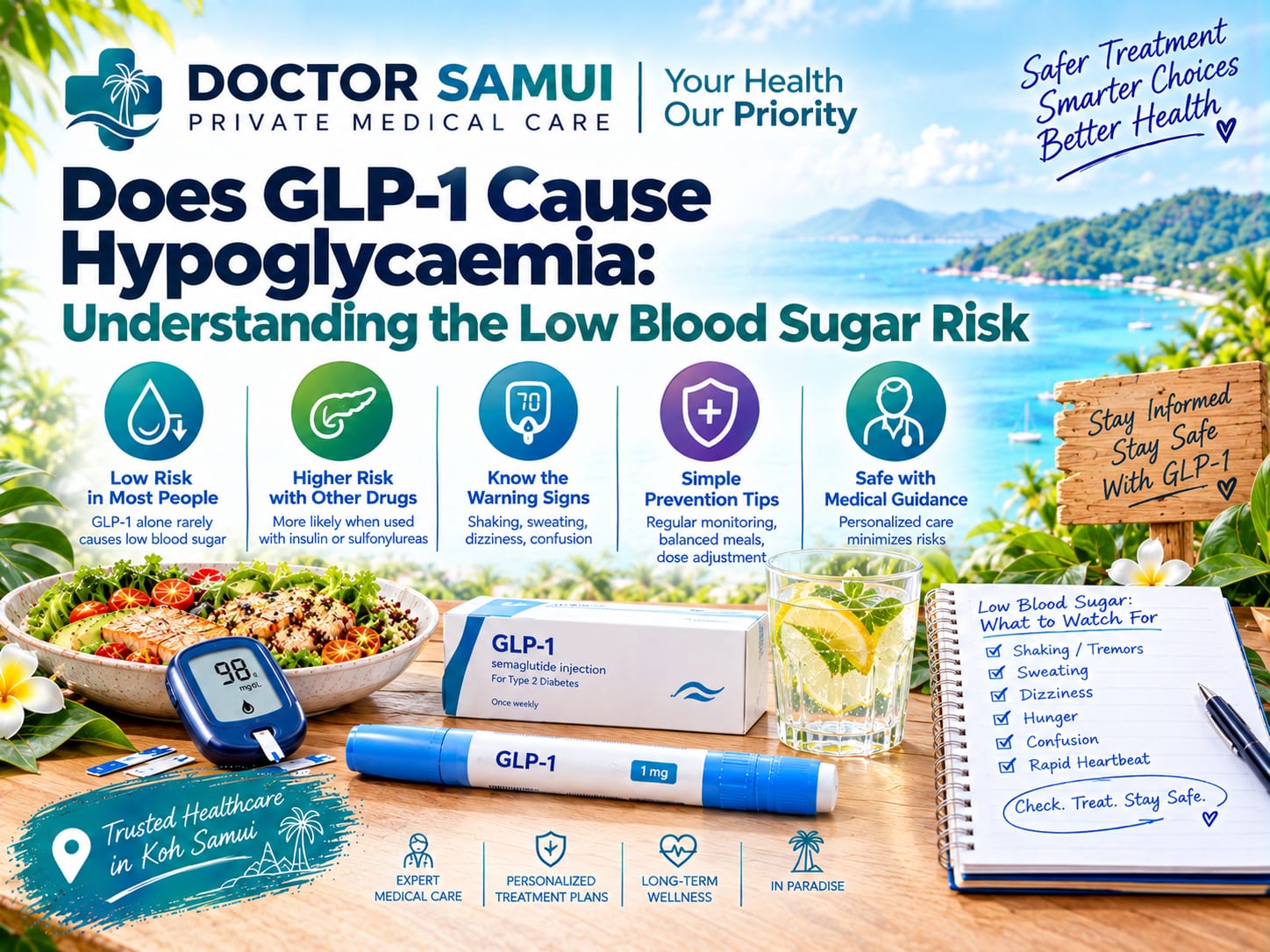
GLP-1 receptor agonists like semaglutide (Ozempic, Wegovy) rarely cause hypoglycaemia on their own. The risk rises when they are combined with insulin or sulfonylureas, or when you skip meals, exercise hard, or drink alcohol. On their own, GLP-1 drugs release insulin only when blood sugar is already elevated, which is why dangerously low blood sugar is uncommon with monotherapy.
You are three days into a snorkelling trip around Koh Samui, eating less than usual because your appetite has dropped since starting semaglutide, and you feel dizzy walking back to the beach towel. Is that low blood sugar, or just the heat? It matters, because the answer changes what you do next.
GLP-1 receptor agonists are among the most widely used medications for type 2 diabetes and weight management right now. By themselves, these drugs carry a low risk of true hypoglycaemia. The complication many people experience is something else entirely, and knowing the difference could save you unnecessary worry, or stop you from ignoring something real.
Why GLP-1 Monotherapy Rarely Causes Hypoglycaemia
GLP-1 receptor agonists stimulate insulin release only when blood glucose is already high. When your blood sugar drops toward a normal level, that insulin signal switches off. Your body’s own counter-regulatory response, where glucagon kicks in to raise blood sugar, stays intact.
This glucose-dependent mechanism separates GLP-1 drugs from older diabetes medications like sulfonylureas, which push insulin out regardless of where your blood sugar currently sits. With a sulfonylurea, insulin keeps coming even when you do not need it. With a GLP-1 drug alone, it does not.
If you are taking semaglutide, dulaglutide, or exenatide without any other glucose-lowering drug, the biological floor that prevents blood sugar from falling too low is still working. That is not marketing language. It is the mechanism.
When the GLP-1 Hypoglycaemia Risk Does Rise
The picture changes when GLP-1 therapy is combined with other medications. Insulin and sulfonylureas both lower blood sugar through glucose-independent pathways, meaning they keep working even when your levels are already low. Adding a GLP-1 drug on top does not cancel that effect.
Clinical evidence shows that symptomatic hypoglycaemia rates climb when semaglutide is used alongside a sulfonylurea. If you are on that combination, your prescribing doctor should have reviewed whether your sulfonylurea or insulin dose needed reducing when the GLP-1 was added. If that conversation did not happen, it should.
Meal skipping adds risk in combination therapy. GLP-1 drugs suppress appetite effectively, and it is easy to eat very little without noticing. Eating much less than usual while keeping the same insulin or sulfonylurea dose is a real trigger for a low.

GLP-1 Hypoglycaemia Risk in Tropical Heat: What Changes on Samui
This is where things get specific to the island. On Koh Samui, the conditions that raise GLP-1 hypoglycaemia risk stack up in ways they simply do not at home.
Heat and dehydration increase glucose uptake and alter how medications behave in your body. A full day at Angthong Marine Park, a waterfall hike at Na Muang, or an afternoon of diving at Sail Rock involves sustained physical exertion in 32-degree heat. Exercise independently lowers blood glucose. Combine that with a GLP-1 drug plus insulin and the risk becomes real.
Alcohol is another factor. It blocks the liver from releasing stored glucose when blood sugar falls, which disrupts the normal recovery response. Irregular meal timing, skipping breakfast before a boat trip, or eating late after a beach bar visit all shift the risk further. If you are managing diabetes or using GLP-1 drugs for weight loss while travelling here, these factors deserve honest attention.
Who Is at Higher Risk of Low Blood Sugar on GLP-1 Therapy
Most people on GLP-1 monotherapy do not need to worry much. But certain groups need closer attention.
People on combination therapy with insulin or sulfonylureas are the highest-risk group. People with type 1 diabetes using GLP-1 drugs off-label carry real risk too. If you have had Roux-en-Y gastric bypass surgery, your situation is more complex: rapid nutrient delivery and exaggerated insulin secretion after bypass can already trigger reactive hypoglycaemia after meals, and the interaction with a GLP-1 drug is not well established. Specialist input is needed before starting or adjusting GLP-1 therapy in this setting.
Older adults and anyone with kidney disease, liver disease, or poor nutritional intake are also at higher risk. If any of these apply to you, blood glucose monitoring before and after physical activity is not optional.
Recognising True Hypoglycaemia vs. GLP-1 Side Effects
This confusion is common on the island. GLP-1 drugs cause nausea, fatigue, dizziness, and sweating, especially in the first weeks of treatment. These symptoms look almost identical to mild hypoglycaemia.
The only reliable way to tell them apart is to check your blood glucose. Below 3.9 mmol/L (70 mg/dL) is a true low. If your reading is in a normal range and you feel unwell, it is almost certainly a tolerability side effect, not a blood sugar emergency.
Without a glucometer, you cannot know for certain. Treat conservatively: eat something, rest, and seek advice if symptoms do not settle. If you have not brought monitoring equipment to Samui, that is worth correcting before your next active day. You can find out more about clinical support through the GLP-1 service at Doctor Samui.
What To Do in a Hypoglycaemic Episode
Mild hypoglycaemia, where you feel shaky, sweaty, or lightheaded but can still swallow, responds to 15 grams of fast-acting carbohydrate. That is three or four glucose tablets (check the grams on the label), a small glass of juice, or a regular (not diet) fizzy drink. Wait 15 minutes, then check your glucose again. If still low, repeat. This is the 15-15 rule.
One important note for GLP-1 users: these drugs slow gastric emptying. Carbohydrates may be absorbed more slowly than usual during an episode, so correction can take longer than you expect. Sit down. Do not rush back into swimming or activity.
Seek immediate medical help if the person cannot swallow safely, is confused, has a seizure, or does not recover after two rounds of the 15-15 rule. These situations need IV dextrose or glucagon, not more juice. Doctor Samui provides 24/7 hotel and villa visits across Lamai, Chaweng, Bophut, and Maenam, so clinical support is reachable wherever you are staying. You do not need to travel to find a hospital. For same-day support at your accommodation, see 24-hour house-call doctor services in Koh Samui.
Monitoring Your Blood Sugar on GLP-1 Therapy
If you are on GLP-1 therapy alone for weight loss and have no diabetes diagnosis, routine blood glucose monitoring is not usually required. If you are using a GLP-1 drug as part of diabetes management, especially alongside other medications, regular monitoring matters.
A continuous glucose monitor (CGM) removes the guesswork entirely. It shows trends in real time, including dips during exercise or overnight. For anyone on combination therapy doing active island activities, a CGM is worth discussing with your doctor before travel. If you want a review before heading out diving or on a full-day excursion, a health check-up at Doctor Samui’s Chaweng clinic can include a glucose review and medication assessment.
On GLP-1 therapy and unsure about your risk of low blood sugar while travelling on Koh Samui? Doctor Samui’s Chaweng clinic offers same-day consultations, blood glucose testing, and medication reviews. If you are anywhere on the island and need a doctor to come to you, our team is available 24 hours a day for hotel and villa visits. We can review your current medication combination, advise on monitoring during active days, and help you manage safely in the island heat.
Frequently Asked Questions
Dr. Ponlawat Pitsuwan
Physician, Doctor Samui
a walk-in clinic based in Chaweng, Koh Samui, with 24/7 hotel and villa visits across the island. He sees tourists, families, and long-stay expats for diabetes management, GLP-1 therapy monitoring, and medication review in the context of tropical travel and island activity. His focus is straightforward, evidence-based care delivered in plain language.
References
- Marso SP, et al. Semaglutide and Cardiovascular Outcomes in Patients with Type 2 Diabetes. N Engl J Med, 2016.
- American Diabetes Association. 9. Pharmacologic Approaches to Glycemic Treatment: Standards of Care in Diabetes — 2024. Diabetes Care, 2024.
- American Diabetes Association. 6. Glycemic Goals and Hypoglycemia: Standards of Care in Diabetes — 2025. Diabetes Care, 2025.
The information in this article is for educational purposes only and does not constitute medical advice. It should not be used to self-diagnose or replace a consultation with a qualified physician. If you have concerns about your health, contact a licensed medical professional. For appointments at Doctor Samui, visit doctorsamui.com.