Clinically reviewed by Dr. Ponlawat Pitsuwan, Physician, Doctor Samui.
Last reviewed: October 2026
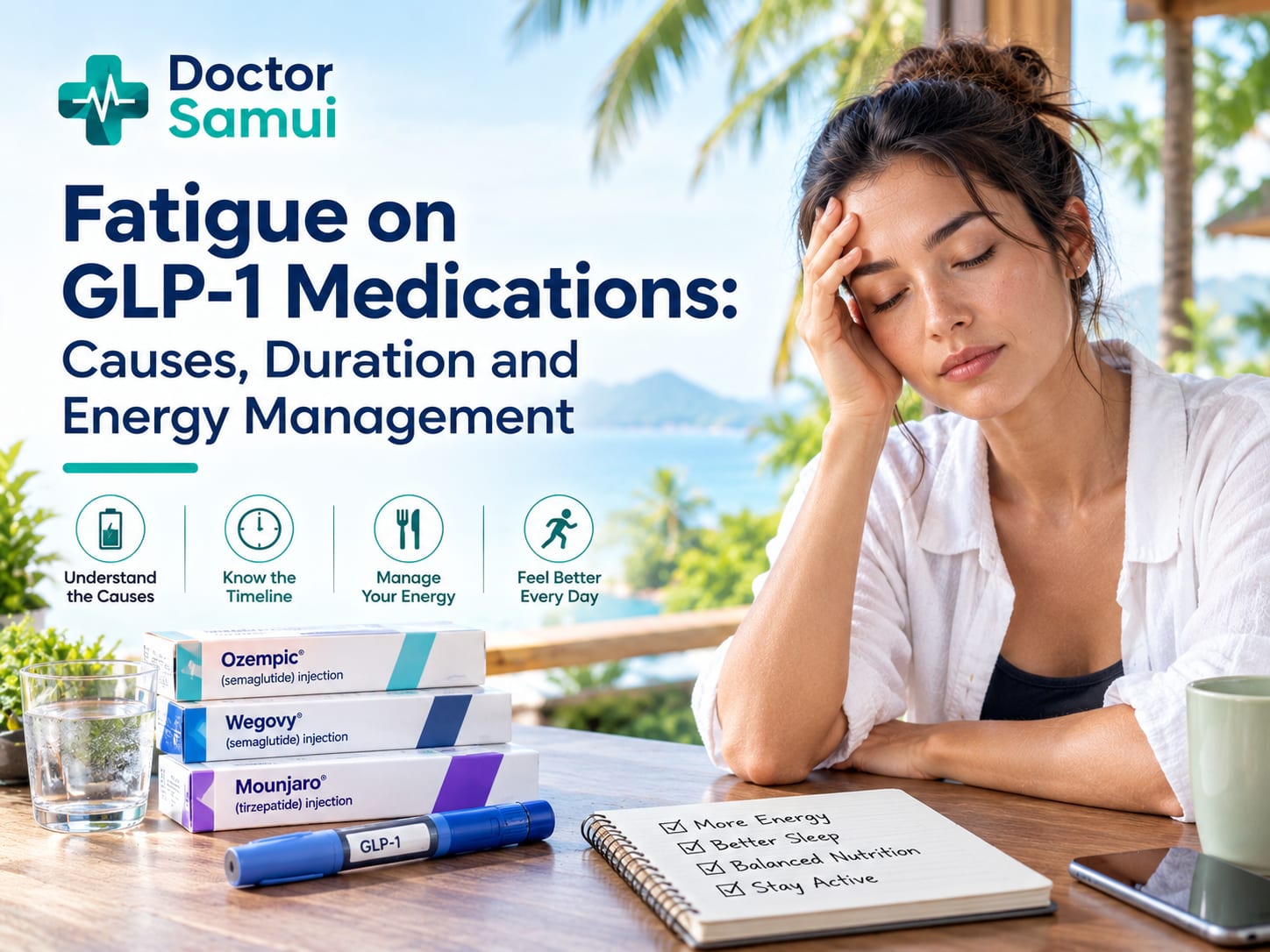
Fatigue is a recognised side effect of GLP-1 medications including semaglutide and tirzepatide. For many people it is most noticeable in the early weeks and around dose increases, and it often eases once a stable dose is reached. If tiredness persists, or comes with other symptoms, a blood test to check iron, B12, and electrolytes is worth doing.
You pack your medication alongside your snorkel gear, check into a villa in Lamai, and plan three days of reef swimming and sunset walks. Then your injection day arrives. By the following afternoon you are flat on the sun lounger, genuinely exhausted, not from the heat, not from the sea, from a bone-deep tiredness that does not match how little you have done. If you are on semaglutide or tirzepatide, fatigue like this is a recognised side effect.
The exact cause of GLP-1 fatigue is not fully understood. Likely contributors include your body eating less, losing fluids, or running short on nutrients it relied on before. Knowing which of those is driving it tells you what to do.

Why GLP-1 Medications Cause Fatigue
Several things happen at once when you start or increase a GLP-1 medication, and most of them pull energy in the wrong direction.
A likely major cause is a caloric deficit. These medications suppress appetite significantly. Many people eat far less than usual, sometimes far less than their body needs to function well. Fatigue follows. This is not the drug causing harm. It is your body reacting to eating less.
Nausea and vomiting, common in the early weeks, make things worse. If you cannot keep much food down, you lose fluids and electrolytes. Sodium, potassium, or magnesium can drop. That can cause tiredness, brain fog, and muscle weakness. Dehydration is a known risk on these medications, especially when starting or increasing the dose, and heat adds to fluid loss.
GLP-1 receptors exist in the brain as well as the gut. Some people notice low motivation or a flat mood alongside physical tiredness. Prescribing literature uses the term asthenia for this, which simply means generalised weakness and fatigue. If you see it on a side effects list, that is what it refers to. These medications are not for anyone with a personal or family history of medullary thyroid cancer or MEN 2, or anyone who has had a serious allergic reaction to them. If you are pregnant or planning a pregnancy, talk to your prescriber first.
The GLP-1 Fatigue Timeline
Fatigue rarely stays at the same level throughout treatment. The pattern varies, but some general phases are common.
The first few weeks tend to be the most unpredictable. Your body is adjusting to reduced caloric intake, possible nausea, and new gastric emptying patterns. Some people feel tired for much of the day.
Fatigue often flares around a dose increase, which usually happens every few weeks during the build-up phase. Appetite suppression deepens and nausea may return briefly. Knowing this phase is coming helps. It is not a sign the medication is wrong for you.
Once the dose is stable, many people notice improvement. Energy starts to return as the body adapts to its new baseline intake. If fatigue is still significant after several weeks on a stable dose, something beyond normal adjustment may be driving it. Questions about how long does GLP-1 fatigue last are best answered by a doctor who can review your full picture, not a general estimate.
Nutritional Gaps That Worsen GLP-1 Fatigue
Persistent fatigue can sometimes have a nutritional cause. In one large study of people with type 2 diabetes on GLP-1 medications, about one in five had a recorded nutritional deficiency within a year, most often vitamin D. Three nutrients are worth checking.
Iron is the first to check. Reduced food intake means less dietary iron. Changes in stomach acid and digestion may also affect absorption, but this is not well studied. Low iron causes fatigue that feels constant and heavy, not just post-injection dips.
Vitamin B12 can also run low when intake falls. B12 deficiency causes fatigue, brain fog, and sometimes tingling in the hands or feet. If you are vegetarian or have been on these medications for more than a few months, this is worth testing.
Magnesium can drop when vomiting or diarrhea cause fluid loss. Low magnesium can add to tiredness and weakness. If you take thyroid medication, your dose may need checking as you lose weight. A health check-up in Koh Samui can include blood work covering all of these.
Managing GLP-1 Fatigue in Koh Samui’s Heat
Koh Samui is hot and humid for most of the year. That matters specifically for patients on GLP-1 medications.
These medications can raise your risk of dehydration: nausea limiting fluid intake, and GI losses from vomiting or loose stools. Add outdoor heat and a full beach day, and electrolyte loss accelerates. This can make fatigue worse.
Drink more water than you think you need, particularly on injection day and the day after. Add electrolytes via a pharmacy sachet or a drink with sodium and potassium. Avoid strenuous outdoor activity on your peak fatigue days. If oral hydration is not keeping up, IV therapy in Lamai or a hotel visit can deliver IV fluids and electrolytes directly to your accommodation.
Plan your injection day around your schedule. Some people choose to inject on a day they know will be restful. On a beach holiday, that might mean injecting after a boat trip to Angthong, not the morning before one.
When GLP-1 Fatigue Is a Warning Sign
Normal GLP-1 fatigue improves over time. These symptoms mean something else is going on and you need a doctor.
Severe abdominal pain, especially pain that moves to your back, is not fatigue-related. It can indicate pancreatitis, which needs immediate assessment. Do not wait. Swelling of the face, lips, or throat, or trouble breathing, can be a serious allergic reaction and needs emergency care.
Fainting, extreme dizziness, or a racing heart alongside fatigue suggests significant dehydration or, in patients also using insulin or sulphonylureas, low blood sugar. Both need prompt attention.
Persistent vomiting that stops you drinking fluids is a medical problem, not a side effect to push through. If you cannot keep water down, you need fluids by another route.
Fatigue that gets worse week on week, rather than better, is not typical. Neither is fatigue severe enough to prevent basic daily function. Yellowing of the skin or eyes, dark urine, or significant abdominal swelling alongside tiredness needs urgent review. Doctor Samui offers walk-in care at our Chaweng clinic and 24/7 hotel and villa visits across the island.
Practical Energy Management on GLP-1
Protein intake is an important dietary lever. On a reduced appetite, many people eat less protein, which can add to muscle loss alongside fat loss. Losing muscle can leave you feeling weaker. Make protein the priority at every meal, even a small one.
Sleep can be disrupted early in treatment. Nausea and stomach discomfort can affect sleep quality. If blood tests show low magnesium, your doctor can advise on diet or supplements.
Light movement can help on days you feel up to it. Short walks, gentle swimming, or easy stretching maintain circulation and mood without draining the energy reserves you are already working with. Pushing for a full workout schedule in the early weeks may leave you more drained.
If you are managing GLP-1 side effects on Koh Samui and fatigue is significantly affecting your stay, Doctor Samui can help. We offer walk-in appointments at our Chaweng clinic and 24/7 hotel and villa visits across the island, including Lamai, Bophut, Maenam, Choeng Mon, and Bang Rak. We can arrange blood tests to check iron, B12, thyroid, and electrolytes as part of a health check-up, review your symptoms, and arrange IV hydration if needed. No appointment necessary at the clinic. For hotel or villa visits, call or message us any time.
FAQ
Dr. Ponlawat Pitsuwan
Physician, Doctor Samui
a walk-in clinic based in Chaweng, Koh Samui, with 24/7 hotel and villa visits across the island. He sees tourists, families, and long-stay expats for GLP-1 medication support, side effect management, and same-day blood testing. His focus is straightforward, evidence-based care delivered in plain language.
References
- Novo Nordisk / U.S. FDA. WEGOVY (semaglutide) injection prescribing information. 2025.
- Eli Lilly and Company. ZEPBOUND (tirzepatide) injection prescribing information. Eli Lilly, 2025.
- Wilding JPH, Batterham RL, Calanna S, et al. Once-Weekly Semaglutide in Adults with Overweight or Obesity. N Engl J Med, 2021.
- Nutritional deficiencies and muscle loss in adults with type 2 diabetes using GLP-1 receptor agonists: A retrospective observational study. PMC, 2025.
- Micronutrient and Nutritional Deficiencies Associated With GLP-1 Receptor Agonist Therapy: A Narrative Review. PubMed.
The information in this article is for educational purposes only and does not constitute medical advice. It should not be used to self-diagnose or replace a consultation with a qualified physician. If you have concerns about your health, contact a licensed medical professional. For appointments at Doctor Samui, visit doctorsamui.com.