Clinically reviewed by Dr. Ponlawat Pitsuwan, Physician, Doctor Samui. Last reviewed: August 2026
For most cases of traveler’s diarrhea in Koh Samui, start with oral rehydration salts from any 7-Eleven, rest, and plain food. Loperamide (Imodium) can slow things down if you have no fever and no blood in your stool. If you have a high fever, bloody stool, or cannot keep fluids down, stop self-treating and see a doctor. Doctor Samui offers walk-in care in Chaweng and 24/7 hotel visits across the island.
It is 11 pm. You ate at a night market on Fisherman’s Village road three hours ago, and now you are not leaving the bathroom. You feel terrible, you are far from home, and the only thing open near your hotel is a 7-Eleven.
The honest answer: most cases settle within 24 to 48 hours with the right steps at home. But some cases need a doctor, and a few need one urgently. Here is exactly what to do, what to buy, what to skip, and when to call for help.

What Causes Diarrhea in Koh Samui
Locals call it Samui belly. Tourists call it food poisoning. Doctors call it traveler’s diarrhea, and it is the most common reason visitors walk into the Chaweng clinic or call for a hotel visit.
The usual culprits are bacterial. Contaminated street food, pre-cut fruit from roadside stalls, and ice made from tap water come up again and again. Waterfall swimming at Na Muang after heavy rain carries a real risk of swallowing bacteria-laden water. Norovirus, which spreads person to person, causes outbreaks on tour boats and resort buffets. Occasionally the cause is a parasite like Giardia, which shows up later and tends to linger longer than a standard stomach bug.
Your gut is also adjusting to unfamiliar food, new bacteria in the local water, and often more alcohol than usual. That combination is why diarrhea hits so many visitors here, even careful ones.
Why Dehydration Hits Harder Here
Koh Samui’s heat and humidity mean your body is already losing fluid faster than it would at home. Add diarrhea, and dehydration can set in within hours.
If you spent the day hiking to Na Muang or snorkelling off Chaweng reef, you were probably mildly dehydrated before you even got sick. Dark urine, dizziness when you stand up, and a dry mouth are early signs. Confusion, a rapid heartbeat, or inability to stand are serious signs. Do not wait on those.

Step One — Rehydrate Before Anything Else
The first thing to do is replace what you are losing. Water alone is not enough because diarrhea strips out the salts your body needs to hold onto fluid.
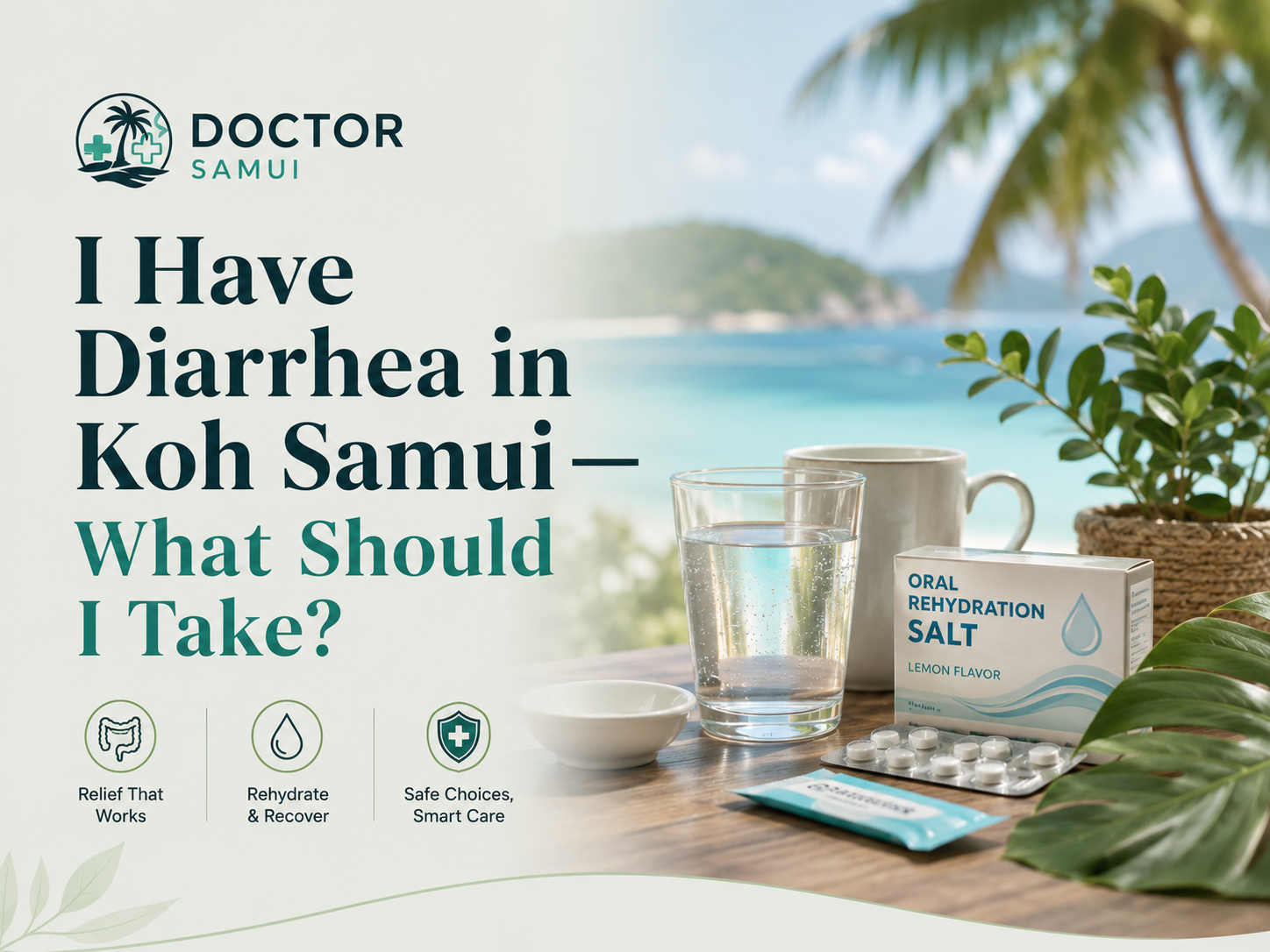
Oral rehydration salts (ORS) are your best tool. Every 7-Eleven on the island stocks them, usually near the checkout, no prescription needed. Look for sachets labelled ORS or electrolyte salts. Mix one sachet with 500 ml of bottled water, not tap water, and sip steadily rather than all at once.
If you are vomiting too, try small sips every few minutes. If you cannot keep anything down for more than a few hours, that changes the plan entirely.
How to Stop Diarrhea — Medications, and What to Skip
Loperamide, sold here as Imodium or the Thai brand Dehecta, is the most useful over-the-counter option for straightforward watery diarrhea. It slows gut movement and cuts the number of urgent trips to the bathroom. You can buy it at any 7-Eleven or pharmacy without a prescription.
One rule matters here: do not take loperamide if you have a fever above 38.5°C, blood or mucus in your stool, or severe cramping. Slowing the gut down during a bacterial infection can make things significantly worse. Stop, and get assessed instead.
Bismuth subsalicylate, the active ingredient in Pepto-Bismol, can ease nausea and mild symptoms, though it is harder to find on the island. Probiotics containing Saccharomyces boulardii have reasonable evidence behind them for shortening diarrhea duration and are available in Thai pharmacies. They are worth taking alongside rehydration, not as a substitute for it.
Antibiotics are not needed for most cases. They become appropriate when you have a high fever, blood in your stool, or symptoms that are not improving after 48 to 72 hours. Azithromycin is the standard choice in Thailand for bacterial diarrhea. It requires a prescription and a proper clinical assessment first. Do not buy antibiotics over the counter and self-prescribe. It can mask something serious and drives antibiotic resistance.
What to Eat — and What to Leave Alone
Eat plain food: rice, crackers, banana, boiled potato. These are easy on the gut and help firm things up. Avoid dairy, fried food, spicy food, raw vegetables, and alcohol until you have had a normal day. These all irritate an already inflamed gut.
Keep eating small amounts even if your appetite is low. Starving yourself does not speed up recovery.
Diarrhea in Children — Act Faster Than You Would for Yourself
Children dehydrate much faster than adults, especially under five and especially in tropical heat. If your child has diarrhea, start ORS straight away and watch them closely.
Call a doctor if your child has fewer wet nappies or darker urine, no tears when crying, sunken eyes, unusual sleepiness, a fever above 38°C, blood in the stool, or cannot keep fluids down for more than four hours. These are signs they need clinical assessment, not a wait-and-see approach. Doctor Samui can send a doctor or nurse to your hotel or villa at any hour, which is usually the most practical option when your child is too unwell to travel.
Do not give loperamide to children under 12 without medical advice.
Red Flags — When to Stop Self-Treating
Most diarrhea in Koh Samui is unpleasant but manageable at home. Some cases are not.
Get medical help the same day if you have blood or mucus in your stool, a fever above 38.5°C, severe abdominal pain, or you cannot keep any fluids down. These point toward a bacterial infection or complication that needs a stool test, prescription medication, or IV fluids.
Get emergency help immediately if you feel confused, cannot stand without dizziness, have not urinated in eight or more hours, or have a very rapid heartbeat. These are signs of serious dehydration or a body-wide infection response that needs urgent treatment.
How to Stop Diarrhea from Ruining the Rest of Your Holiday
Once you have recovered, a few habits will lower your chances of a repeat. Stick to bottled water for drinking and brushing your teeth. Avoid ice from roadside stalls, where it is often made from tap water. Mid-range restaurants and hotels here typically use purified ice, but do not assume. Be cautious with pre-cut fruit. Choose freshly cooked food over buffets sitting out in the heat. If you are swimming at Na Muang or any inland waterfall, try not to swallow the water.
For more detail on what treatments are available and what to expect from a clinic visit, see our full page on diarrhea treatment in Koh Samui.
How Doctor Samui Can Help
If your symptoms are not improving, you are too sick to walk to a clinic, or you have a child who needs assessment, you do not have to work it out alone.
At our Chaweng clinic we can run a stool test to identify whether the cause is bacterial, viral, or parasitic, prescribe the right treatment if one is needed, and give anti-nausea medication where appropriate. If you are significantly dehydrated, an IV drip will replace fluids and electrolytes in 30 to 45 minutes. If you cannot get to the clinic, we offer 24/7 hotel and villa visits across Chaweng, Lamai, Bophut, Maenam, Choeng Mon, and the rest of the island. A doctor arrives with IV fluids, anti-nausea medication, and prescription treatments. You tell us where you are, and we come to you.
Diarrhea that is not improving, a fever on top of it, or a sick child in your hotel room — these are situations where a doctor visit makes a real difference. Doctor Samui offers walk-in care at our Chaweng clinic and 24/7 house calls to hotels and villas across Koh Samui. We carry IV fluids, anti-nausea medication, and prescription treatments. Contact us by phone or WhatsApp any time of day or night.
Frequently Asked Questions
Dr. Ponlawat Pitsuwan
Physician, Doctor Samui
a walk-in clinic based in Chaweng, Koh Samui, with 24/7 hotel and villa visits across the island. He treats tourists, families, and long-stay expats for traveler’s diarrhea, food poisoning, dehydration, and related island illnesses on a daily basis. His focus is straightforward, evidence-based care delivered in plain language.