Clinically reviewed by Dr. Ponlawat Pitsuwan, Physician, Doctor Samui.
Last reviewed: September 2026
Bloody diarrhea in dogs can range from a mild gut upset to a life-threatening emergency. Bright red blood usually points to the lower gut. Dark, tarry stools point higher up and are more serious. If your dog is also vomiting, weak, or has pale gums, treat it as an emergency. Same-day veterinary assessment is always the right call.
Your dog was running along the beach near Chaweng this morning, sniffing everything, probably eating a few things she should not have. By afternoon she has passed bloody stool twice and is lying flat in the villa. You are far from your usual vet, you do not know the island clinics, and you are already Googling.
Here is what you need to know right now.
Bloody diarrhea in dogs has many causes, and the right response depends on a few key things: what the blood looks like, how your dog is acting, and whether other symptoms are piling on. Some cases can wait a few hours. Others cannot. This guide helps you tell the difference, understand the most likely causes on a tropical island like Koh Samui, and know exactly what to do next.
Why the Colour of Blood in Dog Stool Matters
This is the first thing to look at. The colour and consistency of the blood tells you roughly where in the gut the problem is.
Bright red blood coating the stool or mixed through it comes from the lower gut: the colon or rectum. It looks alarming, but it does not automatically mean the situation is critical.
Dark, tarry, almost black stools mean the blood has been digested, which means the bleeding is higher up. That is generally more serious. If your dog’s stool smells unusually foul and looks black, go to a vet now, not tomorrow.
The pattern that warrants the most concern is high-volume, gelatinous, bright red stool passed rapidly and repeatedly. That raspberry jam appearance is the hallmark of hemorrhagic gastroenteritis, a condition that can spiral fast.
Common Causes of Bloody Diarrhea in Dogs
Hemorrhagic Gastroenteritis (HGE)
Hemorrhagic gastroenteritis, also called acute hemorrhagic diarrhea syndrome, comes on suddenly with no obvious trigger. It is most common in small or young adult dogs. The stool looks like raspberry jam. Dogs can go from normal to seriously ill within hours. It is not contagious, but it is a genuine emergency that needs IV fluid treatment.
Parvovirus
If your dog is not vaccinated, parvovirus belongs at the top of your list. It causes severe, bloody, foul-smelling diarrhea alongside vomiting and rapid decline. It is highly contagious and can be fatal, especially in puppies. If you are on Koh Samui with an unvaccinated dog showing these signs, do not wait to see if it passes.
Intestinal Parasites
Hookworms, Giardia, and Cryptosporidium are all common in Thai dog populations. Hookworms feed on the gut lining and cause bloody or tarry stools. Giardia causes watery diarrhea that can include blood. These parasites spread through contaminated soil, water, and contact with other dogs. On Samui, where free-roaming dogs are everywhere, exposure risk is high.
Bacterial Infections and Scavenging
Salmonella, Campylobacter, and Clostridium all cause bloody diarrhea in dogs. They often come from scavenged food: dead fish on the beach, bin waste, raw scraps from street stalls. If your dog has been sniffing along the shoreline or helping herself to leftovers, bacterial enteritis is very possible.

Tropical and Koh Samui-Specific Risks
No generic article about dog diarrhea is going to cover this part, so pay attention.
Koh Samui has a large population of free-roaming dogs, many carrying tick-borne diseases. Ehrlichia canis, spread by ticks and endemic in tropical southern Thailand, causes bleeding disorders. Bloody diarrhea can be one sign. Babesia and Anaplasma are also present on the island. If your dog has been outdoors here and is now passing blood, tick-borne illness belongs on the list.
The beach itself is a hazard. Dogs eat dead marine life, rotting organic matter, and contaminated sand without hesitation. What looks like a morning walk is actually a foraging session. Beach scavenging is one of the most common triggers for acute gut upset in island dogs.
Freshwater sources including streams near waterfalls like Na Muang can carry Giardia and Cryptosporidium. If your dog drank from a stream during a hike or day trip, parasite exposure is a real possibility.
Danger Signs That Mean Act Now
Some bloody diarrhea can be briefly monitored. These signs cannot be waited out.
Pale, white, or grey gums are a sign of circulatory shock. Press a finger on the gum and release: the pink colour should return in under two seconds. If it does not, or the gum is pale to begin with, that is an emergency.
Get to a vet the same day, or faster, if your dog has extreme weakness or collapse, is vomiting alongside bloody diarrhea, has passed blood multiple times within a few hours, or will not stand and is unresponsive. These signs mean the body is losing ground fast.
What to Do Right Now If Your Dog Has Bloody Diarrhea
Remove food. Keep fresh water available, but do not push fluids if your dog is vomiting and cannot keep anything down.
Check the gums. Pink and moist is normal. Pale, tacky, or white is not. If the gums look wrong, stop reading and call a vet immediately.
Observe and record. How many times has she passed bloody stool? Is it bright red or dark? Is she vomiting? Can she stand? These details matter when you speak to a vet.
Contact a vet on the island. Ask your accommodation for the nearest veterinary clinic. If family members are also unwell with stomach symptoms, Doctor Samui’s Chaweng clinic and 24/7 villa service can assess the human side at the same time and help point you toward trusted veterinary care for your dog.
Do not give your dog human medications. Ibuprofen and other common human painkillers are toxic to dogs.
What the Vet Will Do for Bloody Diarrhea in Dogs
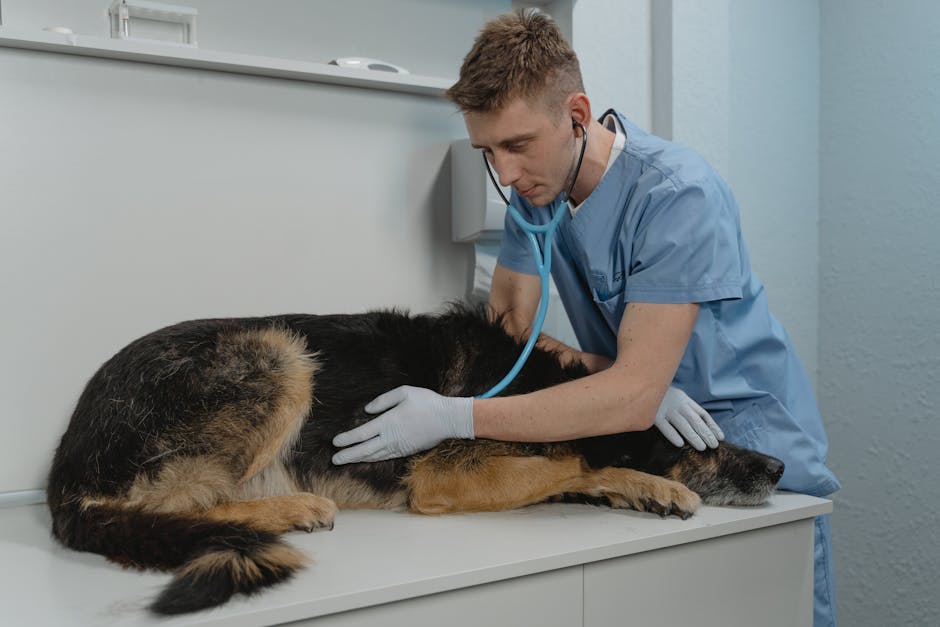
Expect a physical exam first: gum colour, hydration, abdomen feel, heart rate, temperature. Blood work will likely follow, checking red blood cell levels to measure how much blood has been lost. If parvo is suspected, a quick antigen test gives a fast result. A fecal screen checks for parasites. If there is any concern about something swallowed or a blockage, abdominal X-rays may be needed.
Treatment depends on the cause. HGE usually requires hospitalisation with IV fluids to correct dehydration. Parasites are treated with the appropriate antiparasitic. Parvovirus needs intensive supportive care. Bacterial infections may need antibiotics alongside a bland diet and rest.
Most dogs with HGE who get prompt treatment do well. The window matters. A dog that looks manageable at breakfast can be in serious trouble by evening.
Zoonotic Risk: When Your Dog’s Illness Can Affect Your Family
Some causes of bloody diarrhea in dogs can infect people. Campylobacter, Salmonella, Giardia, and Cryptosporidium can all pass from your dog to you or your children, especially in close living quarters like a villa or hotel room.
Wash hands thoroughly after any contact with the dog or her environment. Keep young children away from the affected area. If anyone in the household is also having diarrhea, get them assessed too.
Doctor Samui’s team treats human gut illness across the island daily, including traveller’s diarrhea, bacterial infections, and parasite-related illness. If your dog is sick and a family member is unwell at the same time, we can assess the human side while you get your dog to a vet.
If your dog is showing signs of bloody diarrhea on Koh Samui, contact a vet as your first step. If family members are also unwell with diarrhea or stomach symptoms, Doctor Samui’s walk-in clinic in Chaweng and 24/7 hotel and villa service can assess the human side right away. We treat traveller’s diarrhea, bacterial GI infections, and parasite-related illness across the island, and we know Samui’s veterinary options well.
Is bloody diarrhea in dogs always an emergency?
Not always, but it always needs same-day vet contact. A single small streak of bright red blood in an otherwise alert, active dog may not be immediately life-threatening. But multiple bloody episodes, dark tarry stools, pale gums, vomiting, or weakness are genuine emergencies. HGE can become critical within 12 hours, so do not take a wait-and-see approach past a few hours.
What are the most common causes of bloody diarrhea in dogs on Koh Samui?
On Samui, the top causes include beach scavenging, bacterial enteritis from Salmonella or Campylobacter, intestinal parasites like hookworm and Giardia common in Thai dog populations, HGE, and tick-borne disease like Ehrlichia canis endemic in tropical southern Thailand. Parvovirus is a serious risk in unvaccinated dogs. Free-roaming dog contact on the island increases exposure to most of these.
My dog drank from a stream near Na Muang waterfall and now has bloody diarrhea. What should I do?
Freshwater streams on Samui can carry Giardia and Cryptosporidium, and this is a plausible cause. Contact a vet the same day. Bring details of when she drank the water, how many bloody episodes she has had, and whether she is vomiting or lethargic. A fecal test will help confirm parasites, and treatment is straightforward once the cause is identified.
What does dangerous bloody diarrhea look like compared to minor blood in stool?
Minor hematochezia may look like a streak of bright red blood on otherwise normal stool in a dog that is eating and acting well. Dangerous signs include raspberry jam consistency, high volume, dark tarry colour, very frequent episodes within a few hours, or any blood alongside vomiting, weakness, or pale gums. The more symptoms stacking up together, the more urgent the situation.
Can my dog’s bloody diarrhea infect my family?
Yes, several causes are zoonotic. Campylobacter, Salmonella, Giardia, and Cryptosporidium can all pass from dogs to humans, especially in shared spaces like a villa or hotel room. Wash hands thoroughly after any contact with the dog or her environment, and keep young children away from the affected area. If anyone in the family has gut symptoms too, get them assessed at the same time.
What should I do right now if my dog has bloody diarrhea on Koh Samui?
Remove food but keep water available. Check her gums: pink is normal, pale or white means act immediately. Note how many bloody episodes she has had, what the blood looks like, and whether she is vomiting or weak. Contact a vet on the island right away. If family members are also unwell, Doctor Samui’s team can assess the human side with 24/7 availability across Chaweng, Lamai, Bophut, and the rest of the island.
Dr. Ponlawat Pitsuwan
Physician, Doctor Samui
a walk-in clinic based in Chaweng, Koh Samui, with 24/7 hotel and villa visits across the island. He sees tourists, families, and long-stay expats for gastrointestinal illness, tropical infections, traveller’s diarrhea, and a wide range of acute conditions common to island life. His focus is straightforward, evidence-based care delivered in plain language.