
Clinically reviewed by Dr. Ponlawat Pitsuwan, Physician, Doctor Samui.
Last reviewed: September 2026
A tattoo infection in Koh Samui usually shows up as redness spreading beyond the tattoo border after day three, worsening pain, warmth that keeps intensifying, or pus. Normal healing improves day by day. Infection does not. If you are unsure after 48 to 72 hours, get it checked at Doctor Samui’s Chaweng clinic or request a same-day hotel visit.
You got inked on day one of your Samui trip. It looked great leaving the studio. Now, two days later, the skin around it is hot, red, and angrier than it was yesterday. You have a snorkelling day booked at Angthong Marine Park tomorrow and you are wondering whether to push through or whether something is actually wrong.
Tattoos are open wounds, and Koh Samui’s heat, humidity, and ocean water make them far more vulnerable to infection than most people expect. The good news is that if you catch it early, treatment is straightforward.

Normal Healing vs Tattoo Infection: What You Are Actually Looking At
In the first one to three days, your tattoo will look red and feel tender. A clear or slightly yellow fluid called plasma will ooze from the surface. The skin will feel warm to the touch. All of this should start improving by day three, not getting worse.
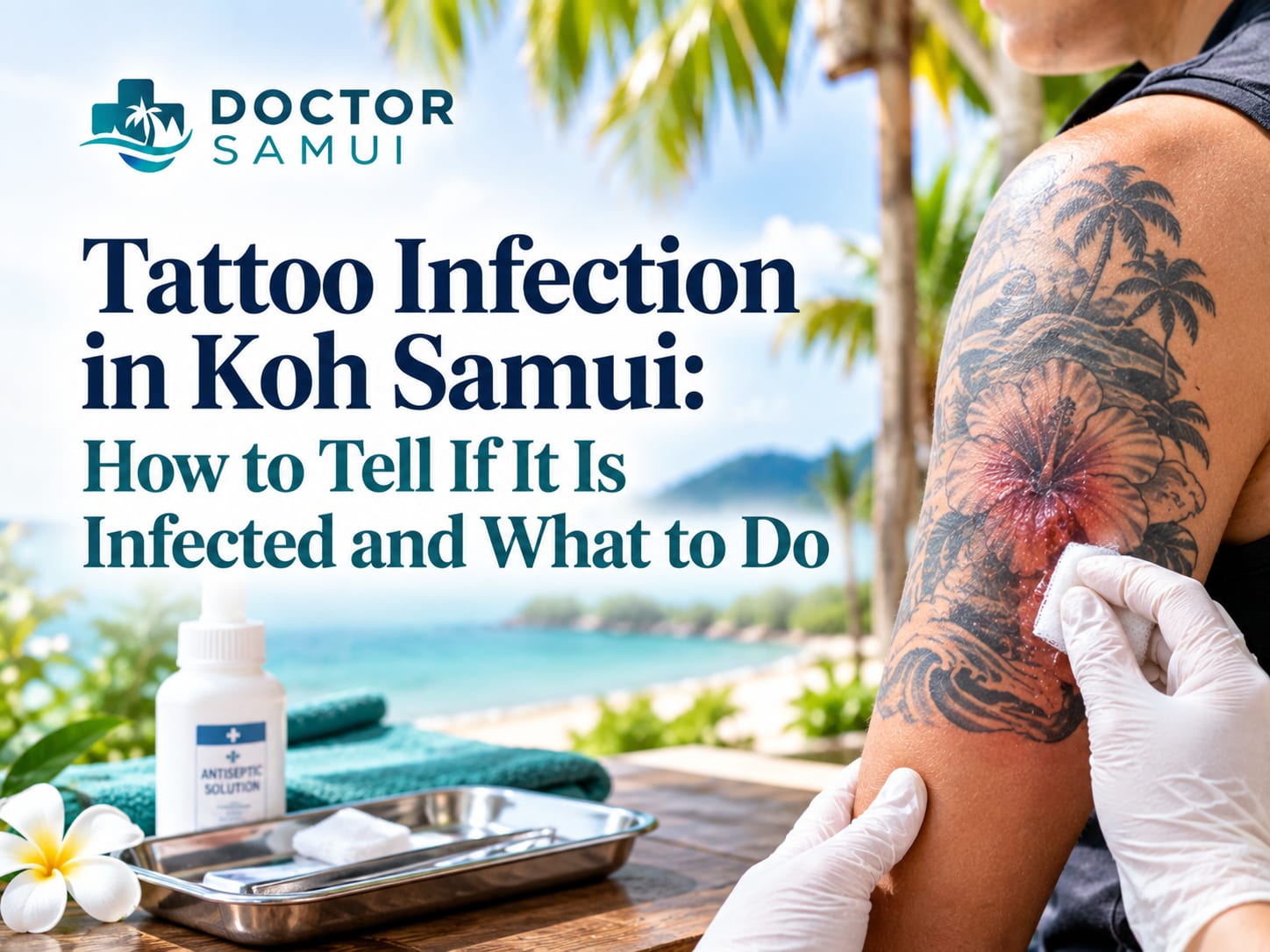
Infection looks different. The redness spreads beyond the edge of the tattoo itself. The skin feels hot in a deepening way, not just surface-level tenderness. Pain increases rather than settles. You may see yellow or green discharge that is thicker than the clear plasma of normal healing.
On Koh Samui, normal healing can look more flushed than you would expect at home. The heat brings blood to the skin. That makes it even more important to watch the direction of travel: are things improving or getting worse? Getting worse after day three is a warning sign worth acting on.
Why Koh Samui’s Tropical Climate Raises Your Infection Risk
Samui sits at around 80 to 90 percent humidity for most of the year. You sweat constantly, even at rest. That sweat collects on a fresh tattoo and creates exactly the warm, moist conditions bacteria need to multiply fast.
The second-skin film dressings that studios apply work well in temperate climates. In Samui’s heat, the edges lift, sweat pools underneath, and the seal fails sooner than expected. Once the dressing lifts, the wound is exposed to everything on your skin, in the air, and on whatever surfaces you touch.
Heavy moisturising creams, popular in aftercare advice from cooler countries, can trap moisture against the wound here. In this climate, less is often more. A light, breathable approach works better than sealing the tattoo under a thick layer of cream.

Bamboo Tattoos and Sak Yant: A Specific Risk on Samui
Koh Samui has several studios offering bamboo tattooing and Sak Yant spiritual tattoos. These use a sharpened rod tapped by hand rather than a machine needle. Done properly by an experienced artist using single-use needles and sterile ink, the infection risk is comparable to a machine tattoo.
The problem is that tourists cannot always verify what they cannot see. Contaminated ink, a needle used more than once, or non-sterile water mixed into the ink are the main risks at studios that cut corners. The result can be a bacterial infection or, in rare cases, an atypical mycobacterial infection that does not respond to standard antibiotics and may not appear until weeks later.
If you chose a bamboo or Sak Yant tattoo, the warning signs are identical to any other tattoo infection. Watch for spreading redness, worsening pain, and any discharge after day three. Do not wait to see if it resolves on its own.
The Sea, Pool, and Waterfall Problem
Every studio will tell you not to swim. Almost every tourist does it anyway, especially on a one-week trip where the tattoo and the snorkelling day land back-to-back.
Seawater is not clean. It carries marine bacteria, including Vibrio species, that are particularly aggressive in open wounds. Your tattoo is an open wound for at least two to three weeks. A villa pool looks clean but is not sterile. Waterfalls at Na Muang or Hin Lad involve fresh water that picks up soil bacteria on the way down. Any submersion in the first three weeks carries real risk.
If your trip schedule means the tattoo and the water activities conflict, the simple answer is to get the tattoo on the last two days of your trip, not the first. If you already swam and now have spreading redness or swelling, come in and get it assessed early. Prompt treatment stops a minor infection from becoming a larger problem. You can read more about how we treat open wounds and skin injuries at our accidents and injuries page.
When to See a Doctor for a Tattoo Infection on Koh Samui
Most tattoo infections start as cellulitis, a bacterial skin infection that spreads through the skin layer. Caught early, this responds well to a course of oral antibiotics. Left alone, it can spread, worsen, and in some cases require intravenous antibiotics or drainage.
See a doctor if redness is spreading beyond the tattoo border, if you have a fever above 38°C, if lymph nodes near the tattoo site feel swollen and tender, or if you see pus. Also come in if the wound smells off, or if pain is worsening after day three.
Do not rely on over-the-counter antiseptic cream alone if any of these signs are present. Some infections here involve bacteria with antibiotic resistance, including MRSA, which will not respond to topical treatment. A clinical assessment tells you what you are actually dealing with.
How Doctor Samui Treats Tattoo Infections
When you come into our Chaweng clinic or we visit your hotel or villa, the assessment is straightforward. We look at the wound, check the spread of redness, take your temperature, and feel the nearby lymph nodes.
If the infection looks bacterial and uncomplicated, we prescribe a course of oral antibiotics suited to skin infections in this region. If there is pus or an abscess forming, we drain it cleanly and dress the wound properly. For more severe infections, we can arrange IV antibiotics. We also provide documentation for travel insurance claims, covering the consultation, medications, and wound care.
You do not need to navigate a Thai public hospital for this. Walk into our clinic in Chaweng, or WhatsApp us and we can be at your hotel the same day. English, German, and Hebrew speaking staff are available.
Aftercare That Actually Works in a Tropical Climate
Keep the tattoo out of direct sun. Wash it gently with mild soap and cool water twice a day. Pat it dry, do not rub. Apply a very thin layer of fragrance-free moisturiser. Do not rewrap it in cling film after the initial dressing comes off.
Wear loose, breathable clothing over it. Avoid heavy sweating where you can, at least in the first few days. Skip the beach, the pool, and the waterfall. If your second-skin dressing starts to lift at the edges before the recommended removal time, take it off rather than letting fluid pool underneath.
These adjustments matter more here than they would at home. The same wound that might heal without issue in a cool, dry climate can turn in 48 hours in Samui’s heat. Knowing the difference between normal wound healing and infection saves you from a week of unnecessary pain on a trip you planned carefully.
If your tattoo looks infected or you are not sure whether what you are seeing is normal, Doctor Samui can assess it the same day. Walk into our Chaweng clinic or request a hotel or villa visit anywhere on Koh Samui, available 24 hours a day. We handle wound assessment, antibiotic prescriptions, and travel insurance documentation. Contact us on WhatsApp to book.
Frequently Asked Questions
Dr. Ponlawat Pitsuwan
Physician, Doctor Samui
a walk-in clinic based in Chaweng, Koh Samui, with 24-hour hotel and villa visits across the island. He sees tourists, families, and long-stay expats for wound care, skin infections, tattoo complications, and minor procedures including abscess drainage and wound dressing. His focus is straightforward, evidence-based care delivered in plain language.
