
Clinically reviewed by Dr. Ponlawat Pitsuwan, Physician, Doctor Samui.
Last reviewed: September 2026
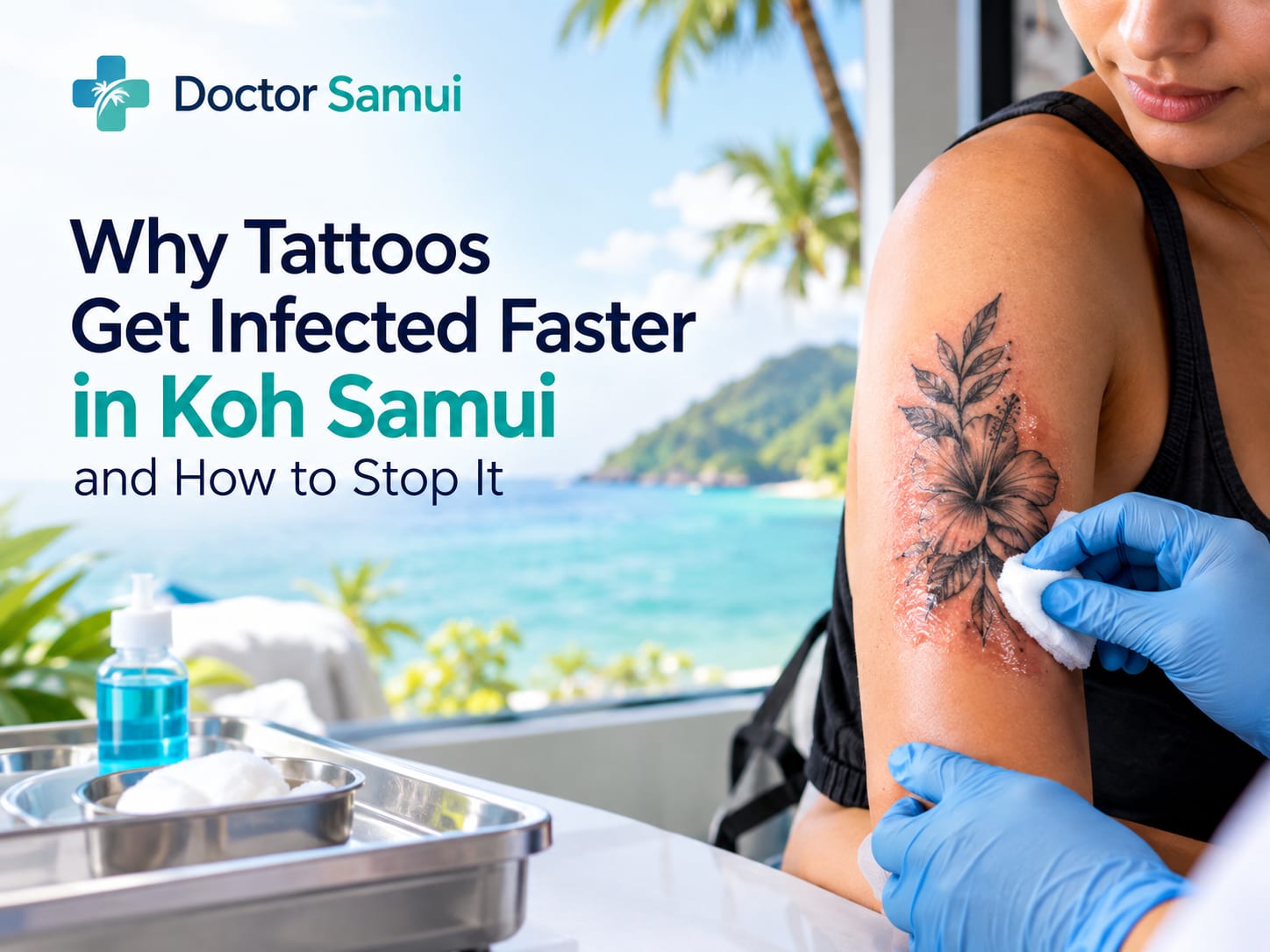
Fresh tattoos heal more slowly in Koh Samui’s heat and humidity because sweat, seawater bacteria, and constant UV exposure all attack broken skin at the same time. Keep the area clean and dry, stay out of the sea and pools for at least two to four weeks, and watch for spreading redness or pus after day three. If those signs appear, see a doctor the same day.
You leave the studio on Chaweng’s back streets, fresh ink wrapped and buzzing, and within ten minutes you are sweating through your shirt in the back of a songthaew. That is the moment your tattoo’s healing window starts working against you. Koh Samui sits at around 85 to 90 percent humidity year-round and rarely dips below 30 degrees. Those are exactly the conditions bacteria love most.
This is not scare-mongering. It is what we see at our Chaweng clinic regularly: tourists and long-stay expats who followed their studio’s standard aftercare instructions, but those instructions were written for a cool, dry studio in Europe or the US, not for a Gulf of Thailand island with seawater day trips and poolside afternoons. A few specific changes to how you care for fresh ink here make a real difference.
Why Koh Samui Is Harder on Fresh Tattoo Healing Than Most Places
A fresh tattoo is an open wound. The skin barrier is broken across the entire design, and for the first several days, bacteria can get straight in. In most climates, the main threats are limited. On Koh Samui, you are dealing with several at once.
Constant heat means you sweat almost without stopping. Sweat sits against the tattoo, softens scabs before they are ready, and carries Staphylococcus aureus, a common skin bacterium that becomes a problem the moment it enters a wound. High humidity then stops the skin from drying out normally between washes, which slows healing further.
The Gulf of Thailand adds its own layer of risk. Seawater here carries natural environmental bacteria, including strains that thrive in warm coastal water and cause slow, stubborn skin infections. One group, nontuberculous mycobacteria (NTM), are found in both seawater and freshwater. NTM infections take weeks to appear, respond poorly to standard antibiotics, and are frequently mistaken for a delayed allergic reaction.
The First 72 Hours of Tattoo Aftercare in Koh Samui’s Climate
The first three days are when most infections start. What you do in this window sets the course for the rest of healing.
For the first few hours, keep whatever covering the studio applied in place. When you remove it, wash your hands first, then rinse the tattoo gently under cool running water using a fragrance-free antibacterial soap. Pat it dry with a clean paper towel. Do not use a hotel towel. Hotel towels are laundered in bulk, they are not sterile, and they carry bacteria from dozens of previous guests.
Apply a very thin layer of plain, fragrance-free moisturiser, then let the skin breathe. In this humidity, less is more. Wear loose, breathable clothing over the area. Repeat the wash-and-moisturise cycle two to three times a day, keep the tattoo out of direct sun entirely, and avoid touching it between washes.

The Moisturiser Mistake Most Tourists Make in the Heat
In a cooler climate, moisturising generously and keeping a second-skin wrap on for several days is reasonable advice. On Koh Samui, it is the wrong approach.
When air humidity is already 85 to 90 percent, adding a thick layer of product under wrap creates a sealed, moist environment that bacteria find ideal. Over-moisturised tattoos come in looking pale, waterlogged, and starting to break down at the surface. The scab lifts too early, the skin underneath is not ready, and infection follows.
The rule in this climate: apply moisturiser in a thin film, just enough to stop the skin feeling tight. If the skin looks shiny or wet after applying, you have used too much. Second-skin wraps are fine for the first 24 hours if your studio applies one. After that, remove it and switch to open-air healing with regular cleaning.
Sun, Sea, Pools and Waterfalls: What to Avoid and For How Long
This is where Koh Samui creates specific problems that generic aftercare guides never cover.
Avoid seawater for a minimum of two to four weeks, or until the tattoo is fully healed with no scabs, no peeling, and no raw patches. The Gulf of Thailand is warm and bacteria-rich. The same rule applies to the waterfalls at Na Muang or Hin Lad: freshwater, but still carrying environmental bacteria that can enter broken skin. Snorkelling trips, reef swims near Lamai, and diving dives all need to wait.
Resort and hotel pools are not safe either. Pool chlorine is strong enough to irritate fresh ink and strip the surface, but not strong enough to sterilise a healing wound. Two to four weeks minimum, same as the sea.
Direct sun on fresh ink causes inflammation, fades the colour before it has set, and can trigger a reaction in the top layers of skin. Cover the area with clothing rather than sunscreen for the first two weeks. If you cannot cover it, use a high-SPF, fragrance-free sunscreen, but only after the skin has fully closed and is no longer peeling.
Warning Signs Your Tattoo Is Infected
Some redness and swelling in the first two to three days is normal. The skin is traumatised and responding. What is not normal is redness that spreads beyond the tattoo border after day three, pain that gets worse instead of better, yellow or green discharge, or skin that feels hot to the touch beyond the immediate area.
Red streaking moving away from the tattoo is a serious sign. That pattern, along with fever or feeling generally unwell, can mean the infection has moved deeper. This is not a situation to monitor overnight.
An allergic reaction to tattoo ink can look similar to infection but usually appears as raised, itchy skin without the warmth and spreading redness of true infection. The distinction matters because treatment is different. If you are not sure which you are dealing with, get it assessed rather than guessing.
What to Do If Your Tattoo Gets Infected on Koh Samui
If redness is mild, spreading is not obvious, and there is no pus or fever, increase your cleaning routine and monitor closely for 24 hours. Do not add antibiotic ointment without a doctor’s input. Over-the-counter antibiotic creams from Thai pharmacies are available, but using the wrong one can mask symptoms without treating the cause.
If redness is spreading, pain is increasing, or you can see any discharge, seek medical assessment the same day. Do not wait to see if it improves.
At our Chaweng clinic, we assess the wound, take a swab if needed, and prescribe oral antibiotics where infection is confirmed. Most straightforward tattoo infections respond well to a standard antibiotic course when caught early. More resistant infections, including NTM, need a different approach and take longer, which is another reason not to delay. For more on how we handle wound and skin assessments on the island, see our accidents and injuries page.
Doctor Samui also offers 24/7 hotel and villa visits across Koh Samui, including Lamai, Bophut, Maenam, and Choeng Mon. You do not need to get in a taxi feeling unwell to get this looked at.
Choosing a Safer Tattoo Studio on Koh Samui
Prevention starts before the needle touches skin. Not all studios on the island operate to the same standard, and the differences matter.
The artist should open needle packaging in front of you from sealed sterile packaging. Ink should be poured into single-use caps for each session, not shared between clients. Ask whether the studio uses an autoclave to sterilise reusable equipment. A reputable studio will not hesitate to answer.
Contaminated ink, including ink diluted with non-sterile water, is a known source of NTM infection. If the studio’s pricing seems unusually low, that is worth pausing on. Alcohol is another practical risk that most studios and guides ignore: drinking before or after getting a tattoo thins the blood, increases swelling, and slows your immune response at exactly the wrong moment. Give the tattoo at least 24 hours of clean recovery before a beach night out.
If your tattoo is showing signs of infection, do not wait it out. Doctor Samui’s walk-in clinic in Chaweng is open for same-day wound and skin assessments, and we can visit your hotel or villa 24/7 across Koh Samui, including Lamai, Bophut, Maenam, Choeng Mon, and beyond. We prescribe oral antibiotics on the same visit where needed. Walk in or book a call-out directly through doctorsamui.com.
FAQ
Dr. Ponlawat Pitsuwan
Physician, Doctor Samui
a walk-in clinic based in Chaweng, Koh Samui, with 24/7 hotel and villa visits across the island. He sees tourists, families, and long-stay expats for wound care, skin infections, tattoo complications, and minor surgical procedures. His focus is straightforward, evidence-based care delivered in plain language.
