
Clinically reviewed by Dr. Ponlawat Pitsuwan, Physician, Doctor Samui.
Last reviewed: September 2026
Sunburn blisters mean you have a second-degree burn. Do not pop them. Keep the skin cool and covered, and stay out of the sun completely. See a doctor the same day if you have fever, vomiting, dizziness, widespread blistering, or any child under 12 with blisters. Doctor Samui offers walk-in care in Chaweng and 24/7 hotel and villa visits across the island.
You spent the morning snorkeling off Koh Tan, face down in the water, watching reef fish. By late afternoon, your back is on fire. By evening, you notice fluid-filled bumps forming across your shoulders. That is not just a bad sunburn. That is a second-degree burn, and it needs a different response than aloe vera and sleep.
On Koh Samui, this happens faster than most people expect. The UV index here regularly sits at 11 to 13, which is the extreme category. Humid heat, seawater, and the specific activities tourists do on this island push the risk up quickly. Knowing what you are actually dealing with, and when to call a doctor, matters.

Why Sunburn Blisters Happen So Fast on Koh Samui
At UV index 11 to 13, fair skin can start to burn in under 15 minutes. Most northern European and North American beaches sit at UV index 3 to 6 in summer. That gap is larger than most visitors realise, and you rarely feel the burn until the damage is already done.
Water makes it worse. Snorkeling leaves your entire back and shoulders in full sun with no shade. The sea reflects UV back onto your skin from below while the sun hits you from above. Sunscreen washes off faster than the label suggests, often within 20 minutes of getting in the water.
One risk most people miss: certain medications increase photosensitivity sharply. Doxycycline, used by some travellers for malaria prevention or to treat infections, can cause severe sunburn reactions even with good sunscreen use. If you burned badly despite doing everything right, consider what you are currently taking.
First-Degree or Second-Degree: Which Burn Do You Have
This distinction changes what you do next.
A first-degree burn is red, painful, hot, and dry. No blisters. It hurts and it peels, but it heals in a few days without medical care.
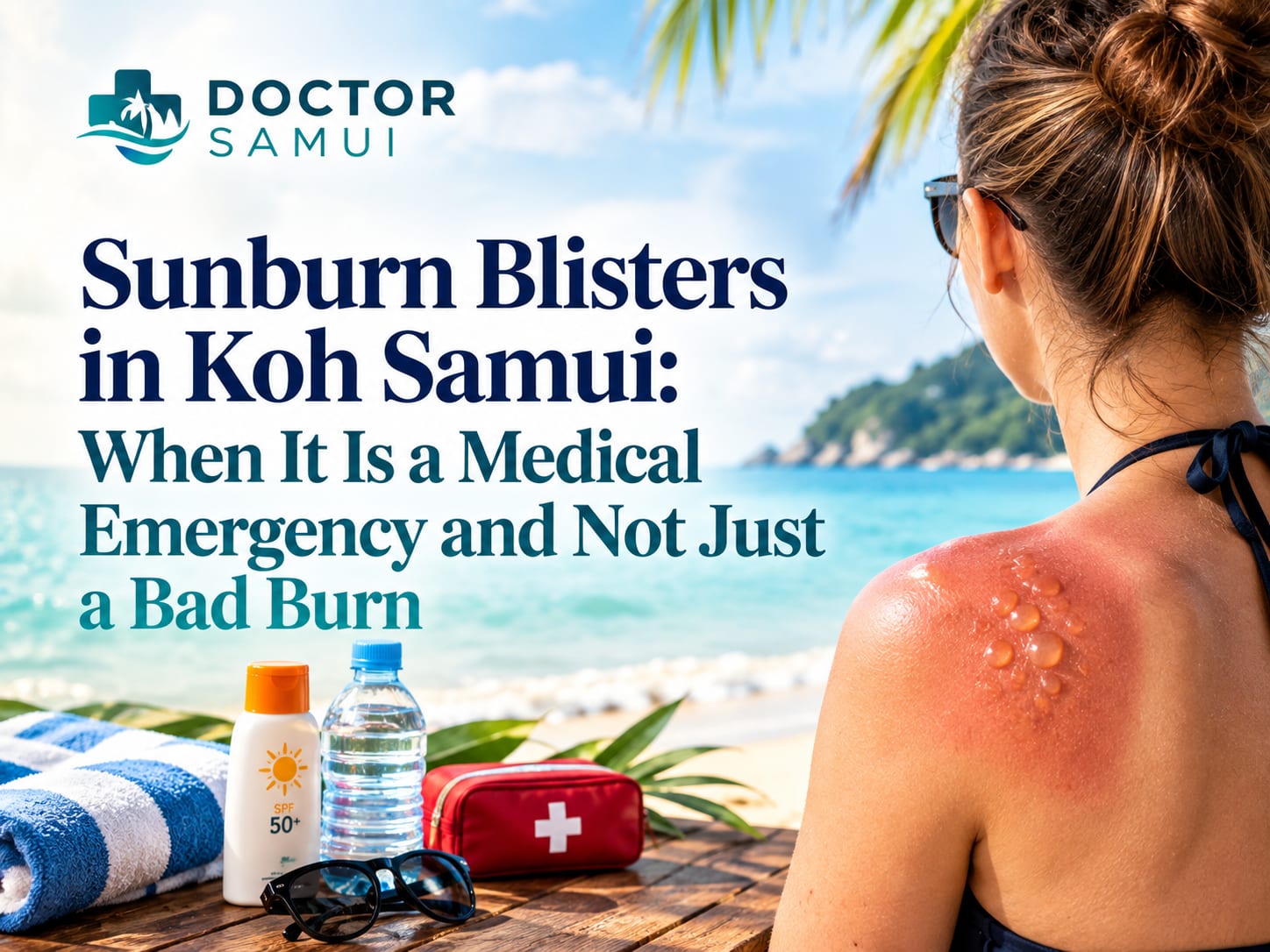
A second-degree burn goes deeper. The skin blisters with clear or pale yellow fluid. It may look wet or shiny, and patches can feel numb. This is the burn that can become infected, can scar, and can come with whole-body symptoms if a large area is affected.
If you have blisters, you have a second-degree burn. That is the line.

What to Do Right Now: First Aid for Sunburn Blisters in Your Hotel Room
Cool the area first. Run cool, not cold, water over the burned skin for 10 to 15 minutes. Do not use ice. Do not apply butter, coconut oil, or toothpaste. All of those trap heat and raise infection risk. Beach wisdom gets this one wrong, and it can make things worse.
Do not pop the blisters. The fluid-filled skin over a blister is the best sterile dressing nature can provide while the skin underneath heals. In Koh Samui’s humidity, once a blister is open, bacteria from sweat, sand, and seawater can get in quickly.
Take ibuprofen for pain and swelling if you have no reason to avoid it. Drink water steadily. Cover the area loosely with clean, non-fluffy fabric. Aloe vera gel, plain with no alcohol or fragrance, is safe to apply over unbroken blisters and widely available at pharmacies in Chaweng and Lamai.
When Sunburn Blisters on Koh Samui Become a Medical Emergency
Some sunburns cross into sun poisoning, which is a whole-body response, not just a skin injury. Watch for fever above 38.5°C, vomiting or nausea, dizziness or confusion, severe chills, or a pounding headache alongside the blistering. These signs mean you need medical care, not just rest.
Call a doctor the same day if you have widespread blistering across a large part of the body, blisters on the face or hands, a child under 12 with any blistering, or signs of dehydration. Doctor Samui can come to your hotel or villa, 24 hours a day, anywhere from Chaweng to Maenam to Lamai. IV rehydration is available on home visits for patients with sun poisoning who cannot keep fluids down.
Signs Your Sunburn Blister Is Getting Infected
A blister that is healing looks like this: the fluid stays clear, the redness stays contained, and the pain gradually eases over two to three days.
A blister that is getting infected looks different. The fluid turns cloudy or yellow-green. The redness spreads beyond the blister edge. The skin around it feels warmer, more swollen, or tender to touch. In some cases you will see red streaks spreading outward from the area. That means the infection is tracking and needs urgent treatment.
Koh Samui’s warm, humid climate speeds up bacterial growth on broken skin. If a blister opens and contacts seawater, sand, or reef, the tropical infection risk rises sharply. Do not wait more than 24 hours if you suspect infection. Come into the Chaweng clinic or request a visit to your accommodation.
What Treatment Looks Like: At the Clinic or at Your Hotel
When a patient comes in with sunburn blisters, the first step is assessing the burn depth and how much of the body is affected. Most cases we see are manageable without a hospital transfer, but that assessment matters.
At the clinic or on a villa visit, treatment typically includes sterile cleaning and dressing of open or at-risk blisters, topical antibiotic ointment where infection risk is high, oral anti-inflammatory medication, and a prescription steroid cream in selected cases. For patients with significant dehydration from sun poisoning, IV fluids can be given at your hotel or villa. That is often the better option when someone feels too unwell to sit in a car.
Everything is documented for travel insurance, including a diagnosis letter and receipt. You can also see how we handle burns and wound care more broadly on our accidents and injuries page.
Prevention: Protecting Your Skin Before the Next Beach Day
If you are continuing your trip after a burn, your skin needs at least a week completely out of direct sunlight. Loose, lightweight clothing and full shade are the only safe options while the skin heals.
Going forward, use SPF 50 mineral sunscreen with zinc oxide. Reef-safe options are widely available on Samui and better for the marine environment around Koh Tan and Angthong. Reapply every 90 minutes and every single time you come out of the water. A rash guard is worth wearing for any snorkeling trip, regardless of how quickly you plan to get back into the shade.
If you are taking doxycycline or any antibiotic, tell your prescribing doctor. Some alternatives carry less photosensitivity risk. This is something we discuss regularly with divers and long-stay expats at the clinic.
If you have sunburn blisters in Koh Samui and you are unsure whether they need medical attention, do not wait until they look worse. Doctor Samui offers same-day walk-in care at our Chaweng clinic and 24/7 hotel and villa visits across the island, including Lamai, Maenam, Bophut, and Choeng Mon. We assess burn depth, provide sterile wound care and dressings, manage sun poisoning with IV fluids on-site where needed, and handle travel insurance documentation. Contact us directly or come in.
Frequently Asked Questions
Dr. Ponlawat Pitsuwan
Physician, Doctor Samui
a walk-in clinic based in Chaweng, Koh Samui, with 24/7 hotel and villa visits across the island. He regularly treats tourists, families, and long-stay expats for sunburn injuries, wound care, and skin infections acquired during island activities including snorkeling, diving, and boat trips. His focus is straightforward, evidence-based care delivered in plain language.
