
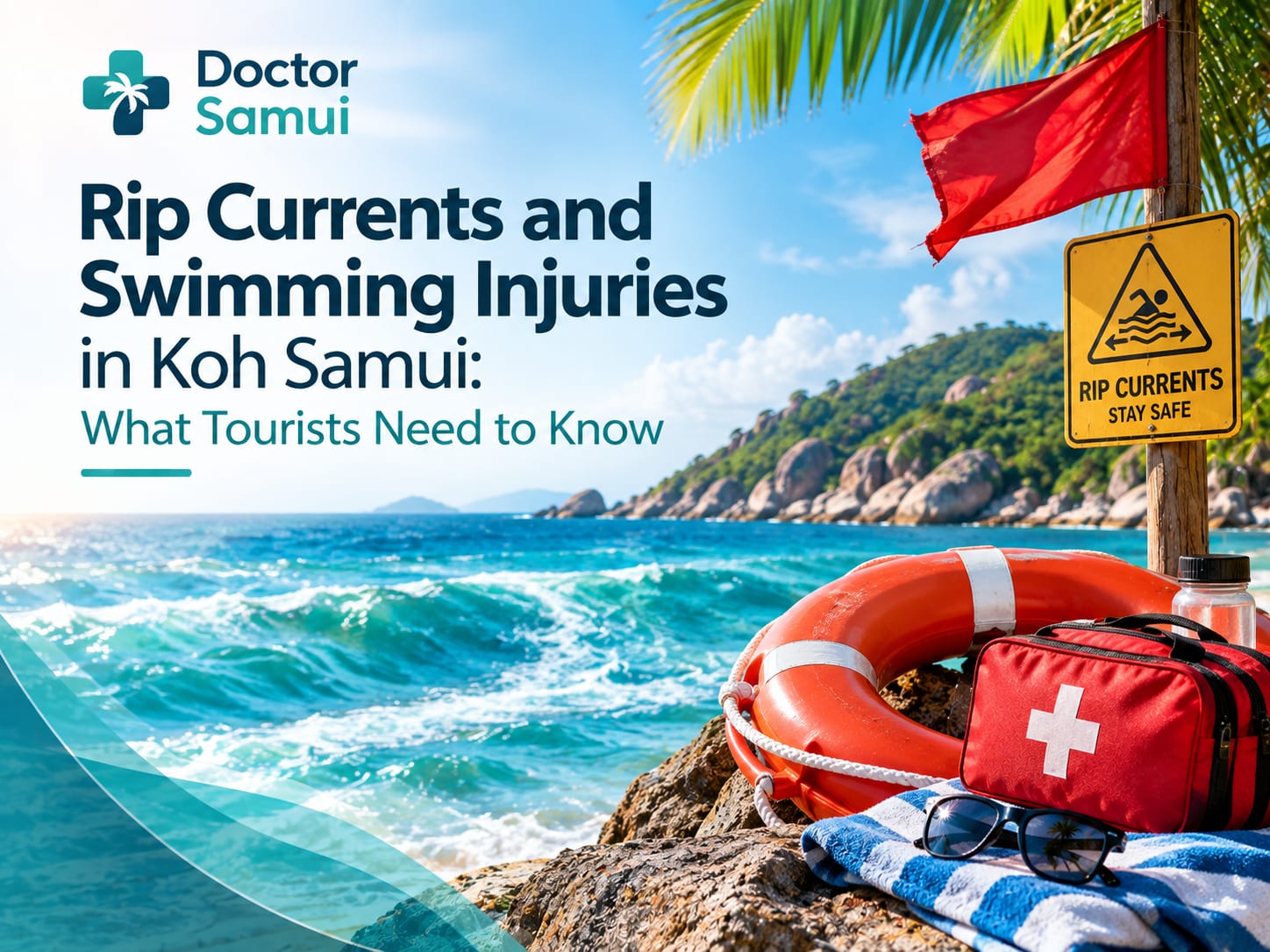
Clinically reviewed by Dr. Ponlawat Pitsuwan, Physician, Doctor Samui.
Last reviewed: September 2026
Rip currents on Koh Samui’s east-coast beaches cause real injuries every season, not just near-misses. If you or your child struggled in the water, swallowed seawater, or hit coral or rocks, get assessed the same day. Doctor Samui provides walk-in care in Chaweng and 24/7 hotel and villa visits across the island for swimming injuries of all kinds.
You are chest-deep at Chaweng, the water looks calm, and then in ten seconds you are fifty metres from shore and the beach is getting smaller. That is a rip current. Most tourists who experience one come out shaken, scraped, and exhausted. Some come out with a lot more than that.
This is the water incident we see most often at our Chaweng clinic after a beach day goes wrong. The current pulls you out. You fight it, swallow water, and get thrown into coral or rock on the way back in. By the time you reach the sand, the danger you can see is over. The injuries you cannot see may just be starting.
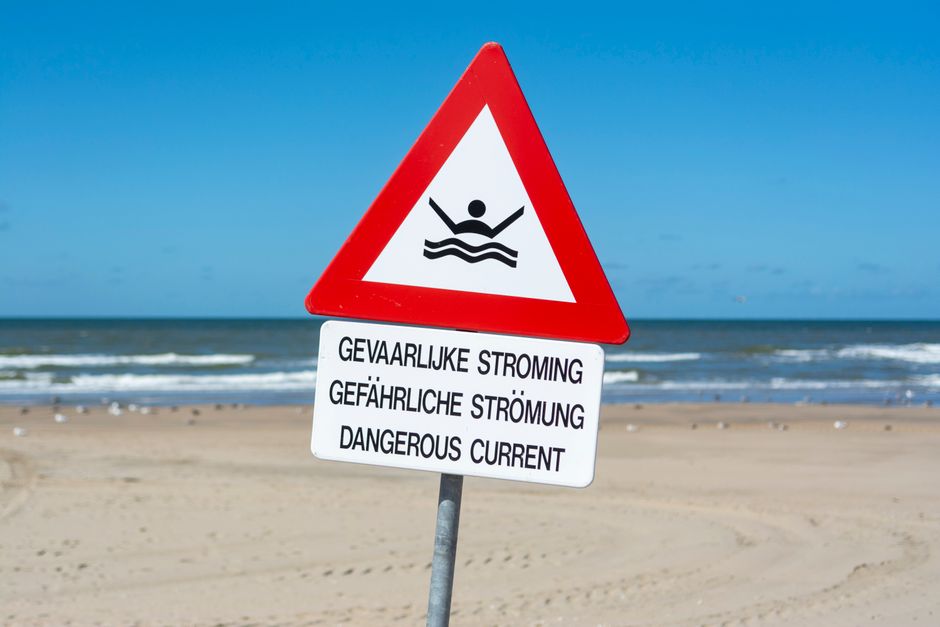
Rip Currents on Koh Samui — Why They Happen and When They Peak
Koh Samui sits in the Gulf of Thailand. Its east-facing beaches, Chaweng and Lamai in particular, take the full force of the northeast monsoon between October and December. Gulf swell builds fast during this window, and rip currents form where waves push water back through gaps in sandbars or along the edges of rocky outcrops.
Between October and December, red no-swim flags go up regularly on Chaweng beach. This is the highest-risk window of the year. That said, rip currents are not a monsoon-only problem. Brief squalls, afternoon chop, and the shape of the sea floor can create dangerous pull at almost any time of year.
The west coast, including Nathon and Taling Ngam, is more sheltered during the northeast monsoon. But from May through September the southwest monsoon swings risk to those shores. No beach on Samui is zero-risk in all seasons.
How to Spot a Rip Current on Koh Samui Beaches
Look for a strip of water that appears flatter, darker, or choppier than the sea around it. Rip currents often show a visible line of foam or discoloured water moving away from shore. Waves break on either side of the gap but not inside it. That gap is where the current is running.
Koh Samui has minimal lifeguard coverage. Red flag systems on most beaches are informal at best. A red flag means do not swim. No flag does not mean the water is safe. It may simply mean no one is watching.
If you are already in the water and feel yourself being pulled out, do not swim straight toward shore. You will tire fast and make no ground. Swim parallel to the beach until the pull weakens, then angle back in. Our accidents and injuries page covers how to spot a rip current in more detail.
What Happens to Your Body in a Rip Current
The first thing that goes is your energy. Fighting a rip current is like running against a fast treadmill. Most people exhaust themselves within two to three minutes. Panic sets in, breathing becomes ragged, and that is when water gets inhaled.
Being dragged at speed across sand is painful but manageable. Being dragged across coral or into a submerged rock is not. Lacerations, deep abrasions, and blunt trauma can all happen in a few seconds.
Exhaustion itself is an injury. Patients after a rip current incident are often pale, shaky, and confused in a way that goes beyond fright. That picture needs assessment, not just a rest on a towel.
Hidden Risks — Lung and Breathing Complications After a Rip Current
You may have read about "secondary drowning" or "dry drowning" online. These terms are no longer used in medicine. The correct term is submersion injury, and it covers any case where water was inhaled and the lungs are affected.
Even a small amount of inhaled saltwater causes the airways to swell. Oxygen levels can drop hours after you feel fine on the beach. Fluid in the lungs can cause inflammation deep in the tissue within six to eight hours of the incident.
This matters most for children. A child who was briefly submerged at Chaweng, cried straight away, and seems okay may still have inhaled enough water to develop breathing trouble overnight. If your child coughs persistently, breathes faster than usual, seems unusually tired, or is irritable and not eating after a swimming incident, they need to be seen today, not tomorrow.
Secondary Injuries From Rip Currents — Coral, Rocks, and Exhaustion
Coral cuts are among the most common things treated at the Chaweng clinic after a rough beach day. The reef along Samui’s east coast is alive and sharp. Getting thrown across it at current speed leaves lacerations that carry a real infection risk from marine bacteria.
Coral wounds need proper saline cleaning and a check for embedded fragments. Leaving coral in a wound is how a small cut becomes a spreading infection three days into your holiday. A tetanus shot is often needed after a coral cut, especially if your last one was more than five years ago.
Blunt trauma from hitting rocks or the sea floor is also common. Shoulder dislocations, ankle sprains, and head injuries all happen in rip current incidents. If there was any impact to the head and you feel confused, have a headache, or vomited after coming out of the water, that needs same-day assessment for concussion.
When to See a Doctor After a Rip Current Incident on Koh Samui
See a doctor the same day if any of these apply. You or your child inhaled water or were briefly submerged. There is a cut or abrasion from coral, rock, or sand. You hit your head or feel dizzy, confused, or have a headache. You are exhausted beyond what normal exercise explains. There is any cough, chest tightness, or unusual breathing after the incident.
If the incident was brief, you never lost control of your breathing, there was no head impact, and you have no wounds, rest and check in on your breathing and energy every two hours. If anything changes, call a doctor.
Do not wait overnight if a child was involved. The window for breathing complications is short.
What Doctor Samui Assesses and Treats After a Swimming Incident
At the clinic, oxygen saturation is checked with a simple finger probe. Breathing is assessed and, where needed, a chest X-ray is arranged. If there is any concern about concussion, a structured clinical assessment is carried out. Wounds from coral or rock get cleaned properly under sterile conditions, not rinsed on the beach and left.
For dehydration and exhaustion after a tough rip current fight, IV fluids can get you back on your feet faster than oral fluids alone. Written documentation of the assessment and treatment is provided for travel insurance claims, which most insurers require for any water sports or swimming injury.
Doctor Samui’s 24/7 villa and hotel visit service means you do not need to travel if you are too injured or shaken to move. A doctor can reach your accommodation in Chaweng, Lamai, Bophut, Mae Nam, Choeng Mon, and across the rest of the island, with equipment to check oxygen levels, assess wounds, and manage everything on site.
Beach-by-Beach Risk — Chaweng, Lamai, and Beyond
Chaweng is the most documented site for serious rip current incidents on Samui. It is a long, exposed east-coast beach with variable sea-floor topography, minimal permanent lifeguard cover, and high tourist numbers. During the northeast monsoon it can look inviting from the shore and be genuinely dangerous in the water.
Lamai carries similar east-coast risk, particularly at the northern and southern ends where rocky points create channelled currents. The middle of Lamai beach tends to be calmer, but still warrants caution when swells are up.
Choeng Mon and Bang Rak on the northeast tip are somewhat more sheltered but not immune. Mae Nam and Bophut on the north coast are generally calmer during the northeast monsoon and carry more risk from May to September. Wherever you swim on Samui, check for flags, ask your hotel, and aim for the morning when conditions are typically steadier. If you want practical guidance on reading the water before you go in, our page on spotting rip currents and beach hazards is a good place to start.
If you or your child was caught in a rip current on Koh Samui, do not wait to see if symptoms settle. Doctor Samui provides same-day walk-in care at our Chaweng clinic and 24/7 doctor visits to hotels and villas across the island. We check oxygen levels, treat coral and reef wounds, manage post-submersion symptoms, and provide travel insurance documentation. Contact us now for fast, straightforward care wherever you are on the island.
Frequently Asked Questions
Dr. Ponlawat Pitsuwan
Physician, Doctor Samui
a walk-in clinic based in Chaweng, Koh Samui, with 24/7 hotel and villa visits across the island. He regularly assesses and treats tourists and families after swimming incidents, coral injuries, and water sports accidents on Koh Samui. His focus is straightforward, evidence-based care delivered in plain language.
