
Clinically reviewed by Dr. Ponlawat Pitsuwan, Physician, Doctor Samui. Last reviewed: September 2026
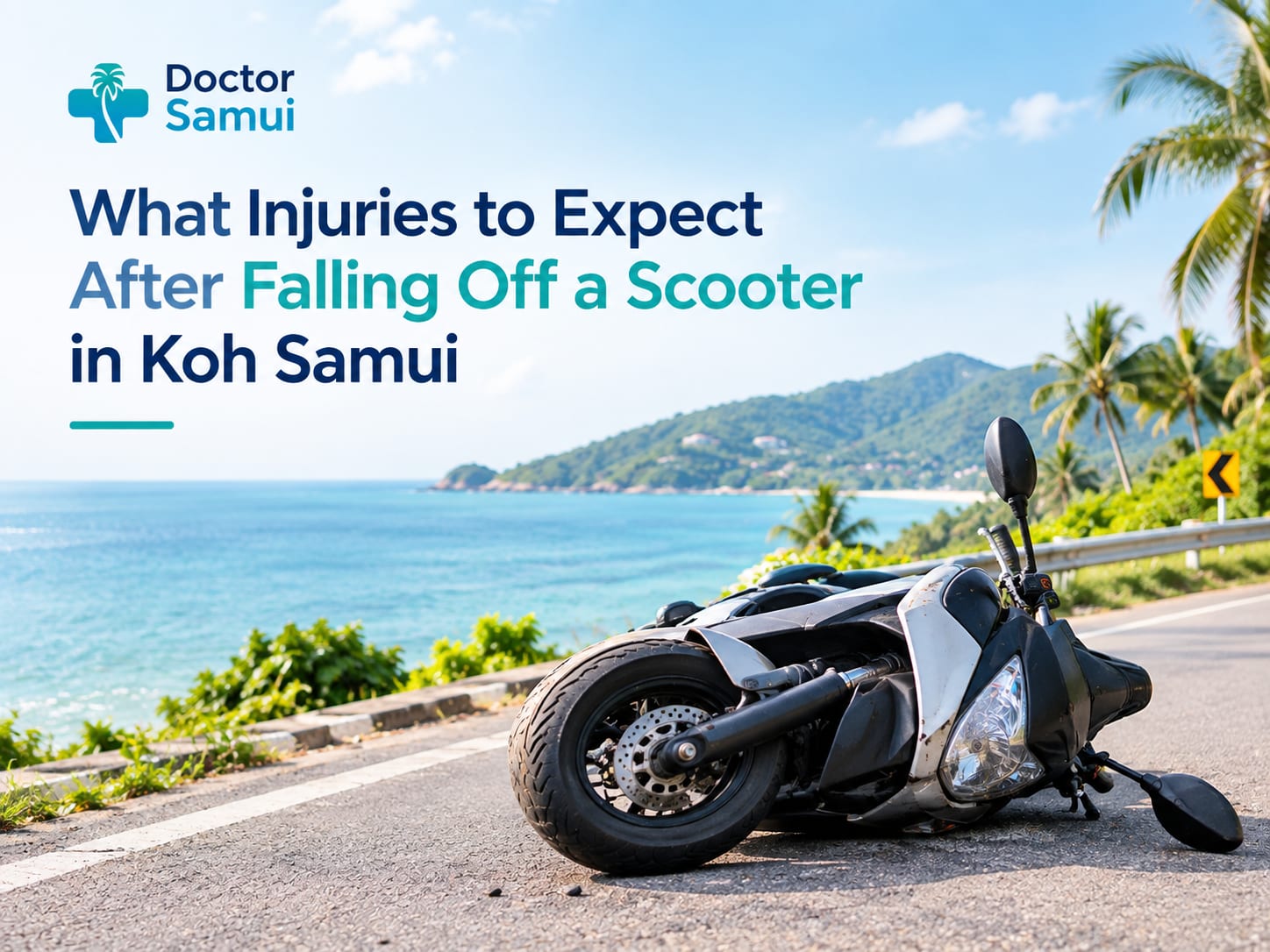
Scooter falls on Koh Samui most often cause road rash, exhaust pipe burns, wrist and clavicle fractures, and head injuries. Road rash infects fast in tropical heat and humidity, sometimes within 24 hours. If the rider is conscious, has no neck pain, and no numbness in the limbs, a walk-in clinic can handle most injuries on the spot. Loss of consciousness, confusion, or visible bone deformity means go straight to hospital.
You come around the bend past Nathon heading south, or you cut through Chaweng on the ring road at dusk. Then the sand at the junction, the wet road after an afternoon storm, or a dog stepping out does what it always does. The fall takes half a second. The injuries take weeks.
Scooter accidents are the single most common reason tourists end up seeking treatment on this island, and they happen on every part of it, not just the mountain roads. Most falls produce a predictable set of injuries: skin off the knees, palms, and shoulders; a burn from the exhaust pipe on the lower leg; and sometimes a broken wrist from catching yourself on the way down. What makes Samui different from falling off a scooter back home is the heat, the humidity, and the road surface, which can turn a wound that looks minor into something infected and serious within a day. This guide covers what to expect, what to do first, and when a clinic visit cannot wait.
Why Samui’s Roads Make Scooter Falls Worse Than You Expect
The ring road looks straightforward until it is not. Sand drifts across the junctions near Lamai and Bophut after every beach day, and most riders do not see it until the front wheel slides. The roads climbing toward Na Muang waterfall and Khao Hua Jook viewpoint are steep, narrow, and slicked with moisture from the forest. After rain, they drain slowly and stay greasy far longer than a city road would.
At night, the unlit stretches between Maenam and Bang Rak are genuinely dark. Dogs walk the road everywhere on this island. Samui’s traffic also mixes tourists on rented scooters, heavy pickup trucks, and tour vans that swing wide on bends with no warning.
The road surface itself matters clinically. Samui’s asphalt is coarse and embedded with grit and oil. When skin meets that surface at even low speed, the abrasion is deep and contaminated from the first second.
The Samui Tattoo: Road Rash in a Tropical Climate
Locals and clinic staff here call it the Samui tattoo. It is what road rash looks like two days after a fall: red, raw, and starting to swell at the edges. Road rash is a friction abrasion, where skin is scraped away, sometimes in layers, sometimes down to the tissue underneath. A wide, deep abrasion across the knee or shoulder is a different injury from a small graze, and a wound where skin peels back entirely requires surgical assessment.
The reason tropical road rash is more serious than the same injury at home comes down to bacteria, heat, and moisture. Koh Samui sits above 30°C for most of the year with high humidity year-round. Wounds that are not cleaned and dressed properly within a few hours will show signs of infection: redness spreading outward, warmth, pus, and swelling. We see infected road rash every week at the Chaweng clinic, and almost always the patient waited a day before coming in.
Proper treatment means sterile irrigation to flush out grit, wound cleaning to remove damaged tissue, and a non-adherent dressing that keeps the wound moist without trapping bacteria. A shower rinse and a plaster from a 7-Eleven is not enough for any wound larger than your palm. Our wound dressing service includes follow-up redressing so the wound is checked at each stage, not just once.

Exhaust Pipe Burns: The Injury Most Riders Ignore First
The exhaust pipe on a scooter reaches above 200°C when the engine is warm. The burn happens in under a second, usually to the inner calf or ankle, and it often does not register immediately because adrenaline is running after a fall. Passengers sitting side-saddle with bare legs get these burns without even falling, just from leaning against a stationary hot pipe near Chaweng Beach or anywhere else on the island.
The burn looks like a clean oval or stripe and blisters quickly. Even a small exhaust burn can go through the top layers of skin entirely, and in a tropical climate, an open blister that ruptures becomes an infected wound within hours.
Cool the burn under clean running water for 15 to 20 minutes immediately. Not ice. Not toothpaste. Not coconut oil. Do not pop the blister. If the burn is larger than a coin, blistering, or on a joint, it needs proper sterile dressing and a tetanus check. These are exactly the burns we treat as part of our accident and injury care.
Wrist, Clavicle, and Knee Injuries: What Breaks When You Hit the Ground
When you fall forward off a scooter, your hands go out to catch yourself. That reflex is automatic. The force travels up through the wrist and into the arm. Wrist fractures and clavicle fractures, the collarbone, are among the most common fall injuries we treat. The knee takes impact when the rider goes sideways, and kneecap fractures, torn ligaments, and deep lacerations over the knee are all regular presentations.
A fractured wrist does not always look broken. It swells, it hurts to move, and pressing along the bone produces a specific tenderness. A broken clavicle causes pain with any shoulder movement and sometimes a visible bump in the bone. Neither injury should be splinted and ignored for two days until it is convenient to get it checked.
Our Chaweng clinic can assess these injuries on-site. If a clean fracture without displacement is confirmed, we can splint and arrange appropriate follow-up. A fracture with visible deformity, loss of sensation in the hand or arm, or inability to bear weight on a leg means a hospital with orthopaedic capacity, specifically Bangkok Hospital Samui or Wattanapat, is the right call.
Head Injuries and Concussion: Red Flags You Cannot Ignore
Helmets reduce the severity of head injuries significantly. They do not eliminate them. A fall where the head hits the road, even with a helmet on, can produce a concussion: a temporary disruption to how the brain functions. The signs are not always obvious immediately after impact.
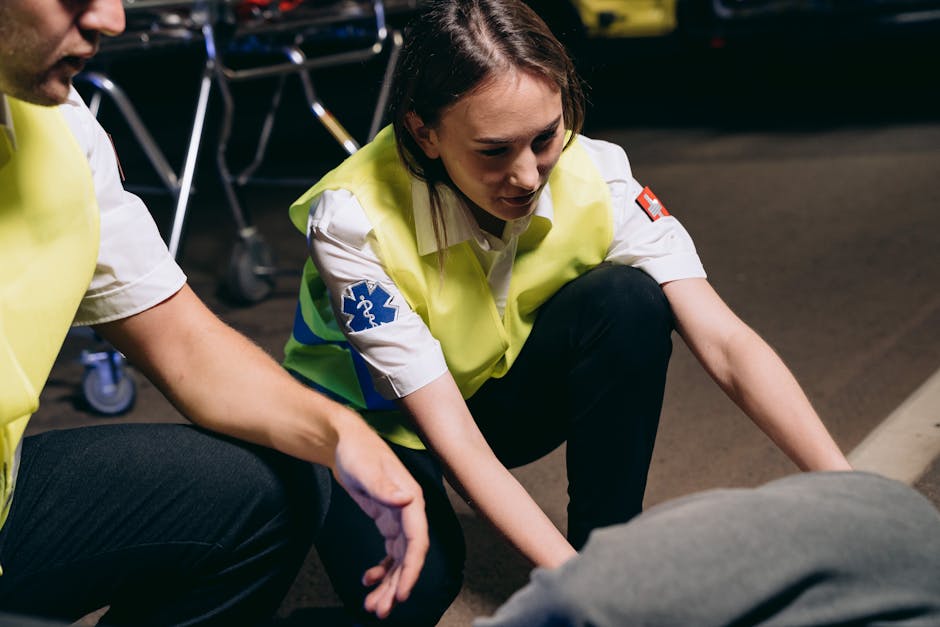
Watch for confusion about where you are or what happened, memory gaps about the fall, vomiting more than once, a headache that gets worse over the first hour, unequal pupil size, slurred speech, or weakness in the arms or legs. Any of these needs immediate assessment. If there is neck pain, tingling, or numbness down the arms after a head strike, do not move the person until they have been assessed.
Someone who was unconscious even briefly needs observation and potentially a CT scan. That is a hospital, not a clinic. Call the Thai emergency line on 1669. If another vehicle was involved, the tourist police line is 1155.
Clinic or Hospital: Making the Right Call on Samui
A walk-in clinic can handle: wound cleaning and suturing, road rash dressing, exhaust burn assessment and dressing, tetanus vaccination, pain management, suspected minor fracture assessment, concussion evaluation for mild presentations, IV antibiotics if infection has set in, and documentation for your insurance claim.
Go directly to Bangkok Hospital Samui or Wattanapat if the rider was unconscious or is now confused, there is visible bone deformity or the limb is at an abnormal angle, there is severe head bleeding, chest pain or difficulty breathing after impact, or there is weakness or numbness in the arms or legs.
When in doubt, call us first. We can advise over the phone and arrange referral and transfer where needed.
Getting Treated at Your Hotel or Villa After a Fall
Not every injured rider can get into a car. Road rash across the back of the thigh, a painful sprained ankle, or a shoulder that will not move can make travelling to a clinic genuinely difficult, especially if you are staying in a villa off the main road in Choeng Mon or up toward Maenam.
Doctor Samui provides 24/7 hotel and villa visits across the island, including Chaweng, Lamai, Bophut, Maenam, Bang Rak, and remote villa areas. A mobile visit covers wound assessment, dressing, pain relief, medication, and a clinical decision on whether hospital transfer is needed. For wound rechecks after the first visit, a villa visit means the dressing gets changed properly without the patient travelling on a painful injury.
For some injuries, moving someone before they have been assessed makes things worse. If you are not sure whether you can be safely transported, call us and we will tell you.
Insurance, Police Reports, and What the Clinic Can Help With
Scooter accidents and travel insurance have a specific complication on Koh Samui that catches many tourists by surprise. A large number of travel policies exclude coverage for scooter accidents if the rider did not hold a valid International Driving Permit with motorcycle endorsement at the time of the accident. Check your policy wording before you rent, not after a fall.
If you are covered, insurers typically require an itemised receipt from the clinic or hospital, an official medical certificate, and, if another vehicle was involved, a police report reference number. The tourist police line is 1155. Our clinic can prepare insurance-ready documentation and medical certificates at the time of your visit or shortly after. Keep every receipt from the moment of treatment.
If you have fallen off a scooter anywhere on Koh Samui, Doctor Samui’s walk-in clinic in Chaweng is open for wound dressing, fracture assessment, exhaust burn treatment, concussion evaluation, tetanus vaccination, and insurance documentation. If you cannot travel, our doctors visit hotels and villas across the island 24 hours a day. Call us to describe your injuries and we will tell you the fastest, safest way to get you treated.
FAQ
Dr. Ponlawat Pitsuwan
Physician, Doctor Samui
a walk-in clinic based in Chaweng, Koh Samui, with 24/7 hotel and villa visits across the island. He treats tourists, families, and long-stay expats for scooter and road injuries, wound care, fracture assessment, and post-accident care. His focus is straightforward, evidence-based care delivered in plain language.
