
Clinically reviewed by Dr. Ponlawat Pitsuwan, Physician, Doctor Samui.
Last reviewed: November 2026
A hangover fades through the day. Alcohol withdrawal gets worse as hours pass and can lead to seizures or delirium. If you stopped drinking after several days of heavy daily alcohol use and you are shaking, sweating heavily, confused, or your heart is racing, these are warning signs that need a clinical assessment, not rest and water. Doctor Samui offers 24/7 villa and hotel visits across Koh Samui for confidential withdrawal assessment and treatment.
You woke up after the Full Moon Party or the tail end of a big week in Chaweng, and something feels wrong beyond the usual rough morning. The room is spinning. Your hands are trembling. You are sweating more than the heat explains. That gap between "rough night" and "my nervous system is in trouble" is the most important thing to understand before you decide to sleep it off.
A hangover peaks in the morning and starts to ease by afternoon. Alcohol withdrawal does the opposite: it builds. The two can feel similar in the first few hours, which is exactly why people wait too long. If you have been drinking heavily every day for a week or more and you have now stopped, what comes next depends less on how much you drank last night and more on how long the pattern ran.

A Full Moon or Chaweng Binge Is Not Always Just a Hangover the Next Day
The Full Moon Party on Koh Phangan runs all night. Bucket drinks, which are large shared cups of spirits mixed with energy drinks and soda, are the standard delivery. Each bucket typically contains a double or triple measure of spirits. Over a six-to-twelve-hour party, the total intake is high. Add a week of nightly bar crawls along Chaweng Beach before that, and the picture changes from a one-off binge to something the body has started adapting to.
Your brain adjusts to daily heavy alcohol by increasing its own excitatory activity to stay balanced. When alcohol is removed suddenly, that excitatory drive has nothing pushing back against it. That rebound is what produces shaking, sweating, rapid heart rate, and, in serious cases, seizures. This is not about willpower or how tough you are. It is a physical response from your nervous system.
Timeline of Shakes, Sweats, Confusion and Seizure Risk After You Stop
Withdrawal symptoms usually begin within six to twelve hours of the last drink. Mild tremor, nausea, sweating, and anxiety are the first signs. Heart rate and blood pressure can rise. By twenty-four to forty-eight hours, seizure risk peaks. This is the window that catches people off guard, particularly those who feel slightly better in the middle and assume they are through the worst.
Between forty-eight and seventy-two hours, a small number of people develop delirium tremens: sudden severe confusion, agitation, rapid heart rate, fever, and sometimes hallucinations. This is a medical emergency and needs hospital-level care. If the person in your villa cannot hold a straight conversation, call for help now.
Who Is at Higher Risk After a Party Week, Including a Sudden Stop at a Retreat
You do not need to be a daily drinker at home to develop withdrawal here. Sustained heavy daily drinking over several days can be enough to create physical dependence in some people, particularly in a hot climate where dehydration, poor sleep, irregular food intake, and high alcohol volume all compound each other. This is the holiday binge pattern, and it matters clinically.
Risk is higher if you drink heavily at home already, if you have had a withdrawal experience before, or if you are using other sedatives alongside alcohol. Being significantly dehydrated or run-down when you stop can also speed up how quickly symptoms appear.
The sudden stop situation that often goes unnoticed is a retreat arrival. Someone flies to Samui after a heavy week, checks into a wellness retreat in the hills, and stops drinking entirely on day one because the program demands it. By day two, what looks like detox fatigue is actually early withdrawal. Without a prescribing clinician on site, that retreat cannot give the medications needed to manage this safely.
What You Can Safely Do at the Villa, and What Means a Hospital Trip
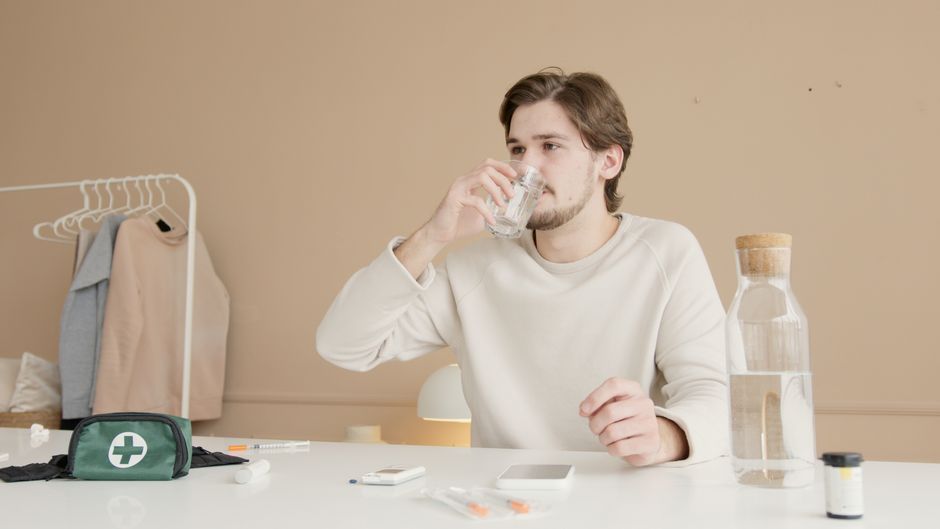
Mild symptoms that ease through the morning after a single heavy night, light headache, mild nausea, slight tiredness, are consistent with an ordinary hangover. Rest, water, electrolytes, and food are appropriate. IV hydration through a villa visit can help recovery if you cannot keep fluids down, and Doctor Samui’s house call service covers Chaweng, Lamai, Bophut, and the rest of the island around the clock.
What you cannot manage at the villa without a clinical assessment is shaking that does not settle, heart rate that feels fast or irregular, confusion, significant sweating, or any visual disturbance. These need symptom-triggered medication, not just fluids. The key distinction is this: IV fluids and vitamins treat dehydration. They do not suppress the neurological rebound that drives withdrawal. A doctor needs to assess which one you are dealing with before deciding what goes into the drip.
Call for help immediately if the person is confused, cannot stand steadily, is seeing or hearing things that are not there, has a seizure, or if symptoms are getting worse rather than better after several hours. These warrant emergency care, not a villa visit.
Why a Detox Retreat Is the Wrong Place to Manage Withdrawal Without Medical Cover
Wellness retreats and detox programs on Samui vary widely in what they can actually offer medically. Most cannot prescribe benzodiazepines, which are the clinical standard for managing moderate-to-severe alcohol withdrawal and preventing seizures. Most cannot administer IV thiamine, vitamin B1, which is the treatment for Wernicke’s encephalopathy, a serious brain condition caused by thiamine depletion that can follow heavy alcohol use.
Wernicke’s encephalopathy produces confusion, abnormal eye movements, and loss of coordination. Without prompt thiamine treatment it can progress to Korsakoff syndrome, a permanent memory condition. It is preventable when identified early, and it is exactly what a clinical assessment catches that a retreat schedule does not.
A retreat is a reasonable next step after medically supervised withdrawal is complete. It is the wrong first step if the body has not been cleared by a physician. If you booked a retreat after a heavy drinking holiday, tell the program staff about your drinking pattern on arrival and ask whether they have a prescribing doctor available. If the answer is no, get a medical assessment first.
Getting Help on Samui Confidentially, Including After You Come Back From Phangan
The ferry from Koh Phangan to Koh Samui takes around thirty minutes. If you have been drinking heavily throughout a Phangan visit and your last drink was the night before you crossed, you may already be six to eight hours into the withdrawal window by the time you reach the pier. Early signs during the crossing, trembling, nausea, your heart racing, are not seasickness. Go straight to a clinic or call Doctor Samui when you dock rather than heading to your villa to sleep.
Concerns about privacy stop a lot of people from seeking help. What you discuss at the clinic or during a villa visit stays between you and the treating physician. Medical confidentiality in Thailand applies in the same way it does in most countries tourists come from.
On travel insurance: seek care first, check your policy second. An untreated seizure or delirium tremens will cost far more than any policy question. Doctor Samui works with travel insurance providers and can provide clinical records for your claim. Details on insurance-supported visits are on the travel insurance clinic page.
For expats on the island who drink regularly and want a clear picture before or after a difficult period, a health check-up at Doctor Samui covers electrolytes, liver markers, and a clinical review to inform next steps.
If you stopped drinking after a heavy week in Chaweng or after the Full Moon Party and something feels wrong beyond a standard rough morning, do not sit with it. Doctor Samui offers 24/7 villa and hotel visits across Koh Samui, including confidential withdrawal assessment and IV therapy. Walk into the Chaweng clinic or call for a house visit wherever you are on the island. If the person is confused, seizing, or getting worse by the hour, go to the nearest emergency facility immediately.
Frequently Asked Questions
Dr. Ponlawat Pitsuwan
Physician, Doctor Samui
a walk-in clinic based in Chaweng, Koh Samui, with 24/7 hotel and villa visits across the island. He sees tourists, families, and long-stay expats for acute illness, injury, and alcohol-related presentations after the Full Moon Party and party weeks in Chaweng. His focus is straightforward, evidence-based care delivered in plain language.
References
- Sullivan JT, Sykora K, Schneiderman J, Naranjo CA, Sellers EM. Assessment of alcohol withdrawal: the revised clinical institute withdrawal assessment for alcohol scale (CIWA-Ar). British Journal of Addiction. 1989;84(11):1353-1357.
- Schuckit MA. Recognition and management of withdrawal delirium (delirium tremens). New England Journal of Medicine. 2014;371(22):2109-2113.
- Galvin R, Bråthen G, Ivashynka A, et al. EFNS guidelines for diagnosis, therapy and prevention of Wernicke encephalopathy. European Journal of Neurology. 2010;17(12):1408-1418.
- World Health Organization. Management of alcohol withdrawal. WHO Mental Health Gap Action Programme Evidence Centre, 2012.
- Cleveland Clinic. Alcohol withdrawal. Cleveland Clinic Health Library, reviewed 2023.
- Harvard Health Publishing. Alcohol withdrawal (A to Z). Harvard Medical School, 2023.
The information in this article is for educational purposes only and does not constitute medical advice. It should not be used to self-diagnose or replace a consultation with a qualified physician. If you have concerns about your health, contact a licensed medical professional. For appointments at Doctor Samui, visit doctorsamui.com.
