
Clinically reviewed by Dr. Ponlawat Pitsuwan, Physician, Doctor Samui.
Last reviewed: November 2026
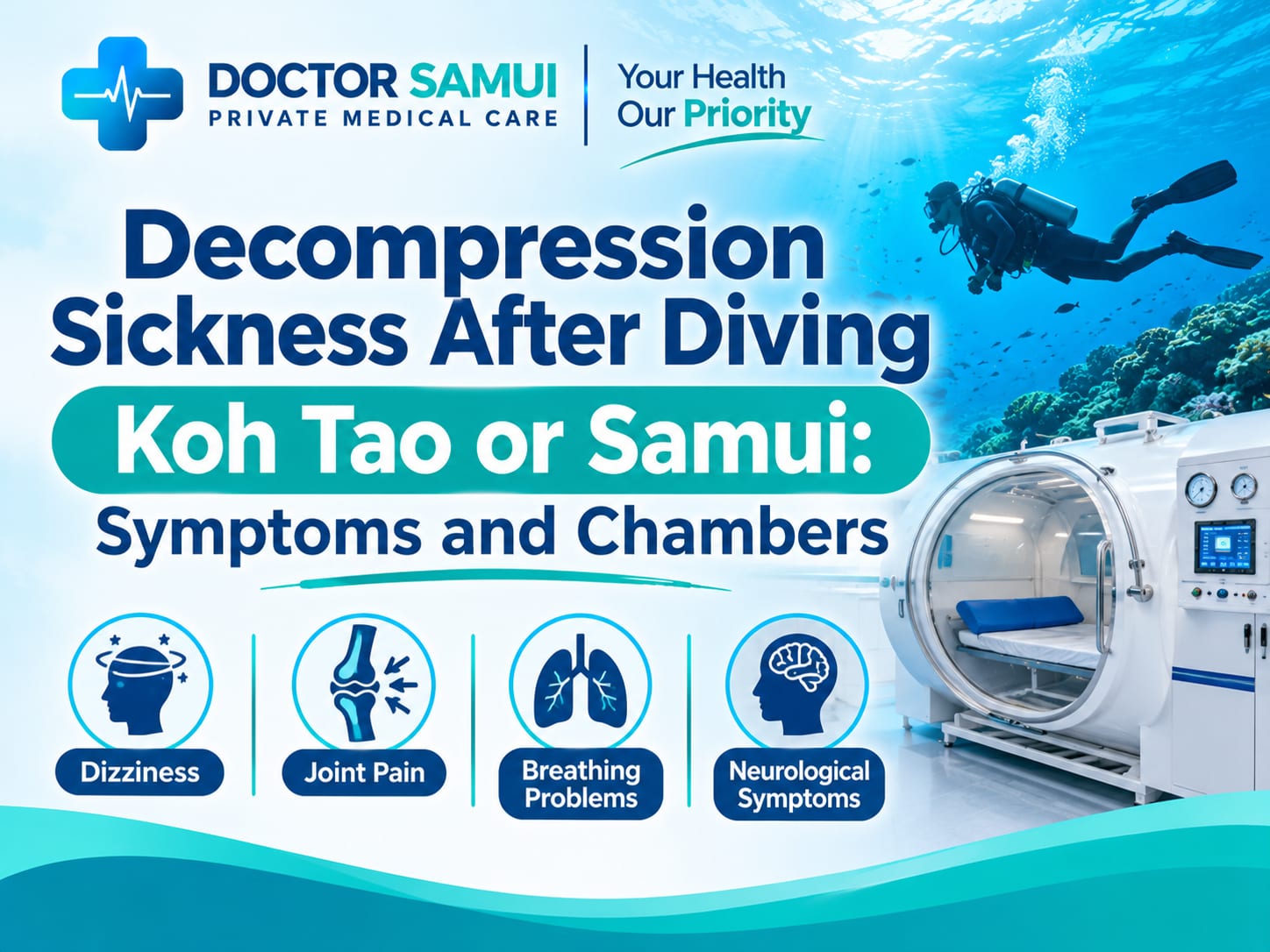
Decompression sickness (the bends) happens when nitrogen bubbles form in your blood and tissues after a dive. Symptoms usually appear within a few hours of surfacing. The only definitive treatment is recompression in a hyperbaric chamber. The nearest facilities to Koh Samui are on Koh Tao and in the wider Gulf of Thailand region. Get assessed immediately: do not wait to see if symptoms improve on their own.
You finish a morning dive off Koh Tao, climb back onto the boat, and by the time you reach shore your knee aches and your skin feels odd. You put it down to the heat. Maybe you just overdid it. That is exactly the moment decompression sickness gets dangerous: not because the symptoms are dramatic, but because they are easy to explain away.
The bends occur when you ascend too quickly and dissolved nitrogen forms bubbles in your tissues and bloodstream. Symptoms range from joint pain and skin mottling to numbness, paralysis, and breathing difficulty. Some are subtle enough to dismiss. Any symptom after a dive warrants assessment, not observation. If you are on Samui and unsure, Doctor Samui’s walk-in clinic in Chaweng can see you immediately, start first-response care, and coordinate what comes next.
Symptoms After a Dive
The tricky part about decompression sickness on a tropical island trip is context. You are hot, possibly dehydrated, maybe tired from a long dive day. Joint aches feel like tiredness. A patchy skin rash looks like a sunburn reaction. Fatigue reads as travel exhaustion.
Do not explain away any symptom that starts after a dive. The critical question is timing: did it begin after you surfaced? If yes, treat it as dive-related until proven otherwise.
Skin, Joint and Neurological Signs
Type I decompression sickness covers musculoskeletal and skin symptoms. Joint pain is the most common, usually in the shoulders, elbows, knees, or hips. The skin sign to know is cutis marmorata: a blotchy, mottled rash that looks like marbling under the skin. It is not itchy sunburn. It is nitrogen bubbles affecting blood flow in the skin.
Type II decompression sickness is a true emergency. It involves the nervous system, heart, or lungs. Watch for numbness, tingling, weakness in the arms or legs, vision changes, hearing problems, difficulty breathing, or chest tightness. Confusion or unusual behaviour after a dive also falls here. Any Type II sign means call for help now, not in an hour.
Emergency Steps and Oxygen
The first thing to do is stop diving immediately. That includes your buddy: if one person shows signs, no one goes back in the water. Lay the affected person flat, or in a recovery position if they are unwell. Keep them still and calm.
The single most important first aid is 100 percent oxygen, given continuously by a non-rebreather mask. This helps wash out nitrogen faster. Most dive operators carry emergency oxygen: use it. Keep fluids going with water, not alcohol or caffeine.
Call for medical help while this is happening, not after. Doctor Samui offers 24-hour hotel and villa visits across Koh Samui, so if you are at a resort in Chaweng, Lamai, or Choeng Mon, a doctor can reach you quickly. We can administer IV fluids, perform a full neurological assessment, and arrange urgent transfer to a recompression facility. Getting clinical documentation started early also supports your insurance claim later.

Koh Samui Hyperbaric Chamber Options
There is no hyperbaric chamber on Koh Samui itself. The nearest dedicated recompression facility for divers in the Gulf of Thailand region is on Koh Tao, operated by Hyperbaric Services of Thailand at the Koh Tao Hospital site. If you are diving out of Koh Tao, this is your fastest route to treatment.
For divers based on Koh Samui, transfer to Koh Tao is typically by speedboat or helicopter depending on condition severity. This is why starting care on Samui matters. A doctor assessment, oxygen, and IV fluids at our Chaweng clinic or via a hotel visit stabilises you before that transfer. We also write the referral documentation the chamber team needs.
Verify current operating status before you dive. Hyperbaric chambers in Thailand have occasionally been out of service for maintenance. DAN (Divers Alert Network) maintains a 24-hour emergency line and can confirm current facility status. If you need urgent help on Samui now, contact Doctor Samui first and we will coordinate directly.
Flying After Diving and Decompression Sickness
If you have had decompression sickness and received hyperbaric treatment, the guidance from dive medicine physicians is to wait before flying, but the recommended interval varies widely and must be set by the treating hyperbaric physician based on your symptoms and recovery. This is not the same as the standard no-DCS flying wait time.
Cabin pressure in a commercial aircraft is lower than sea level pressure. That pressure drop can cause residual nitrogen to bubble again, even after successful treatment. Flying too soon risks a relapse that is harder to treat away from a facility.
Your connecting flight from Samui Airport is not worth the risk. If your insurer or airline needs documentation, Doctor Samui can provide a written post-treatment assessment letter and a fit-to-fly certificate once you are medically cleared. If you have been diving but did not develop decompression sickness, DAN guidelines recommend at least 12 hours before flying after a single no-decompression dive, and at least 18 hours after multiple dives or days of diving.
Insurance for Dive Accidents on Samui
Standard travel insurance usually covers emergency medical treatment including hyperbaric recompression. The problem is documentation. Thai hospitals and chamber facilities will process your claim faster if you arrive with a written clinical assessment from a physician.
Specialist dive insurers such as DAN, DiveAssure, and Dive Master provide the most comprehensive cover, including medical evacuation if a chamber is not immediately accessible. If you are relying on standard travel cover, check your policy before you dive. Emergency medical evacuation is a separate benefit from treatment costs, and many standard policies cap it or exclude it entirely.
A clinic assessment letter from Doctor Samui supports your claim from the start. We document the onset time, symptoms, first-response care given, and referral details. That paperwork is what your insurer needs. You can also check whether your policy works with cashless treatment at our clinic. For dive-related injuries that need ongoing wound care or follow-up, our accident and trauma service covers you between sessions. And if you need a doctor to come to your villa while you are grounded and recovering, mobile doctor services across Koh Samui are available around the clock.
If you surfaced from a dive and something feels off, do not wait. Doctor Samui’s clinic in Chaweng is open 24 hours for walk-in assessment, and our doctors are available across Koh Samui for hotel and villa visits any time of day or night. We can administer oxygen and IV fluids, perform a neurological assessment, and coordinate urgent transfer to a hyperbaric facility if needed. We also provide post-treatment letters and fit-to-fly certificates for divers grounded on Samui. Contact Doctor Samui now if you have any concern after a dive.
Frequently Asked Questions
Dr. Ponlawat Pitsuwan
Physician, Doctor Samui
a walk-in clinic based in Chaweng, Koh Samui, with 24-hour hotel and villa visits across the island. He sees tourists, families, and long-stay expats on Koh Samui for dive-related injuries, water sports trauma, and marine hazard emergencies. His focus is straightforward, evidence-based care delivered in plain language.
References
- Vann RD, Butler FK, Mitchell SJ, Moon RE. Decompression illness. The Lancet. 2011;377(9760):153-164.
- Divers Alert Network. Guidelines for Flying After Diving. DAN Health & Medicine.
- Divers Alert Network. Flying After Recompression Treatment. DAN Research Reports.
- StatPearls. Decompression Sickness. National Center for Biotechnology Information, 2024.
The information in this article is for educational purposes only and does not constitute medical advice. It should not be used to self-diagnose or replace a consultation with a qualified physician. If you have concerns about your health, contact a licensed medical professional. For appointments at Doctor Samui, visit doctorsamui.com.
