Clinically reviewed by Dr. Ponlawat Pitsuwan, Physician, Doctor Samui.
Last reviewed: October 2026
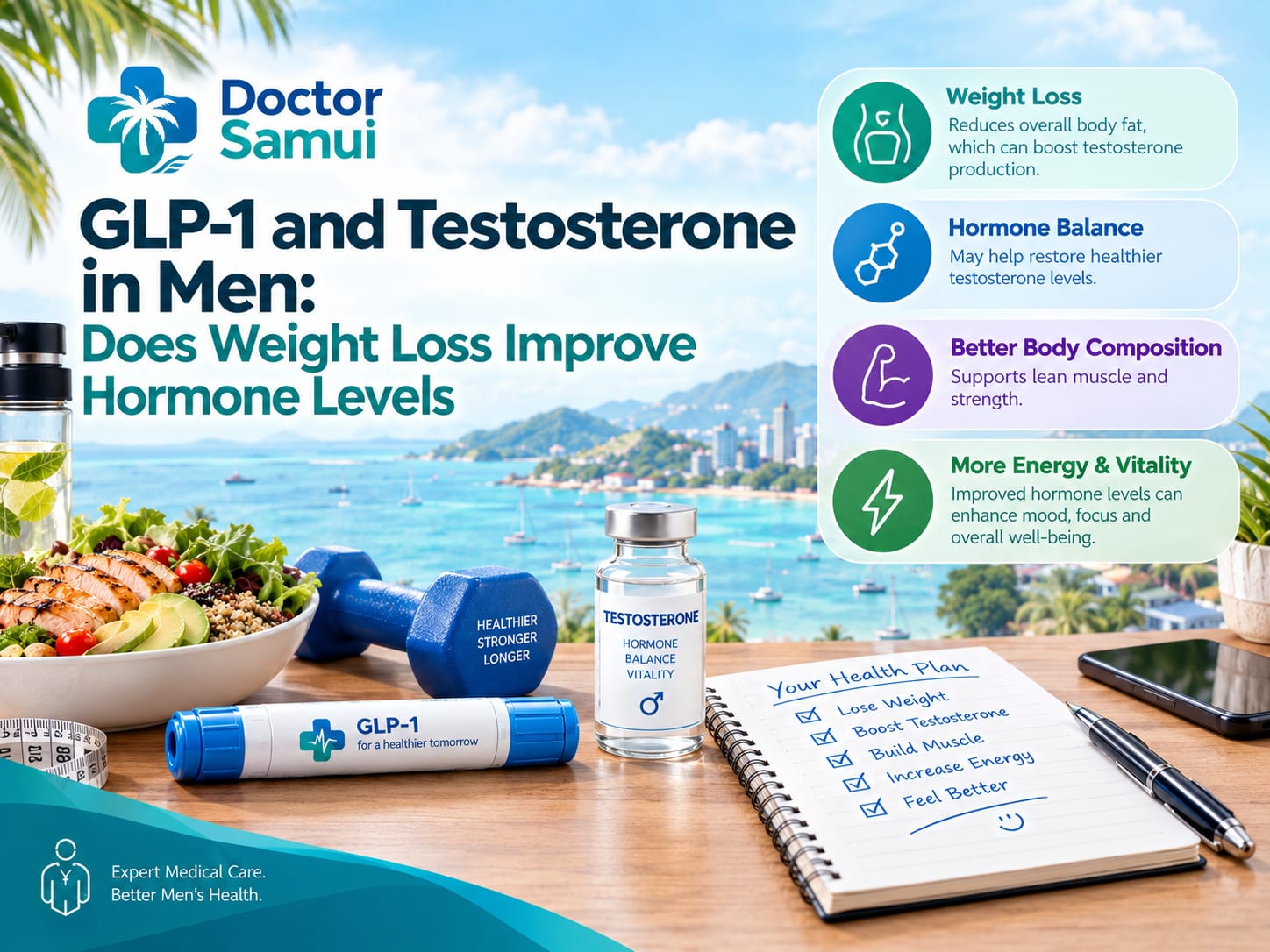
GLP-1 receptor agonists like semaglutide (Ozempic, Wegovy) and tirzepatide (Zepbound) can raise testosterone in men whose low hormone levels are linked to excess body fat. They do this indirectly, through fat loss and improved metabolic health, not by stimulating the testes directly. Men with obesity-related low testosterone are the most likely to benefit. Men with primary testicular failure are unlikely to see meaningful change from GLP-1 alone.
You have been on Samui for three months. Training in the heat, eating well, keeping active along the ring road and the beach tracks. But your energy is flat, your drive is low, and your last blood test flagged your testosterone. A friend mentioned Ozempic. Now you are searching whether a weight-loss drug could fix a hormone problem, and whether you even need to see a doctor first.
The short answer: GLP-1 drugs can genuinely improve testosterone in the right man. Whether you are that man depends on one specific question your blood results can already answer.
This is not a simple swap for testosterone replacement therapy (TRT). It works through a different mechanism, with real benefits and real limits. Knowing which applies to you matters before you start anything.

Why Excess Body Fat Suppresses Testosterone
Fat tissue is not passive. Visceral fat, the fat stored deep around your organs, contains an enzyme called aromatase. Aromatase converts testosterone into oestrogen. The more visceral fat you carry, the more testosterone gets converted before it can do its job.
Excess weight also tends to lower sex hormone-binding globulin (SHBG), the protein that carries testosterone in your blood. Lower SHBG can make your total testosterone reading look deceptively low even before the aromatase effect kicks in.
Insulin resistance, which commonly runs alongside excess weight, blunts the signal from the brain to the testes. The result is a hormonal environment that suppresses testosterone at several points at once. This pattern is called functional hypogonadism: low testosterone caused by metabolic dysfunction, not by a problem with the testes themselves.
How GLP-1 Drugs May Improve Testosterone in Men
GLP-1 receptor agonists like semaglutide and tirzepatide drive significant visceral fat reduction. As that fat comes off, aromatase activity falls. Less testosterone gets converted to oestrogen. Insulin sensitivity improves. SHBG begins to normalise. The brain-to-testes signalling pathway can restore itself.
The result is a genuine rise in testosterone. But it is driven by the fat and metabolic changes, not by the drug acting on your hormones directly. GLP-1s do not stimulate the testes. They remove the suppressive metabolic load that was blocking normal function.
This distinction matters. If your low testosterone has a different cause, the fat loss will not fix it.
What the Research Actually Shows
A study presented at the 2025 Endocrine Society annual meeting followed 110 men with obesity or type 2 diabetes who were taking GLP-1 receptor agonists including semaglutide, tirzepatide, and dulaglutide. The proportion of men with normal total and free testosterone rose from 53 percent to 77 percent over about 18 months of follow-up with roughly 10 percent body weight loss. The researchers noted the study shows a correlation but cannot confirm the drugs directly caused the improvement. That is the most cited data on this question right now.
GLP-1 drugs do not suppress gonadotropins, the hormones LH and FSH that the brain uses to signal the testes. TRT does suppress them, which is why TRT can reduce sperm production. GLP-1s leave that pathway intact.
A trial by Gregorič and colleagues, presented at ECE 2024 and published in 2025, compared semaglutide against TRT in about 25 men with type 2 diabetes, obesity, and functional hypogonadism. TRT showed greater improvement in erectile function scores on the IIEF-15 scale. Semaglutide preserved sperm concentration better and raised testosterone significantly, though the sample was small and the findings should be treated as preliminary. Neither approach is universally better. The right choice depends on your goals and your baseline results.
GLP-1 versus Testosterone Replacement Therapy
These two treatments work through entirely different mechanisms. TRT replaces testosterone directly. It works faster and raises levels more predictably. But it suppresses LH and FSH, which reduces sperm production, sometimes significantly. For men who want to preserve fertility, that is a real trade-off.
GLP-1 drugs take longer. The testosterone benefit follows the fat loss, which takes months. But they address the underlying metabolic dysfunction that caused the problem in the first place. If the weight stays off, the hormonal gains may persist.
| GLP-1 (e.g. Semaglutide) | Testosterone Replacement Therapy | |
|---|---|---|
| How it works | Indirect, via fat and metabolic improvement | Direct, replaces testosterone |
| Speed of effect on testosterone | Slow (months) | Faster (weeks) |
| Effect on sperm / fertility | Preserved | Reduced (suppresses LH/FSH) |
| Addresses root cause in obesity | Yes | No |
| Suitable if primary testicular failure | Unlikely to be sufficient | Yes |
| Ongoing medication needed | Yes, to maintain weight loss | Yes |
What Happens to Muscle Mass on GLP-1 Drugs
This is a concern that gets missed. GLP-1-driven weight loss includes some loss of lean muscle alongside fat, particularly without a resistance training programme. Lower muscle mass reduces your metabolic rate and can blunt the hormonal gains from fat loss.
Testosterone supports muscle, but the relationship runs both ways. Maintaining muscle also supports the hormonal environment. If you start a GLP-1 programme without a plan to protect your muscle, you may lose some of the benefit you are chasing.
Resistance training and adequate protein intake are not optional extras here. They are part of getting the hormonal outcome you want. GLP-1 drugs are not suitable for everyone. Men with a personal or family history of medullary thyroid carcinoma or multiple endocrine neoplasia type 2 should not take them, and anyone with a history of pancreatitis should discuss the risk with a doctor before starting.
Who Is Most Likely to See a Testosterone Benefit from GLP-1
The men who see the clearest benefit share a specific profile. They carry significant excess body weight, particularly visceral fat. Their testosterone is low, but their LH and FSH are normal or elevated. That pattern tells us the testes can still respond if the metabolic suppression is lifted. This is functional hypogonadism, and GLP-1 is well suited to it.
Men with primary hypogonadism, where the testes themselves are not functioning properly, are unlikely to see meaningful testosterone recovery from fat loss alone. Their LH and FSH are typically elevated, as the brain responds to failing testes by sending stronger signals, and the cause is not metabolic.
A baseline hormone panel tells you which situation you are in. Without it, you are guessing.
Getting Started with GLP-1 on Koh Samui
If you are a long-stay expat or spending real time on Samui and want to address this properly, the starting point is a blood panel before you do anything else. Total testosterone, free testosterone, LH, FSH, and SHBG together give a clear picture of what is suppressed and why.
At the Chaweng clinic, Doctor Samui runs that baseline assessment as part of a GLP-1 programme for men. If your results point toward functional hypogonadism driven by excess weight and insulin resistance, we can discuss whether a GLP-1 programme fits your situation and how to structure it alongside resistance training to protect your muscle mass.
For men living further out, house call and IV therapy services in Lamai mean you do not have to travel in for a first consultation. We can also arrange visits across the island for long-stay guests who prefer that. If your results suggest something other than a metabolic cause, we will tell you directly and discuss whether specialist referral is the right next step.
What Happens If You Stop Taking GLP-1
The 2025 Endocrine Society study did not measure testosterone after men stopped the medication. That gap in the data matters and is worth naming clearly.
What broader stopping-GLP-1 research shows is that weight tends to return after stopping in men who have not made lasting lifestyle changes. If the weight comes back, the visceral fat comes back. If the visceral fat comes back, aromatase activity rises again, and testosterone is likely to fall.
The hormonal benefit from GLP-1 is probably not durable once the drug stops without sustained lifestyle change. Regular monitoring, continued attention to body composition, and resistance training give you the best chance of keeping what you gained.
If your testosterone has been flagged low and you are wondering whether a GLP-1 programme is the right approach, the first step is a proper hormone panel, not a prescription. Doctor Samui’s Chaweng clinic offers baseline hormone testing and GLP-1 consultations for men, with 24-hour hotel and villa visits available across Koh Samui. We will tell you honestly whether GLP-1 is likely to help you or whether a different path makes more sense. Contact Doctor Samui to book.
FAQ
Dr. Ponlawat Pitsuwan
Physician, Doctor Samui
a walk-in clinic based in Chaweng, Koh Samui, with 24/7 hotel and villa visits across the island. He sees tourists, families, and long-stay expats for men’s health concerns including low testosterone, metabolic health, and GLP-1 consultations. His focus is straightforward, evidence-based care delivered in plain language.
References
- Portillo-Canales L, et al. "Anti-Obesity Medications Can Normalize Testosterone Levels in Men." Abstract presented at ENDO 2025, Endocrine Society Annual Meeting, 2025.
- Gregorič A, et al. "The Effects of Semaglutide vs Testosterone Replacement Therapy on Functional Hypogonadism and Sperm Quality in Men with Type 2 Diabetes Mellitus and Obesity." Endocrine Abstracts (ECE 2024), 2024.
- Bhasin S, et al. "Testosterone Therapy in Men with Hypogonadism: An Endocrine Society Clinical Practice Guideline." Journal of Clinical Endocrinology and Metabolism, 2018.
- Lincoff AM, et al. "Semaglutide and Cardiovascular Outcomes in Obesity without Diabetes." New England Journal of Medicine, 2023.
- Healio Endocrinology. "Obesity drugs may raise testosterone in men." Healio, 2025.
The information in this article is for educational purposes only and does not constitute medical advice. It should not be used to self-diagnose or replace a consultation with a qualified physician. If you have concerns about your health, contact a licensed medical professional. For appointments at Doctor Samui, visit doctorsamui.com.