Clinically reviewed by Dr. Ponlawat Pitsuwan, Physician, Doctor Samui.
Last reviewed: October 2026
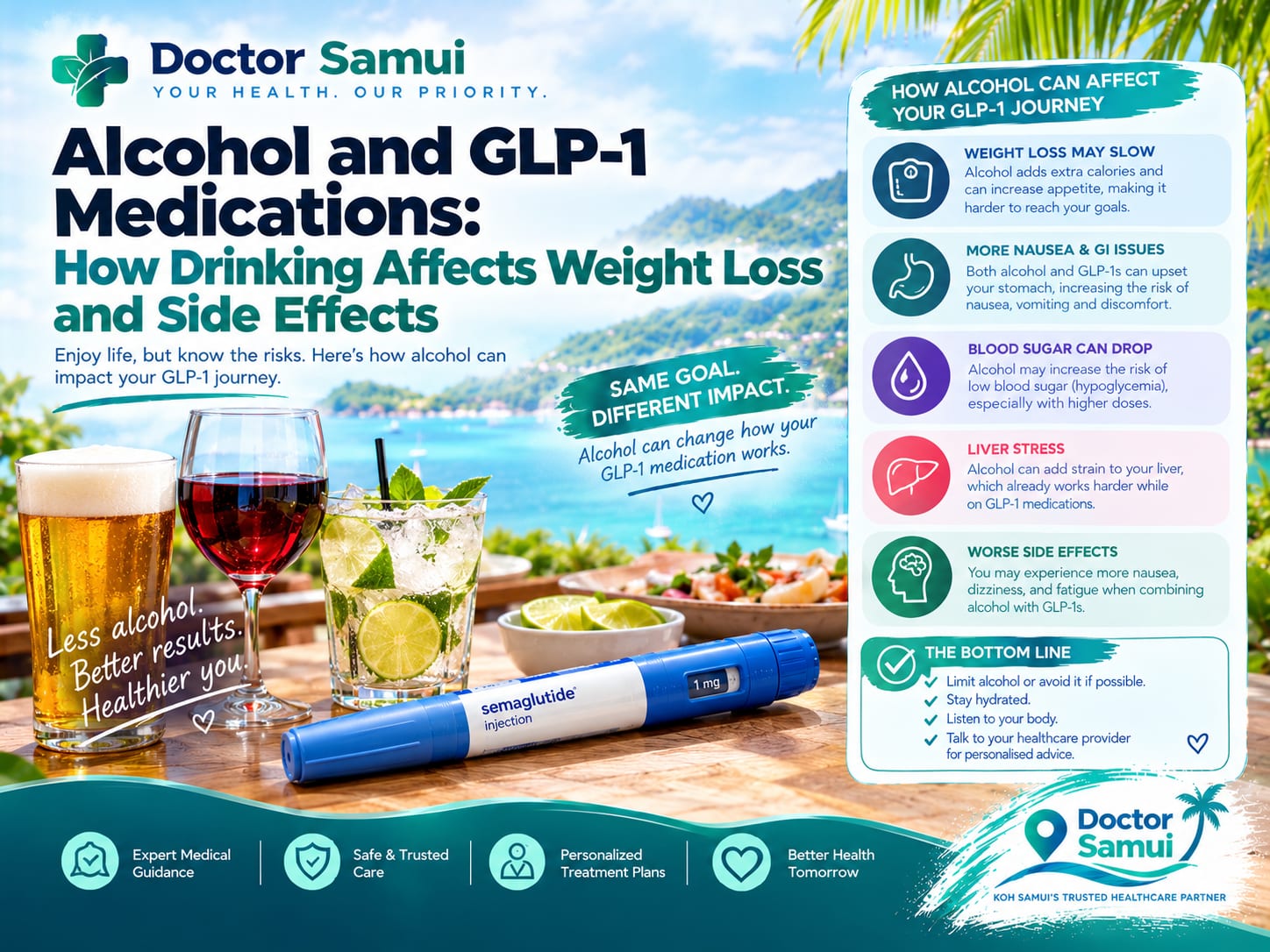
GLP-1 medications like semaglutide (Ozempic, Wegovy), tirzepatide (Mounjaro), and liraglutide slow stomach emptying and reduce appetite. Alcohol is not directly contraindicated, but the GLP-1 alcohol interaction raises real risks: stronger intoxication, worse nausea and vomiting, blood sugar drops, and a small but serious risk of pancreatitis. If you are on a GLP-1 and plan to drink, knowing these risks helps you make a safer choice.
You are two weeks into your GLP-1 program, you have lost a few kilos, and tonight there is a beach bar at Chaweng Noi calling your name. You have two drinks and feel significantly more drunk than usual. This is not in your head. Your medication changed how your body handles alcohol, and most people find out the hard way rather than from their prescribing doctor.
Alcohol and GLP-1 medications are not a forbidden combination, but they interact in ways that catch people off guard. The risks stack up quickly in a hot, active environment. Here is what you actually need to know before your next drink.

Why Alcohol Hits Differently on GLP-1 Medications
GLP-1 drugs work partly by slowing gastric emptying, meaning food leaves your stomach more slowly than normal. This changes your alcohol tolerance in a way most patients do not expect.
Food in your stomach normally acts as a buffer, slowing how fast alcohol reaches your small intestine where most absorption happens. On a GLP-1, your stomach is already emptying more slowly and you are likely eating less overall. The result is that alcohol absorption becomes less predictable. You may absorb a higher concentration than you are used to from the same number of drinks.
Patients who have been on semaglutide or tirzepatide for a few months often report that one or two drinks feel like three. This is not a direct drug-on-drug interaction. It is a physical consequence of how GLP-1s change digestion. Know this before you order that second cocktail on the Samui waterfront.
The GI Side-Effect Overlap
Nausea is one of the most common side effects of GLP-1 medications, particularly in the first few weeks. Alcohol irritates the stomach lining independently. Put them together and the nausea compounds fast.
Vomiting is where this becomes genuinely risky. When you lose fluids and electrolytes rapidly, the problem escalates. In Samui’s heat and humidity, you are already losing more fluid through sweat than you would in a cooler climate. An electrolyte imbalance from vomiting plus dehydration from heat can worsen quickly, particularly overnight when you may not be drinking water.
Acid reflux is also more common on GLP-1 drugs. Alcohol relaxes the valve between your oesophagus and stomach, making heartburn and reflux significantly worse together. This is not dangerous on its own, but it is uncomfortable enough to ruin a holiday.

Blood Sugar and the Hypoglycaemia Risk
GLP-1 medications alone carry a low risk of hypoglycaemia (low blood sugar). The drug’s effect is glucose-dependent, meaning it scales back when blood sugar is already low. If you are only on a GLP-1 and not on insulin or a sulfonylurea, your risk under normal circumstances is low.
Add alcohol, and the picture changes. Alcohol reduces the liver’s ability to release glucose into the bloodstream. If you have not eaten much, which is common on GLP-1 therapy, your glucose reserves going into a night of drinking are already lower than usual. The combination of poor food intake, alcohol, and a GLP-1’s insulin-sensitising effect can push blood sugar low enough to cause symptoms.
Signs of low blood sugar include shakiness, sweating, confusion, and feeling faint. These can be mistaken for ordinary drunkenness. If you are on a GLP-1 and feel worse than the amount you drank should explain, eat something and get assessed.
Pancreatitis Risk When Alcohol and GLP-1 Therapy Combine
This is the one risk worth taking seriously even if you drink occasionally and moderately. GLP-1 medications carry a labelled precaution regarding pancreatitis, meaning inflammation of the pancreas. Alcohol is an independent trigger for pancreatitis, particularly in people with elevated triglycerides.
The symptom overlap is the problem. Pancreatitis causes severe upper abdominal pain that may radiate into the back, persistent nausea, and vomiting. A bad hangover causes the same things. Most people assume it will pass.
Do not wait if the upper abdominal pain does not settle after a few hours, worsens when you lie flat, or a fever develops alongside it. If any of these happen after a night of drinking while on a GLP-1, get seen rather than sleeping it off.
The Emerging Science on GLP-1s and Alcohol Cravings
Something worth knowing about is happening in the research. A number of patients on GLP-1 therapy report that their desire to drink alcohol falls, sometimes significantly, without trying to cut back.
The proposed explanation involves the dopamine reward pathway. GLP-1 receptors are present in brain areas linked to reward and craving. By acting on these pathways, semaglutide and related drugs may reduce the reward signal that drives alcohol-seeking behaviour. Published cohort data has shown reductions in alcohol-related outcomes among people prescribed these medications, though the research is still developing and this is not an approved use of any GLP-1 drug.
Do not use a weight-loss injection to manage problem drinking. If alcohol use is a concern, that conversation needs to happen separately with a doctor.
Dehydration and the GLP-1 Alcohol Interaction in Koh Samui’s Climate
In a temperate country, the dehydration risk from alcohol on a GLP-1 is manageable. In Samui’s heat, it compounds faster than most visitors expect.
Alcohol is a diuretic. GLP-1 side effects, particularly nausea and reduced fluid intake, lower how much you drink throughout the day. Tropical heat and humidity accelerate fluid loss through sweat even when you are sitting still. Stack these together after a long beach day followed by evening drinks, and dehydration with electrolyte imbalance can arrive quickly and feel severe.
If you are on a GLP-1 and spending time in the sun before a night out, drink water consistently throughout the day, not just at the bar. If you wake up with severe nausea, dizziness, or cannot keep fluids down, IV rehydration in Chaweng restores hydration and electrolytes faster than oral fluids. Doctor Samui’s mobile IV service covers the whole island, including hotel and villa visits in Lamai, Bophut, Choeng Mon, and Maenam.
Practical Guidelines If You Choose to Drink on a GLP-1
Eat a protein-containing meal before you drink. Do not skip a meal to save calories and drink instead. Food slows alcohol absorption and gives your liver something to work with.
Pace yourself and alternate alcoholic drinks with water. Your tolerance has likely dropped since starting your medication. Treat yourself as a lighter drinker than you were before, because physiologically that is what you now are. Avoid high-sugar cocktails and shots, which spike and crash blood sugar quickly.
Do not skip your GLP-1 dose before a night out. The drug’s half-life means a single missed dose will not clear your system. You will still have the same gastric effects, just without that week’s benefit. If you are managing your program through Doctor Samui’s GLP-1 service, ask at your next consultation about how your dosing schedule should interact with your social plans.
Know when to stop. If you feel significantly worse than the amount you drank explains, or you feel confused and shaky, stop drinking, eat something, and hydrate. If symptoms do not settle, get assessed.
When to Seek Medical Help
Some symptoms after drinking on a GLP-1 are uncomfortable but manageable at home. Others are not.
Get medical attention if you have upper abdominal pain radiating to the back that does not ease, if you cannot keep any fluids down after several hours, if you feel confused or cannot stand steadily, or if you develop a fever alongside nausea.
Doctor Samui’s walk-in clinic in Chaweng is open around the clock. If you are elsewhere on the island, 24-hour hotel and villa visits are available across all areas. For severe dehydration after a rough night, IV rehydration is available at the clinic or brought directly to your accommodation.
On a GLP-1 program and planning to drink while in Samui? Or already feeling unwell after a night out? Doctor Samui’s walk-in clinic in Chaweng is open 24 hours a day. We offer GLP-1 consultations and prescriptions, IV rehydration, and same-day assessment for any symptoms that concern you. Hotel and villa visits are available across the whole island. Walk in or call ahead.
Frequently Asked Questions
Dr. Ponlawat Pitsuwan
Physician, Doctor Samui
a walk-in clinic based in Chaweng, Koh Samui, with 24/7 hotel and villa visits across the island. He sees tourists, families, and long-stay expats for GLP-1 consultations, weight management, and the practical health challenges that come with living or travelling in a tropical environment. His focus is straightforward, evidence-based care delivered in plain language.
References
The information in this article is for educational purposes only and does not constitute medical advice. It should not be used to self-diagnose or replace a consultation with a qualified physician. If you have concerns about your health, contact a licensed medical professional. For appointments at Doctor Samui, visit doctorsamui.com.