Clinically reviewed by Dr. Ponlawat Pitsuwan, Physician, Doctor Samui.
Last reviewed: October 2026
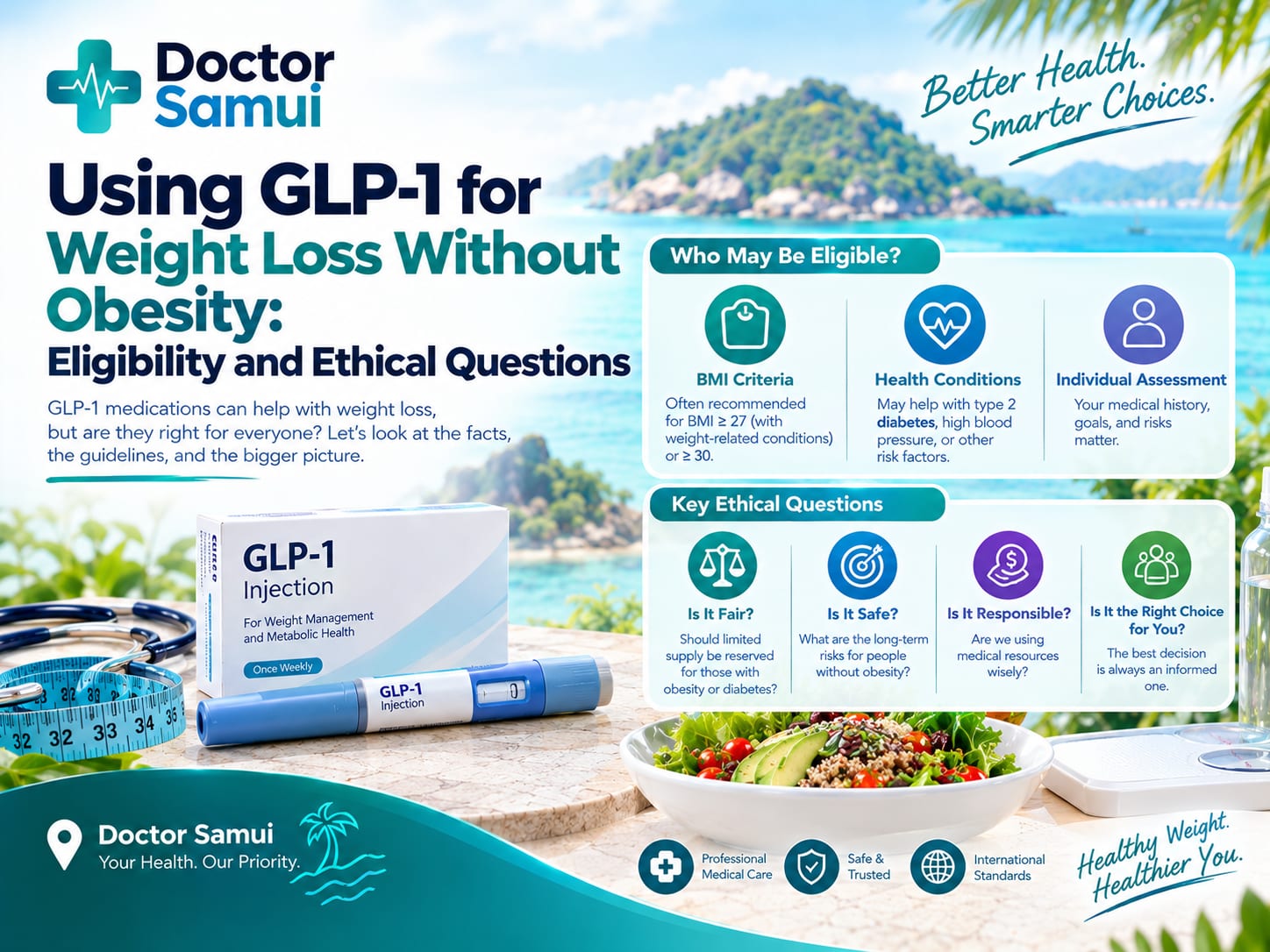
GLP-1 medications like semaglutide and tirzepatide are approved for people with a BMI of 30 or above, or 27 and above with a weight-related health condition. Using them outside these thresholds is off-label and requires a careful clinical assessment, not just a BMI check. A responsible prescriber will look at your metabolic health markers, personal health history, and goals before making any decision.
You have been living on Samui for six months, eating well, staying active, but carrying a few extra kilos that will not shift. Your BMI sits around 26. You have read about GLP-1 medications and wonder whether they apply to you. The honest answer is: it depends, and anyone who tells you otherwise without asking a lot of questions first is not doing this properly.
The approved thresholds exist for a reason, and so does off-label prescribing. Between those two points is a genuine clinical conversation, not a checkbox. This article explains what that conversation should involve, what the real risks are for leaner patients, and what a responsible prescribing process actually looks like on Koh Samui.

What the Approved Thresholds Actually Mean
Standard approvals for weight-management GLP-1 medications set the bar at a BMI of 30 or above, or 27 or above when a weight-related condition is present. That condition might be high blood pressure, type 2 diabetes, or elevated cholesterol. These thresholds come from the trial populations the medications were tested in, which were predominantly people with obesity or metabolic disease.
If your BMI is below 27 and you have no weight-related health conditions, you fall outside every approved indication. That does not mean no doctor will prescribe. It does mean any doctor who does so without a thorough assessment is taking a shortcut they should not take.
Who Qualifies Beyond the BMI Threshold
BMI is a blunt tool. Two people with a BMI of 26 can have very different metabolic health pictures. One has normal blood sugar, healthy cholesterol, and no visceral fat. The other has insulin resistance, an elevated waist-to-hip ratio, and a family history of cardiovascular disease. These are not the same clinical situation.
When a doctor considers off-label GLP-1 prescribing for non-obese weight loss, metabolic health markers matter more than the number on the BMI scale. Fasting glucose, HbA1c, lipid profile, and waist-to-hip ratio all give a clearer picture of actual metabolic risk. A patient with a BMI of 27 and significant insulin resistance sits closer to the intended treatment population than one with the same BMI and entirely normal bloodwork.
This does not mean everyone with a slightly elevated BMI and one abnormal lab result qualifies. It means the decision is clinical, contextual, and should never be reduced to a single number.

Risks Specific to Non-Obese Users
This is the part that matters most if you are considering GLP-1 treatment without being clinically overweight.
When someone with a high BMI loses weight on a GLP-1 medication, most of that loss comes from fat. Clinical trial data show that GLP-1 medications do reduce lean mass alongside fat mass, and concerns have been raised that patients with less fat to lose may be at greater risk of a clinically meaningful proportion of weight loss coming from lean tissue, though direct trial evidence in non-obese patients is limited. Losing muscle has real consequences for strength, metabolism, and bone density.
Nutritional deficiency is a related concern. Appetite suppression can reduce intake enough that protein, micronutrient, and calorie targets go unmet, particularly in someone who was not eating in excess to begin with. This needs active monitoring, not a prescription and a wave goodbye.
Clinicians and eating disorder specialists have raised concern that people with a history of restrictive eating disorders may be more likely to seek GLP-1 medications for cosmetic weight loss, and the evidence base on GLP-1 use in this population remains limited. A thorough history should always ask about this. Prescribing a powerful appetite suppressant to someone with a history of restriction is not a neutral act.
The Ethics of Prescribing GLP-1 Outside Approved Indications
Off-label prescribing is legal and common. It becomes ethically complicated when the benefit-to-risk balance is less clear, and that balance is genuinely less clear in non-obese patients.
The core tension is between patient autonomy and the prescriber’s duty to avoid harm. A patient has the right to make informed decisions about their own body. A doctor has the responsibility to ensure that consent is actually informed, meaning the patient understands both what is known and what is not yet known about long-term use in leaner populations.
Shared decision-making is the framework that resolves this tension. The patient brings their goals, values, and personal health history. The doctor brings clinical judgement, current evidence, and an honest assessment of risk. Neither party should make this decision alone. A prescription handed out without this process is not shared decision-making. It is a transaction, and it is not adequate care. You can read more about the ethics of GLP-1 use for weight loss on the Doctor Samui GLP-1 service page.
What a Responsible Prescribing Process Looks Like
If you are considering GLP-1 treatment and do not meet standard thresholds, here is what a proper clinical process involves.
A full medical history comes first. That includes any history of eating disorders, gastrointestinal conditions, pancreatitis, and thyroid conditions. A personal or family history of medullary thyroid carcinoma or multiple endocrine neoplasia syndrome type 2 is a contraindication to GLP-1 receptor agonists and must be ruled out before prescribing. Baseline bloodwork should include fasting glucose, HbA1c, liver function, lipids, and renal function. Current weight, waist-to-hip ratio, and a realistic discussion of goals are all part of the picture.
Dose titration, starting low and increasing slowly, is not optional. It reduces side effects and gives the prescriber time to monitor how your body responds. A follow-up plan should be agreed before starting, not arranged after something goes wrong. A stopping plan, including what happens to appetite and weight when the medication ends, should be discussed openly from the start.
What Happens When You Stop GLP-1 Treatment
This is particularly relevant for non-obese users whose treatment is more discretionary.
When GLP-1 medications are stopped without a supporting lifestyle change in place, appetite typically returns. For some patients it returns intensely. Weight regained after stopping is common without dietary and physical activity habits that can sustain the loss independently.
This is not a reason to avoid treatment. It is a reason to treat stopping as part of the treatment plan. A maintenance strategy, whether that is a dietary approach, regular physical activity targets, or a clear follow-up schedule, should be agreed before the first dose, not after the last one.
Getting a GLP-1 Assessment on Koh Samui
Whether you are a long-stay expat, a digital nomad, or a visitor managing GLP-1 treatment at home and needing continuity of care, Doctor Samui offers GLP-1 consultations at the Chaweng clinic and through 24-hour hotel and villa visits across the island.
The consultation covers medical history, current weight and metabolic markers, and an honest conversation about your goals and the evidence. For patients already on treatment, we can review your current dose and run bloodwork locally without a gap in care. For patients considering starting, the consultation covers eligibility, the ethical questions around off-label use where relevant, and what a proper prescribing process involves before any decision is made.
If you are based outside Chaweng, the same consultation is available through mobile doctor services. Patients in Lamai can book a house call doctor visit in Lamai. Those staying around Bophut or Maenam can access the same service through mobile doctor visits in Bophut and elsewhere across the island.
Thinking about GLP-1 treatment and not sure whether you qualify? Doctor Samui offers GLP-1 consultations at the Chaweng walk-in clinic and through 24-hour hotel and villa visits across Koh Samui. We cover medical history, metabolic markers, and a full discussion of benefits and risks before any prescription decision is made. For tourists, expats, and long-stay residents, same-day appointments are available. Visit doctorsamui.com/contact to book.
FAQ
Dr. Ponlawat Pitsuwan
Physician, Doctor Samui
a walk-in clinic based in Chaweng, Koh Samui, with 24-hour hotel and villa visits across the island. He sees tourists, families, and long-stay expats on Koh Samui for weight management consultations, metabolic health assessments, and GLP-1 prescribing decisions, including off-label cases that require careful clinical review. His focus is straightforward, evidence-based care delivered in plain language.
References
- Wilding JPH, et al. Once-Weekly Semaglutide in Adults with Overweight or Obesity. New England Journal of Medicine, 2021.
- Wilding JPH, et al. Weight regain and cardiometabolic effects after withdrawal of semaglutide: the STEP 1 trial extension. Diabetes, Obesity and Metabolism, 2022.
- Jastreboff AM, et al. Tirzepatide Once Weekly for the Treatment of Obesity. New England Journal of Medicine, 2022.
- US Food and Drug Administration. Wegovy (semaglutide) Prescribing Information. FDA.gov, 2023.
- National Eating Disorders Association. GLP-1 Receptor Agonists and Eating Disorders. NEDA, 2024.
- World Health Organization. Obesity and Overweight Fact Sheet. WHO.int, 2024.
The information in this article is for educational purposes only and does not constitute medical advice. It should not be used to self-diagnose or replace a consultation with a qualified physician. If you have concerns about your health, contact a licensed medical professional. For appointments at Doctor Samui, visit doctorsamui.com.